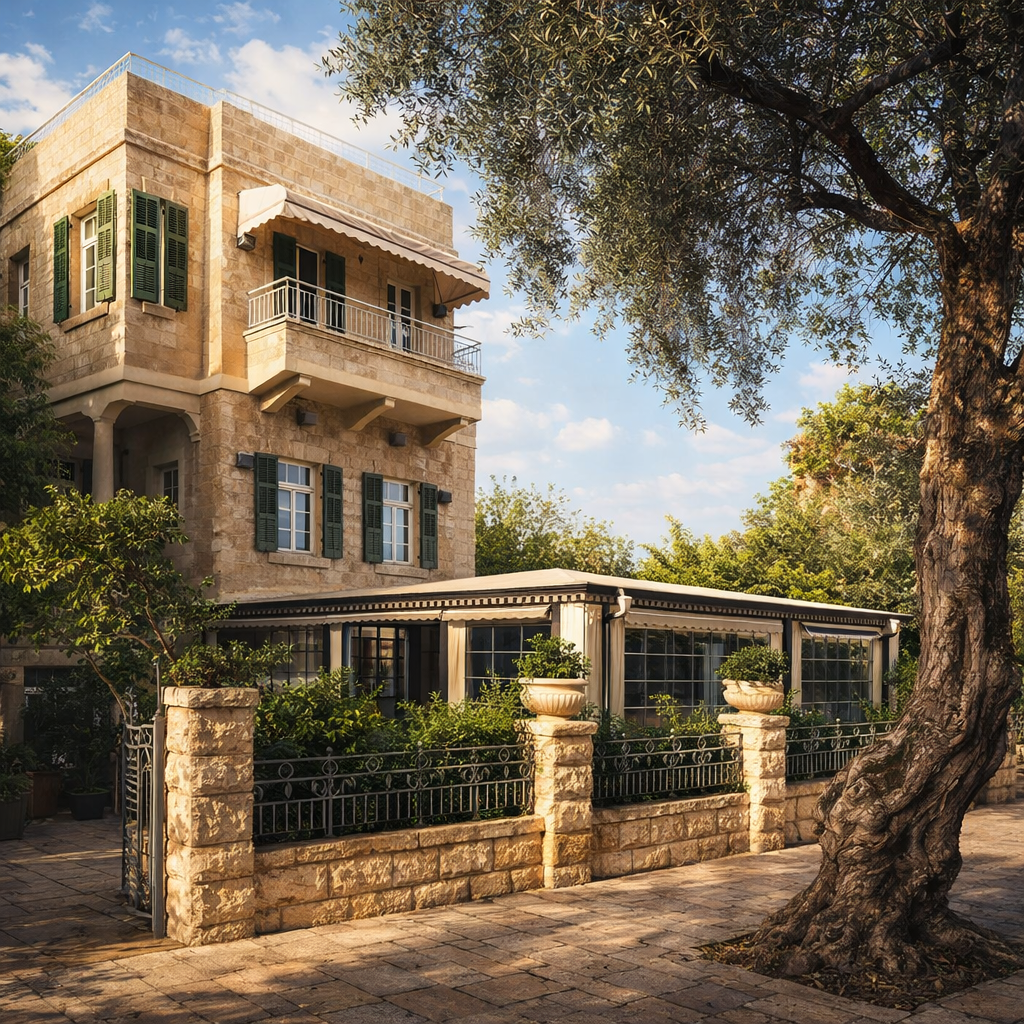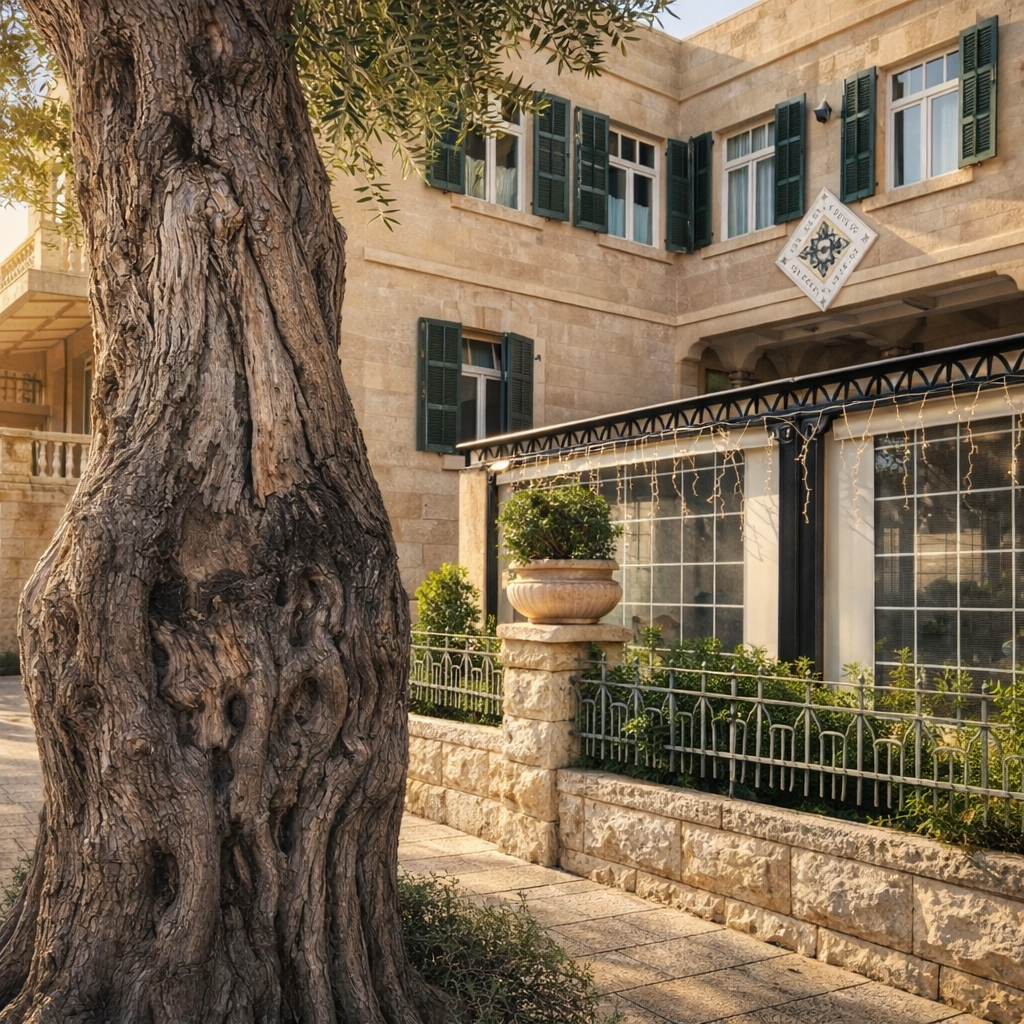

The hotel was built in 1905 by the Christian Epener family, members of the Templar community that founded the German colony in Haifa in 1869. Two sisters, Christine and Helena, ran the hotel until the early 1940s. Their brother Gottlieb Epener, who owned a horse-drawn carriage workshop, assisted them in the administrative and financial management of the hotel. Near the hotel, the first palm trees in the German colony of Washington were planted. They are famous for their great height and, they say, served as a guide for guests, so that you can always easily find a hotel. The archives of the Schumacher Institute, located in Haifa and documenting the city's history, describe the way of life in the German colony of the late 19th and early 20th centuries. The archival records refer to the Epener sisters, renowned culinary experts, whose restaurant, located in the hotel, was in great demand among the colony's guests and popular among British officers until the liquidation of the German community in the 40s (World War II). Also noteworthy is that the Peel Commission (the British Departmental Commission that resolved the partition of Palestine) was based in this hotel for an extended period. The British Government of Palestine decided to deport a large part of the German community to Australia as a result of the open support of the National Socialist Party of Nazi Germany. The property was more nationalised and subsequently acquired by private individuals. In 1950, Shmuel Drezner, a Jew who survived the Holocaust, bought a hotel and worked under his leadership until 1978. In December 2006, the building was acquired by a construction company and repaired, fully preserving its historical appearance (the restoration was carried out under the supervision of the Department for the Preservation of Historical Monuments of the Haifa City Hall). The hotel's design preserves the building's original atmosphere, including terracotta tiles, original wooden balustrades, windows, wooden shutters, and a general style that matches the building's character. Many bathrooms have four-poster baths; wooden windows and blinds are preserved in accordance with the original design; the rooms have old-style oak furniture; and the original 1905 floor tiles have been preserved in many rooms and corridors of the hotel.
The route starts from the Golden Crown Hotel and the City shopping center, runs up Ben Gurion Street through the houses of Schumacher and Olifant, the historic Colony Hotel, the lower terrace of Bahai Gardens, the Song Street, Dojan Restaurant, the burgher-style restaurant, the German Colony Community House and the current City Museum and ends at the bottom of the German colony at the intersection of Jaffa and Ben Gurion streets.