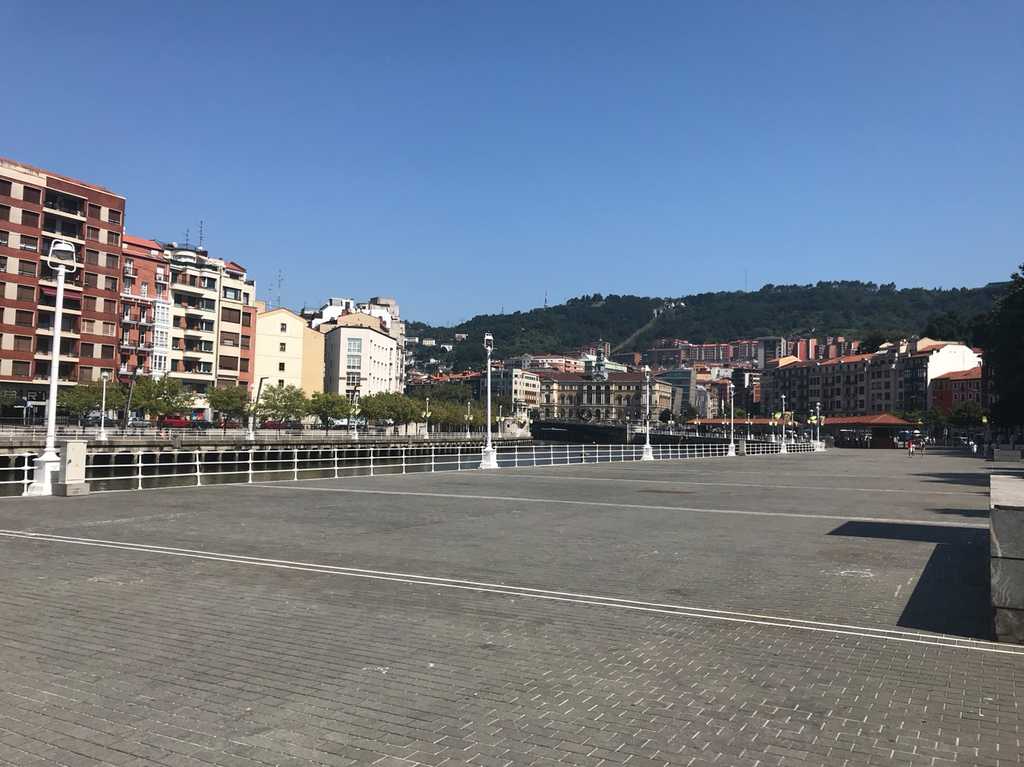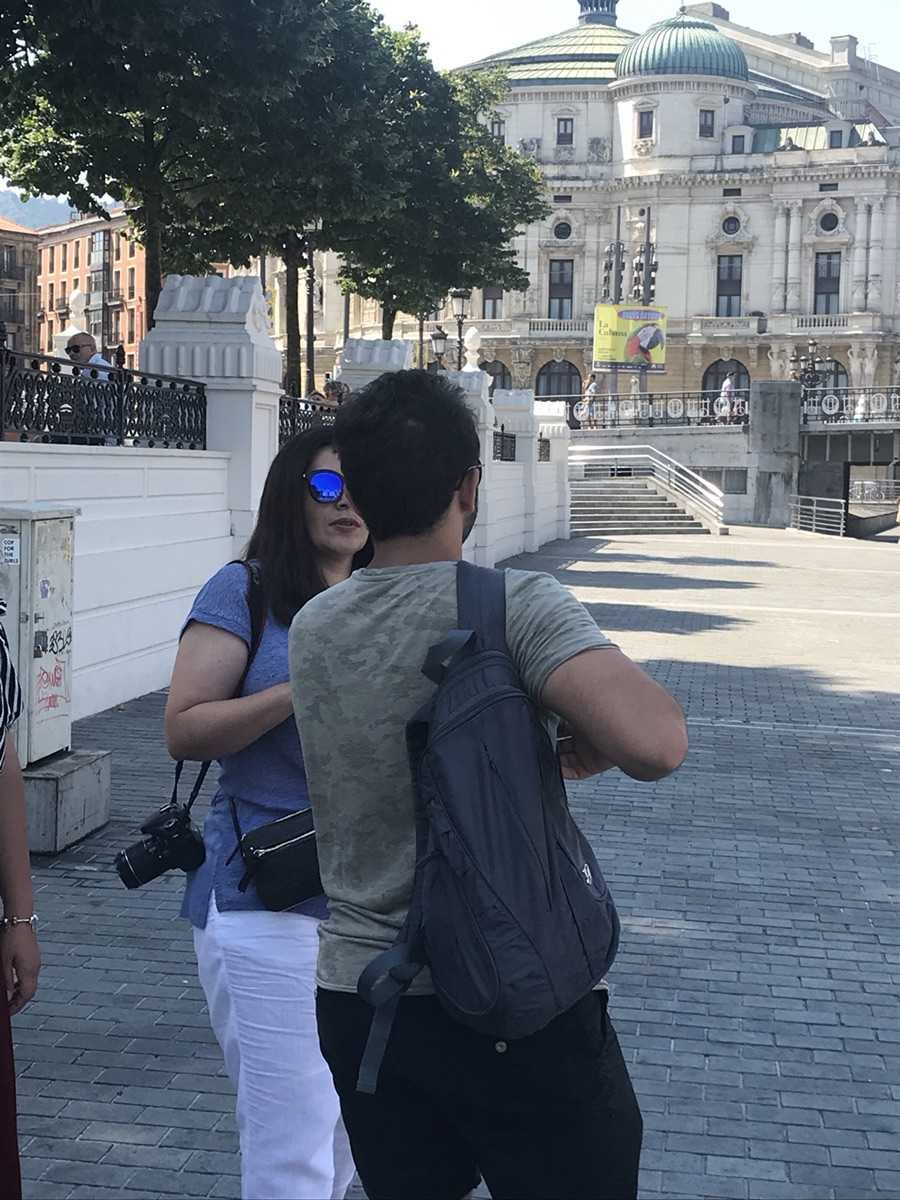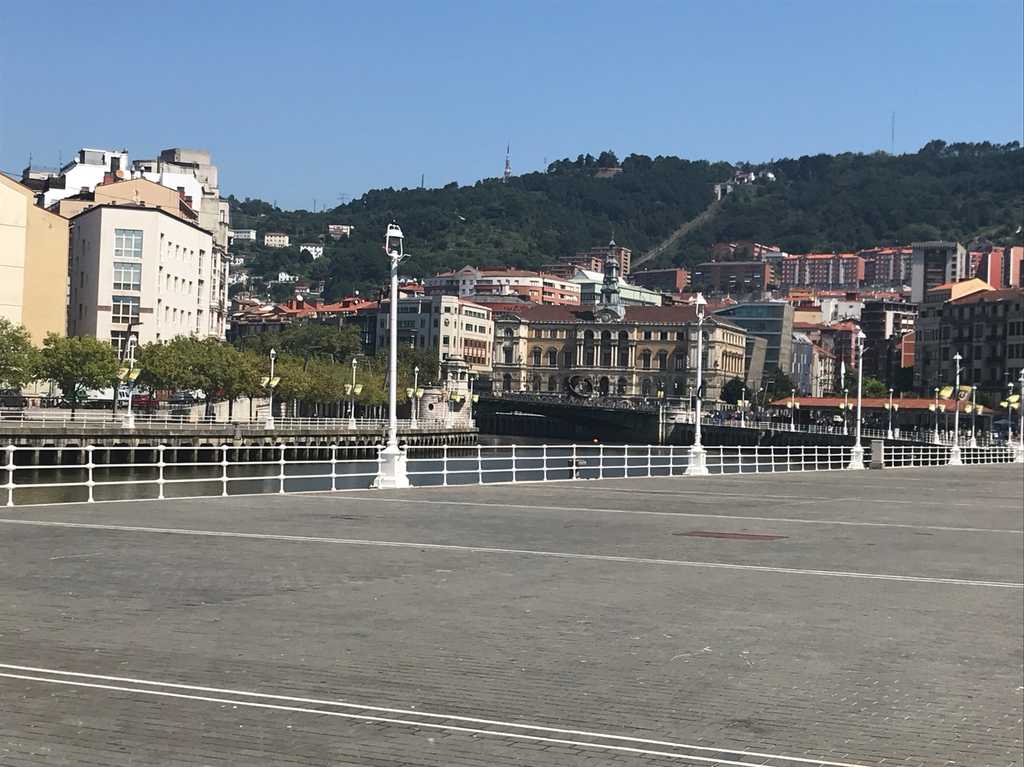

Paseo del Arenal is one of the most pleasant places to begin a walk through Bilbao. From the convenient parking area beside the park, it’s only a few steps to the riverbank. Here, right at the water’s edge, the city opens in a calm panorama: palm trees, long rows of plane trees, benches in the shade, and the quiet surface of the estuary where the reflections of bridges and buildings drift slowly by.
Once, this was a sandy shore and a natural shipyard. Boats and barges were launched here by the people of Bilbao. In the late eighteenth century the area was redesigned — paths, ponds, and lanterns appeared — and Arenal became the city’s main promenade, though it kept the name of the old sandy beach.
Today, the atmosphere still carries the gentle rhythm of old Bilbao: locals walking their dogs, teenagers on skateboards, tourists sitting with a coffee and watching the river. Walking toward Arenal Bridge, it’s worth pausing at the bronze fountains decorated with sea creatures — a rare example of late-nineteenth-century urban sculpture.
The bridge, built in the 1930s, links the old town with the new and offers one of the best views of Santiago Cathedral and the rooftops of Casco Viejo. The riverside path is especially beautiful in the morning or evening, when the light falls at an angle and the air fills with the smell of wet stone and nearby cafés. The path is smooth and easy to walk; for photos, the best spot is a little farther from the bridge, where the river, the trees, and the soft line of the city appear together in the water’s reflection.
This walk is not just a stroll through the old streets of Bilbao — it’s a walk through the city’s memory. Everything here lies close together: the Gothic gates of Santiago Cathedral, the soft murmur of the “Dog Fountain,” the old plaques still marked by the great flood of 1983, and Bar Xukela, where the spirit of the city lives in a glass of wine and laughter at the counter.
We follow Calle del Perro and Calle de la Torre — streets whose names hold legends and the echoes of ancient family towers. At every turn, a story appears: about the Basques, whose defensive towers once stood like the stone houses of Svaneti; about Diego María Gardoki, the first Basque to serve as Spain’s ambassador to the United States; about Pedro Arrupe, the Basque priest who renewed the Jesuit order in the twentieth century.
Our path leads to the river where ships once lined the shore, and finally to El Arenal — the park where Bilbao learned to breathe, to love, and to listen to the quiet rhythm of its own heart.
This walk is like a simple, honest conversation with the city — no guide, no performance, just a friend who has a story waiting behind every corner.