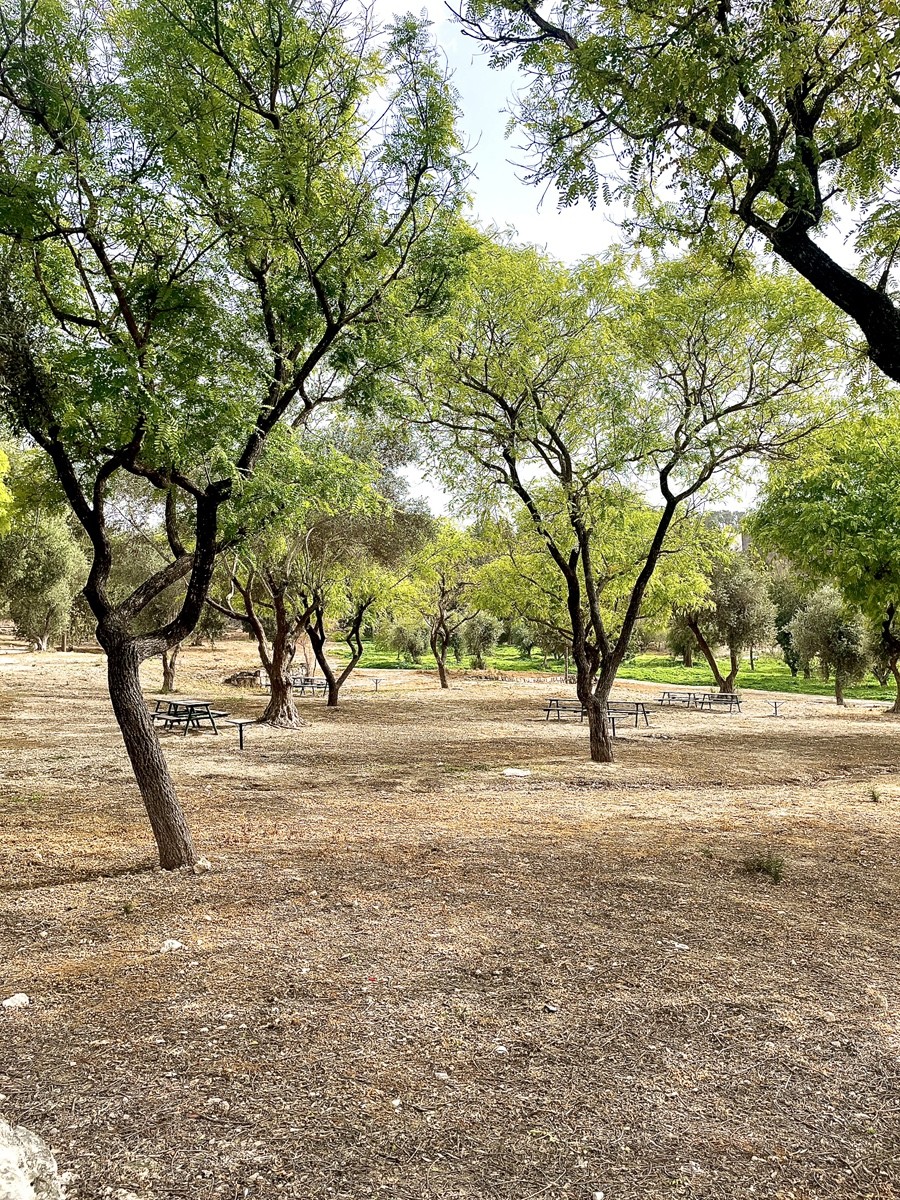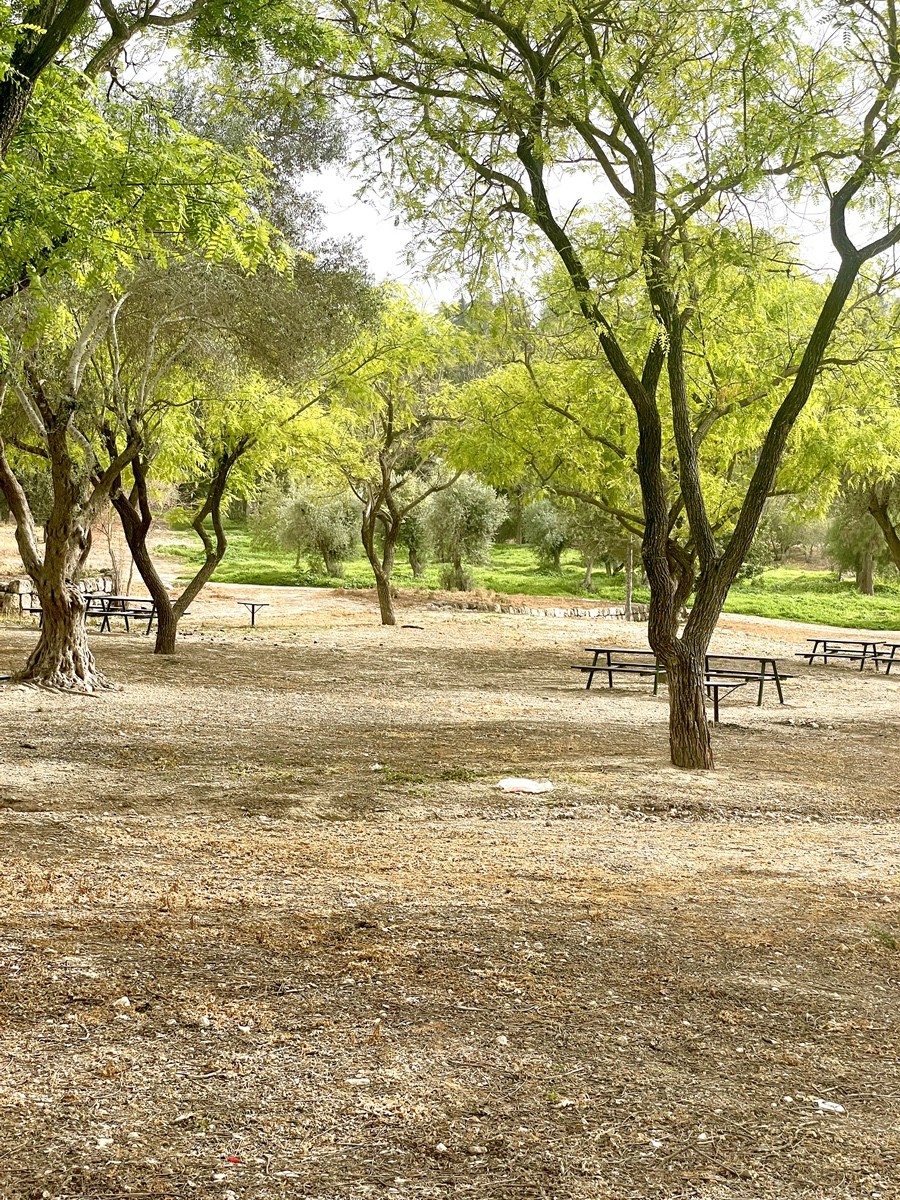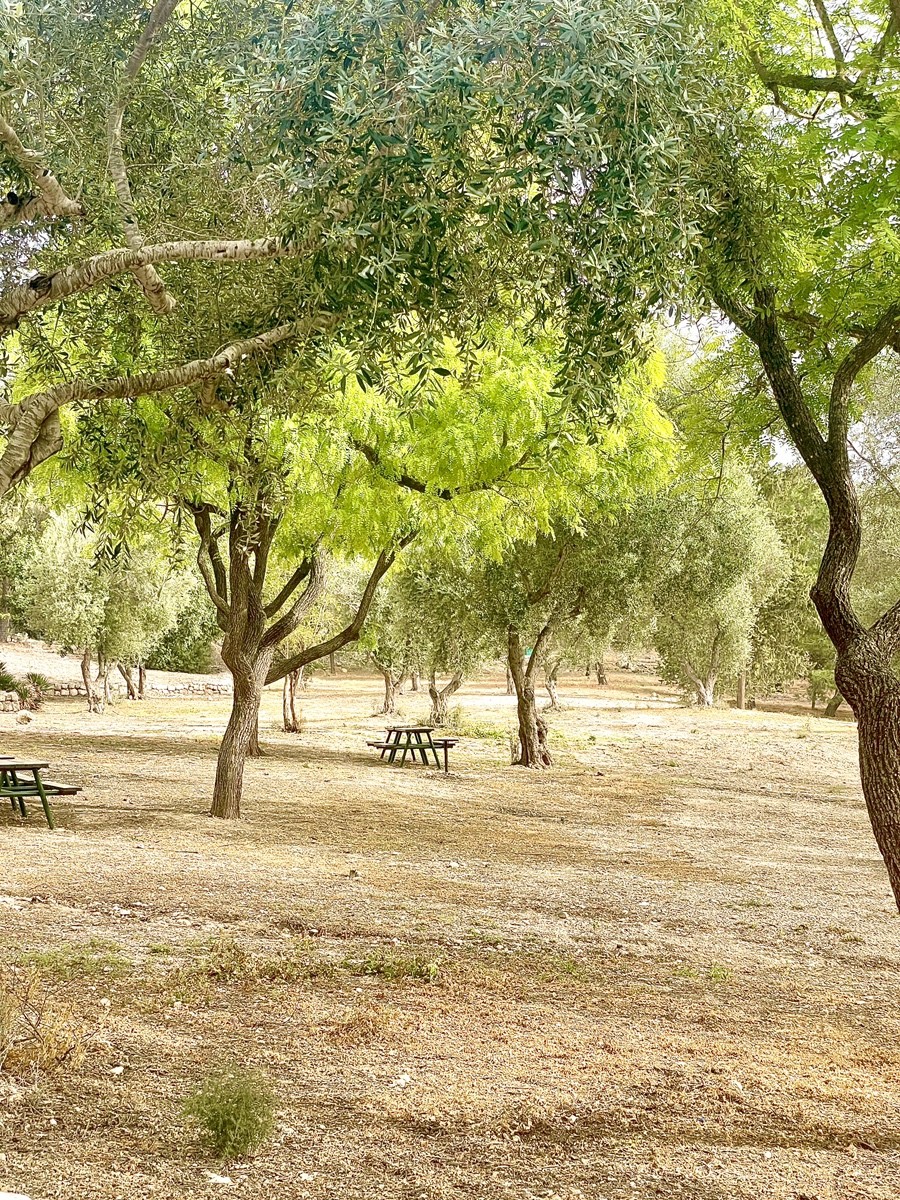

A distinct botanical divide defines the landscape of Canada Park. Alongside the ancient olives and sabra cacti—relics of the Palestinian village of Imwas—stands the Black Locust (Robinia pseudoacacia). Unlike the historic groves, these "acaci"s" were" intentionally planted after 1967 to provide rapid shade for modern picnic areas.
As a hardy "pioneer"r species, the obinia thrives in the poor, rocky soil left behind by the demolition of village structures. Its roots now stabilise the very slopes where houses once stood, serving as a functional tool of Israeli afforestation. While the olives represent the agrarian past, the Robinia and pines symbolise the site's conversion into a recreational zone, effectively anchoring the park’spark'smporary identity over the ruins of the old.
The journey begins in the almond blossoms of Sha'alvim, a landscape rooted in the biblical territory of the Tribe of Dan. The route advances through the strategic Latrun salient to Emmaus-Nicopolis, where Byzantine ruins mark the site of the Resurrection—land preserved through the spiritual visions of Mariam Baouardi and the patronage of Countess Beatrice de Saint-Cricq.
The path culminates at the abandoned Sorek Station, a limestone relic of the Ottoman Empire. Inside, time stands still among concrete staircases and iron veterans: a freight car and a yellow-marked shunting locomotive from the 1990s. A modest monument to Egyptian labourers honours the unsung builders of the WWI era. Today, the silence of these rusted tracks is only broken by the whistle of modern trains, bridging the gap between ancient faith and imperial ruins.