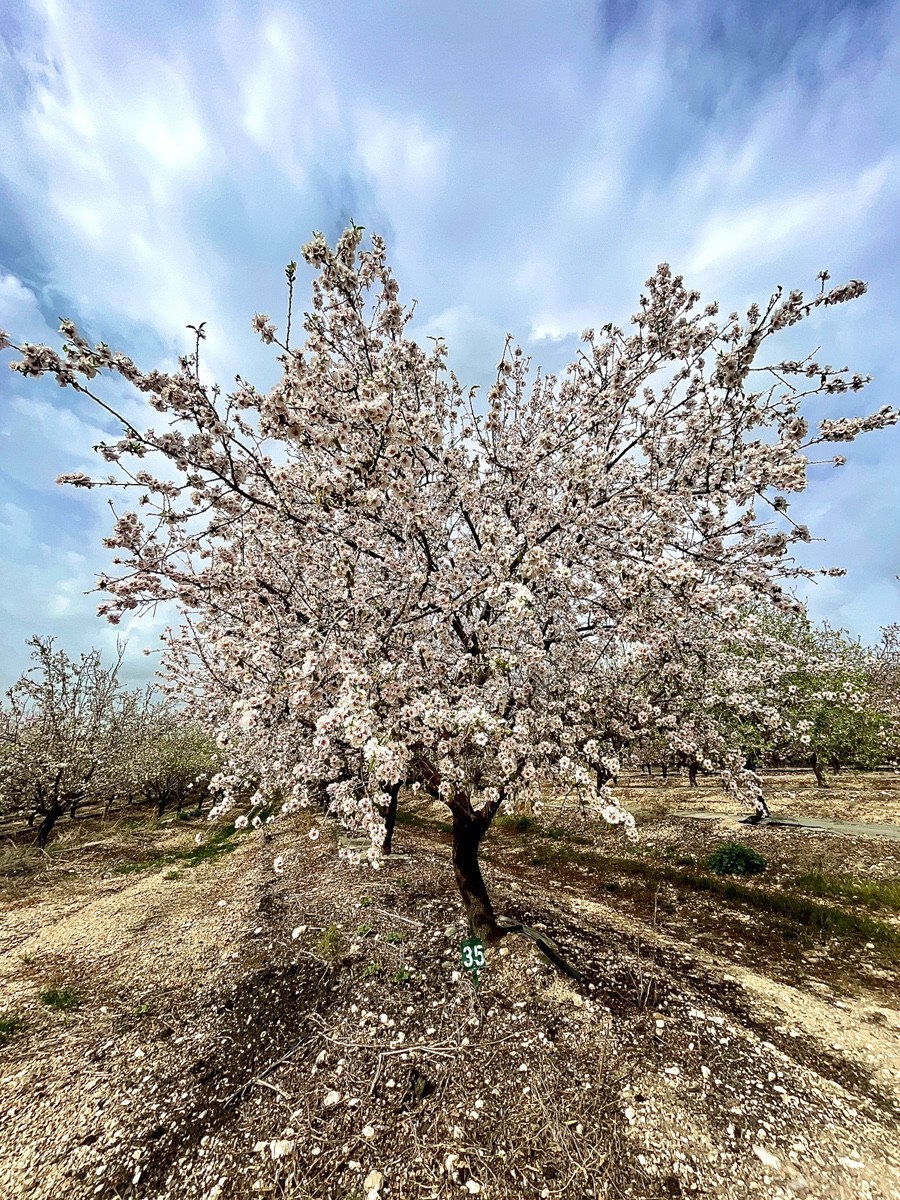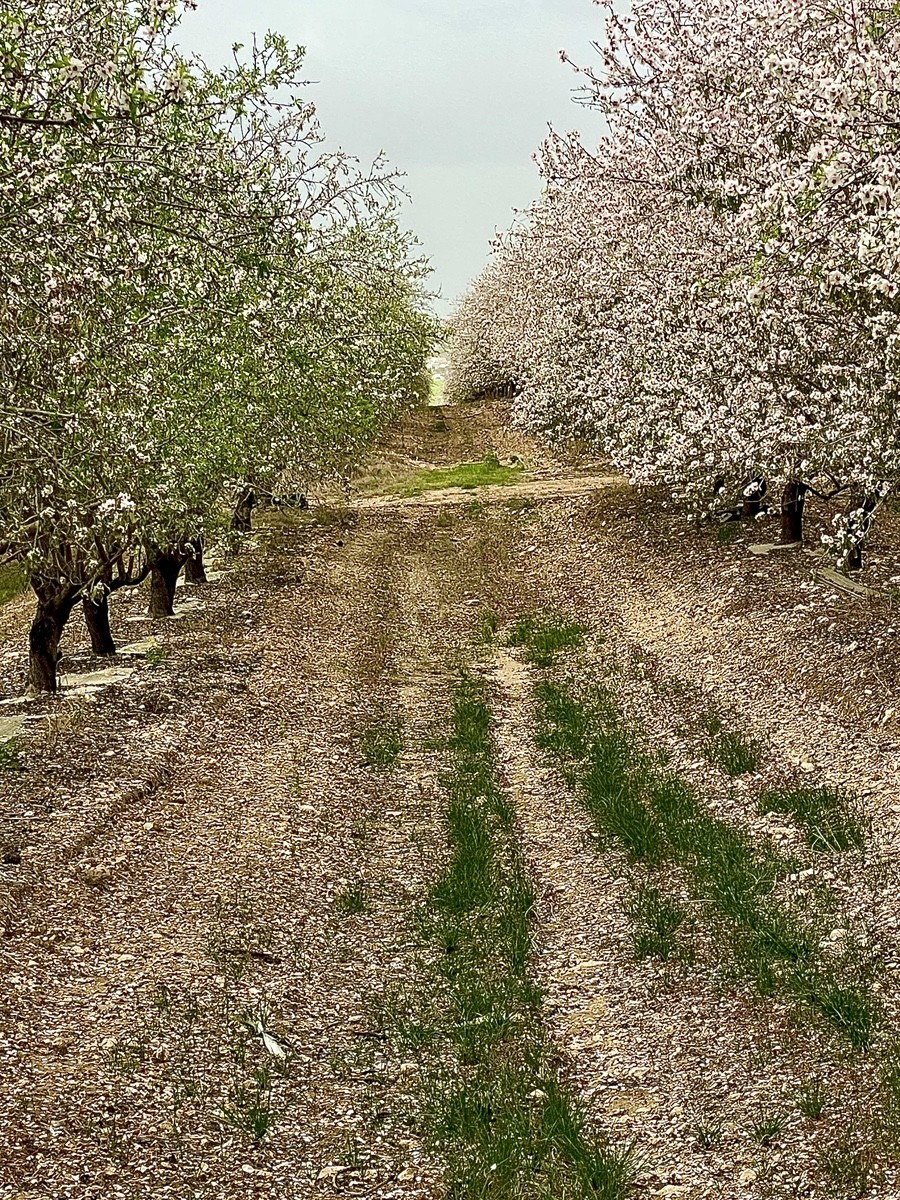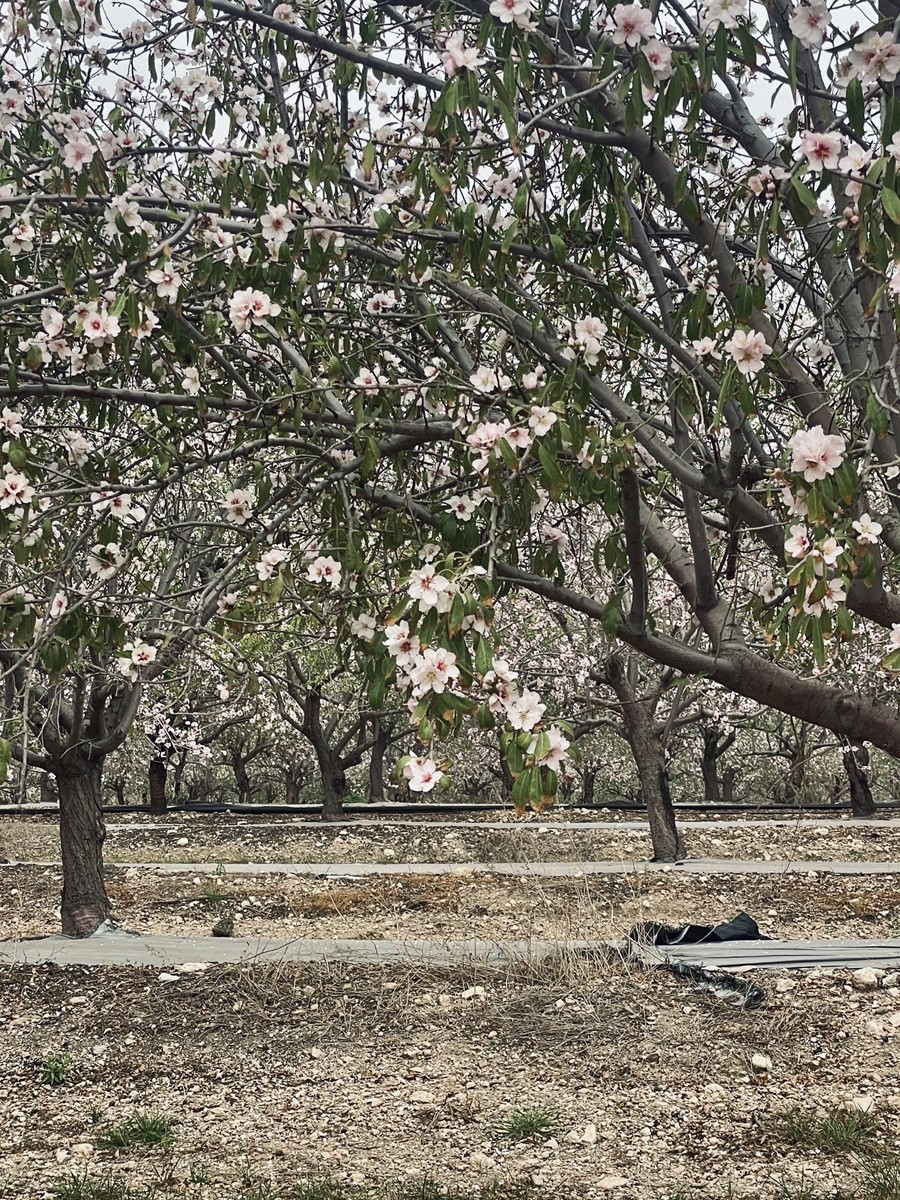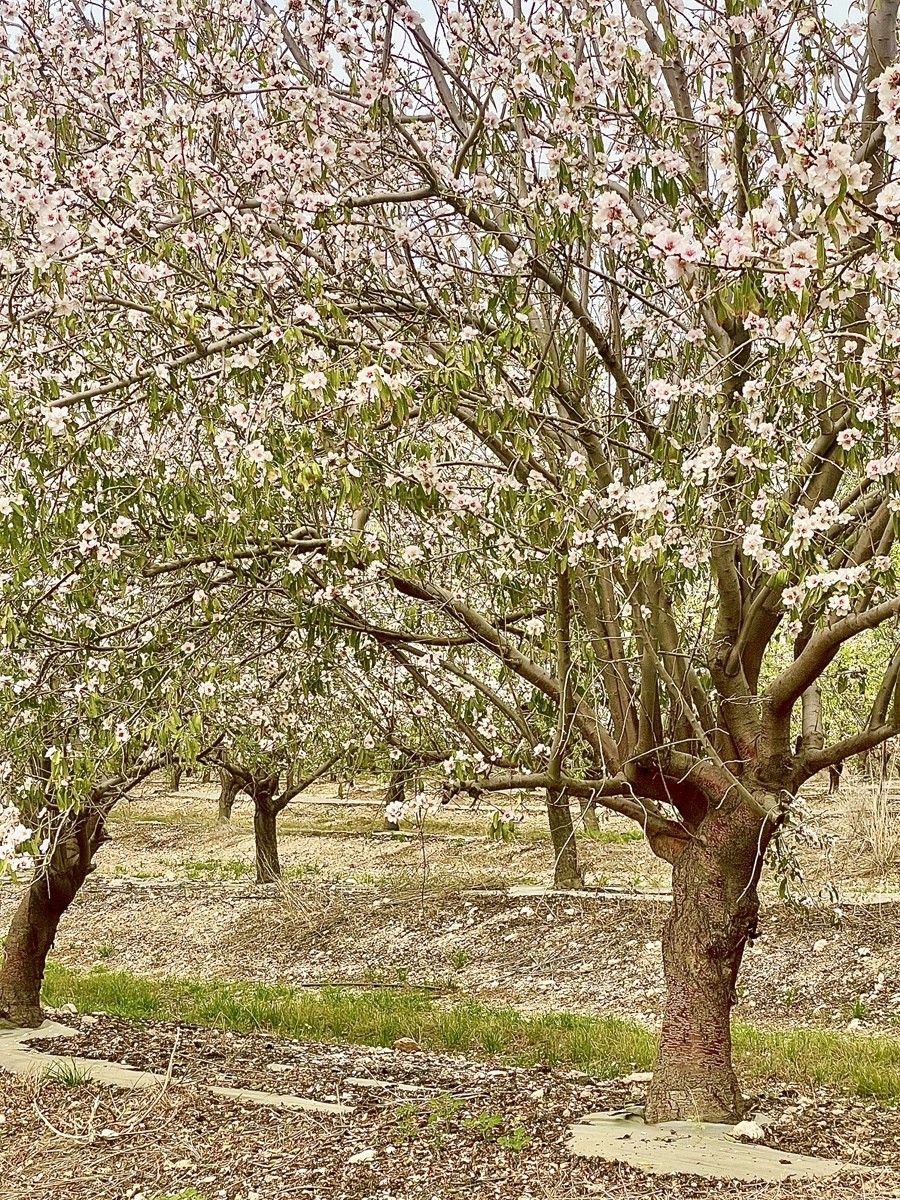

Unlike traditional almond varieties like the Californian Nonpareil, which require cross-pollination from different cultivars and active bee participation, the Israeli "Matan" variety is self-pollinating. Developed at the Volcani Institute and named after researcher Matan Hoffman, this cultivar allows a single flower's pollen to fertilise its own pistil.
This biological independence offers critical agricultural advantages: it eliminates the risk of crop failure during cold, wind-still days when bees are inactive and allows for uniform fields of high-yielding trees. The Matan variety simplifies mechanical harvesting through simultaneous ripening and produces large, sweet, soft-shelled nuts. This innovation has established Israel as a global leader in almond breeding, turning the orchards of Sha'alvim into a model of efficient, high-tech farming.
The journey begins in the almond blossoms of Sha'alvim, a landscape rooted in the biblical territory of the Tribe of Dan. The route advances through the strategic Latrun salient to Emmaus-Nicopolis, where Byzantine ruins mark the site of the Resurrection—land preserved through the spiritual visions of Mariam Baouardi and the patronage of Countess Beatrice de Saint-Cricq.
The path culminates at the abandoned Sorek Station, a limestone relic of the Ottoman Empire. Inside, time stands still among concrete staircases and iron veterans: a freight car and a yellow-marked shunting locomotive from the 1990s. A modest monument to Egyptian labourers honours the unsung builders of the WWI era. Today, the silence of these rusted tracks is only broken by the whistle of modern trains, bridging the gap between ancient faith and imperial ruins.