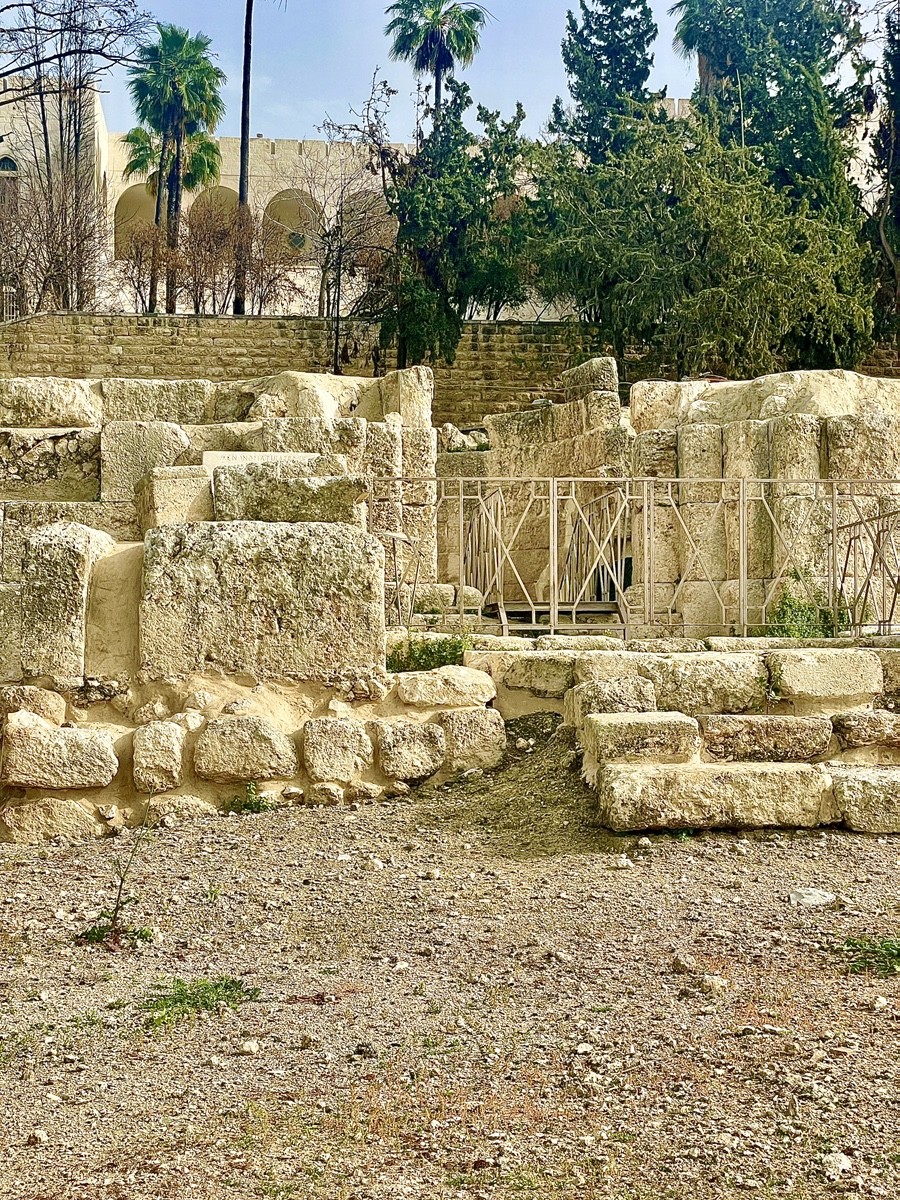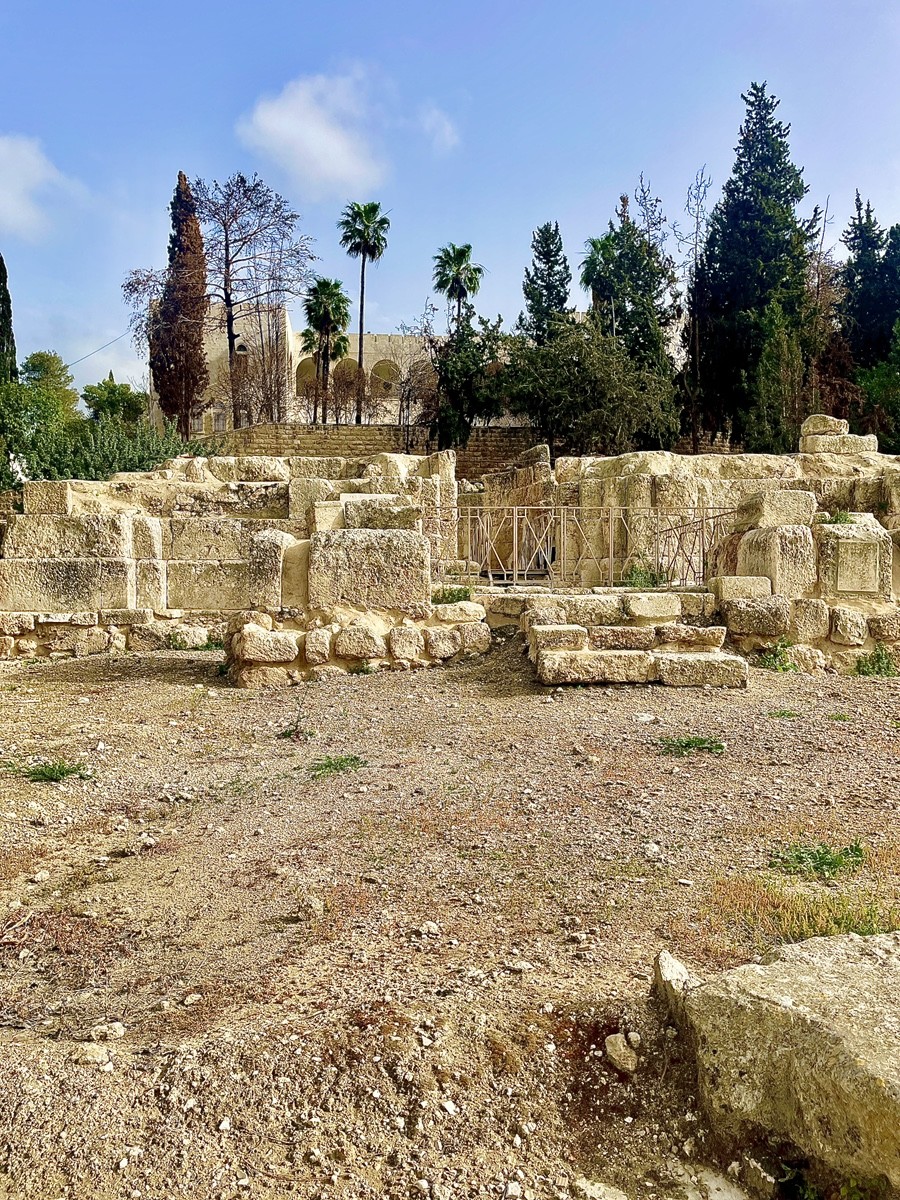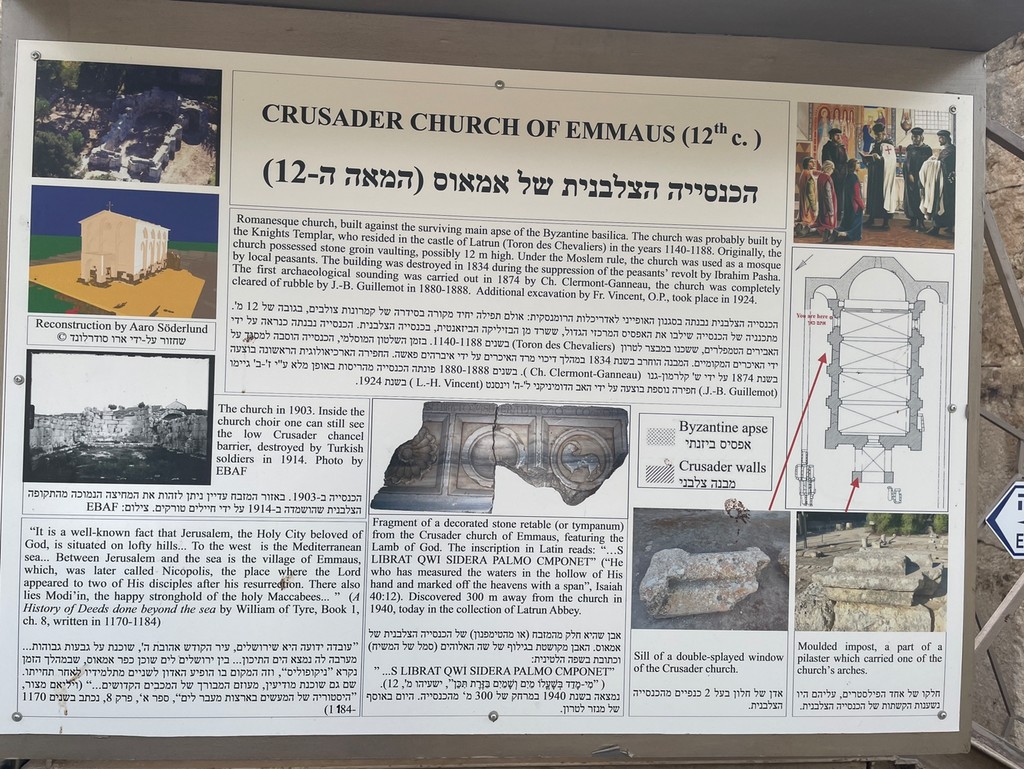

The ruins of Emmaus-Nicopolis present a stark architectural timeline: the massive, rough-hewn blocks of a 5th-century Byzantine basilica form the foundation, upon which 12th-century Crusaders built a smaller, fortress-like church. In the background stands the 19th-century monastery, established after the mystic Mariam Baouardi identified the site as the biblical Emmaus.
Unlike the surrounding village of Imwas, this complex remained untouched during the 1967 conflict due to strict military orders to preserve archaeological and religious sites. This "immunity" was tested again during the nationalistic arson of 2025; while the pine forests of Canada Park burned fiercely, the ancient limestone walls and the irrigated monastery gardens acted as a natural firebreak, sheltering the mosaics and altars from the flames once more.
The journey begins in the almond blossoms of Sha'alvim, a landscape rooted in the biblical territory of the Tribe of Dan. The route advances through the strategic Latrun salient to Emmaus-Nicopolis, where Byzantine ruins mark the site of the Resurrection—land preserved through the spiritual visions of Mariam Baouardi and the patronage of Countess Beatrice de Saint-Cricq.
The path culminates at the abandoned Sorek Station, a limestone relic of the Ottoman Empire. Inside, time stands still among concrete staircases and iron veterans: a freight car and a yellow-marked shunting locomotive from the 1990s. A modest monument to Egyptian labourers honours the unsung builders of the WWI era. Today, the silence of these rusted tracks is only broken by the whistle of modern trains, bridging the gap between ancient faith and imperial ruins.