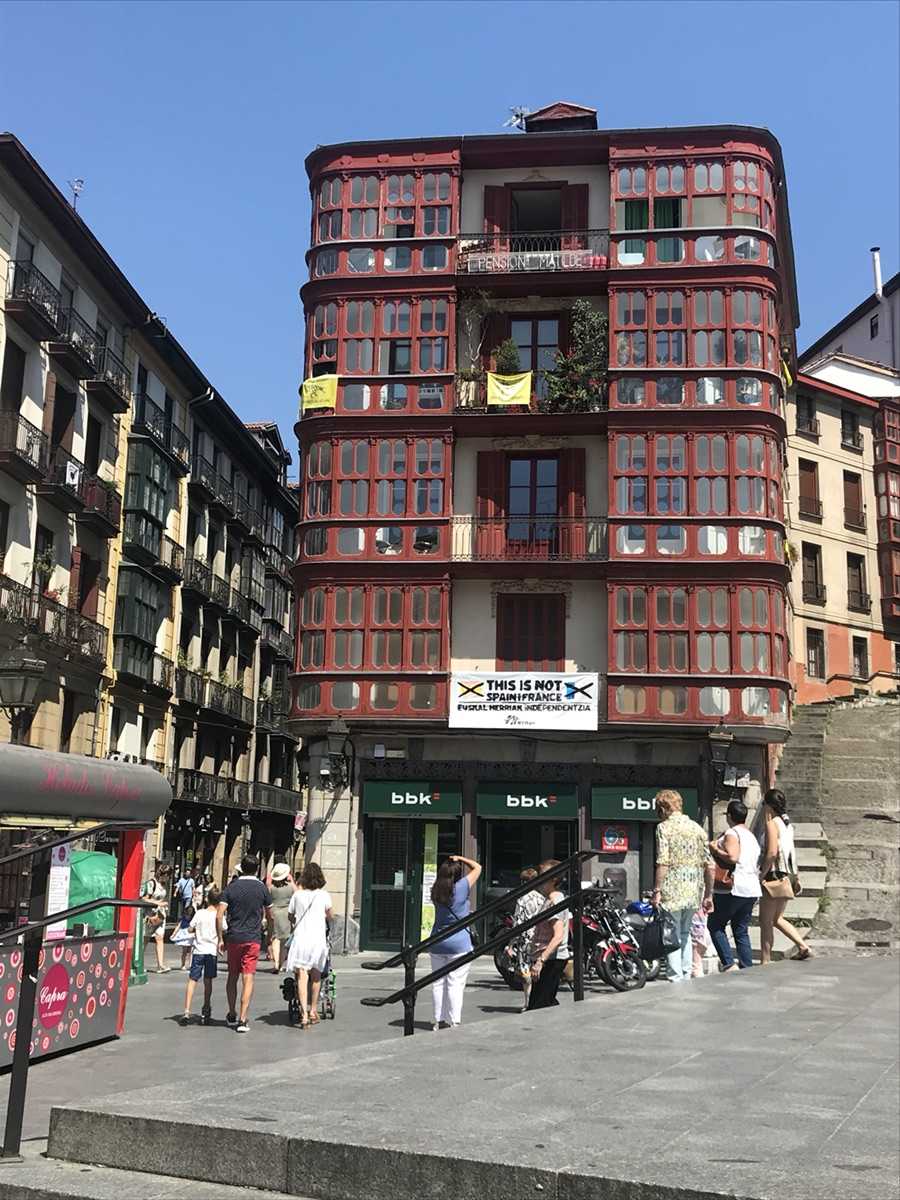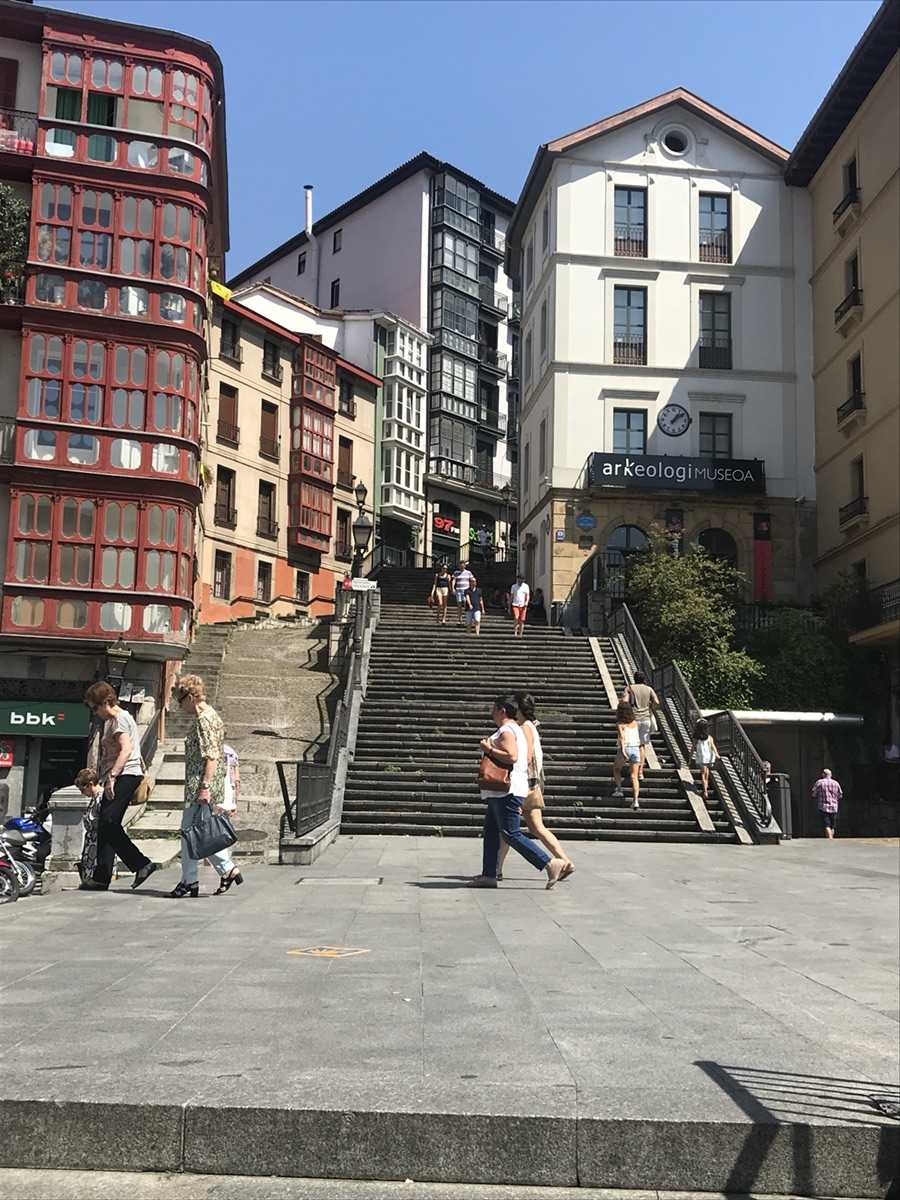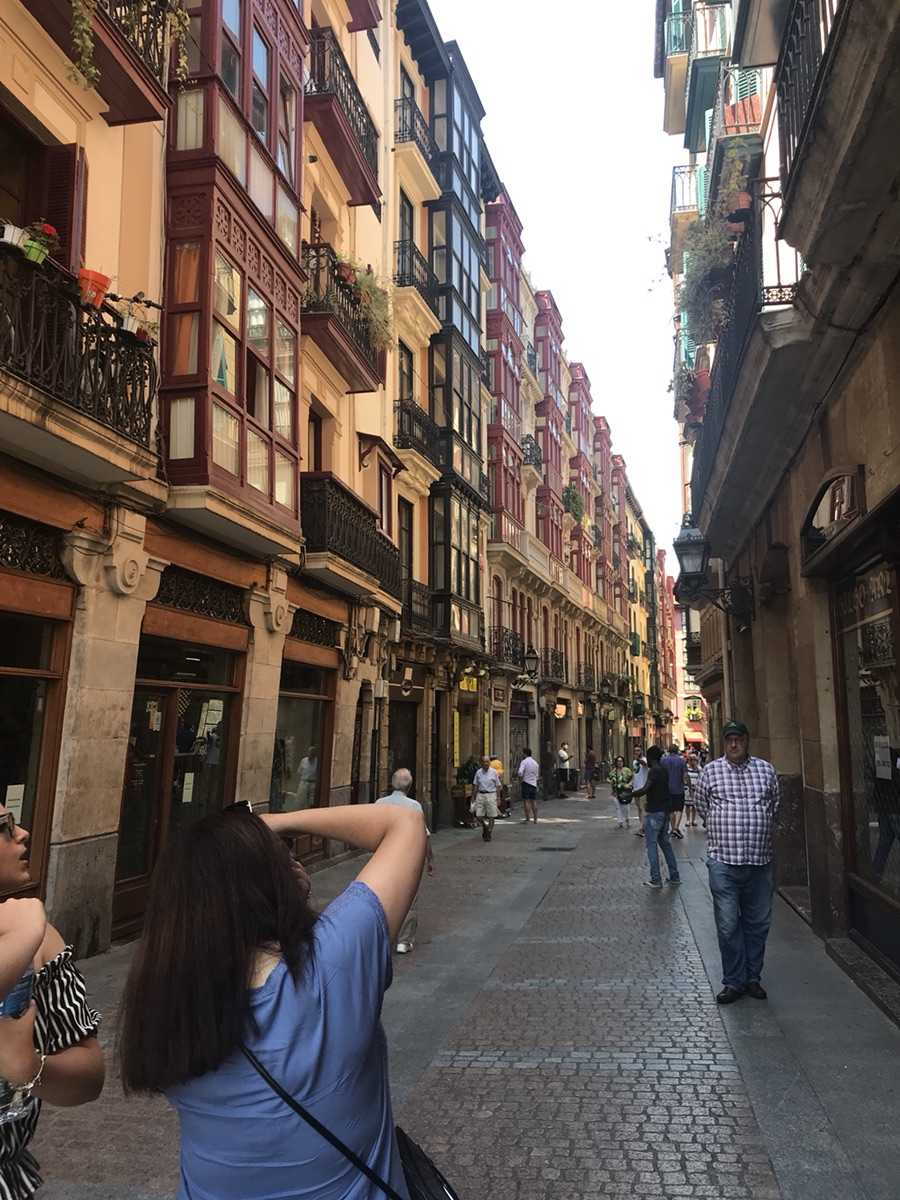

Bilbao, the glass-fronted balconies called miradores changed the way the city looked and lived. They appeared at the end of the nineteenth century, when people began looking for a way to brighten their homes and steal a little more daylight from the often grey Basque sky. Instead of stepping outside, residents pushed their homes outward — building small wooden and metal structures that floated off the façade and wrapped them entirely in glass.
What started as a practical solution soon shaped the city’s personality. Miradores created a new rhythm along the streets: rows of glowing boxes, each one half-room, half-lookout. From inside, people could watch the neighborhood breathe — children running below, voices drifting up from cafés, the slow shift of weather over the hills — all while remaining part of the scene.
They turned façades into something alive, connecting indoors and outdoors in a way that feels very Bilbao: a city where private life is never completely separated from the street, and where architecture grows from human habits, not from grand theories.
This walk is not just a stroll through the old streets of Bilbao — it’s a walk through the city’s memory. Everything here lies close together: the Gothic gates of Santiago Cathedral, the soft murmur of the “Dog Fountain,” the old plaques still marked by the great flood of 1983, and Bar Xukela, where the spirit of the city lives in a glass of wine and laughter at the counter.
We follow Calle del Perro and Calle de la Torre — streets whose names hold legends and the echoes of ancient family towers. At every turn, a story appears: about the Basques, whose defensive towers once stood like the stone houses of Svaneti; about Diego María Gardoki, the first Basque to serve as Spain’s ambassador to the United States; about Pedro Arrupe, the Basque priest who renewed the Jesuit order in the twentieth century.
Our path leads to the river where ships once lined the shore, and finally to El Arenal — the park where Bilbao learned to breathe, to love, and to listen to the quiet rhythm of its own heart.
This walk is like a simple, honest conversation with the city — no guide, no performance, just a friend who has a story waiting behind every corner.