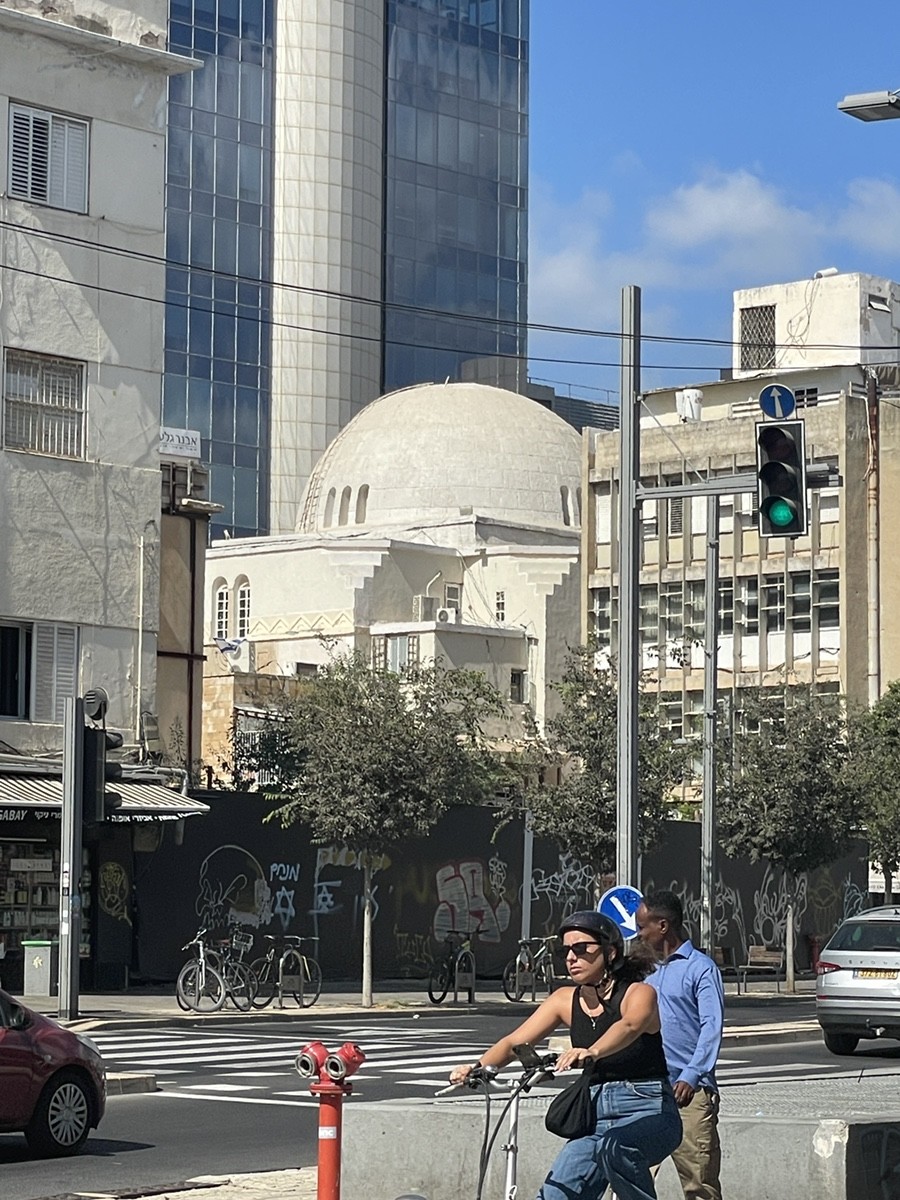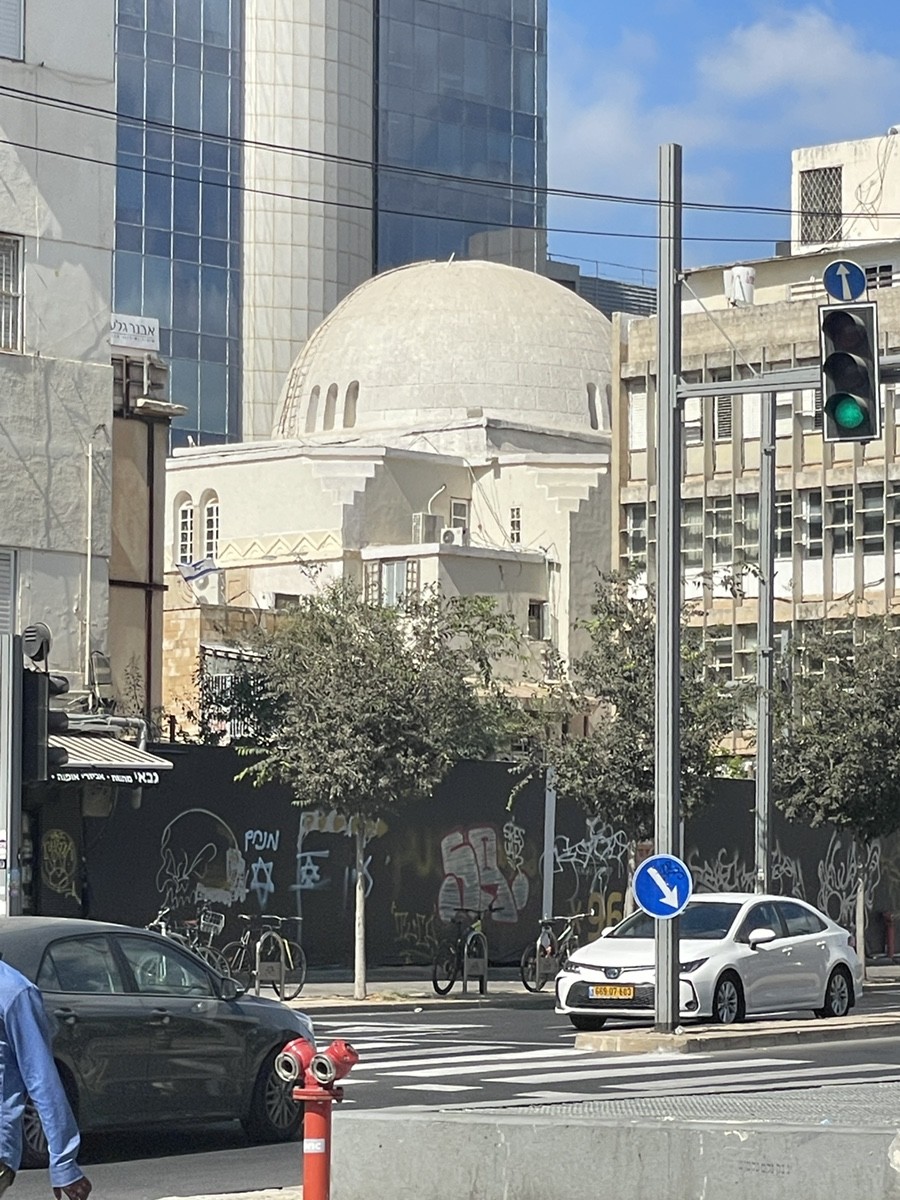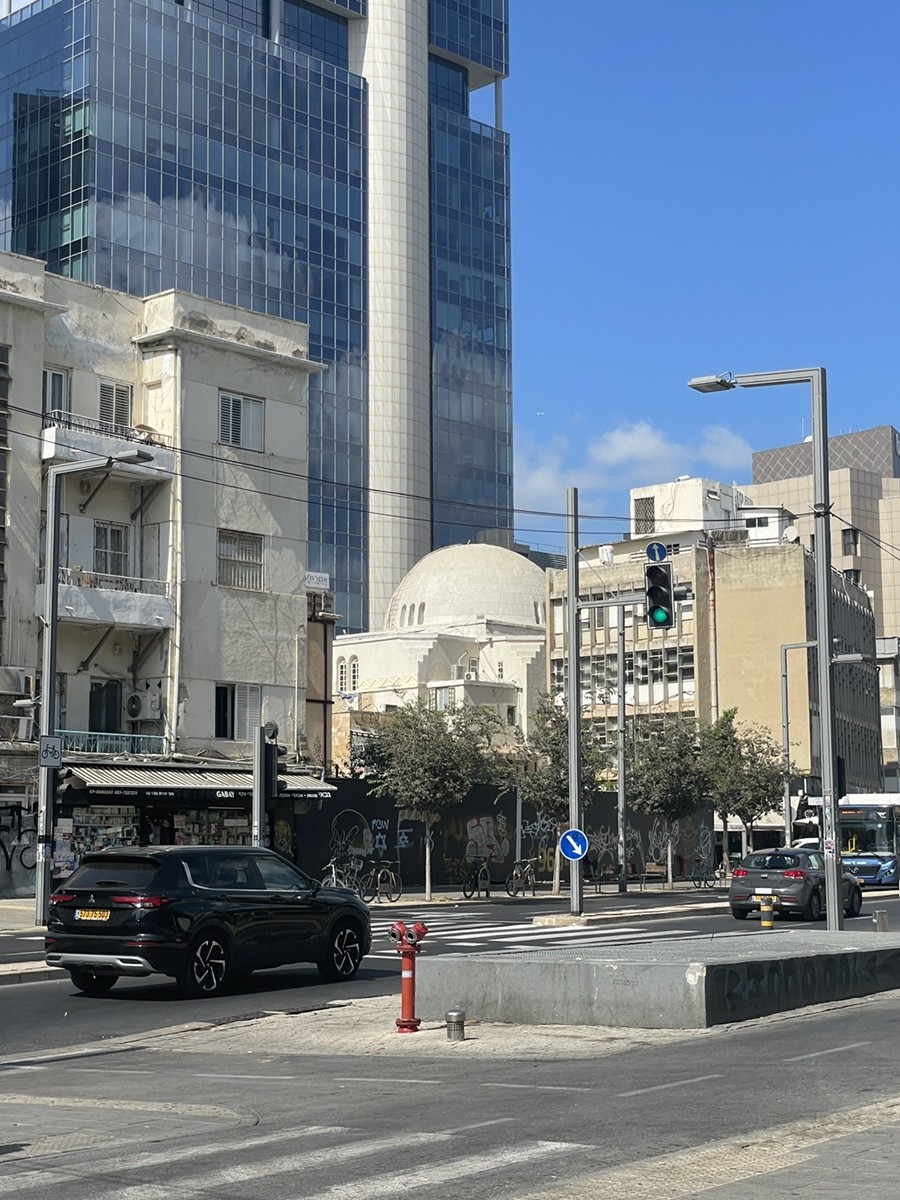

In the 1920s, Tel Aviv was still searching for its identity. To the north stretched Rothschild Boulevard with its elegant European villas and the grand Ashkenazi synagogue; to the south roared **Rutenberg’s power station** in the Hashmal quarter, designed by **Yosef Berlin**. Between them lay an empty stretch of land — a void that unexpectedly became the stage for the Sephardic community’s voice.
Two Jews from Aden, **Shalom Aharon Levy** and **Shlomo Yitzhak Cohen**, had purchased the plot as an investment. But the city’s Sephardic Chief Rabbi, **Ben-Zion Meir Hai Uziel**, saw a greater purpose: to create a spiritual and communal centre for the Jews of the East — one that would stand on equal footing with the Ashkenazi institutions. At his urging, the land was donated, and in **1923** the cornerstone was laid for a new synagogue.
Architect **Yosef Berlin**, the same who designed the nearby power station, envisioned a monumental building in the **Art Deco** style, crowned with a high dome. Thus rose the **Ohel Moed Synagogue** — the “Tent of Meeting.” Its biblical name referred to the Tabernacle in the desert, where all the tribes of Israel gathered—and in this new city, it served the same role. It became a house of prayer and assembly for diverse eastern communities: Adeni, Bukharan, and Balkan Jews. The **Sephardic rabbinate** of Tel Aviv also found its home here.
The logic of history is clear: the Ashkenazim had built the centre, while the Sephardim sought their own voice → the land fell into the hands of generous Adeni donors → Rabbi Uziel insisted on its sacred use → Berlin gave the vision architectural form. And just as Moses’ tent once stood at the heart of the encampment, so **Ohel Moed** rose in the middle of Tel Aviv — declaring that the city was not only a “little Europe,” but a home for all the traditions of the Jewish people.
You’ll walk through the very heart of old Tel Aviv — a neighbourhood where orange groves, missionary dreams, and the glow of early electricity all intertwined. The journey begins at the Model Farm and its iconic water tower, the birthplace of irrigation in Eretz Israel. From there, we’ll trace the footsteps of the Ishma’ilov family — Mashhadi *anusim* who built rental houses and inns for Persian merchants, yet lost much of their fortune under dramatic circumstances. We’ll pause in Gan HaHashmal, the city’s second public garden, which has witnessed the romance of the 1920s, decline, and the wave of 21st-century gentrification. The walk culminates at the grand Ohel Moed Synagogue — the “Tent of Meeting” — where eastern communities claimed their rightful place in the growing city. This is a journey through layers of time: from water to electricity, from merchant houses to gardens and synagogues — a story where every street guards a secret and every building speaks for its generation.