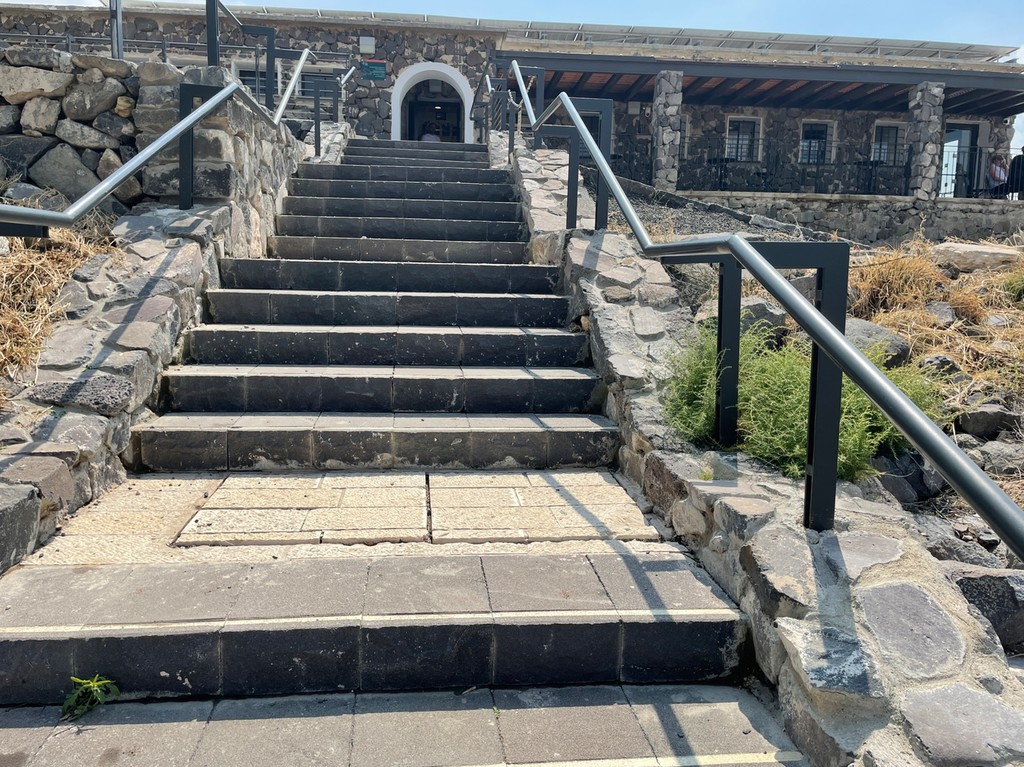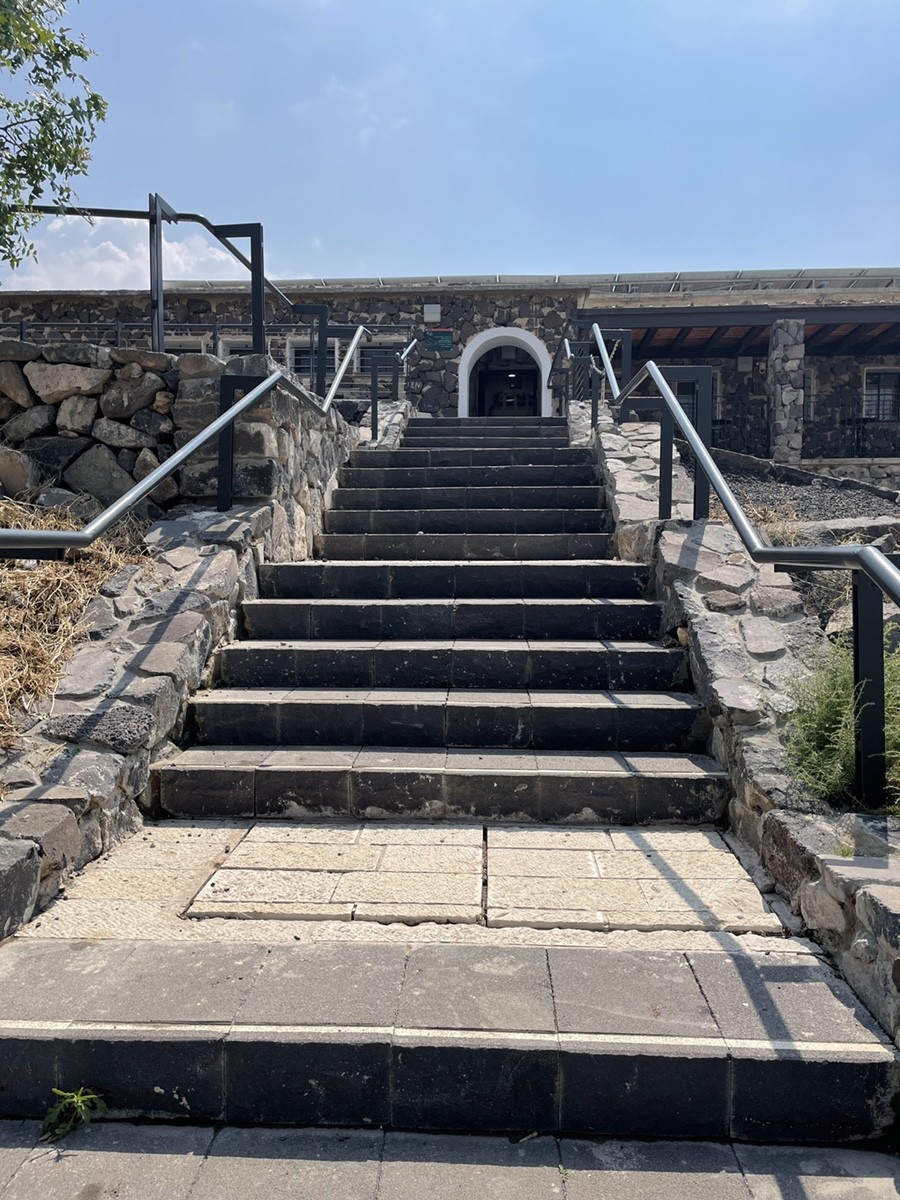

This part of the story really explains why you see those weird concrete buildings alongside the ancient temples. It wasnwasn'tt a military base; it was a high-stakes survival game.
Here is the breakdown of the Susita Dining Hall and the "Sniper War:
"The Bold Midnight Raid (1948) Before May 1948, the Syrians owned the mountain. They used the height to rain fire down on Kibbutz Ein Gev. But on the night of June 17th, 1948, a group of kibbutzniks and soldiers pulled off a daring night attack and snatched the mountain back. From that moment until 1967, Susita became a lonely Israeli island in a Syrian sea.
- The Dining Hall: Architecture of Survival The concrete buildings you see today—especially the Dining Hall—weren't built for comfort; they were built to hide.
The Sniper Threat: The Syrian army held the higher Golan plateau right above the city. They could see almost everything. To an Israeli soldier, a simple walk to lunch could be a death sentence.
Invisible Walls: Engineers designed the dining hall and the paths leading to it using deep trenches and concrete "scr" en" (p"rapets). They completely blocked the Syrian line of sight.
Camouflage: From the Syrian side, the dining hall was designed to look like just another pile of old rocks or a collapsed ancient wall. It was a 1950s building pretending to be a 2,000-year-old ruin.
- A 20-Year Siege For nearly 20 years, these soldiers lived in a state of constant "sie"e."
The Lunch Run: Operation logs show that every movement to the dining hall was treated like a tactical mission.
The Safe Zone: Inside those thick concrete walls was the only place soldiers could actually breathe and relax for a second, knowing a sniper couldn't hit them.
- The Basalt Illusion What's trippy for visitors today is that everyone—the ancient Romans, the Syrians in '48,'48d the Israelis in '50—' sed the same black basalt stone. It makes the whole mountain look like one giant, unified fortress, even though the different parts were built thousands of years apart.
Today, those concrete ruins are the only "mod" rn" gh "sts left in the city, standing as a reminder that for 19 years, this wasn't a tourist park—it was a literal shield for the people living in the valley below.
Imagine the perfect spring morning in Israel—the sun is warm but not yet "blasting" you, and the air smells like fresh wildflowers. It's the absolute best time to grab the keys and head to the eastern side of the Kinneret (Sea of Galilee).
First Stop: Kursi & The Views Start your day at Kursi. It's this massive Byzantine monastery ruin where the vibe is just... super chill. You can walk across ancient mosaics and literally feel the history. But don't stay too long because the drive up the mountain is even better. Make sure to pull over at Mitzpe Nukieb. On a clear day, the view is insane—you see the whole blue "bowl" of the Kinneret stretched out from Tiberias to the Golan Heights. It's one of those "stop and just stare" moments.
The Main Event: Susita (Hippos) Then, you've got the crown jewel: Susita. It's like a ghost city sitting on a hill. They call it the "Pompeii above the lake." You'll walk through the old Roman forum and see giant columns that were knocked down by an earthquake 1,200 years ago and just... stayed there. It's got this wild mix of ancient Roman vibes and old Israeli military outposts.
Trains and Hummus When you head back down, swing by the old Tzemach train station. It's been restored and feels like a movie set from the early 1900s—back when trains ran all the way from Haifa to Damascus.
Finally, once you're officially "toured out," hit up Hummus Eliyahu at the Tzemach junction. Trust me, a warm bowl of creamy hummus with olive oil, fluffy pita, and a solid cup of coffee is the only way to end a trip like this.
Pro tip: Go right now while it's spring. The Golan is bright green, and everything looks like a masterpiece.