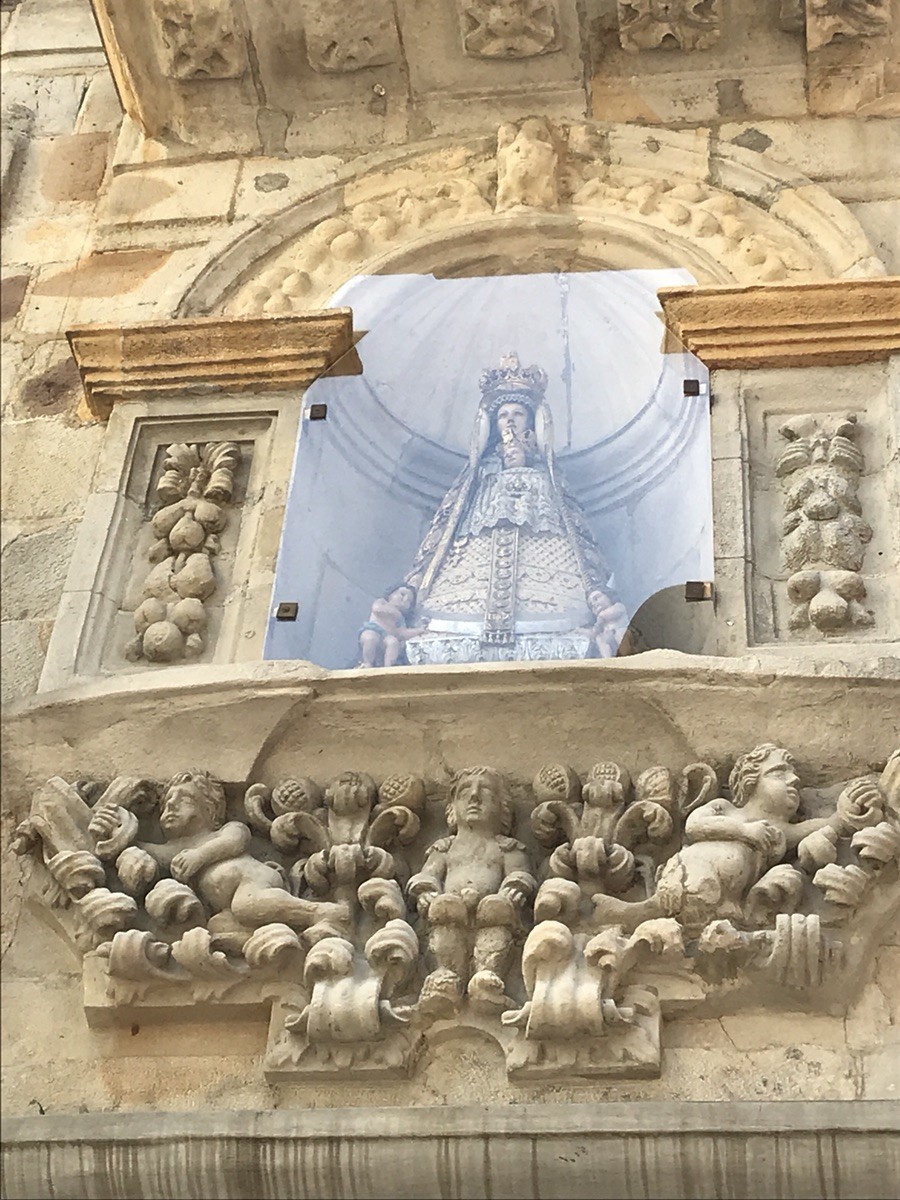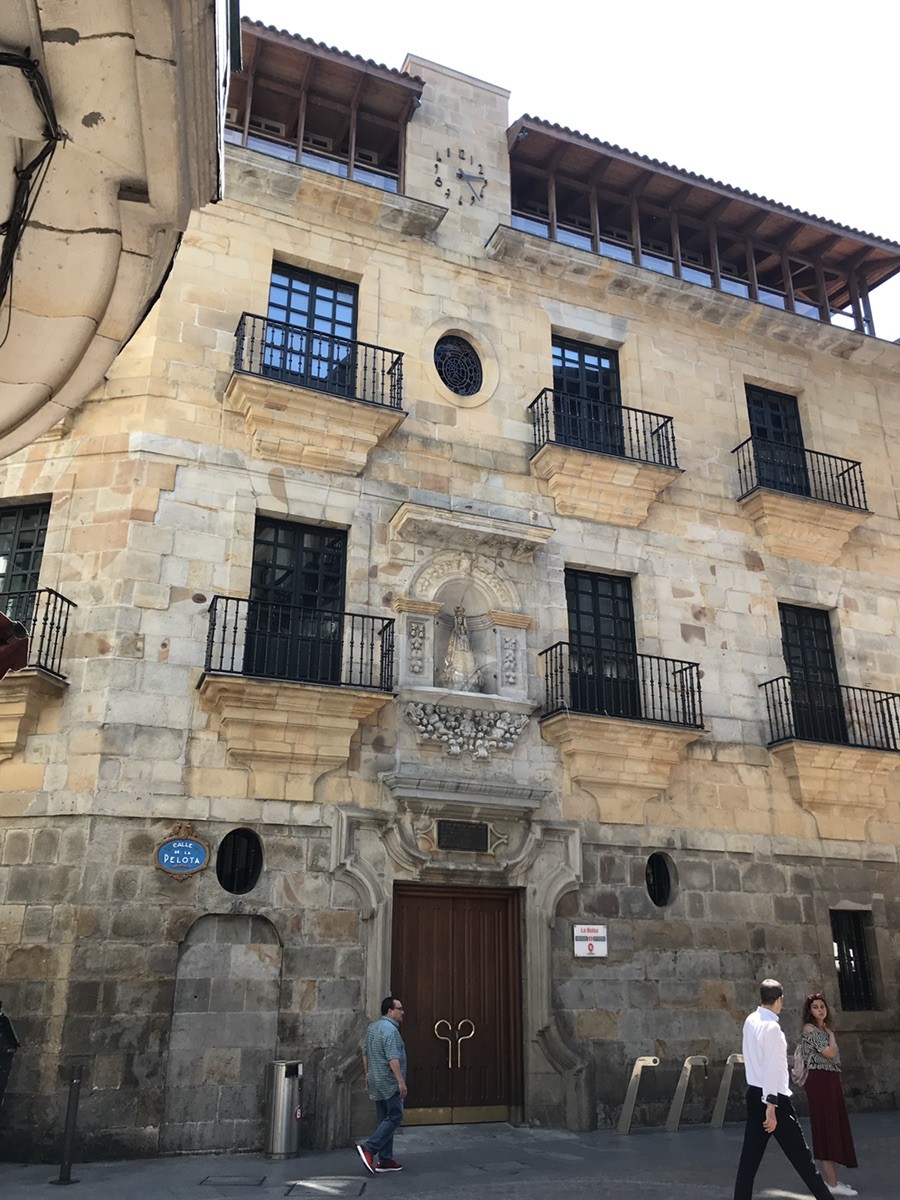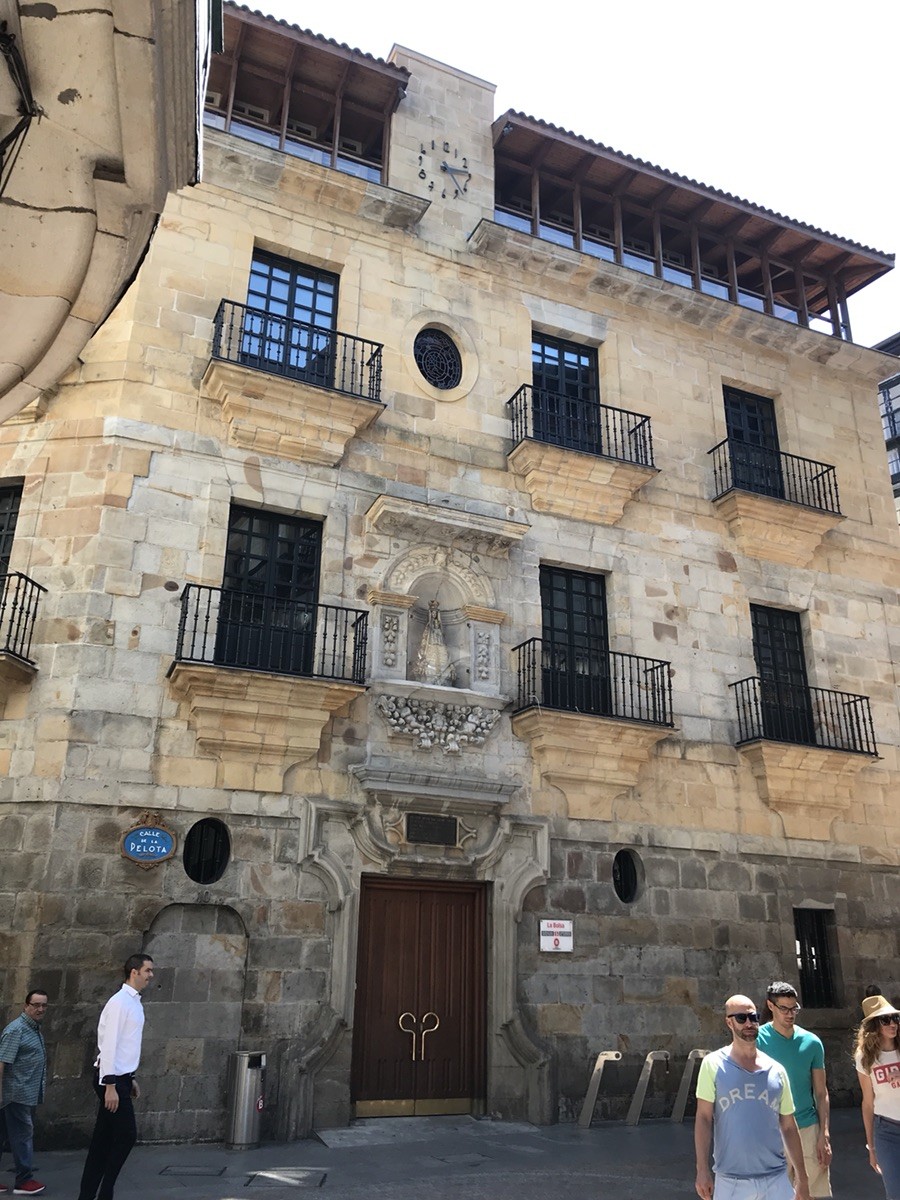

In the old heart of Bilbao, there’s a spot where the city seems to tie sky, stone, and water together. On Pelota Street, number 10, stands an eighteenth-century palace known as Palacio Yohn — though locals simply call it La Bolsa. Built around 1727 on the site of a medieval tower, it’s a classic Baroque townhouse: heavy stone walls, tall windows, family crests carved above the doors. But if you lift your eyes a little higher, you’ll see something far more delicate — a small niche with the image of the Virgin of Begoña.
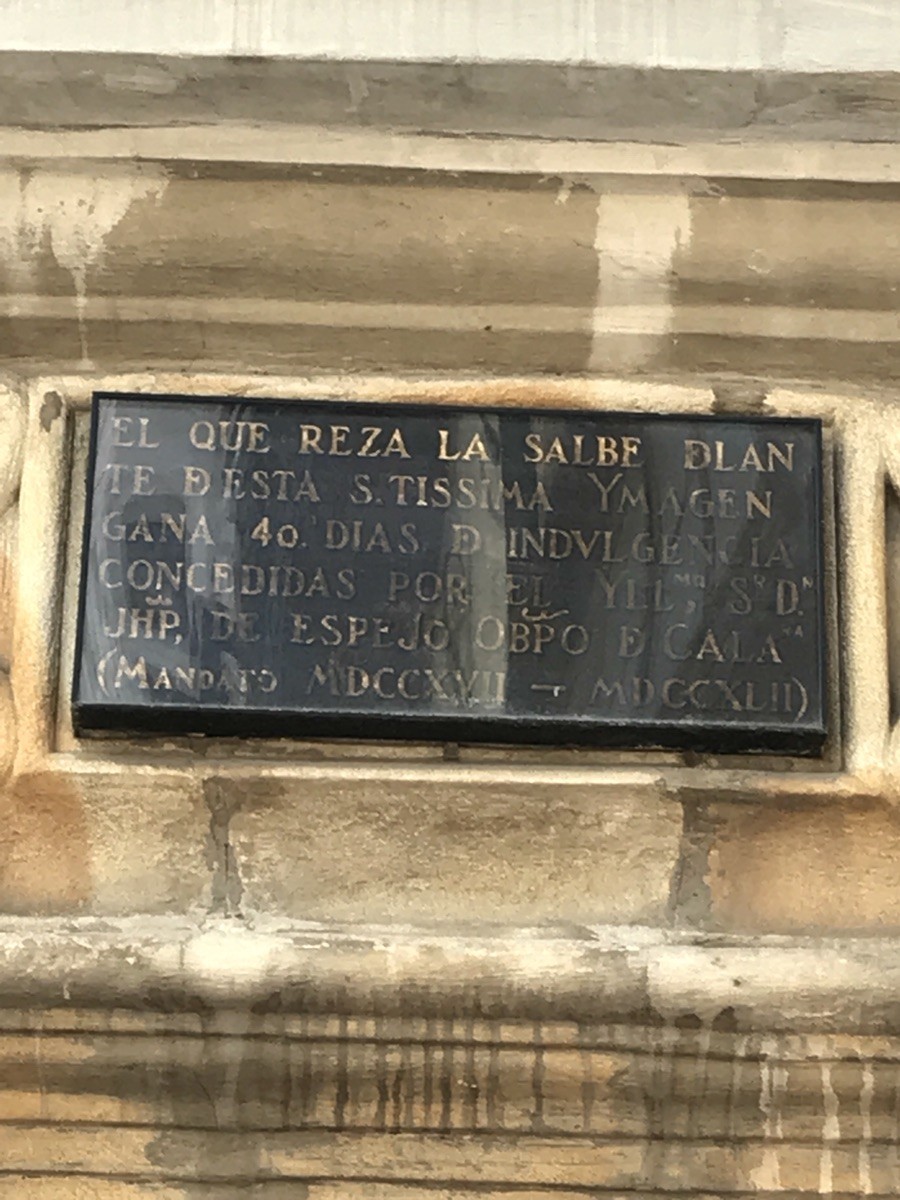
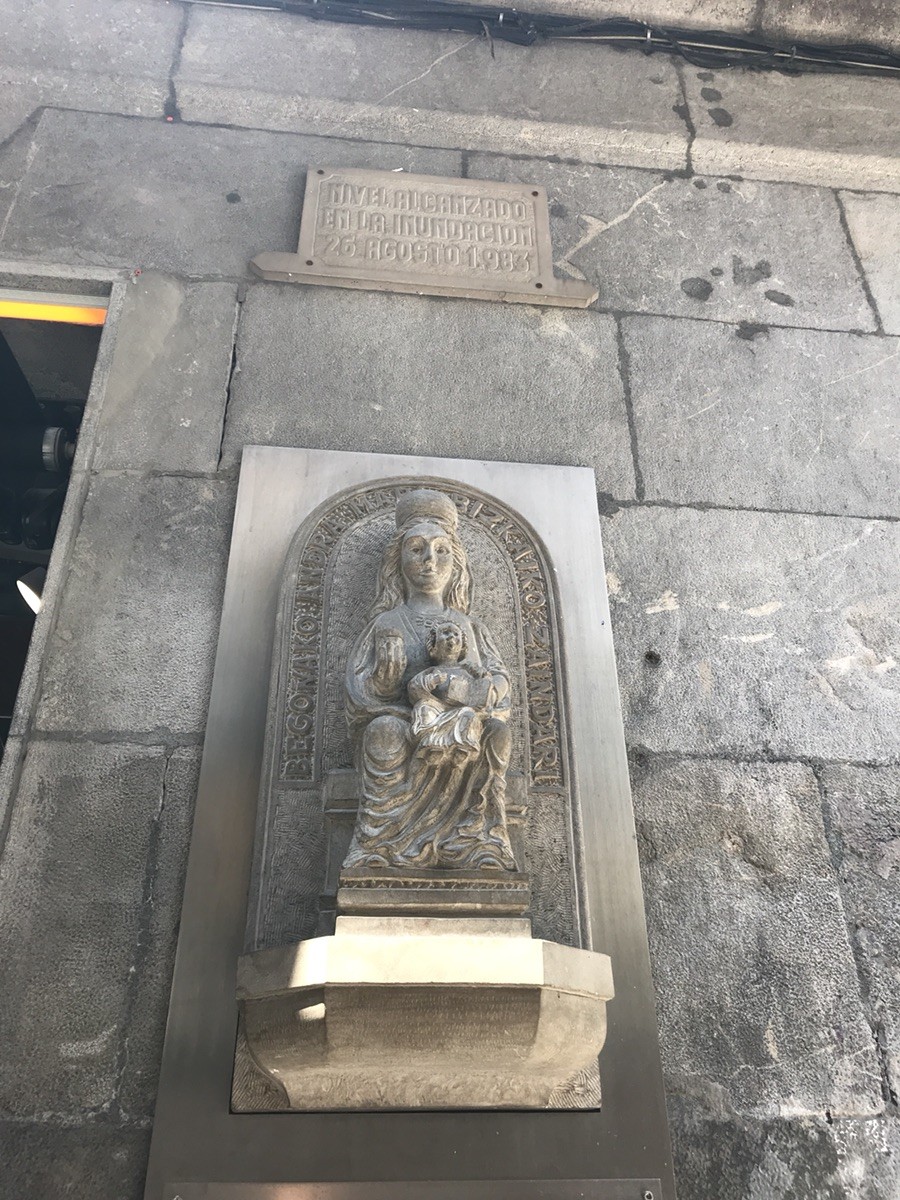
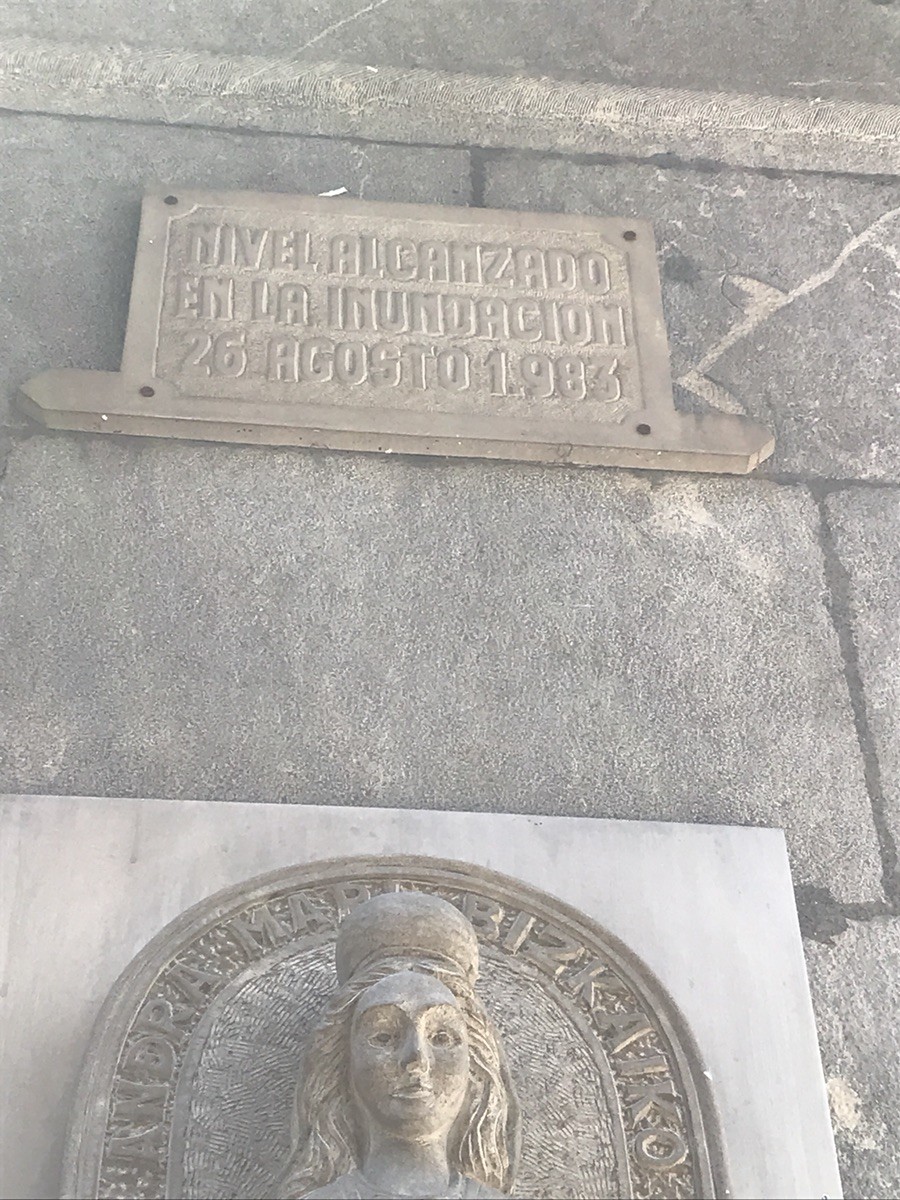
Begoña is the patroness of Bilbao and the whole region of Biscay. This little figure is a copy of the statue from the basilica on the hill, and from her niche she looks down on the old streets as if keeping watch over the people passing below. Beneath her is a marble plaque marking the height the water reached during the catastrophic flood of August 26, 1983. The old town was submerged, but the community survived — and the image of Begoña was placed here as a quiet thank-you for that survival. Walk past it today, and it still feels as if she’s holding the city in her hands.
There’s another small wonder tucked into these narrow lanes. Near the Cathedral of Santiago, set quietly into the pavement, is a tiny metal star — izarra in Basque. It marks the one point in all of Casco Viejo from which you can see the white silhouette of the Basilica of Begoña on the distant hill. Stand on the star, face north, and the buildings suddenly part just enough for the basilica to appear — a small revelation you discover with your own eyes.
And all of this lies within a few steps: a Baroque palace, a star hidden in the cobblestones, and a guardian figure watching over a city that learned to rise after the water. A little geometry of Bilbao — stone, faith, and a hint of quiet magic.
This walk is not just a stroll through the old streets of Bilbao — it’s a walk through the city’s memory. Everything here lies close together: the Gothic gates of Santiago Cathedral, the soft murmur of the “Dog Fountain,” the old plaques still marked by the great flood of 1983, and Bar Xukela, where the spirit of the city lives in a glass of wine and laughter at the counter.
We follow Calle del Perro and Calle de la Torre — streets whose names hold legends and the echoes of ancient family towers. At every turn, a story appears: about the Basques, whose defensive towers once stood like the stone houses of Svaneti; about Diego María Gardoki, the first Basque to serve as Spain’s ambassador to the United States; about Pedro Arrupe, the Basque priest who renewed the Jesuit order in the twentieth century.
Our path leads to the river where ships once lined the shore, and finally to El Arenal — the park where Bilbao learned to breathe, to love, and to listen to the quiet rhythm of its own heart.
This walk is like a simple, honest conversation with the city — no guide, no performance, just a friend who has a story waiting behind every corner.