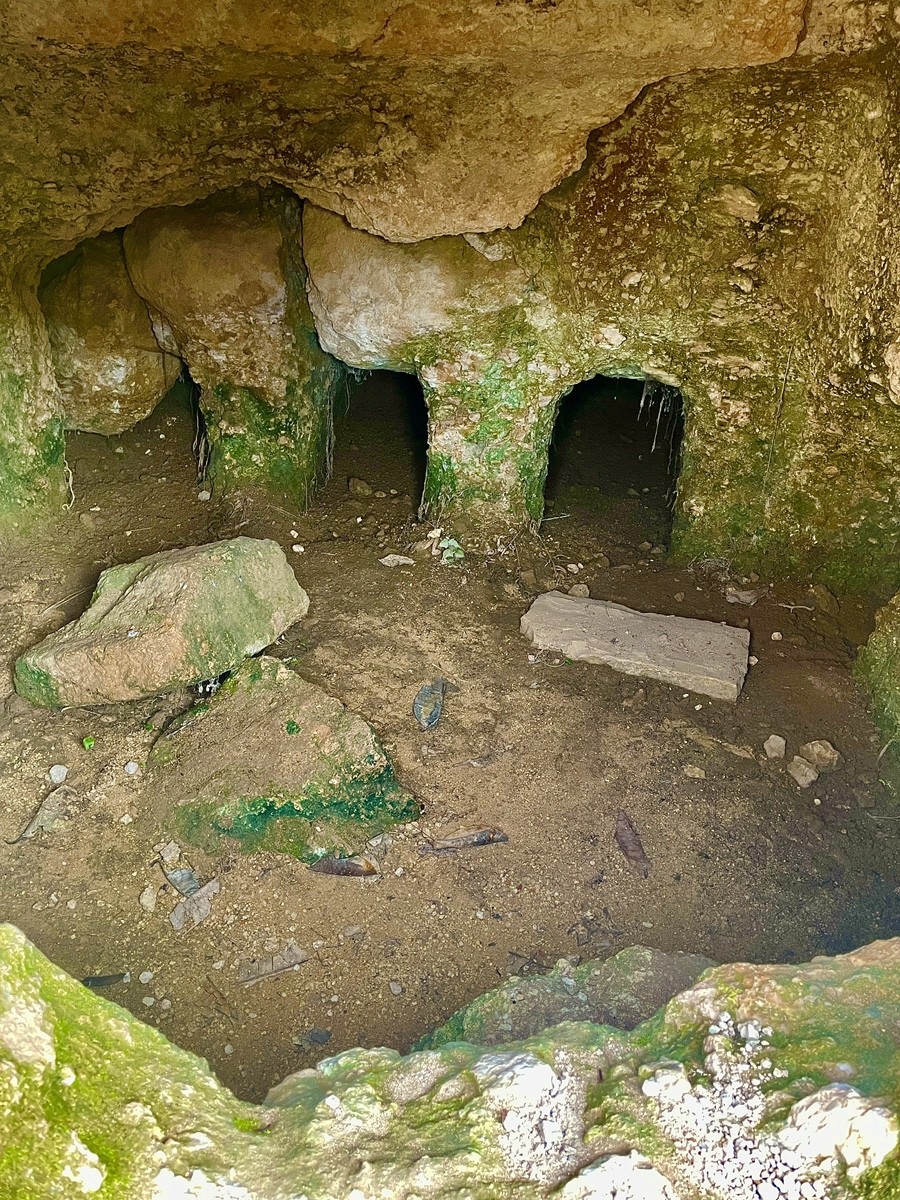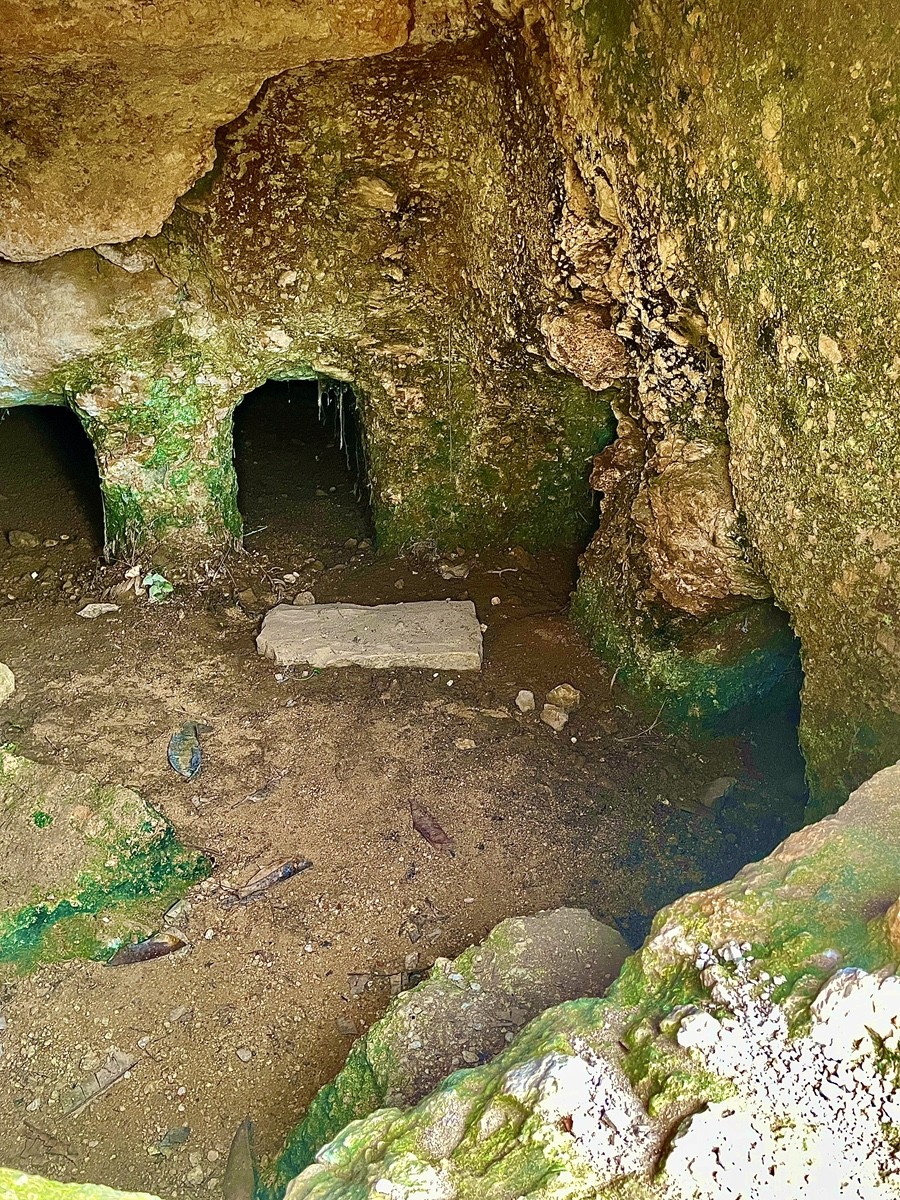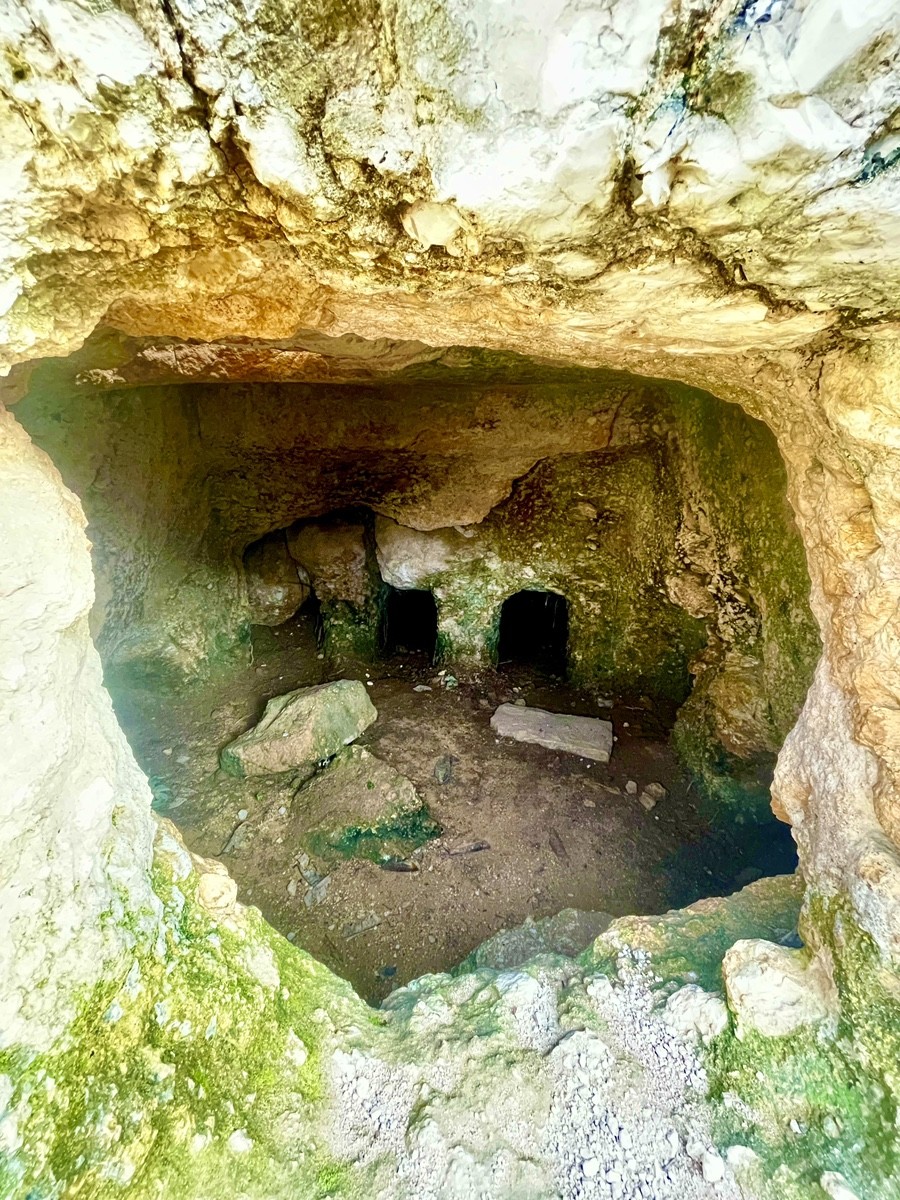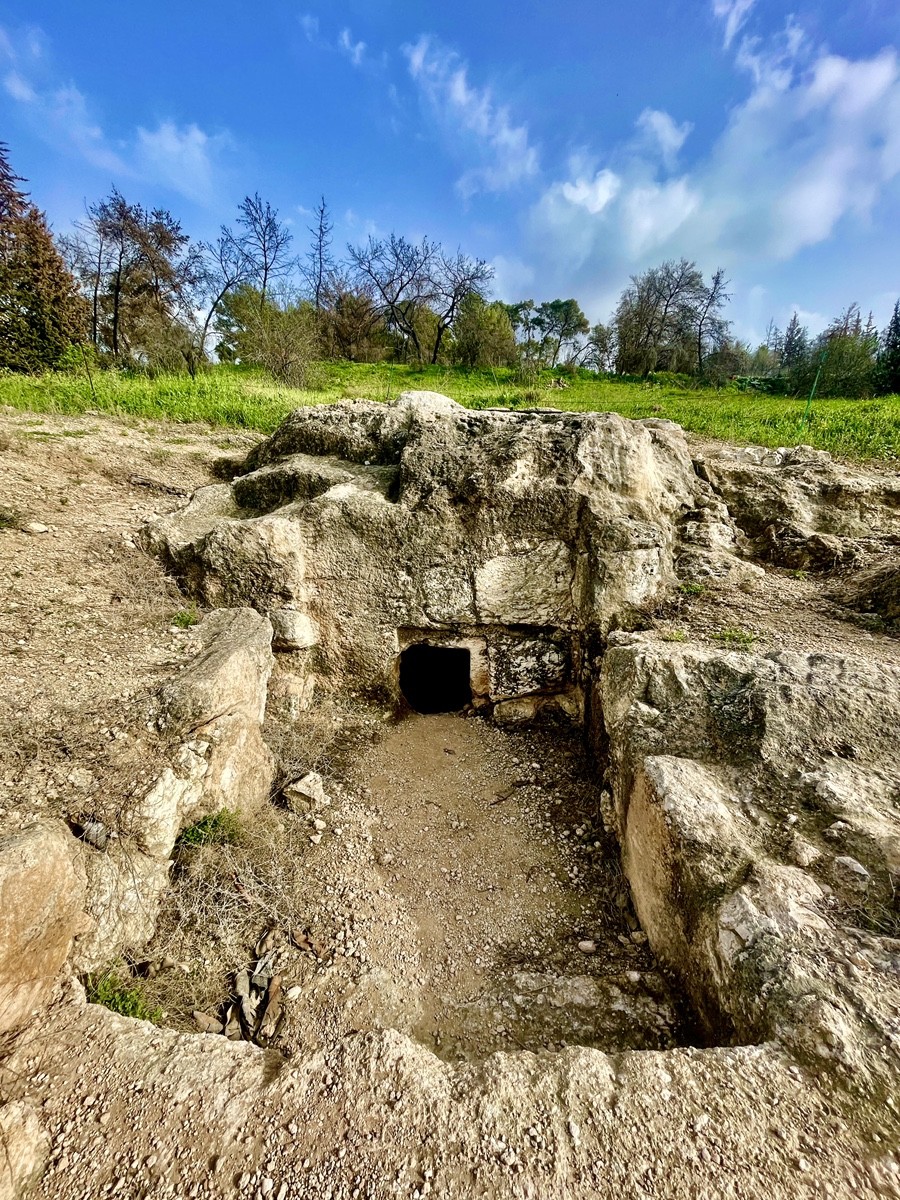

The limestone hills of Hammat (ancient Emmaus) are honeycombed with Jewish rock-cut tombs from the Second Temple period. These structures featured narrow entrances for rolling stones (golel) and deep kokhim (niches) for primary burial, reflecting the high status of the town's residents.
Across two millennia, this land has been a theatre of war for Romans, Crusaders, Ottomans, and modern armies. Yet, a remarkable continuity persists: while houses and fortifications were repeatedly levelled, the cemeteries—both ancient Jewish tombs and the Muslim graves of Imwas—remain largely untouched. This "unwritten rule" of not warring with the dead has turned Canada Park into a unique space where burial grounds of conflicting eras coexist. In a region of extreme political and military turbulence, the sanctity of the grave has proven stronger than the impulse to destroy, preserving the only physical link to the generations who once called this valley home.
The journey begins in the almond blossoms of Sha'alvim, a landscape rooted in the biblical territory of the Tribe of Dan. The route advances through the strategic Latrun salient to Emmaus-Nicopolis, where Byzantine ruins mark the site of the Resurrection—land preserved through the spiritual visions of Mariam Baouardi and the patronage of Countess Beatrice de Saint-Cricq.
The path culminates at the abandoned Sorek Station, a limestone relic of the Ottoman Empire. Inside, time stands still among concrete staircases and iron veterans: a freight car and a yellow-marked shunting locomotive from the 1990s. A modest monument to Egyptian labourers honours the unsung builders of the WWI era. Today, the silence of these rusted tracks is only broken by the whistle of modern trains, bridging the gap between ancient faith and imperial ruins.