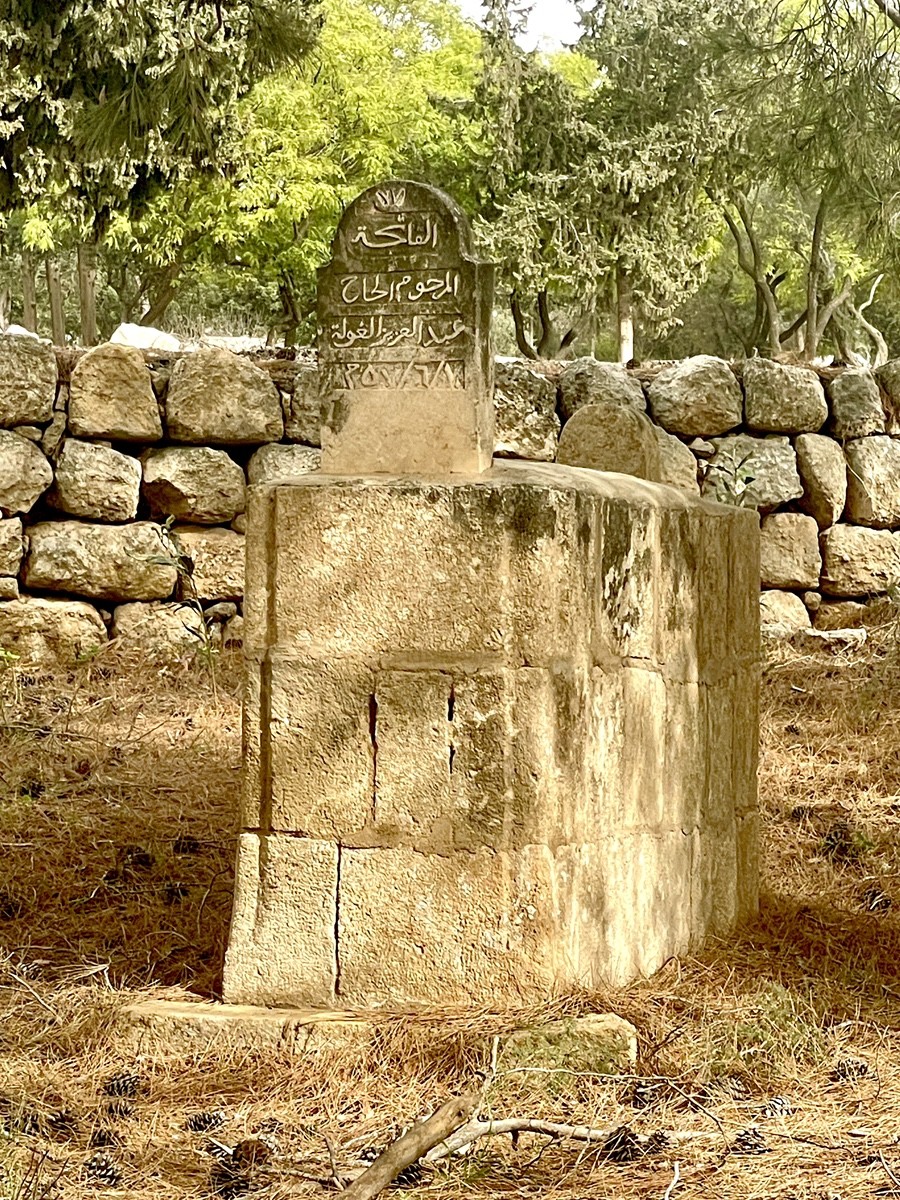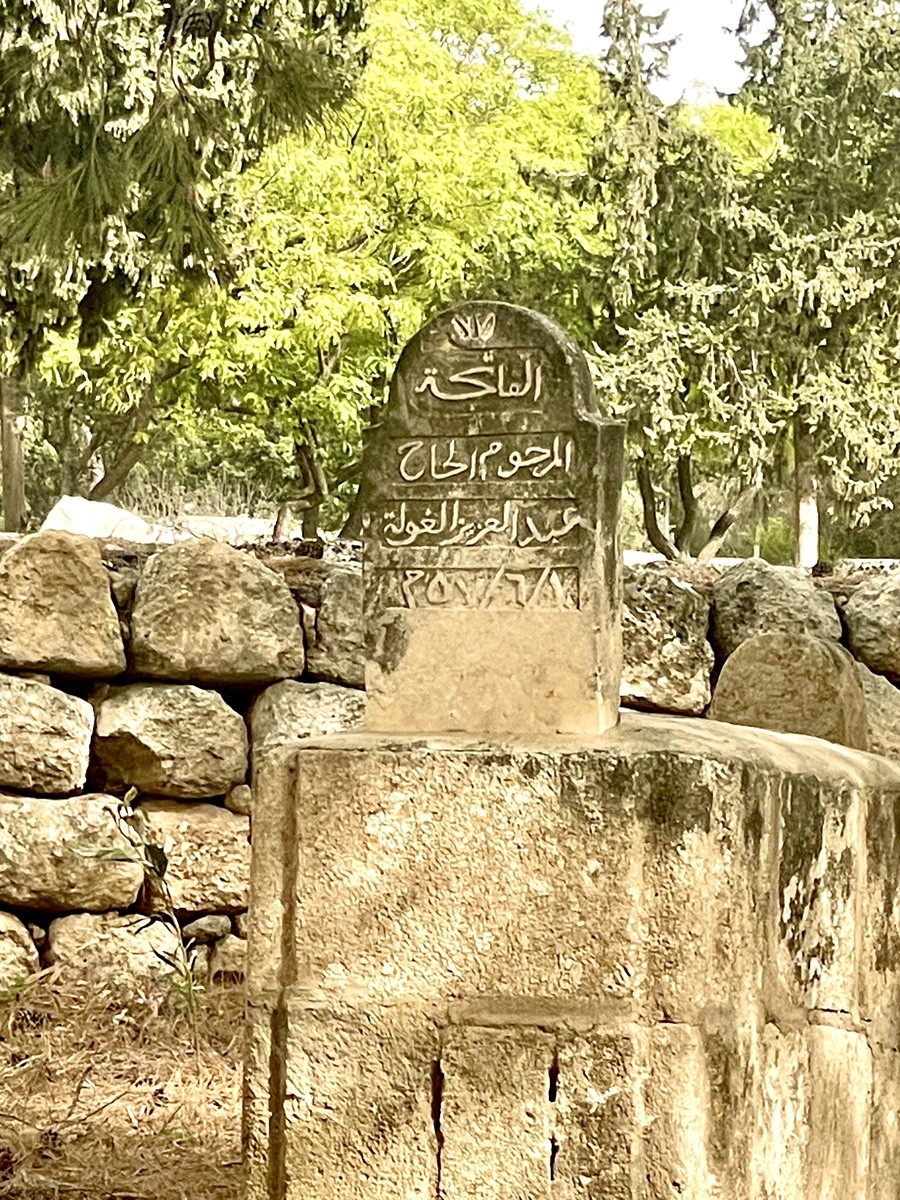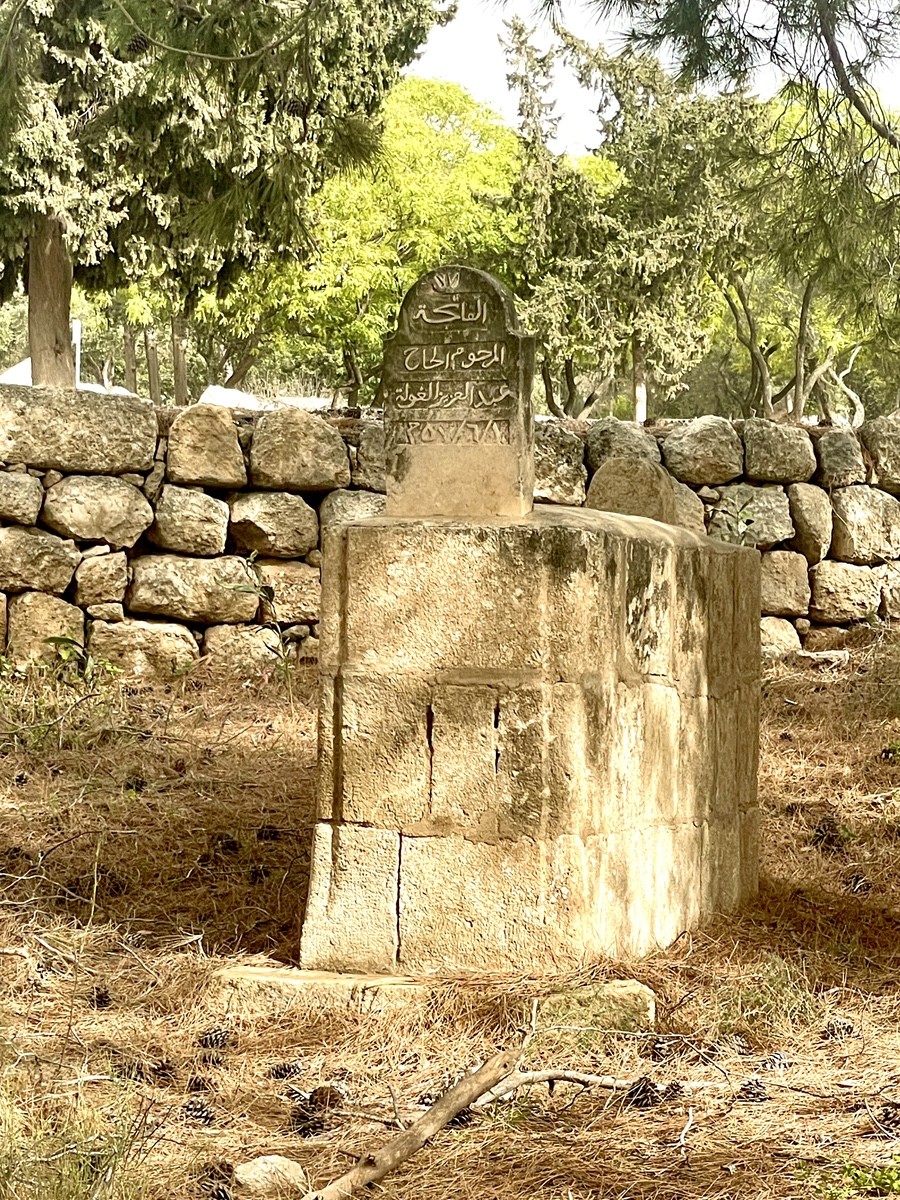

Among the remnants of the Imwas cemetery stands the tombstone of Hajj Abd al-Aziz al-Ghoul, a prominent member of one of the village's most respected clans (hamulas). The title "Hajj" signifies his completed pilgrimage to Mecca, while his surname links him to a family of landowners who for generations cultivated the olive groves of the Ayalon Valley.
In June 1967, the Al-Ghoul family was displaced within hours, joining the 2,000 residents forced toward refugee camps in the West Bank and Jordan. Because Israeli engineering units spared religious sites and graves during the demolition of the village, this headstone remains one of the few physical proofs of the family's presence. Today, the cemetery serves as a rare point of return, where descendants are occasionally permitted to gather to honour the ancestors whose labour once defined the local economy.
The journey begins in the almond blossoms of Sha'alvim, a landscape rooted in the biblical territory of the Tribe of Dan. The route advances through the strategic Latrun salient to Emmaus-Nicopolis, where Byzantine ruins mark the site of the Resurrection—land preserved through the spiritual visions of Mariam Baouardi and the patronage of Countess Beatrice de Saint-Cricq.
The path culminates at the abandoned Sorek Station, a limestone relic of the Ottoman Empire. Inside, time stands still among concrete staircases and iron veterans: a freight car and a yellow-marked shunting locomotive from the 1990s. A modest monument to Egyptian labourers honours the unsung builders of the WWI era. Today, the silence of these rusted tracks is only broken by the whistle of modern trains, bridging the gap between ancient faith and imperial ruins.