
Hard times create strong people; strong people create good times; good times create weak people; and weak people bring back hard times. So goes the cycle of a city’s life. The **Ishma’ilov family**, descendants of the Mashhadi *anusim*, belonged to the generation of the strong — those who built Tel Aviv in the 1920s and 1930s. They erected income houses across the city and supported their fellow Mashhadi merchants wherever they could. Even their hotel on Montefiore Street was conceived as a haven for traders in carpets and jewellery from Persia and Bukhara.
But every story has a turning point. In **1935**, **Ephraim Ishma’ilov** died at the age of 53, and soon after, his heirs lost control of the *Hotel Ishma’ilov*. According to family lore, the building was gambled away to Georgian real estate merchants named **Makhashvili**. Both municipal records and business archives now preserve traces of this tale. Later generations of the family emigrated to the **United States**, settling in **Great Neck, New York**, where a large Mashhadi community eventually formed. In Tel Aviv, their name still appeared in the address books of the 1950s — no longer as developers, but simply as residents.
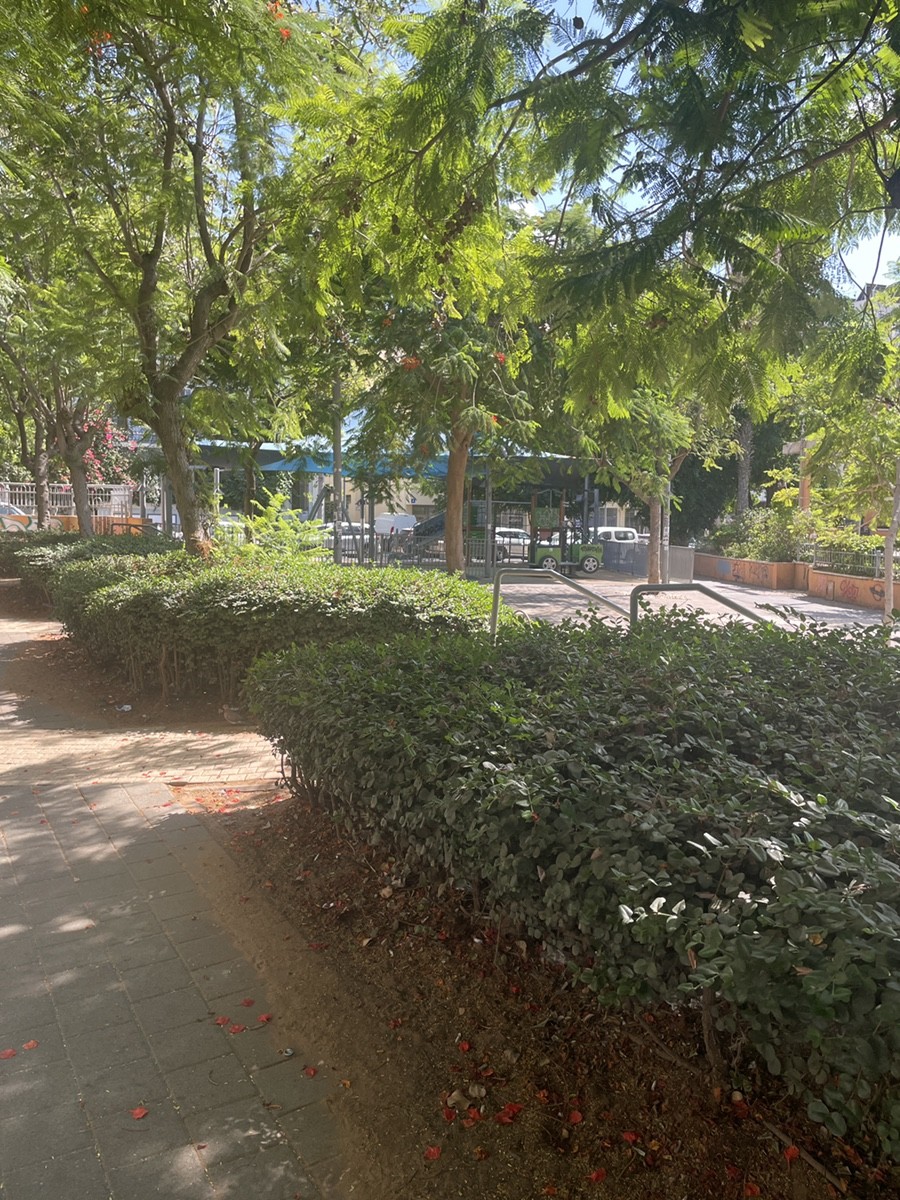
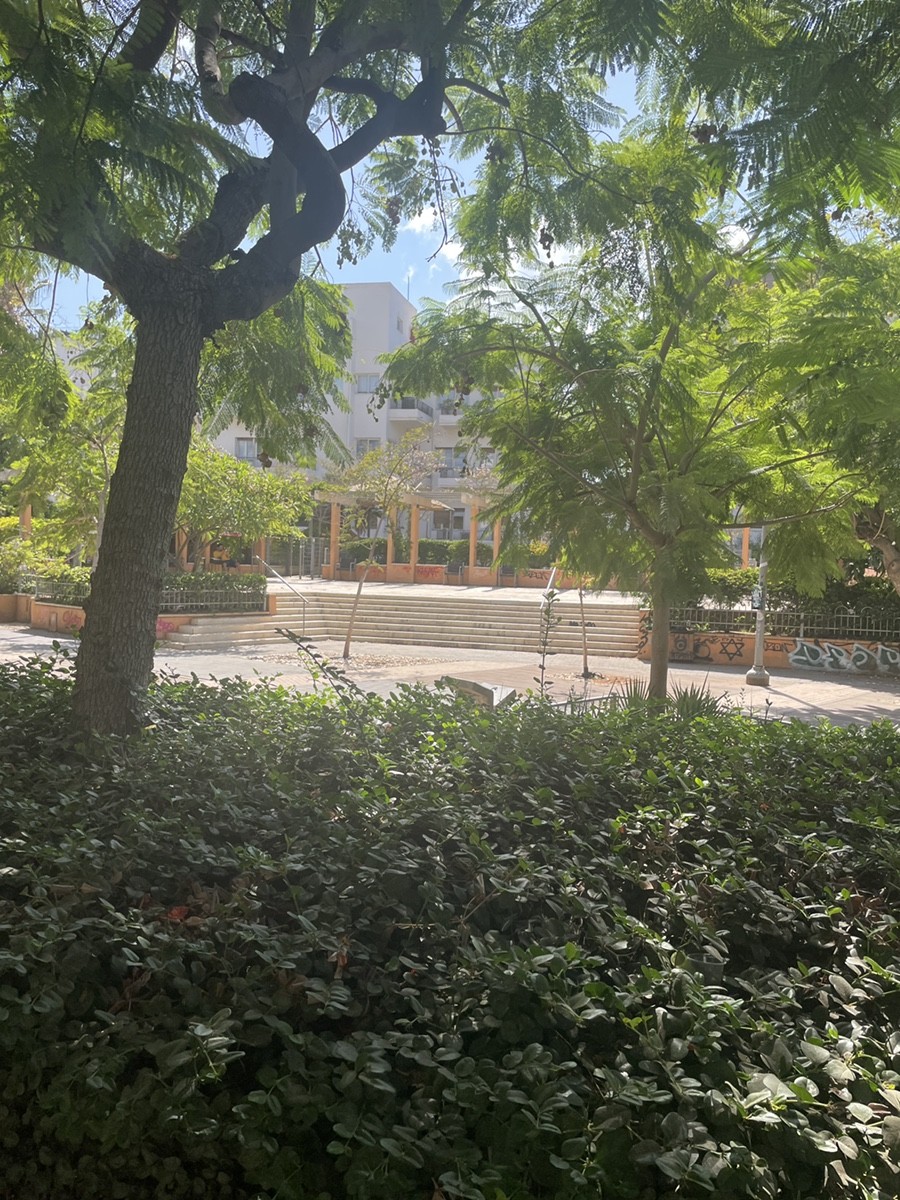
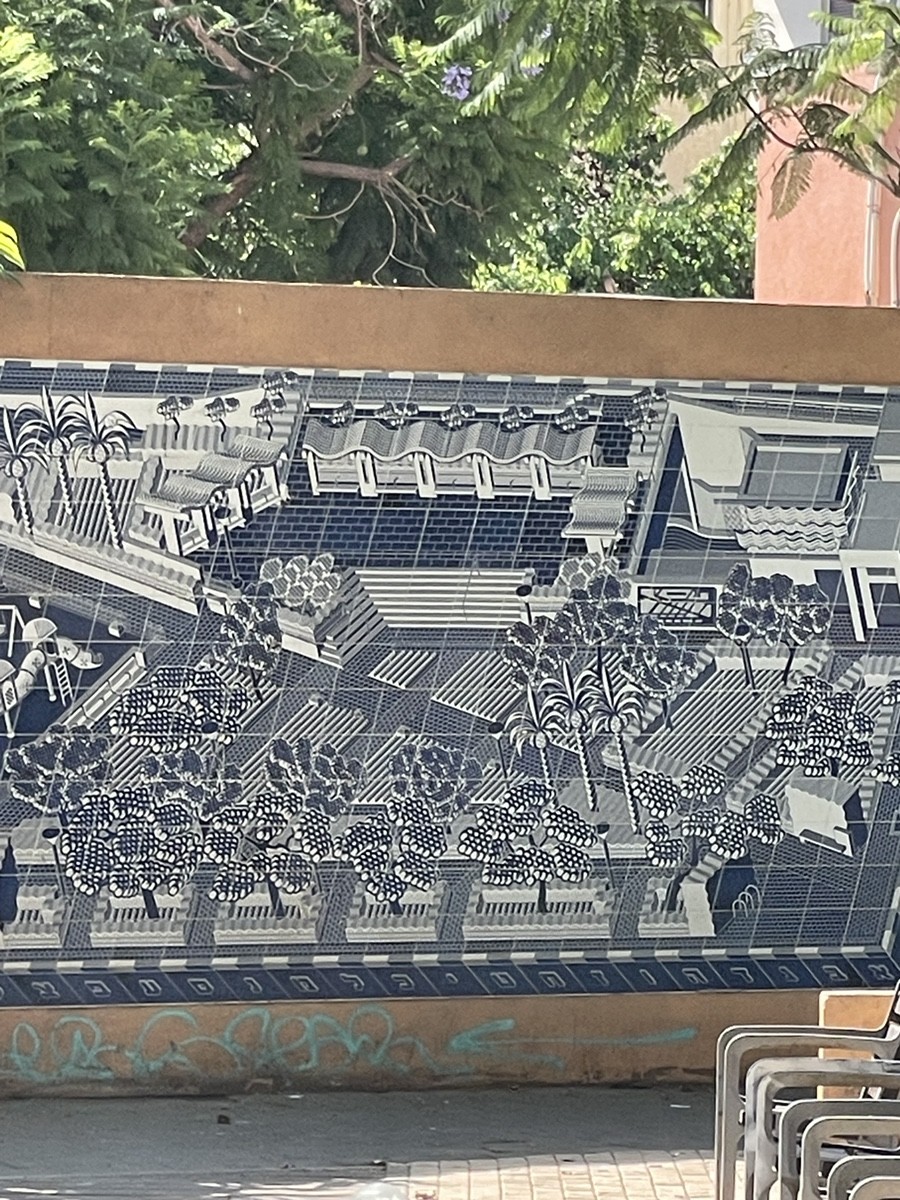
The same rhythm of rise and decline shaped the fate of the garden before us. Originally called **Gan HaSharon**, it was the first official public green space of the **Ramat HaSharon quarter**, founded in 1921–1922. The initiative came from residents, and Tel Aviv’s municipality granted the land under **Meir Dizengoff**. Unlike the empty lots between Allenby and Ahad Ha’am — once private, informal playgrounds for neighbourhood children — Gan HaSharon was planned as a true European-style park.
Over the decades, the garden mirrored the neighbourhood’s fortunes: from the romantic “**Garden of Kisses**” of the 1920s to a zone of decline, drugs, and prostitution by the late 20th century. Only after **2000** did it begin to bloom again — gentrification, restoration, cafés, and design studios reshaped its life. And now, standing here, one can sense the city’s eternal rhythm repeating itself: hard times, strong people, good times — and once more, the trials that precede renewal.
You’ll walk through the very heart of old Tel Aviv — a neighbourhood where orange groves, missionary dreams, and the glow of early electricity all intertwined. The journey begins at the Model Farm and its iconic water tower, the birthplace of irrigation in Eretz Israel. From there, we’ll trace the footsteps of the Ishma’ilov family — Mashhadi *anusim* who built rental houses and inns for Persian merchants, yet lost much of their fortune under dramatic circumstances. We’ll pause in Gan HaHashmal, the city’s second public garden, which has witnessed the romance of the 1920s, decline, and the wave of 21st-century gentrification. The walk culminates at the grand Ohel Moed Synagogue — the “Tent of Meeting” — where eastern communities claimed their rightful place in the growing city. This is a journey through layers of time: from water to electricity, from merchant houses to gardens and synagogues — a story where every street guards a secret and every building speaks for its generation.