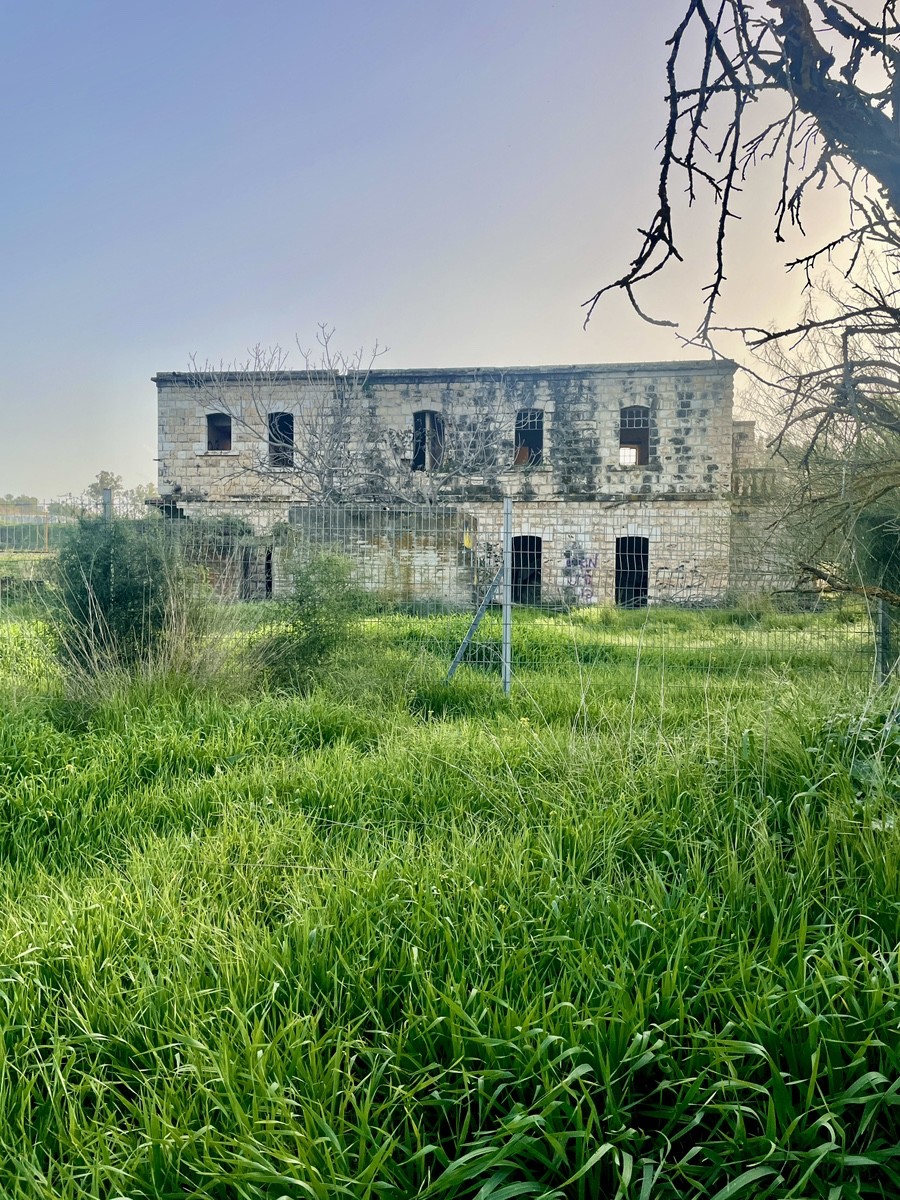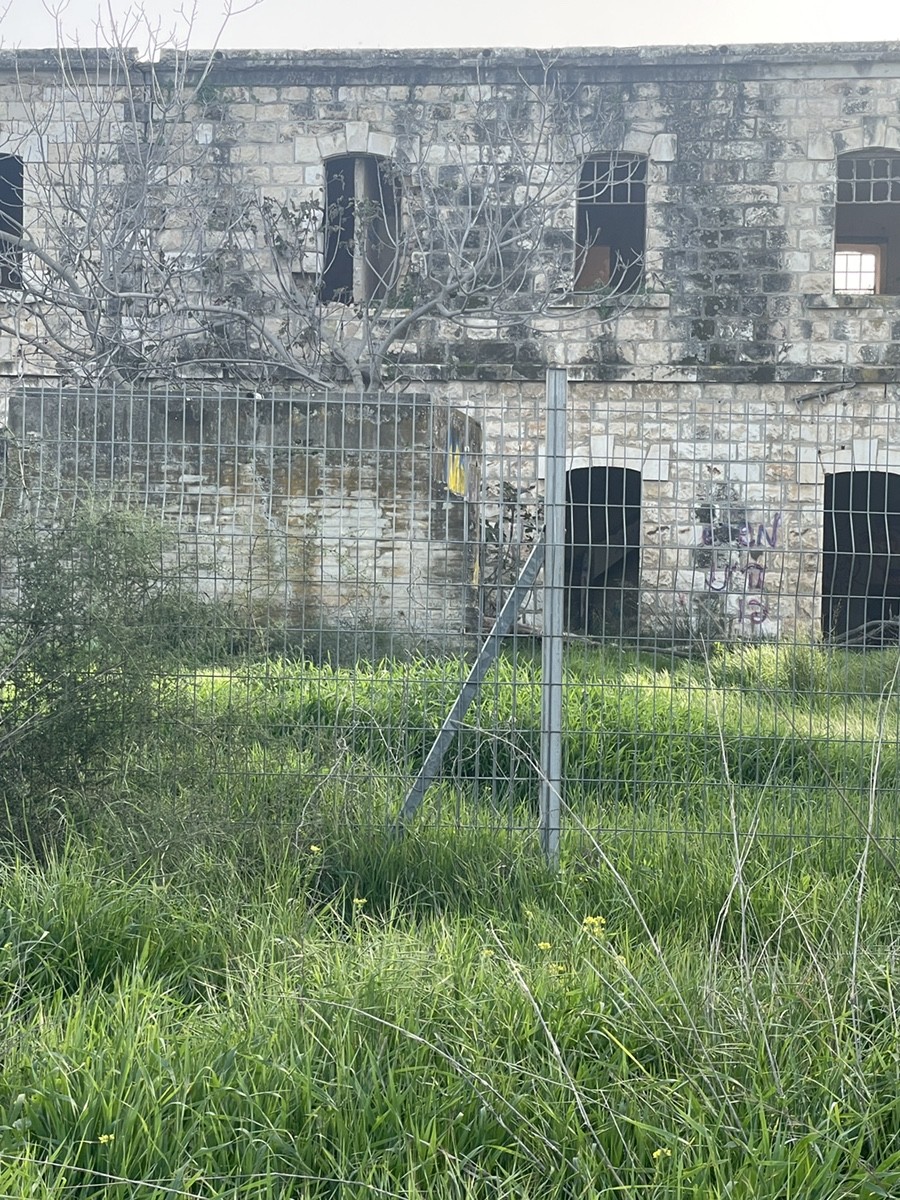

The station building at Wadi es-Sarar (Junction Station) is a quintessential example of late 19th-century Ottoman railway architecture. Now a majestic ruin lost in tall grass, the two-story structure is built from massive blocks of Jerusalem limestone. Its design is defined by a sturdy lower tier of rough-hewn stone and an upper level featuring the characteristic arched windows and doorways typical of the period.
The weathered façade, stained with the patina of time and dampness, tells a story of lost prestige. Historically, the ground floor served as the functional heart of the station—housing the waiting room, ticket office, and telegraph—while the upper floor provided living quarters for the station master and his family. Today, the empty window frames and hollow interior give the building the appearance of a stone skeleton, standing as a silent witness to the era when the steam engine first conquered the Judean wilderness.
The journey begins in the almond blossoms of Sha'alvim, a landscape rooted in the biblical territory of the Tribe of Dan. The route advances through the strategic Latrun salient to Emmaus-Nicopolis, where Byzantine ruins mark the site of the Resurrection—land preserved through the spiritual visions of Mariam Baouardi and the patronage of Countess Beatrice de Saint-Cricq.
The path culminates at the abandoned Sorek Station, a limestone relic of the Ottoman Empire. Inside, time stands still among concrete staircases and iron veterans: a freight car and a yellow-marked shunting locomotive from the 1990s. A modest monument to Egyptian labourers honours the unsung builders of the WWI era. Today, the silence of these rusted tracks is only broken by the whistle of modern trains, bridging the gap between ancient faith and imperial ruins.