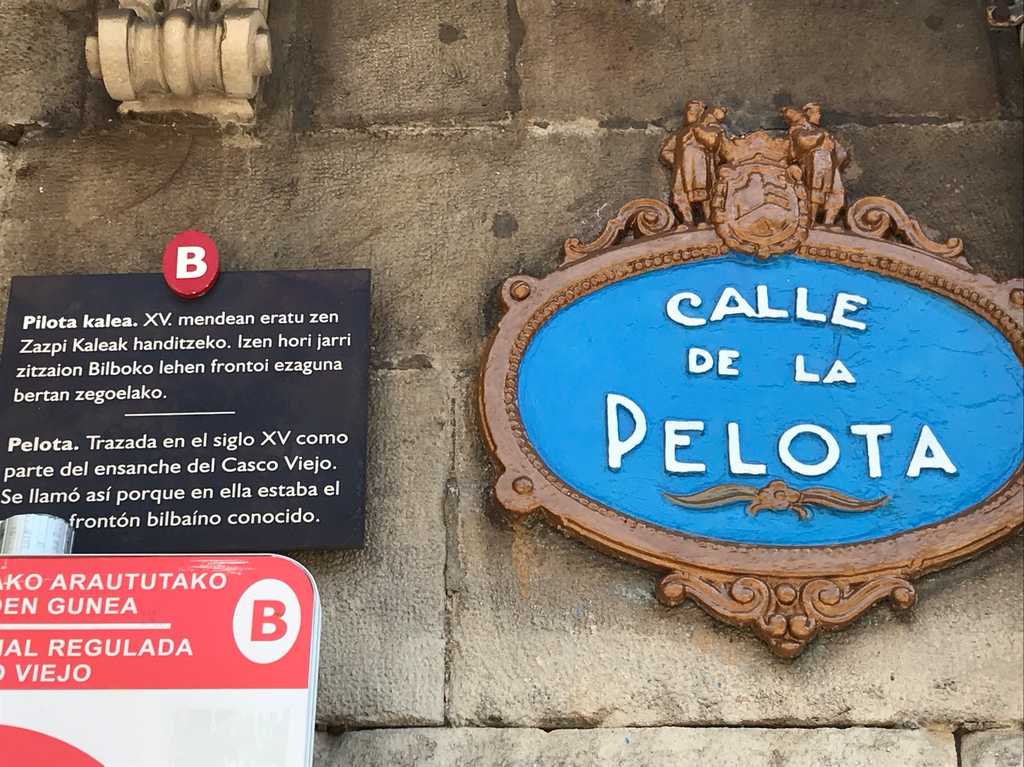

Calle de la Pelota is one of those names that carries more history than the street itself seems willing to reveal at first glance. The plaque here tells the story. The word pelota means “ball,” and in Basque the street is Pilota kalea — a direct nod to the traditional Basque sport pelota, the ancestor of both squash and tennis.
The street was laid out in the 15th century, when Bilbao began to grow beyond its original Seven Streets — Zazpi Kaleak. And right here stood the city’s first known fronton: an open playing court with a single wall where players batted a ball using their hands or early wooden rackets. The games became so popular that the entire street took on the fronton’s name. It wasn’t just a sports venue — it was a gathering place, a slice of Basque culture where competition, community, and everyday life blended naturally.
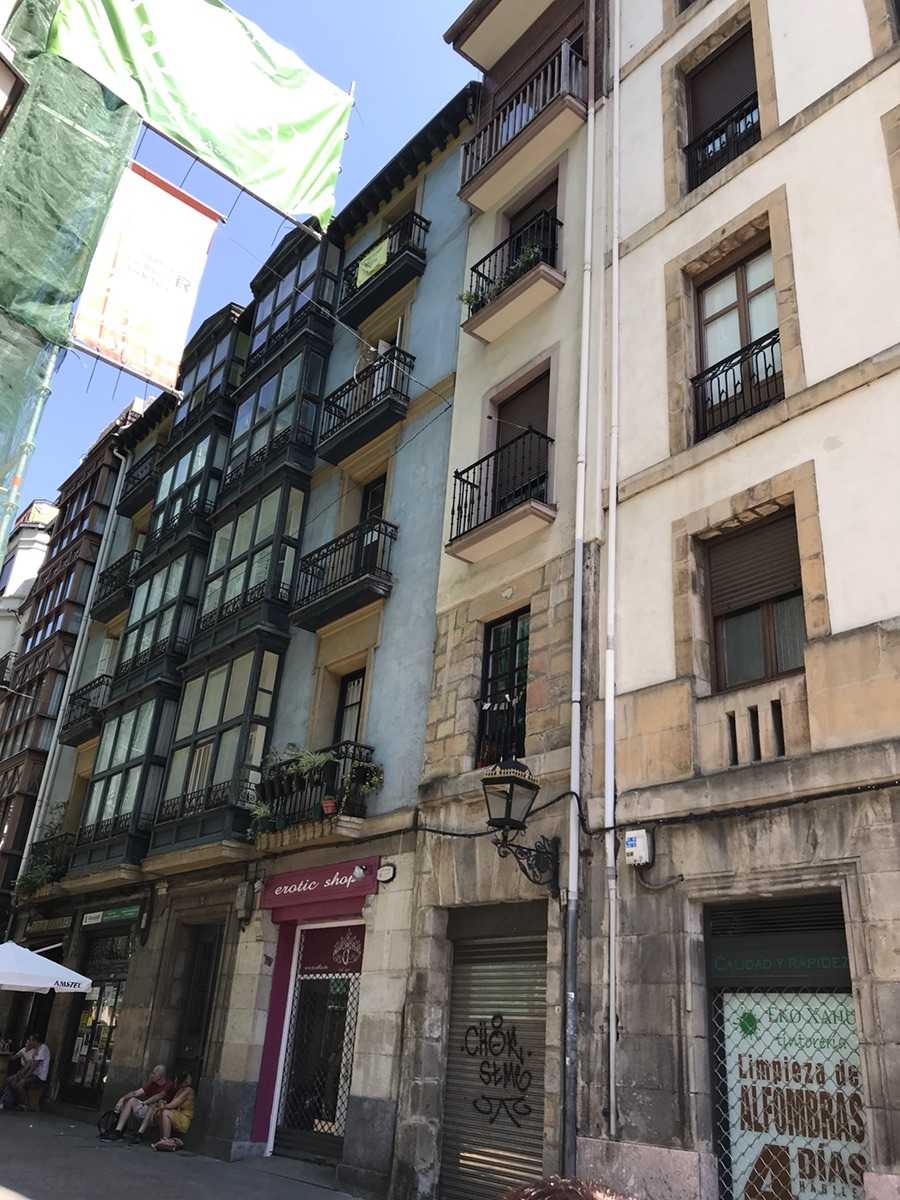
Today Calle de la Pelota feels like any other lively pedestrian street in Casco Viejo — bars, shops, people drifting by — but its name still holds the echo of those matches: the thud of the ball, the shouts of players, the crowd pressing in. It’s a reminder that in Bilbao, sport has always been a way of being together.
This walk is not just a stroll through the old streets of Bilbao — it’s a walk through the city’s memory. Everything here lies close together: the Gothic gates of Santiago Cathedral, the soft murmur of the “Dog Fountain,” the old plaques still marked by the great flood of 1983, and Bar Xukela, where the spirit of the city lives in a glass of wine and laughter at the counter.
We follow Calle del Perro and Calle de la Torre — streets whose names hold legends and the echoes of ancient family towers. At every turn, a story appears: about the Basques, whose defensive towers once stood like the stone houses of Svaneti; about Diego María Gardoki, the first Basque to serve as Spain’s ambassador to the United States; about Pedro Arrupe, the Basque priest who renewed the Jesuit order in the twentieth century.
Our path leads to the river where ships once lined the shore, and finally to El Arenal — the park where Bilbao learned to breathe, to love, and to listen to the quiet rhythm of its own heart.
This walk is like a simple, honest conversation with the city — no guide, no performance, just a friend who has a story waiting behind every corner.