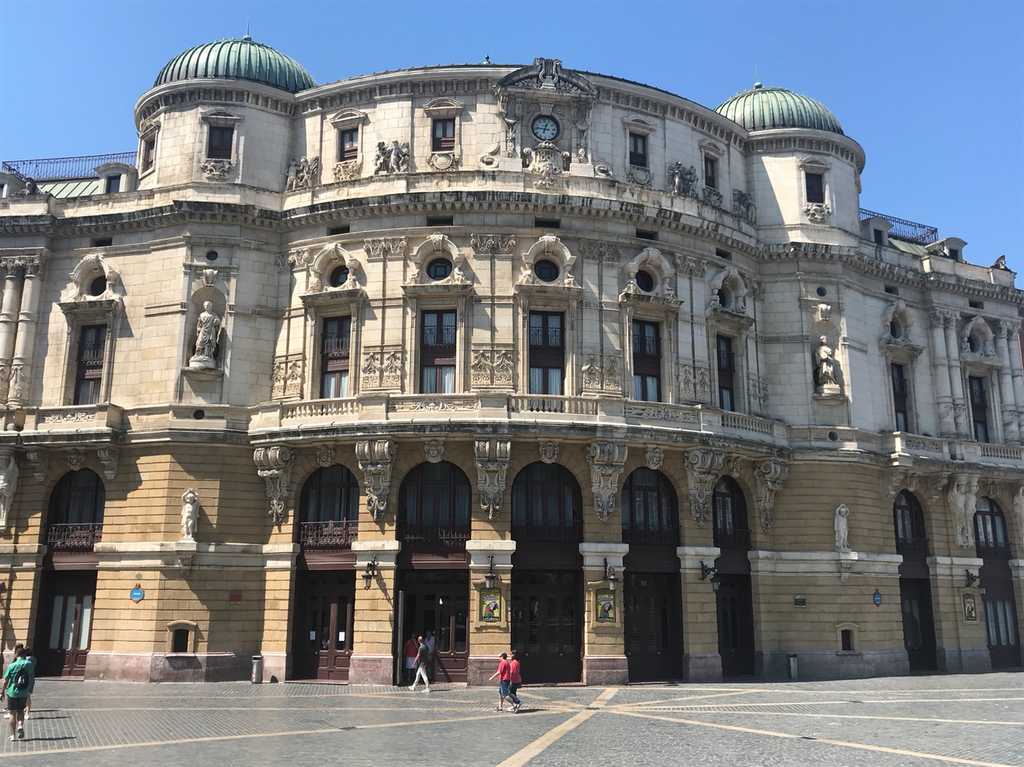

The Arriaga Theater stands right beside the water on Arenal Square, like a guardian at the entrance to the old town. Its façade immediately draws the eye: pale stone, soft curves, domes, and sculptural details give it the elegance of a Paris opera house set on Basque soil. Built in the late nineteenth century by architect Joaquín Rucoba, it became one of the first major symbols of Bilbao’s cultural awakening at a time when the city was quickly shifting from a port to a rising European bourgeois center.
The theater is named after Juan Crisóstomo de Arriaga — a composer who died at twenty and is often called the “Basque Mozart.” His music opened the theater’s very first performance, and since then Arriaga has remained the heart of Bilbao’s performing arts.
The building has lived through more than one disaster. In 1914 it burned almost completely, and in 1983 it was flooded during the devastating river surge. Each time it rose again, reopening its doors — much like the city itself, stubbornly returning to life.
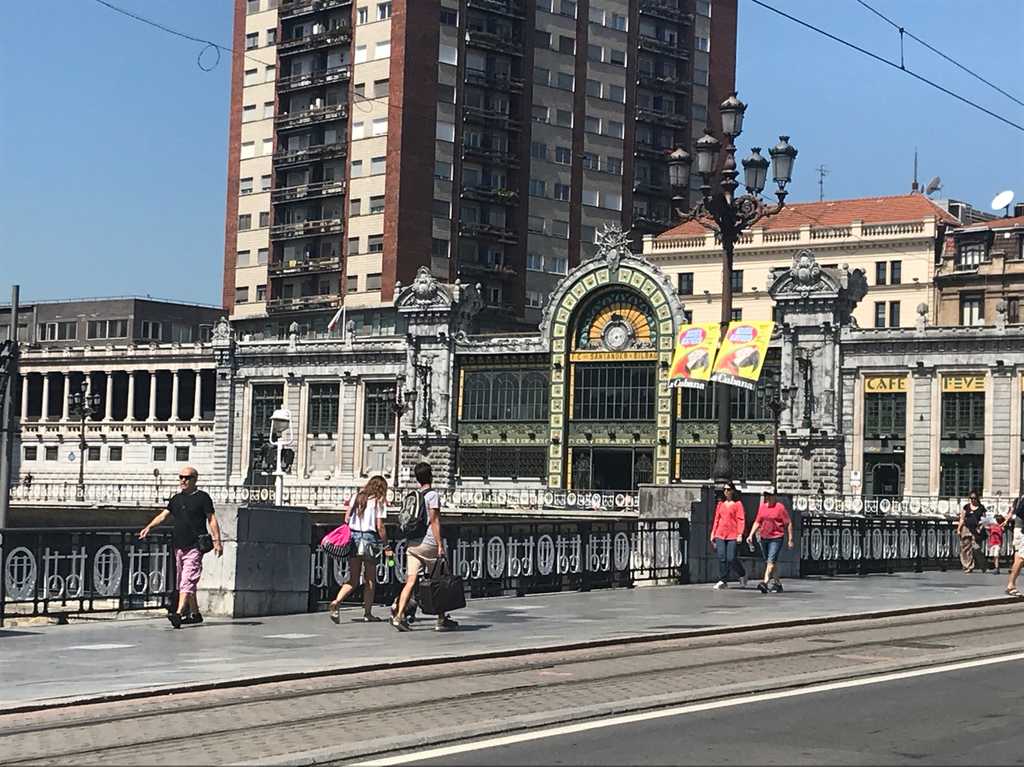
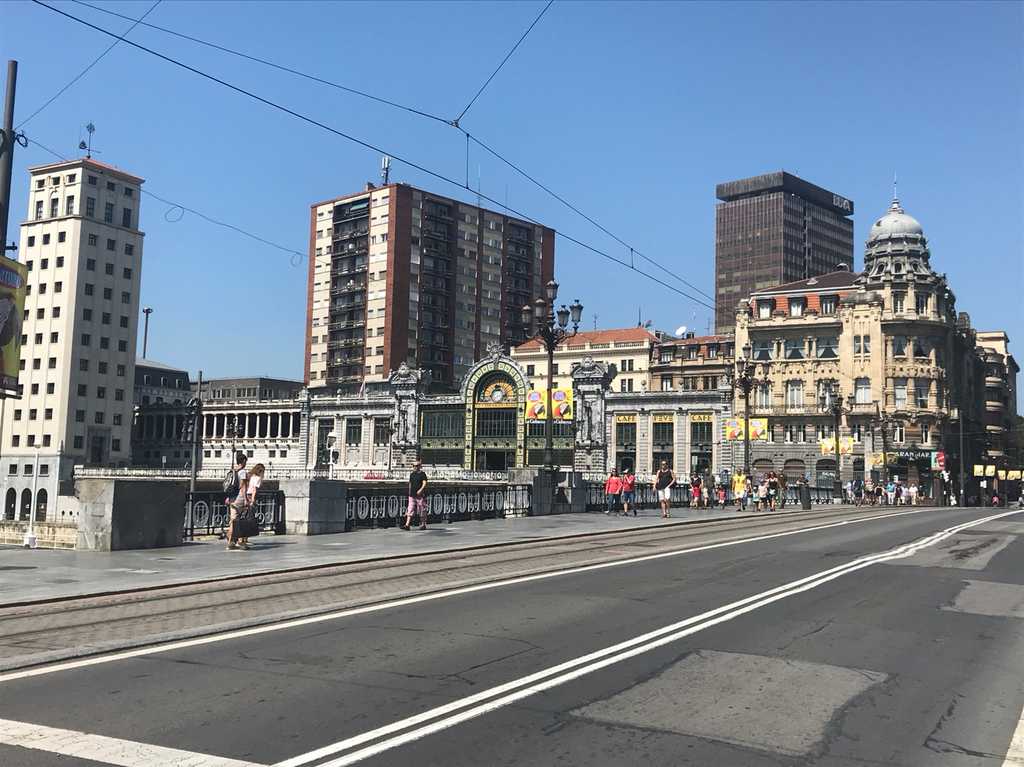
Today the Arriaga Theater is both an architectural highlight and an important point on the walking route: it marks the transition from the riverbank to the narrow streets of old Bilbao. During the day the square is lively, but in the evening, when the lights come on and the domes shimmer in the river’s reflection, the façade looks like part of a grand stage set — with the city playing the leading role.
This walk is not just a stroll through the old streets of Bilbao — it’s a walk through the city’s memory. Everything here lies close together: the Gothic gates of Santiago Cathedral, the soft murmur of the “Dog Fountain,” the old plaques still marked by the great flood of 1983, and Bar Xukela, where the spirit of the city lives in a glass of wine and laughter at the counter.
We follow Calle del Perro and Calle de la Torre — streets whose names hold legends and the echoes of ancient family towers. At every turn, a story appears: about the Basques, whose defensive towers once stood like the stone houses of Svaneti; about Diego María Gardoki, the first Basque to serve as Spain’s ambassador to the United States; about Pedro Arrupe, the Basque priest who renewed the Jesuit order in the twentieth century.
Our path leads to the river where ships once lined the shore, and finally to El Arenal — the park where Bilbao learned to breathe, to love, and to listen to the quiet rhythm of its own heart.
This walk is like a simple, honest conversation with the city — no guide, no performance, just a friend who has a story waiting behind every corner.