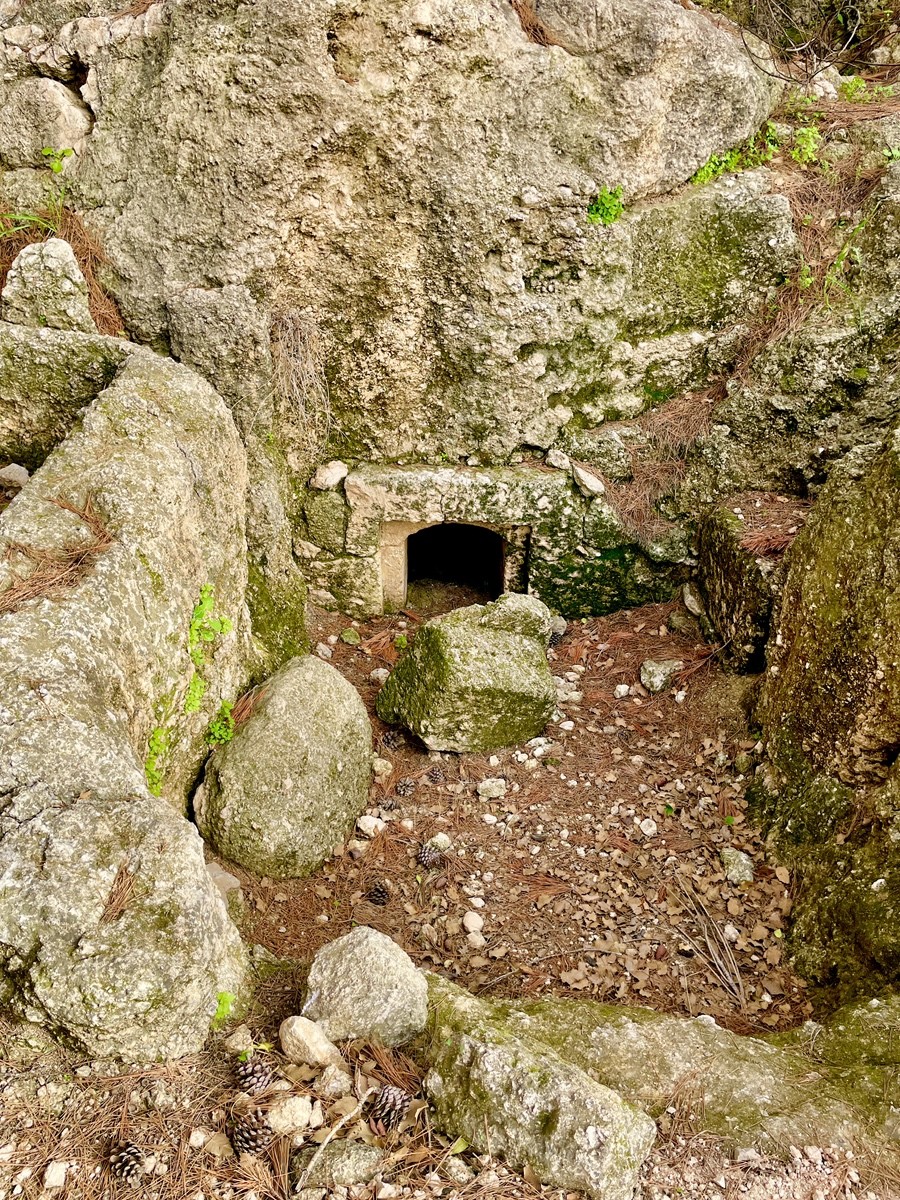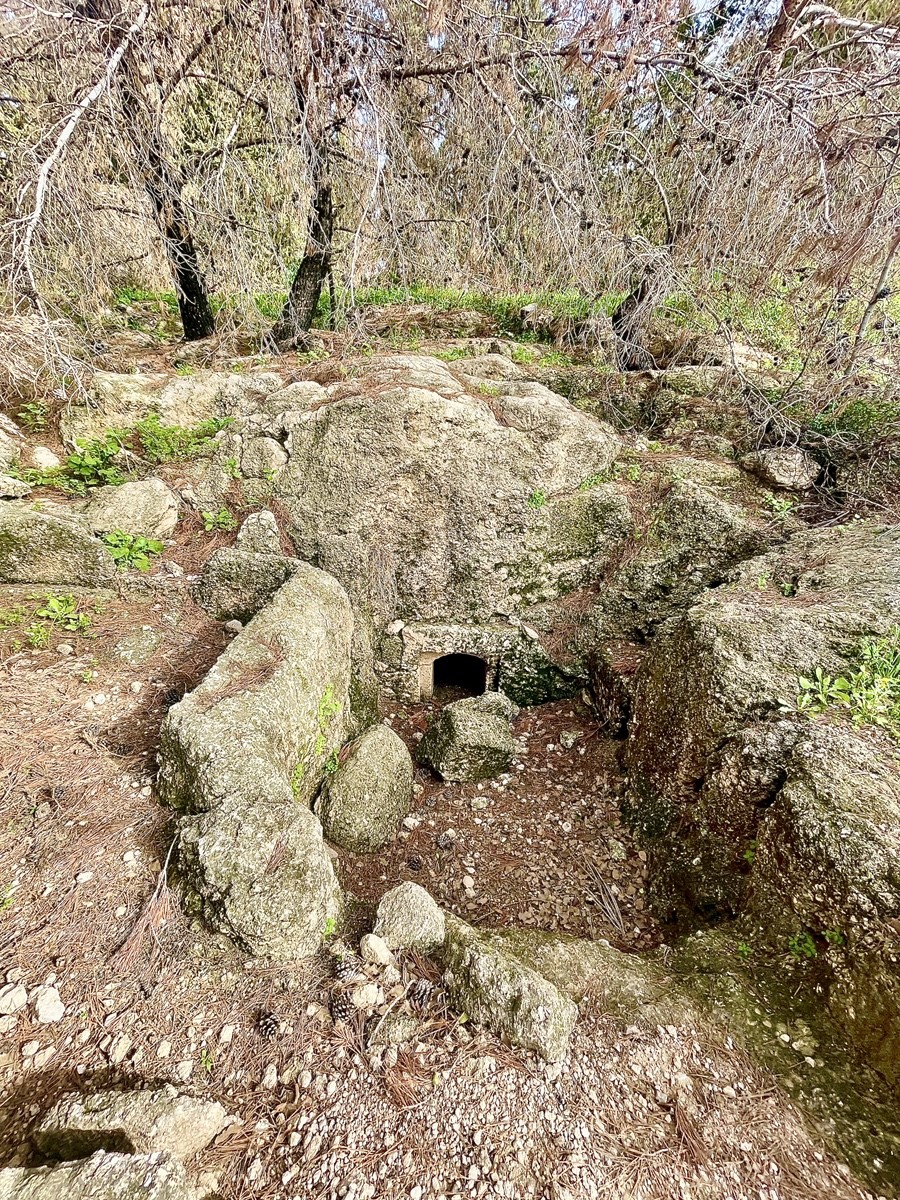

The small square rock-cut entrance marks a Jewish tomb from the Second Temple period, a time when the settlement was known as Hammat. Derived from the Hebrew root for "hot" (ham), the name reflected the local thermal springs. As a prominent administrative centre (toparchy) of Judea, the town's identity shifted with its conquerors.
The Greeks and Romans, unable to preserve the Semitic guttural "H," adapted the name into Ammaus or Emmaus—the version immortalised in the New Testament and the chronicles of Josephus Flavius. Following the Arab conquest in the 7th century, the name reclaimed its guttural depth, evolving into Imwas. This linguistic cycle, spanning two millennia, remained the village's identity until its destruction in 1967, tracing a path from ancient Hebrew roots to Hellenistic adaptation and back to Semitic phonetics.
The journey begins in the almond blossoms of Sha'alvim, a landscape rooted in the biblical territory of the Tribe of Dan. The route advances through the strategic Latrun salient to Emmaus-Nicopolis, where Byzantine ruins mark the site of the Resurrection—land preserved through the spiritual visions of Mariam Baouardi and the patronage of Countess Beatrice de Saint-Cricq.
The path culminates at the abandoned Sorek Station, a limestone relic of the Ottoman Empire. Inside, time stands still among concrete staircases and iron veterans: a freight car and a yellow-marked shunting locomotive from the 1990s. A modest monument to Egyptian labourers honours the unsung builders of the WWI era. Today, the silence of these rusted tracks is only broken by the whistle of modern trains, bridging the gap between ancient faith and imperial ruins.