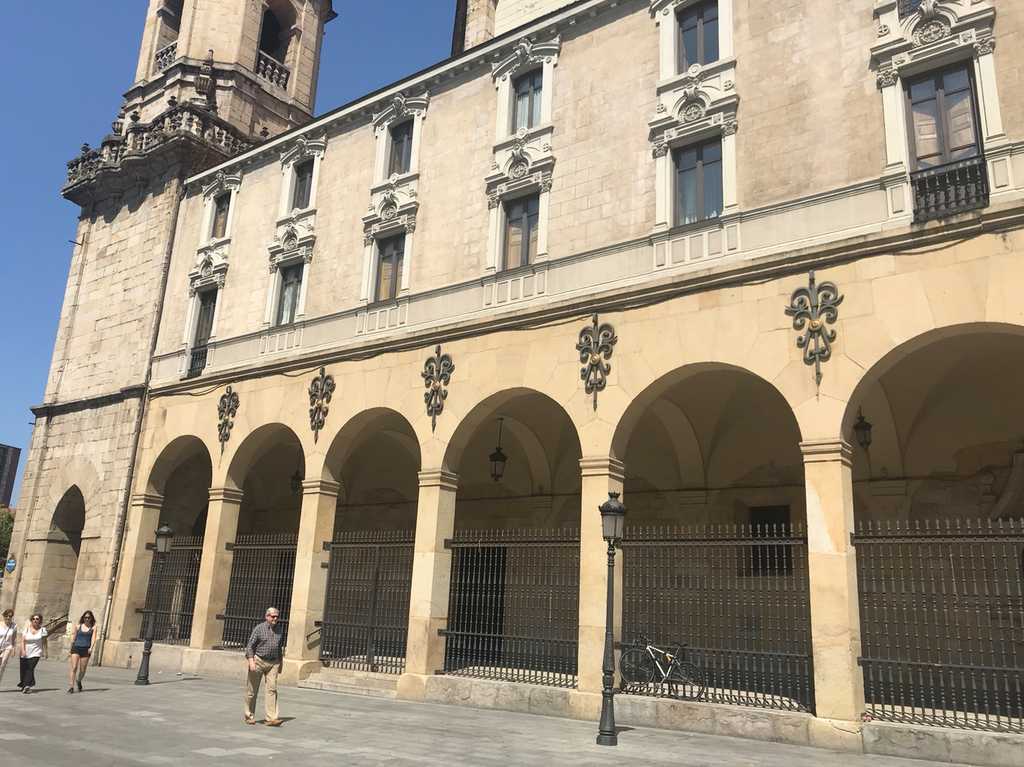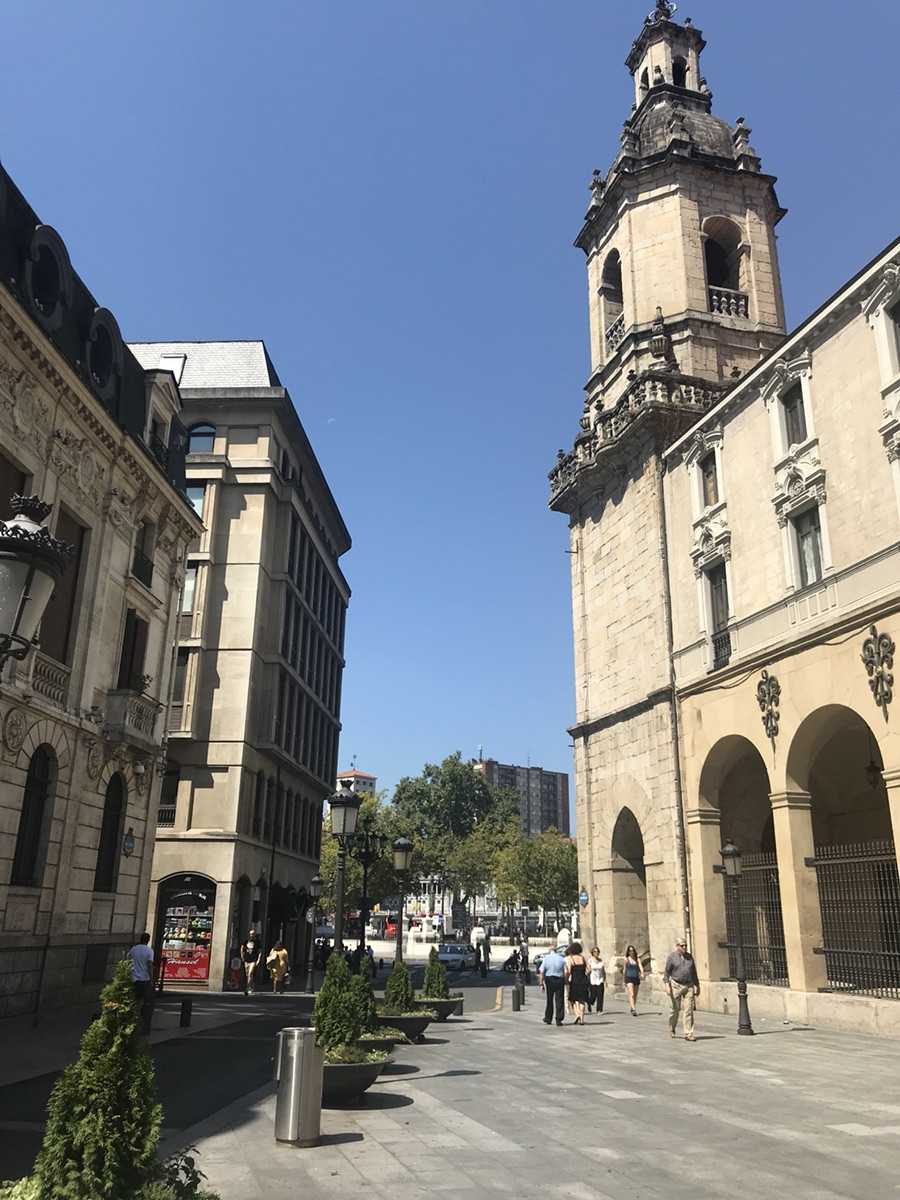

On Saint Nicholas Square, across from the old Baroque church, a small plaque recalls a visitor who passed through long before Bilbao became the modern city it is today. In 1780, John Adams — the future president of the United States, then a diplomat traveling to France — arrived in this port. He spent a night at a local inn and later wrote about how deeply the Basque way of life impressed him.
The Basque Country has always stood apart. Caught between sea and mountains, between Spain and France, it preserved its own laws — the fueros, local rights that granted more autonomy than most Europeans knew at the time. The Basques were sailors, fishermen, and traders, people whose lives depended on tides and wind, yet they were also stubborn defenders of self-rule. It was this mix — openness to the sea and a fierce sense of independence — that struck Adams most.
Here he encountered a society where tradition did not limit freedom, and local rights lived comfortably within a larger political structure. Years later, back in America, these observations echoed in his thinking about federalism — the balance between the independence of individual states and the unity of the nation.
Today the Church of Saint Nicholas, patron of sailors and travelers, stands beside the place where Adams once stayed. Its façade faces the river as if reminding us that the sea carries more than ships and goods — it carries ideas. And sometimes those ideas become the wind that changes history.
This walk is not just a stroll through the old streets of Bilbao — it’s a walk through the city’s memory. Everything here lies close together: the Gothic gates of Santiago Cathedral, the soft murmur of the “Dog Fountain,” the old plaques still marked by the great flood of 1983, and Bar Xukela, where the spirit of the city lives in a glass of wine and laughter at the counter.
We follow Calle del Perro and Calle de la Torre — streets whose names hold legends and the echoes of ancient family towers. At every turn, a story appears: about the Basques, whose defensive towers once stood like the stone houses of Svaneti; about Diego María Gardoki, the first Basque to serve as Spain’s ambassador to the United States; about Pedro Arrupe, the Basque priest who renewed the Jesuit order in the twentieth century.
Our path leads to the river where ships once lined the shore, and finally to El Arenal — the park where Bilbao learned to breathe, to love, and to listen to the quiet rhythm of its own heart.
This walk is like a simple, honest conversation with the city — no guide, no performance, just a friend who has a story waiting behind every corner.