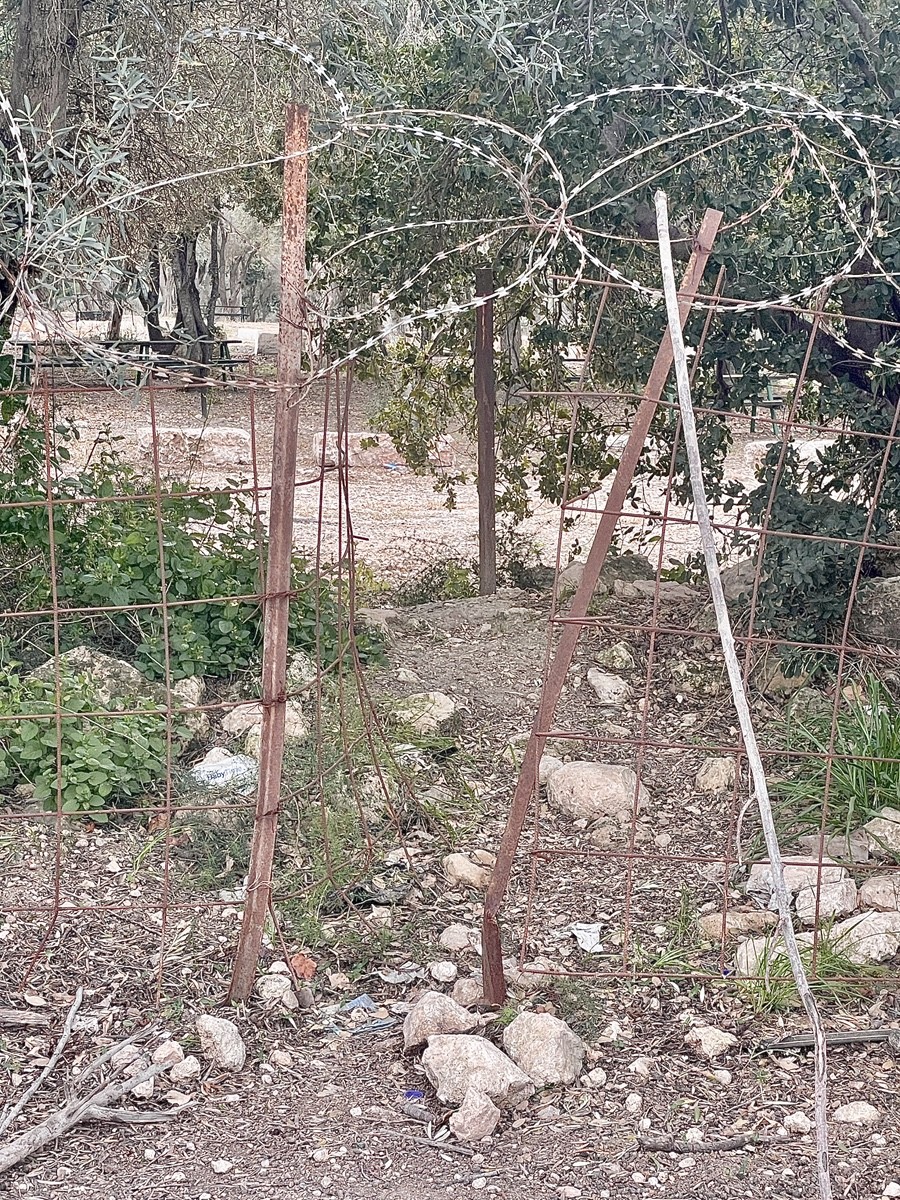

Adjacent to Canada Park lies the former No-Man's-Land, a 46-square-kilometre buffer zone once contested between Israel and Jordan. Founded in 1951 on the Green Line, Kibbutz Sha’alvim served as a dangerous frontier outpost, with its residential area in Israel but its fields bleeding into the disputed neutral strip.
The tension peaked in 1965 during the "War of the Tractors," a territorial struggle fought with ploughs rather than guns. To secure the fertile Ayalon Valley, Kibbutz members raced to cultivate the neutral soil. The crisis led to a historic ruling by Rabbi Shlomo Goren, who permitted ploughing on the Sabbath under the principle of Pikuach Nefesh (saving a life), categorising land defence as a matter of national security. Since 1967, these once-forbidden lands have been transformed into the peaceful almond orchards and vineyards that define the landscape today.
The journey begins in the almond blossoms of Sha'alvim, a landscape rooted in the biblical territory of the Tribe of Dan. The route advances through the strategic Latrun salient to Emmaus-Nicopolis, where Byzantine ruins mark the site of the Resurrection—land preserved through the spiritual visions of Mariam Baouardi and the patronage of Countess Beatrice de Saint-Cricq.
The path culminates at the abandoned Sorek Station, a limestone relic of the Ottoman Empire. Inside, time stands still among concrete staircases and iron veterans: a freight car and a yellow-marked shunting locomotive from the 1990s. A modest monument to Egyptian labourers honours the unsung builders of the WWI era. Today, the silence of these rusted tracks is only broken by the whistle of modern trains, bridging the gap between ancient faith and imperial ruins.