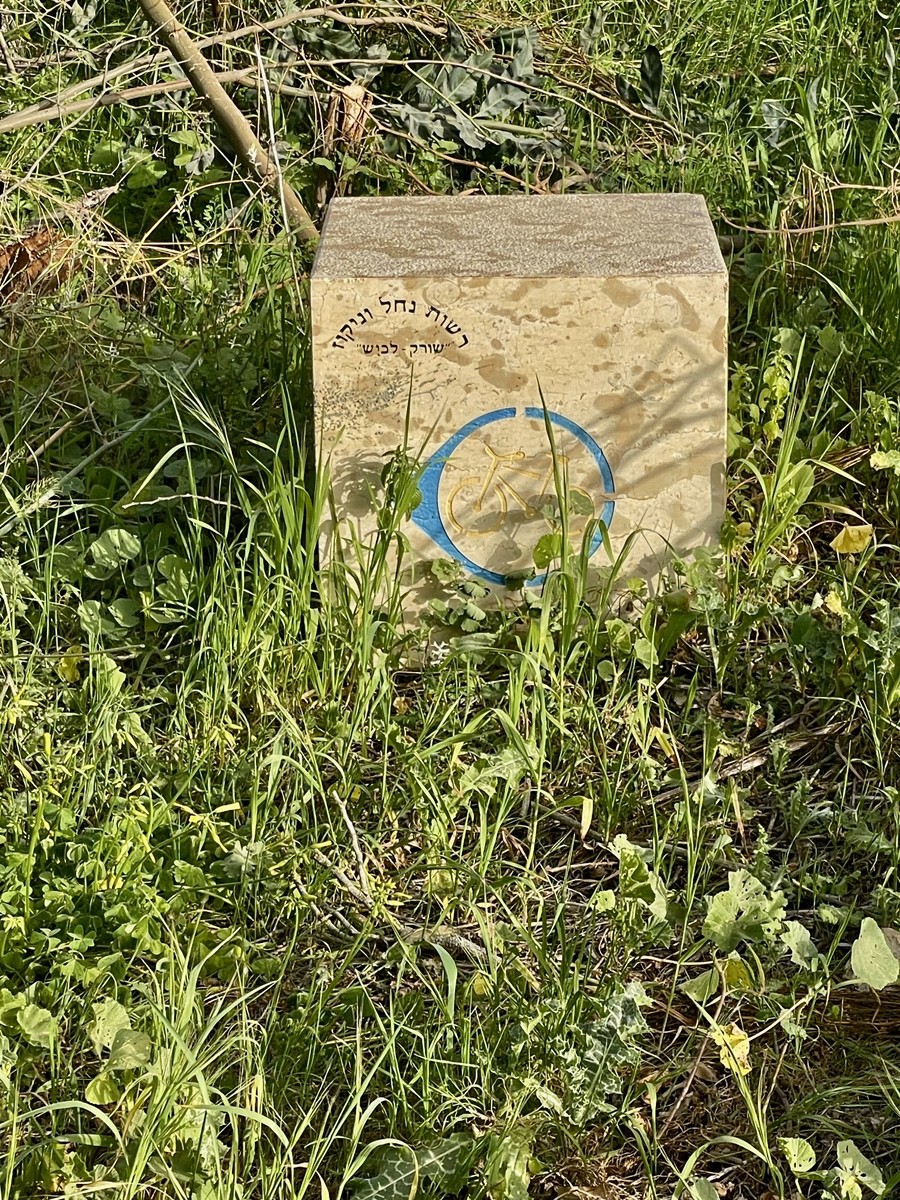

The path to Wadi es-Sarar—named for the "pebbles" lining the streambed—is a walk through layers of history. This landscape is also the biblical Nahal Sorek, the valley of Samson and Delilah, named after a superior red grape variety. In the late 1880s, this ancient terrain became the site of an engineering marvel: the first railway connecting Jaffa to Jerusalem.
Conceived by Jewish entrepreneur Yosef Navon and realised with French capital and Ottoman concessions, the line used a narrow 1000mm gauge to navigate the treacherous ascent into the Judean Hills. While initially a humble waypoint, the station's fate changed in 1915 during World War I. German and Ottoman engineers transformed it into the vital "Junction Station," constructing a strategic southern branch toward Be'er Sheva to challenge the British for control of the Suez Canal. What was once a pastoral valley of vineyards became the most critical military-transport hub in the Middle East.
The journey begins in the almond blossoms of Sha'alvim, a landscape rooted in the biblical territory of the Tribe of Dan. The route advances through the strategic Latrun salient to Emmaus-Nicopolis, where Byzantine ruins mark the site of the Resurrection—land preserved through the spiritual visions of Mariam Baouardi and the patronage of Countess Beatrice de Saint-Cricq.
The path culminates at the abandoned Sorek Station, a limestone relic of the Ottoman Empire. Inside, time stands still among concrete staircases and iron veterans: a freight car and a yellow-marked shunting locomotive from the 1990s. A modest monument to Egyptian labourers honours the unsung builders of the WWI era. Today, the silence of these rusted tracks is only broken by the whistle of modern trains, bridging the gap between ancient faith and imperial ruins.