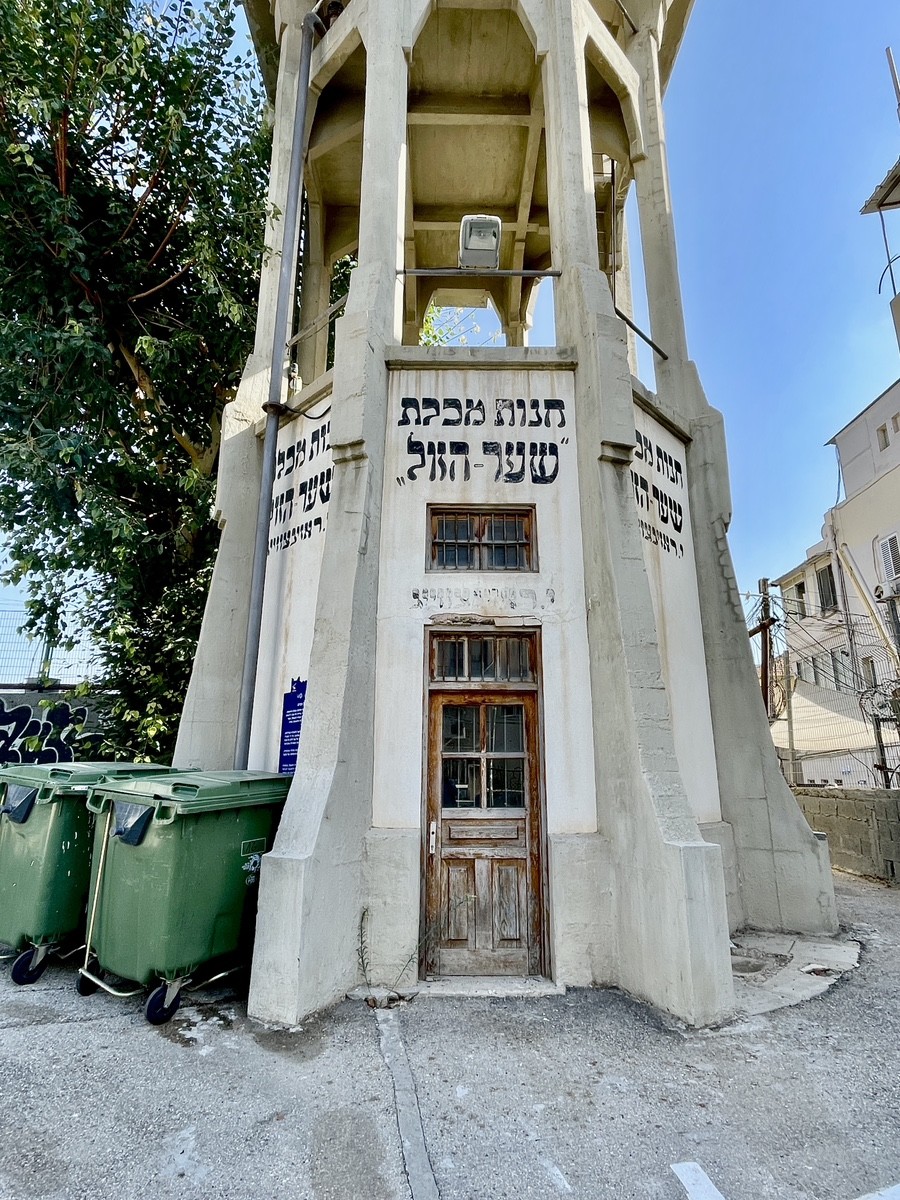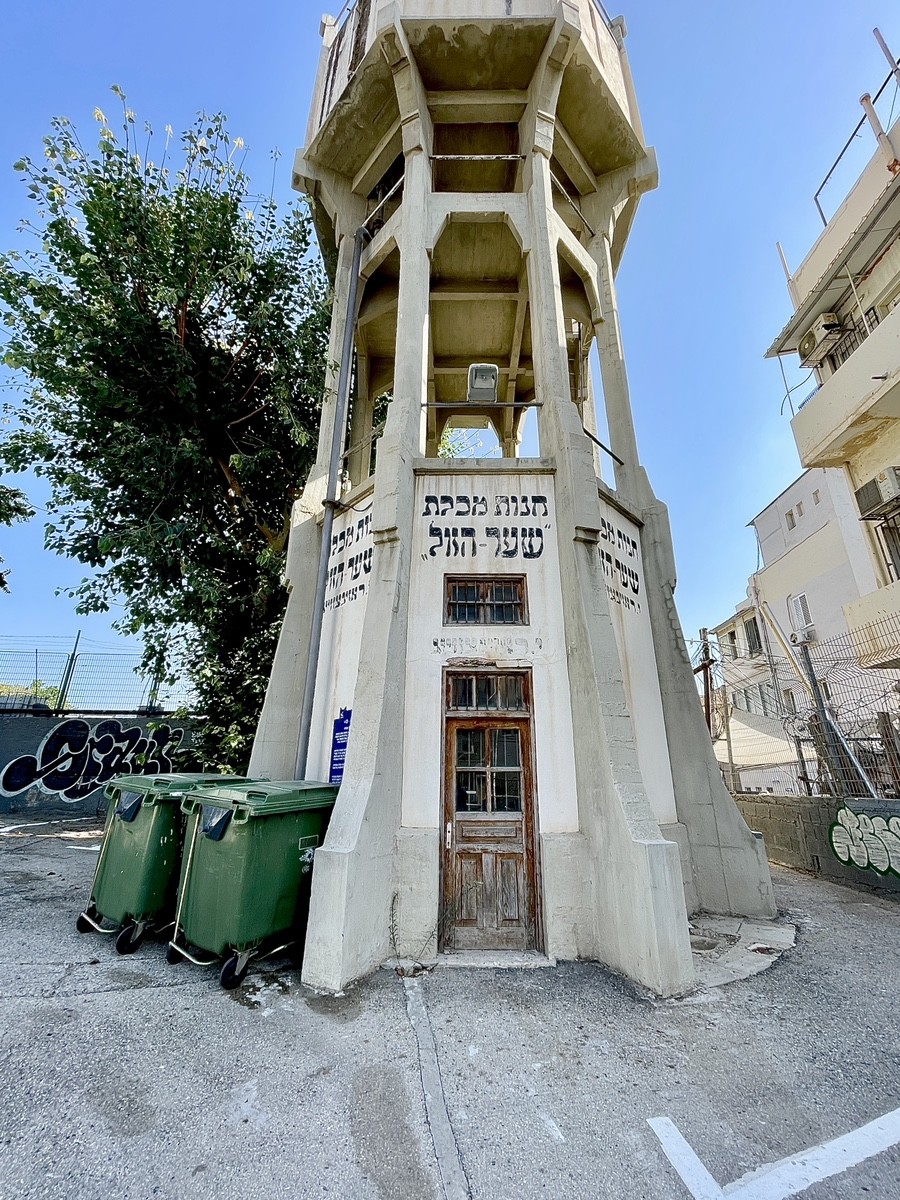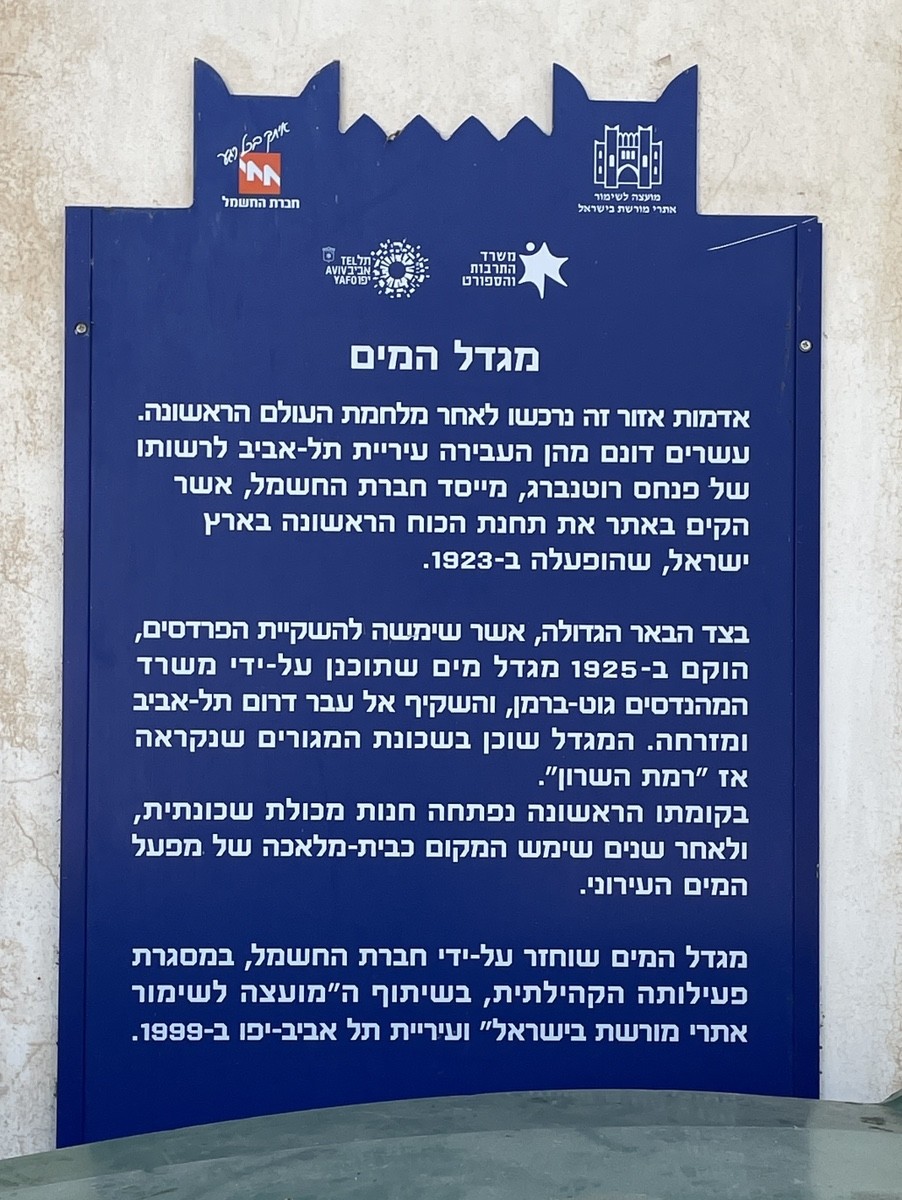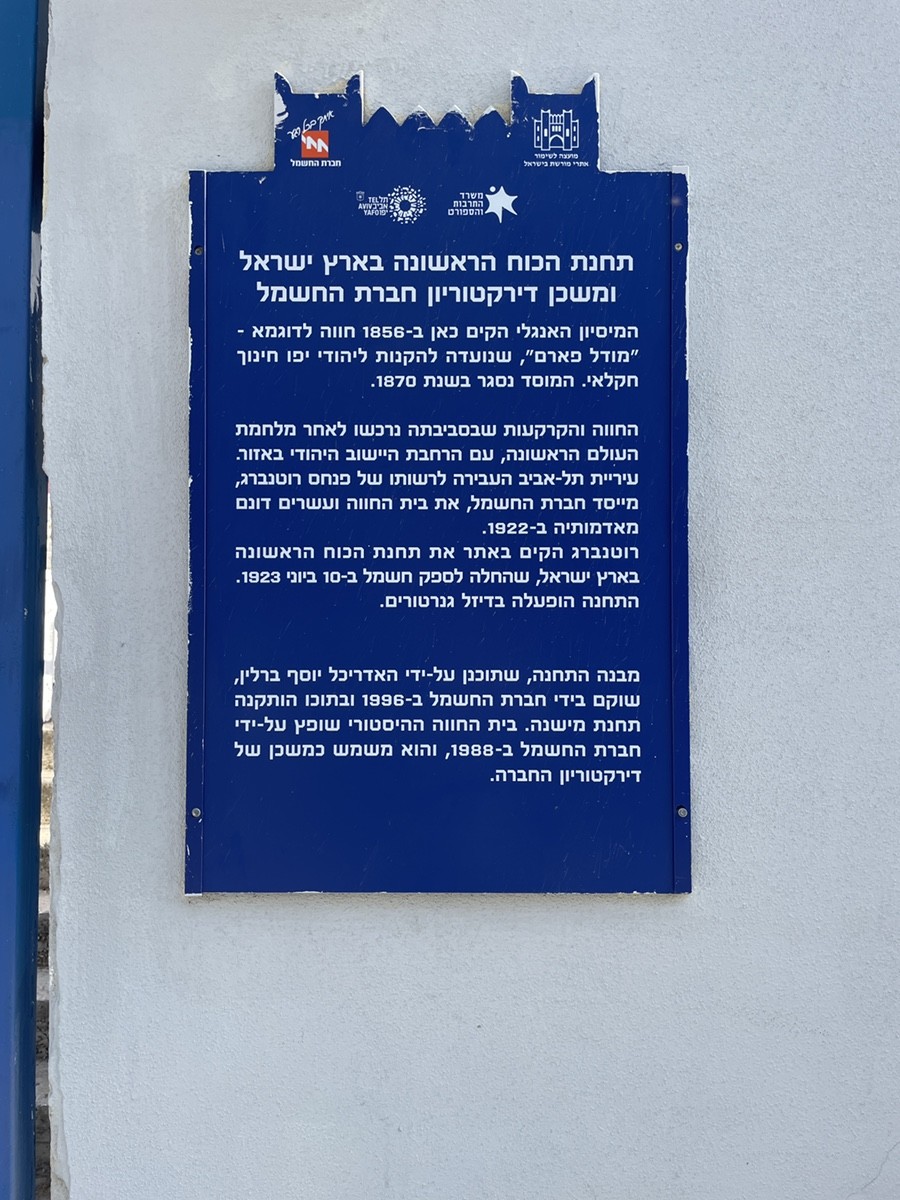

In the very heart of old Tel Aviv, on HaHashmal Street, stands a tower — a silent monument to the time when the city was still learning how to be a city. Its story begins earlier than it seems: before the current reinforced-concrete structure was built in 1925, a stone tower stood here — the original water tower of the **Model Farm**. It was part of a late Ottoman-era vision to create an exemplary agricultural enterprise that would serve as a school and model for Jewish farmers, combining labour with science.
When engineers of a new era arrived in the 1920s, the old stone structure gave way to a new one — modern, rational, and precise. It was built by two men: **Arpad Gut**, a Hungarian engineer who brought reinforced concrete knowledge, and his partner **Berman**, a man almost erased from history. Together, under the firm **Gut & Berman Engineers**, they inscribed their legacy into the fabric of Tel Aviv — in its water towers, industrial buildings, and structural networks.
The HaHashmal tower was more than just a reservoir. At its base once operated a small store called **Sha’ar HaZol**, where locals bought bread, sugar, kerosene, and newspapers. Later, it housed the city’s water department workshop, and during wartime, it served as an observation post. In the 1990s, as Tel Aviv began to turn its gaze back to its past, the tower was restored, and a faint trace of the old lettering remained on its façade — a reminder that everything began with water, light, and the people whose names have nearly vanished with time.
Of **Berman**, no archives remain — no birthplace, no photographs, no date of death. Only a surname in an old technical document, and his invisible mark — in the proportions, the seams of concrete, in the way morning light falls along the tower’s curve. His name is gone, but his work endures — and perhaps that is the most valid form of a city’s memory: to remember those who built it, even when no one recalls where they came from.
You’ll walk through the very heart of old Tel Aviv — a neighbourhood where orange groves, missionary dreams, and the glow of early electricity all intertwined. The journey begins at the Model Farm and its iconic water tower, the birthplace of irrigation in Eretz Israel. From there, we’ll trace the footsteps of the Ishma’ilov family — Mashhadi *anusim* who built rental houses and inns for Persian merchants, yet lost much of their fortune under dramatic circumstances. We’ll pause in Gan HaHashmal, the city’s second public garden, which has witnessed the romance of the 1920s, decline, and the wave of 21st-century gentrification. The walk culminates at the grand Ohel Moed Synagogue — the “Tent of Meeting” — where eastern communities claimed their rightful place in the growing city. This is a journey through layers of time: from water to electricity, from merchant houses to gardens and synagogues — a story where every street guards a secret and every building speaks for its generation.