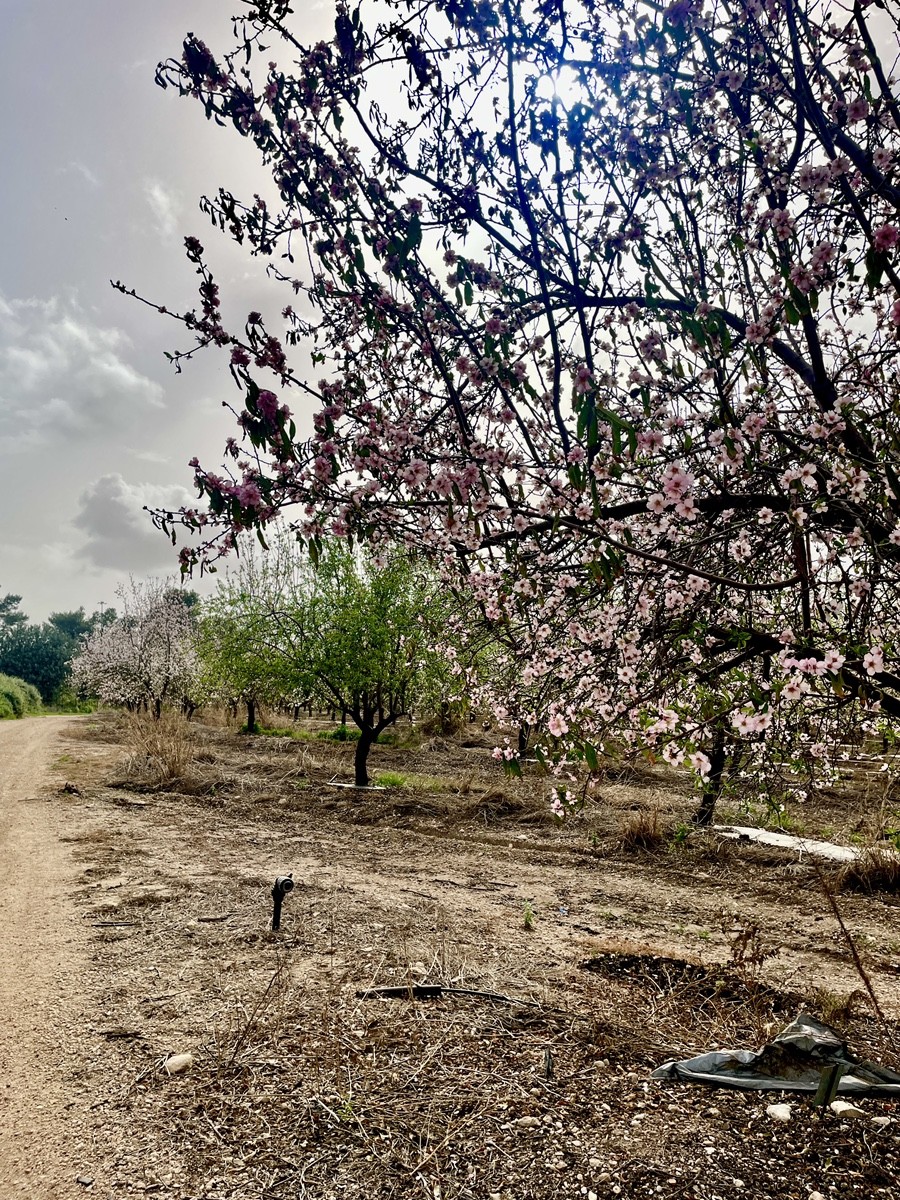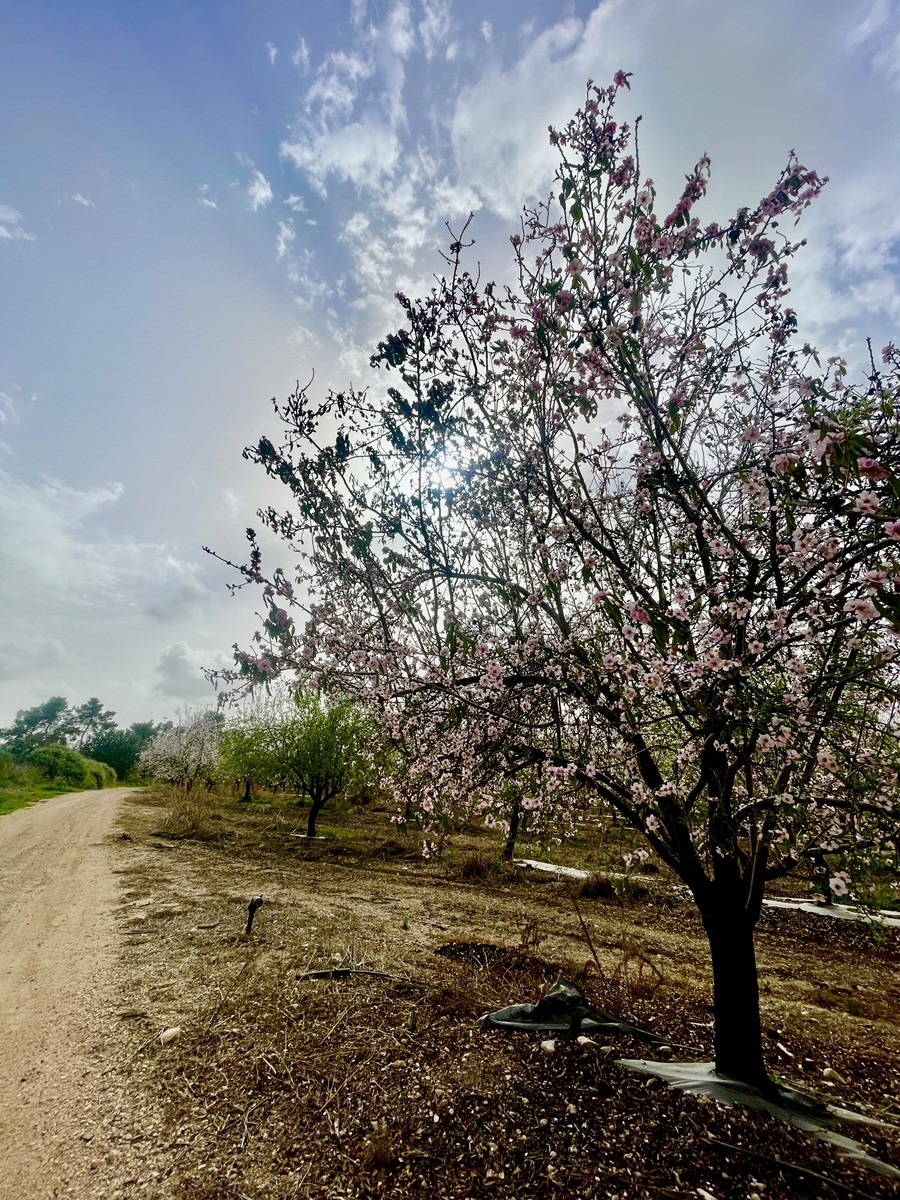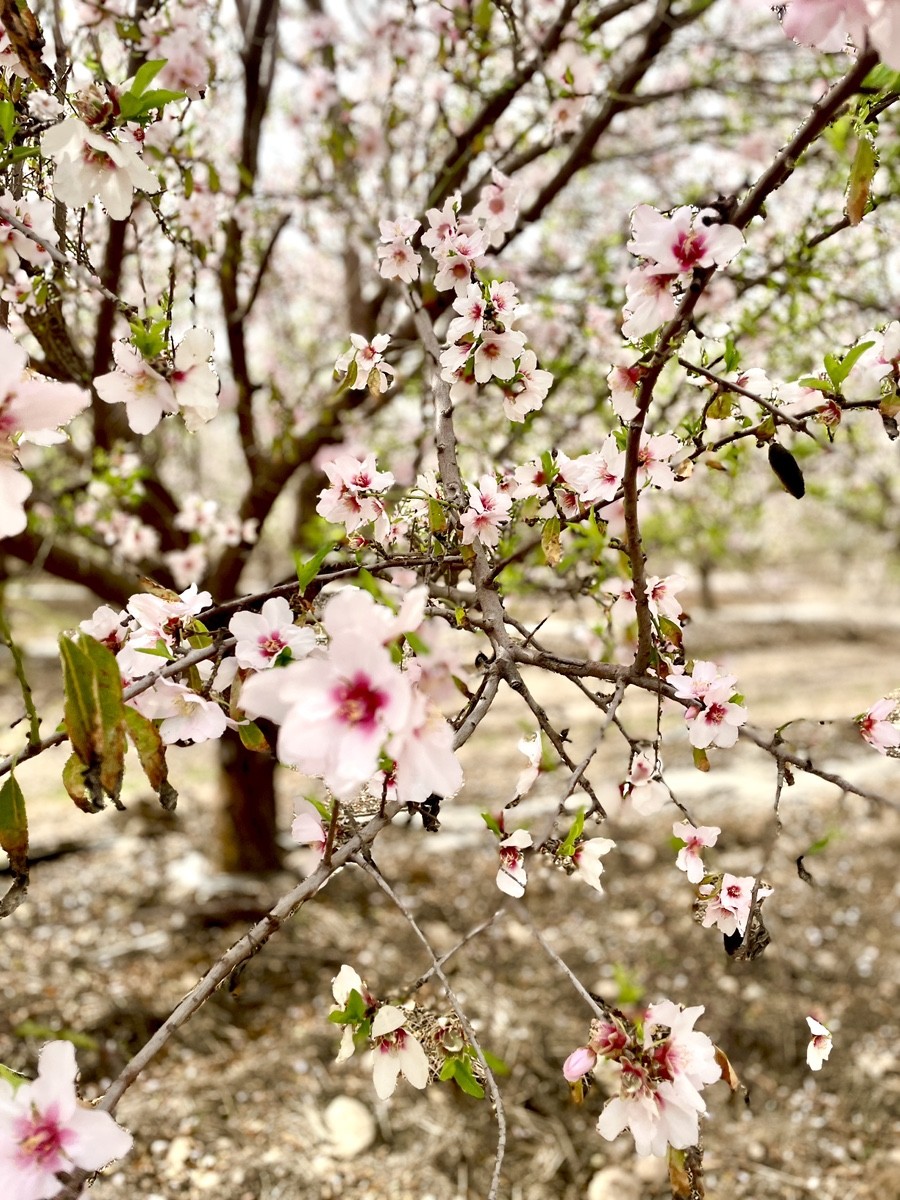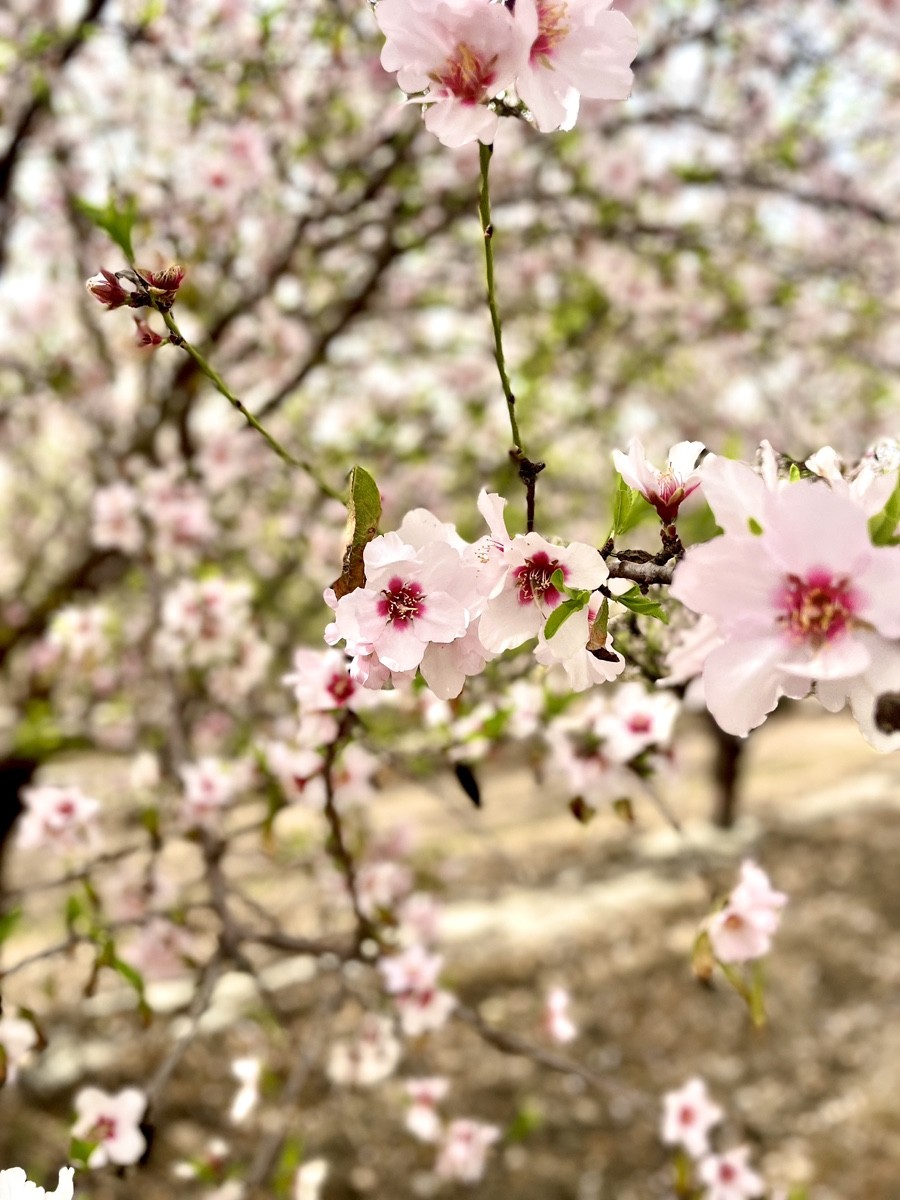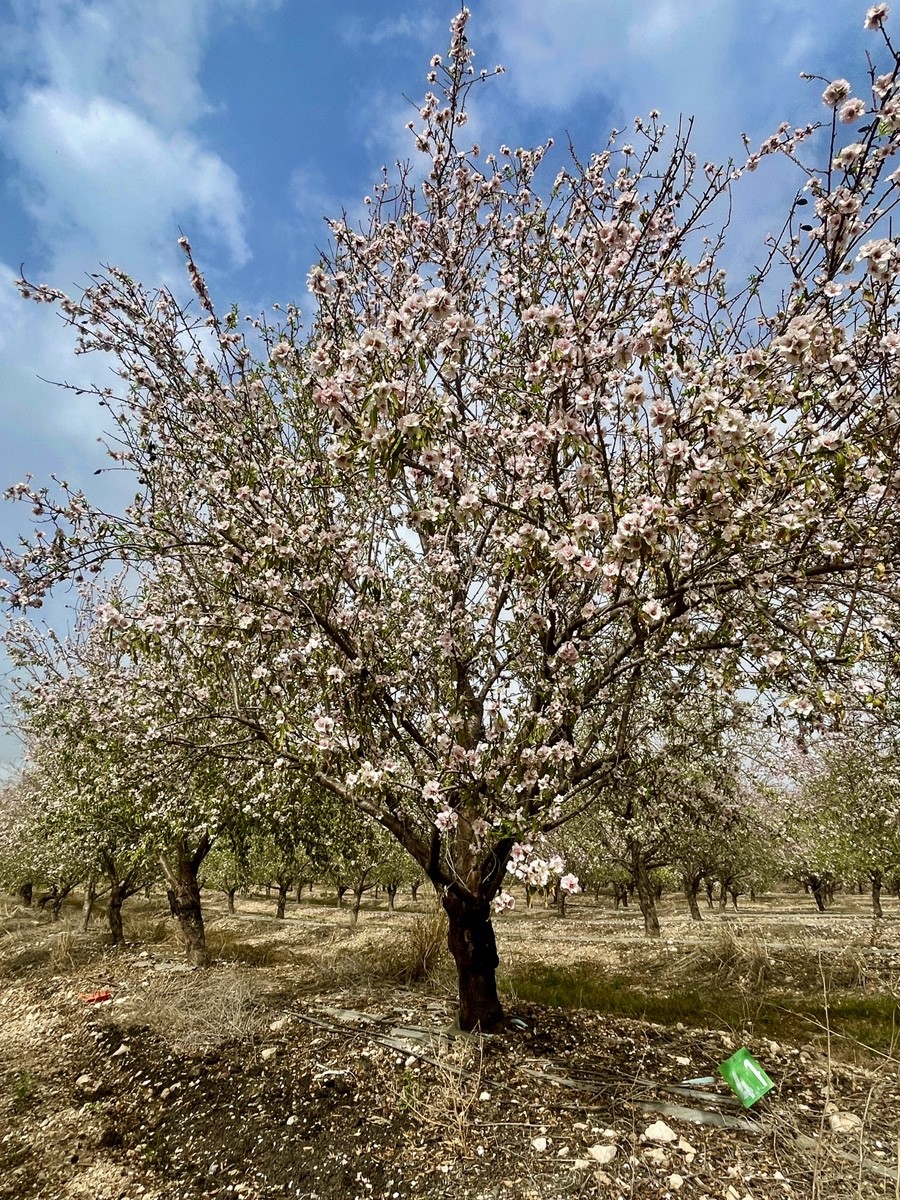

The visual contrast between snow-white and pale-pink almond blossoms in the Ayalon Valley is determined by a genetic "dress code." Commercial varieties like the Nonpareil lean toward pure white, while Israeli hybrids like Matan often display a rosy hue, particularly in early bloom.
A single flower also acts as a biological signal through colour shifts:
Fresh Blooms: Deep pink petals signal peak nectar and pollen to insects.
Mature Blooms: Once pollinated, pigments (anthocyanins) fade, turning the petals white.
The intensity of these colours is influenced by the season; a sharp transition from a cold winter to spring can heighten the concentration of pink. For those wandering the former No-Man's Land, the Wild Almond (Prunus dulcis) stands out with vivid crimson or deep magenta blossoms, far more intense than its cultivated "pale" relatives. To capture the most vibrant pinks, photographers must arrive in late January before the orchards transition to their mature, white state.
The journey begins in the almond blossoms of Sha'alvim, a landscape rooted in the biblical territory of the Tribe of Dan. The route advances through the strategic Latrun salient to Emmaus-Nicopolis, where Byzantine ruins mark the site of the Resurrection—land preserved through the spiritual visions of Mariam Baouardi and the patronage of Countess Beatrice de Saint-Cricq.
The path culminates at the abandoned Sorek Station, a limestone relic of the Ottoman Empire. Inside, time stands still among concrete staircases and iron veterans: a freight car and a yellow-marked shunting locomotive from the 1990s. A modest monument to Egyptian labourers honours the unsung builders of the WWI era. Today, the silence of these rusted tracks is only broken by the whistle of modern trains, bridging the gap between ancient faith and imperial ruins.