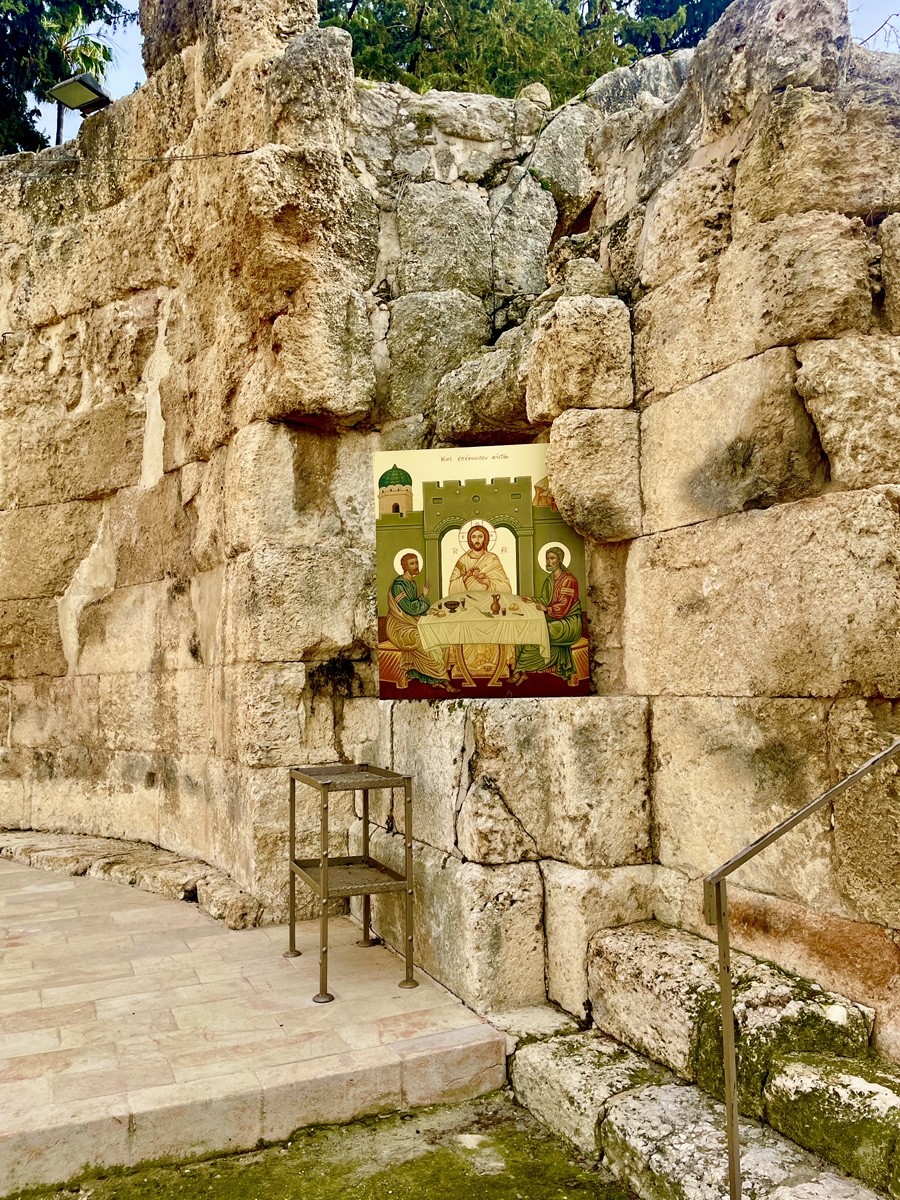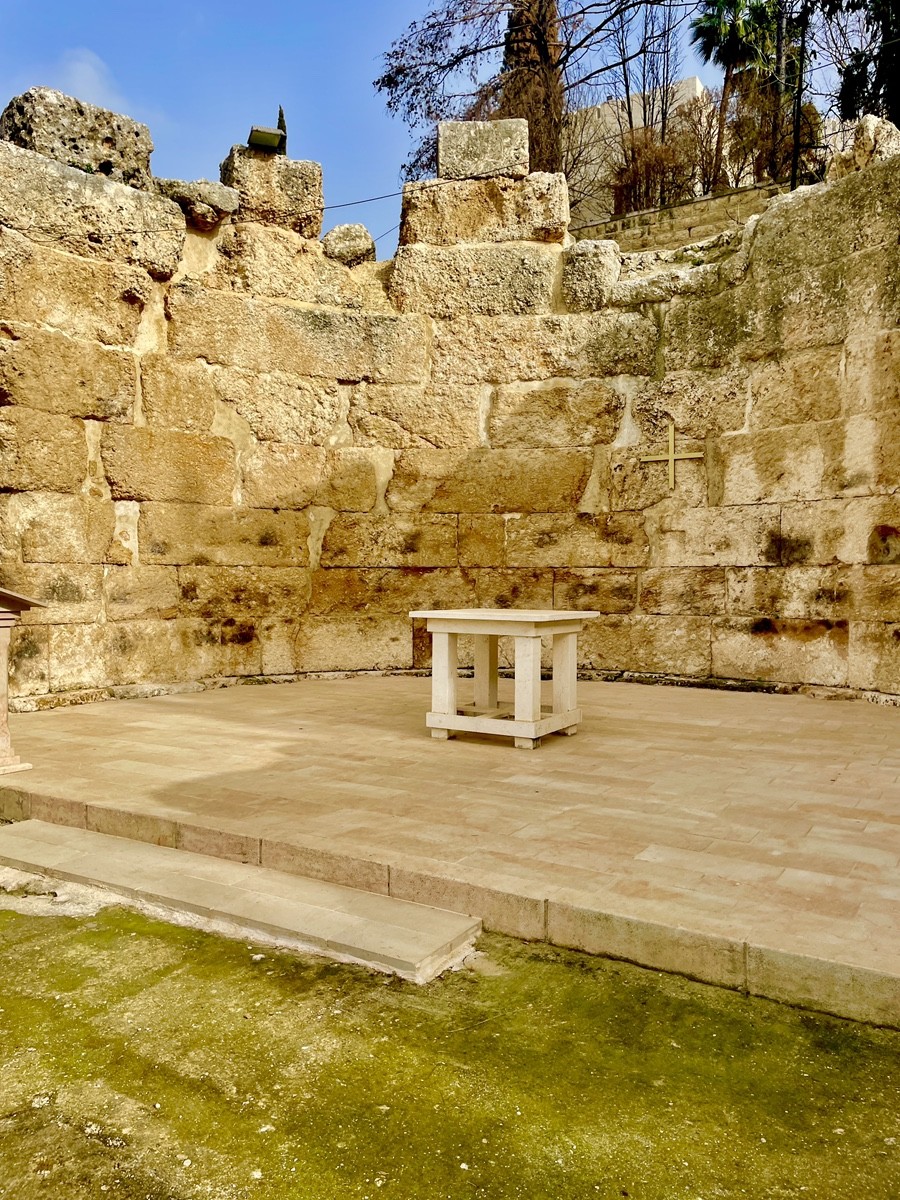

The elevation of Emmaus to the status of Nicopolis ("City of Victory") in 221 CE was a triumph of personal diplomacy. Julius Africanus, a Christian scholar and librarian to Emperor Heliogabalus, leveraged his imperial influence to secure city status and minting rights for his "small homeland." By the 5th century, this Roman administrative centre became a Byzantine episcopal seat, anchored by one of the region's largest cathedrals.
The site's mosaics provide a rare chronological anchor: a found cross motif on the floor predates the 427 CE imperial edict banning sacred symbols on pavements to prevent them from being stepped on. Today, the ruins remain a "living" sanctuary maintained by the Community of the Beatitudes. Pilgrims still gather among the ancient stones for the liturgy of the "Breaking of Bread," physically reenacting the Gospel narrative of the Resurrection on the very site Julius Africanus once championed.
The journey begins in the almond blossoms of Sha'alvim, a landscape rooted in the biblical territory of the Tribe of Dan. The route advances through the strategic Latrun salient to Emmaus-Nicopolis, where Byzantine ruins mark the site of the Resurrection—land preserved through the spiritual visions of Mariam Baouardi and the patronage of Countess Beatrice de Saint-Cricq.
The path culminates at the abandoned Sorek Station, a limestone relic of the Ottoman Empire. Inside, time stands still among concrete staircases and iron veterans: a freight car and a yellow-marked shunting locomotive from the 1990s. A modest monument to Egyptian labourers honours the unsung builders of the WWI era. Today, the silence of these rusted tracks is only broken by the whistle of modern trains, bridging the gap between ancient faith and imperial ruins.