

Places to visit in Bilbao
Guggenheim Museum Bilbao
The Guggenheim Museum in Bilbao is not just a building — it is a living space shaped by light, water, and metal. Its titanium curves echo the bends of the Nervión River and the forms of old ship hulls, as if the city remembered its past and turned it into art. Frank Gehry’s architecture does not follow symmetry; it moves, shifts, and seems to breathe with the wind and the reflections of the sky.
At the entrance stands “Maman” by Louise Bourgeois — a bronze spider where strength and care are woven together. The marble eggs beneath it symbolize life, vulnerability, and memory. Nearby, the red arch of the La Salve Bridge, redesigned by Daniel Buren, marks the transition between the city’s industrial past and its cultural renewal.
Inside, the museum becomes a temple of modernity. The central atrium — a cathedral of glass and light — connects three levels, each offering a new way to experience art. On the lower level, Richard Serra’s steel spirals The Matter of Time turn every step into sound. Higher up are rotating exhibitions, from Chagall to Vasconcelos, where art flows like a river. At the top level, the atmosphere becomes calm and deep: Rothko, Klein, Holzer, Bourgeois.
Everything here is connected: bridges, river, buildings, people. The city and the museum mirror each other. In this place, past, present, and future do not stand apart — they move and resonate together.



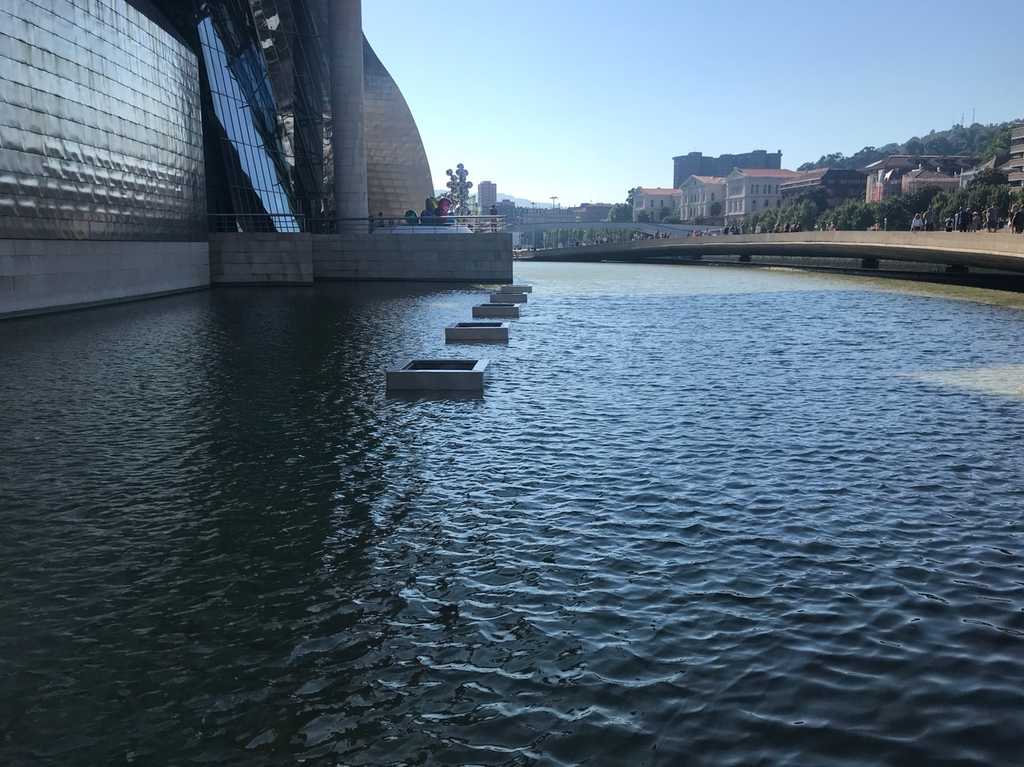
The south side of the Guggenheim Museum in Bilbao seems to dissolve into the Nervión River. The titanium plates curve like waves, following the line of the water, as if the city — once a shipyard — remembered its maritime soul. Architect Frank Gehry imagined the museum as a ship sailing along the river, not only through water but also through time. Its form rejects symmetry: metal, glass, and light come together as a living breath of the city, where the past of shipbuilders turns into the art of the future.
On the mirror-like water surface around the museum, everything is reflected — sky, wind, sun, and people. Here, water is not just part of the landscape; it is an extension of the architecture. It makes the building feel alive, softens the metal, and turns a solid structure into a reflection of inner movement.
In this world of shifting reflections, a vertical column of mirrored spheres shines in the distance — the sculpture Tall Tree & The Eye by British-Indian artist Anish Kapoor. Born in Bombay and raised in London, Kapoor turned metal into a philosophy of perception. His steel spheres multiply space, flip sky and earth, and invite the viewer inside the reflection itself. For Kapoor, the form matters less than the experience — the moment when a person can no longer see where reality ends and its mirrored image begins.
Here, Gehry and Kapoor — architect and sculptor — meet in one place and one idea. Gehry created a space that moves; Kapoor created reflections that think. Together they gave Bilbao more than a museum — they created a mirror of the city: living, shimmering, endless, where every passerby becomes part of the art simply by looking into the water.
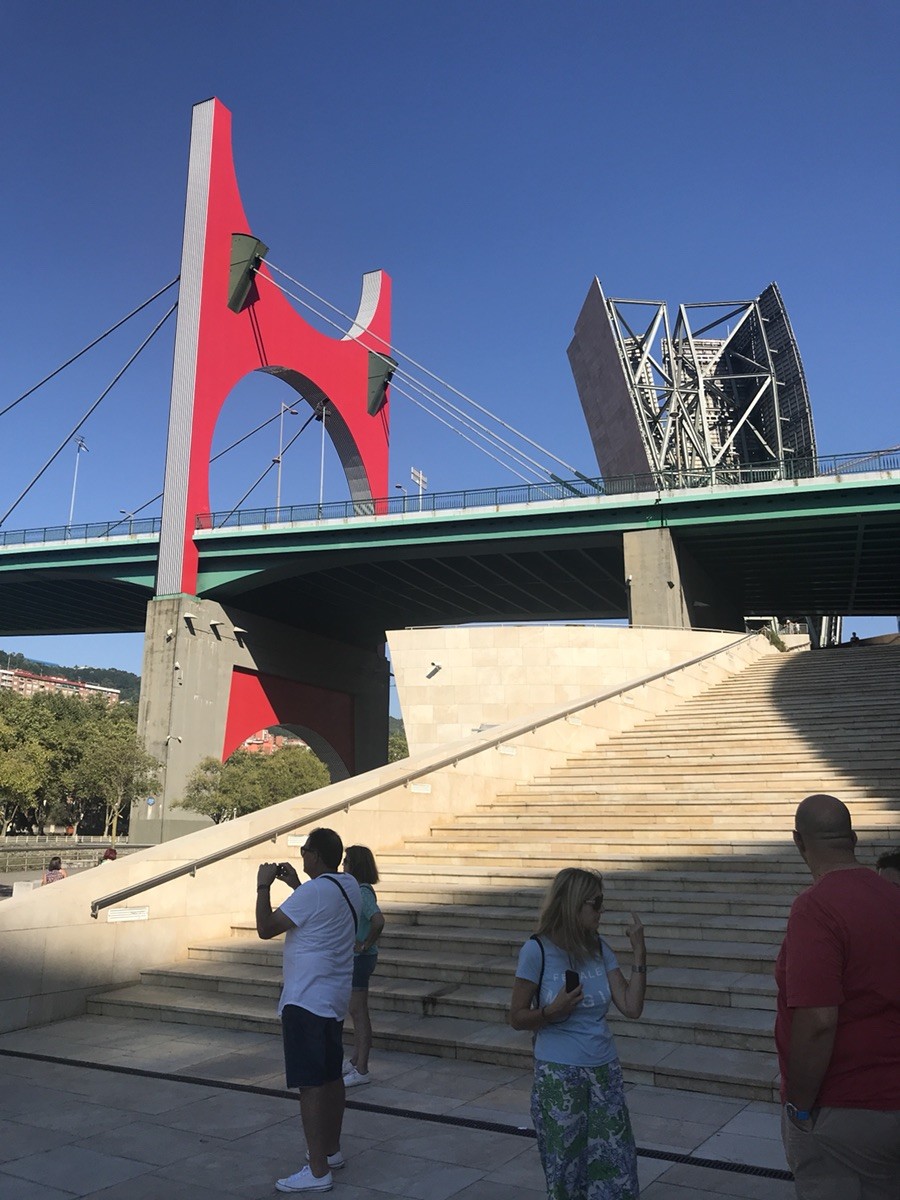
Above the Nervión River, beneath the green-red arc of the La Salve Bridge, rises a giant spider-like figure — “Maman” by Louise Bourgeois. Its bronze body looks fragile and intimidating at the same time: eight thin legs stretch toward the sky as if guarding the museum’s entrance. The sculpture is more than ten meters tall, yet it carries not danger but protection — like a mother shielding her children from the world.
Louise Bourgeois, a French artist who spent most of her life in New York, created this work in memory of her own mother. Her mother was a weaver, and for Bourgeois the spider symbolizes care, patience, and craftsmanship: it repairs, builds, and creates, much like a person trying to piece together the fragments of their life. Inside the spider’s body hangs a sac filled with marble eggs — a symbol of vulnerability and hope, hidden beneath a protective bronze shell.
Its placement next to the Guggenheim Museum is intentional. “Maman” stands between the river and the bridge — a point where the city and art meet. The spider’s legs seem to weave sky, concrete, metal, and water into a single whole. Paired with Frank Gehry’s flowing, organic architecture, Bourgeois’s spider becomes not just a sculpture but a living presence in the city — the embodiment of a feminine force that protects and creates.
This is the second stop on the Guggenheim Museum route: a place where fear and beauty merge, where the darkness of bronze reflects the light of the river, and where art reminds us that every form — like every person — carries a story woven from love.
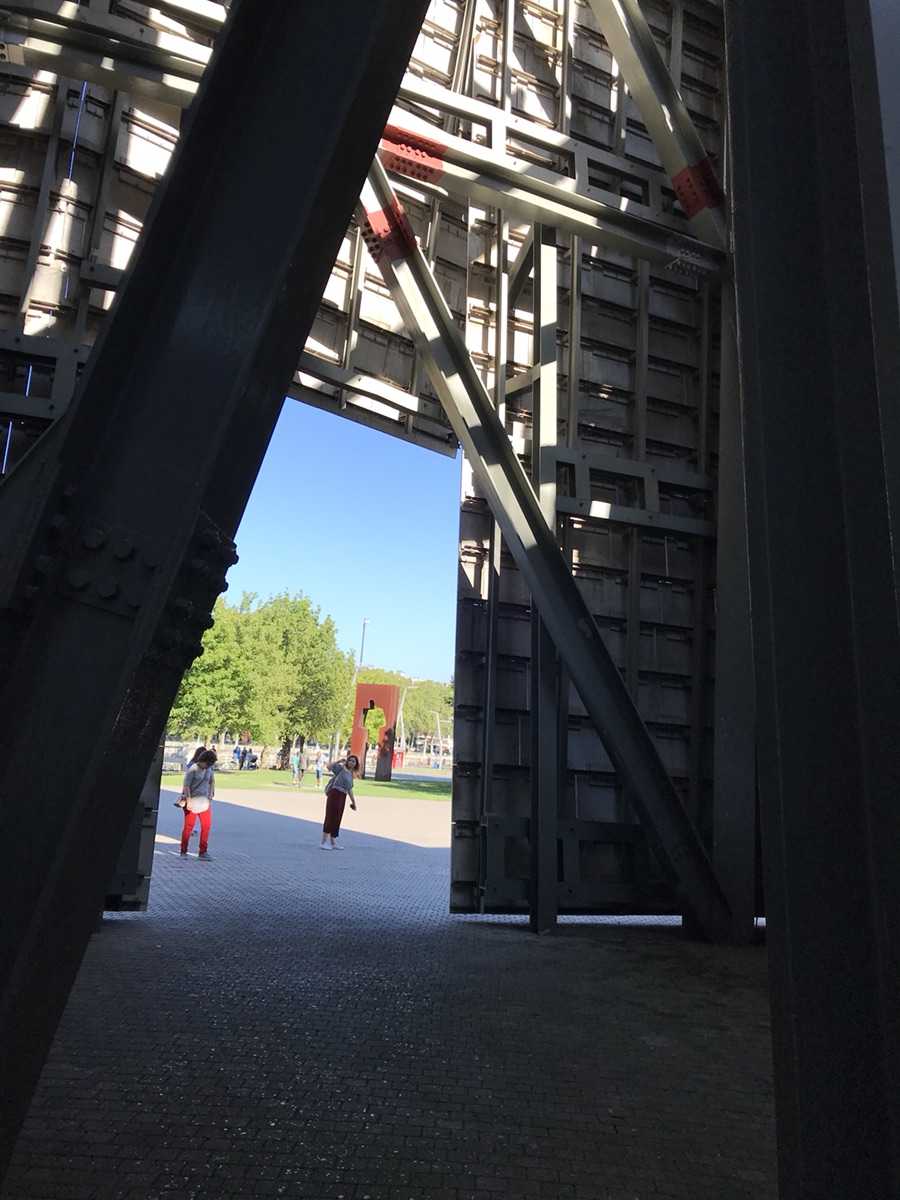
Under the green-and-red arches of the La Salve Bridge lies one of the most unexpected spaces in Bilbao. Once it was just an ordinary traffic junction; today it is part of the museum ensemble. Architect Frank Gehry chose not to hide the bridge but to turn it into an element of the artistic composition: the structure became a frame through which the city looks at itself.
In 2007, a giant arc by French artist Daniel Buren — Arcos Rojos — was added to the bridge’s massive supports. The bright red marks the boundary between industrial past and cultural present, between the city and the museum, between the road and the space of art.
The museum is named after Solomon Robert Guggenheim, an American collector and philanthropist born into a wealthy Swiss-Jewish family in Pennsylvania. In the 1930s he began collecting modern art — from Wassily Kandinsky to Paul Klee — and founded an institution in New York dedicated to “advancing new forms of artistic perception.” Later, his niece Peggy Guggenheim became one of the most influential figures in the art world, opening her own gallery in Venice.
Bilbao became the first European city entrusted by the Guggenheim Foundation with the family name for a new museum. In the 1990s, during a period of economic decline, the Basque government and the Guggenheim Foundation agreed to build a cultural anchor that could revive the entire region. And it worked. Today, the Guggenheim in Bilbao is not just a branch of an American institution but a symbol of how culture can transform a city.
Here beneath the bridge lies not a border but a point of connection — between eras, people, continents, and artistic forms.
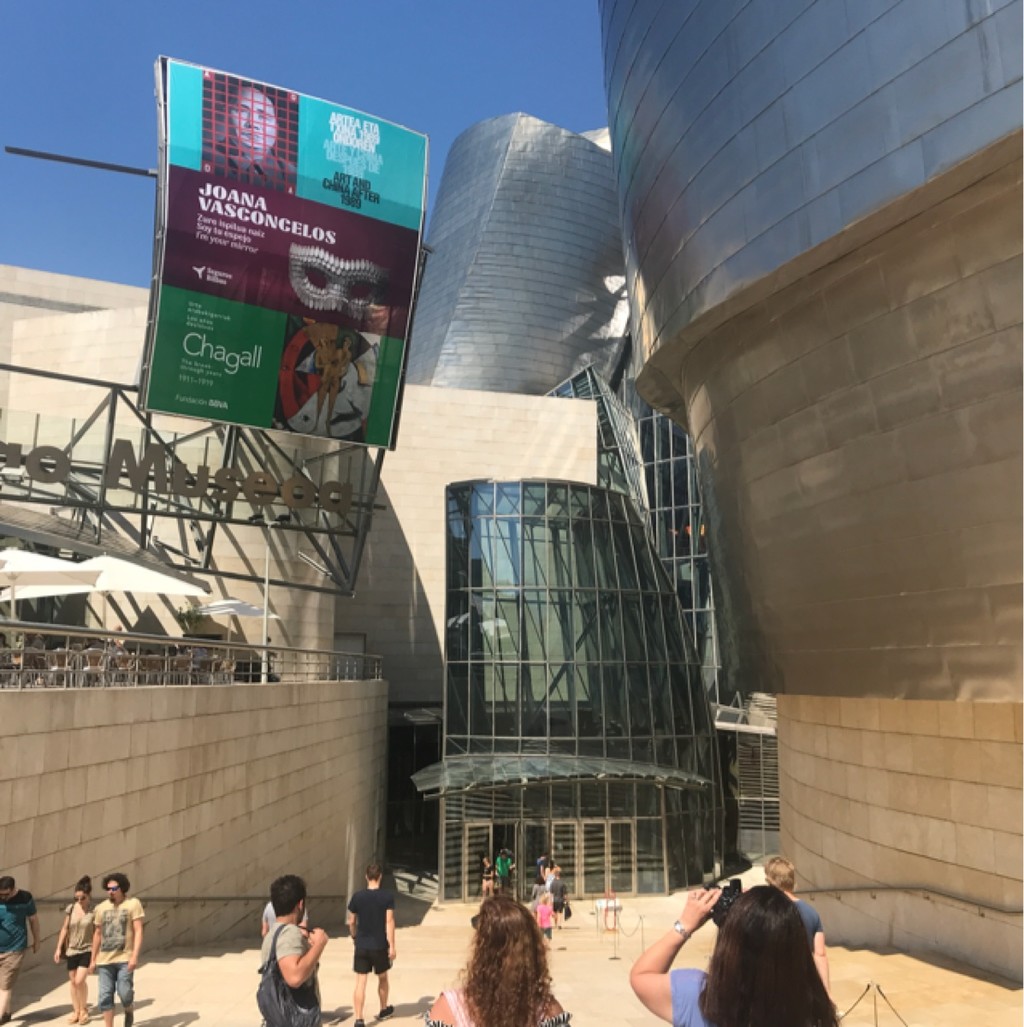
In front of the main entrance to the Guggenheim Museum, the façades seem to melt into a stream of light and metal. The glass atrium welcomes visitors with a transparent, airy presence — this is where the journey begins into one of the world’s most recognizable museums. Posters for temporary exhibitions often hang near the entrance, reminding visitors that the museum is always changing and living in the rhythm of contemporary art.
What to see: Permanent collection: Richard Serra’s installation The Matter of Time, Jenny Holzer’s light texts, works by Mark Rothko, Yves Klein, and Louise Bourgeois. Temporary exhibitions: they change regularly — painting, video art, fashion, architecture. It’s important to check the schedule before your visit.
Visitor tip: Set aside at least three hours to enjoy the full route without rushing — from the river reflections to the atrium’s glass dome. The best time to visit is early morning or late evening, when the museum’s titanium surface turns golden and looks almost alive.
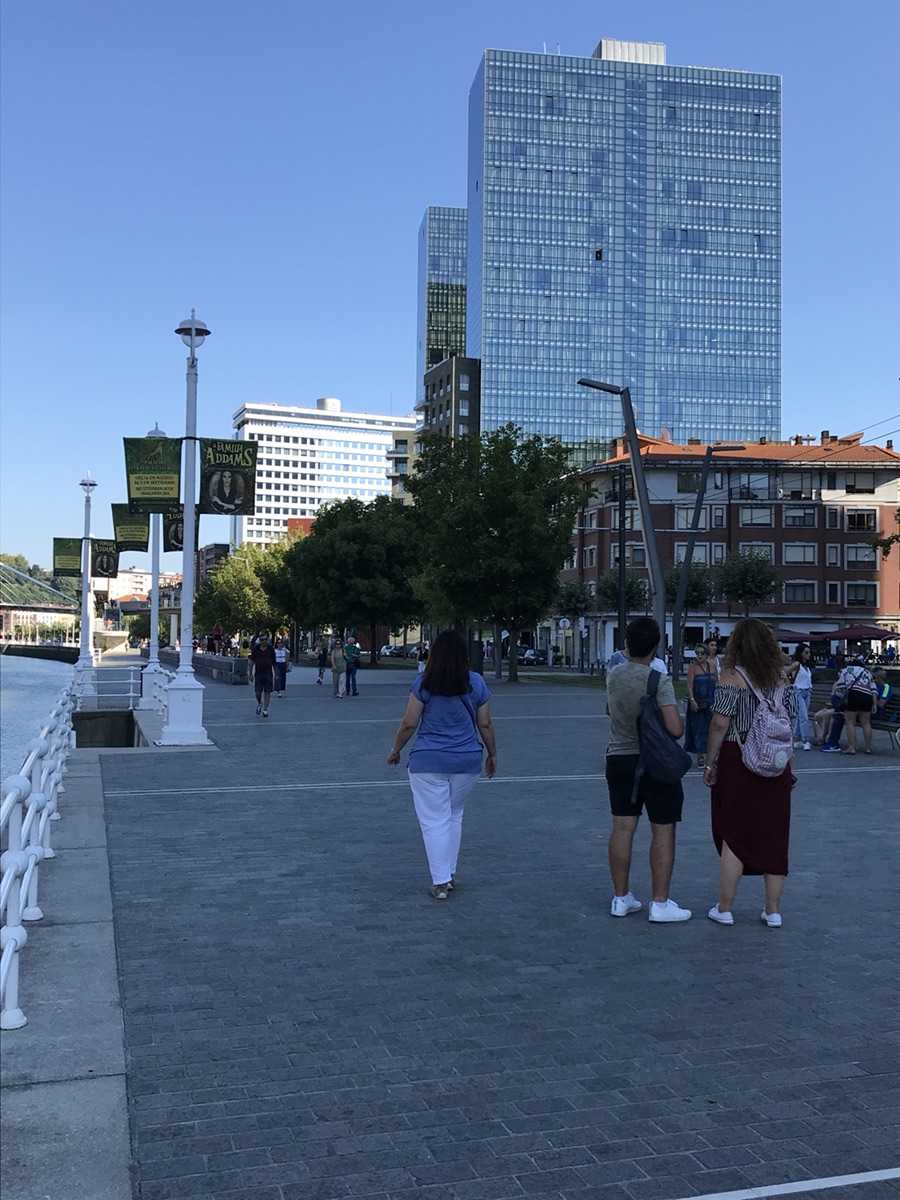
This part of the Nervión riverfront is one of the most scenic areas in Bilbao. From here, the city opens up in a new architectural harmony: glass, concrete, steel, and the green hills blend into one calm rhythm. On the left you can see the Isozaki Towers — designed by Japanese architect Arata Isozaki — a symbol of Bilbao’s new urban era. They rise across from the Guggenheim Museum, like an architectural dialogue between East and West.
A bit further along the river stands the elegant white arc of Zubizuri, which in Basque means “White Bridge.” It was designed by Santiago Calatrava — an architect, engineer, and poet of form. The suspension cables, stretched like the strings of a harp, create a feeling of flight, and the curved walkway makes the crossing feel like the soft sweep of a wing. Calatrava imagined it as a symbol of connection — between the old industrial Bilbao and the city’s new cultural center.
This riverside walk is the perfect conclusion to a visit to the Guggenheim Museum. Here you can feel how art extends beyond the museum walls and becomes part of the landscape. The city, the river, the bridges, and the people — everything continues the same idea that begins inside the museum: movement, reflection, and an endless dialogue between a person and their world.
Bilbao – Nervión Riverfront & Zubizuri Bridge