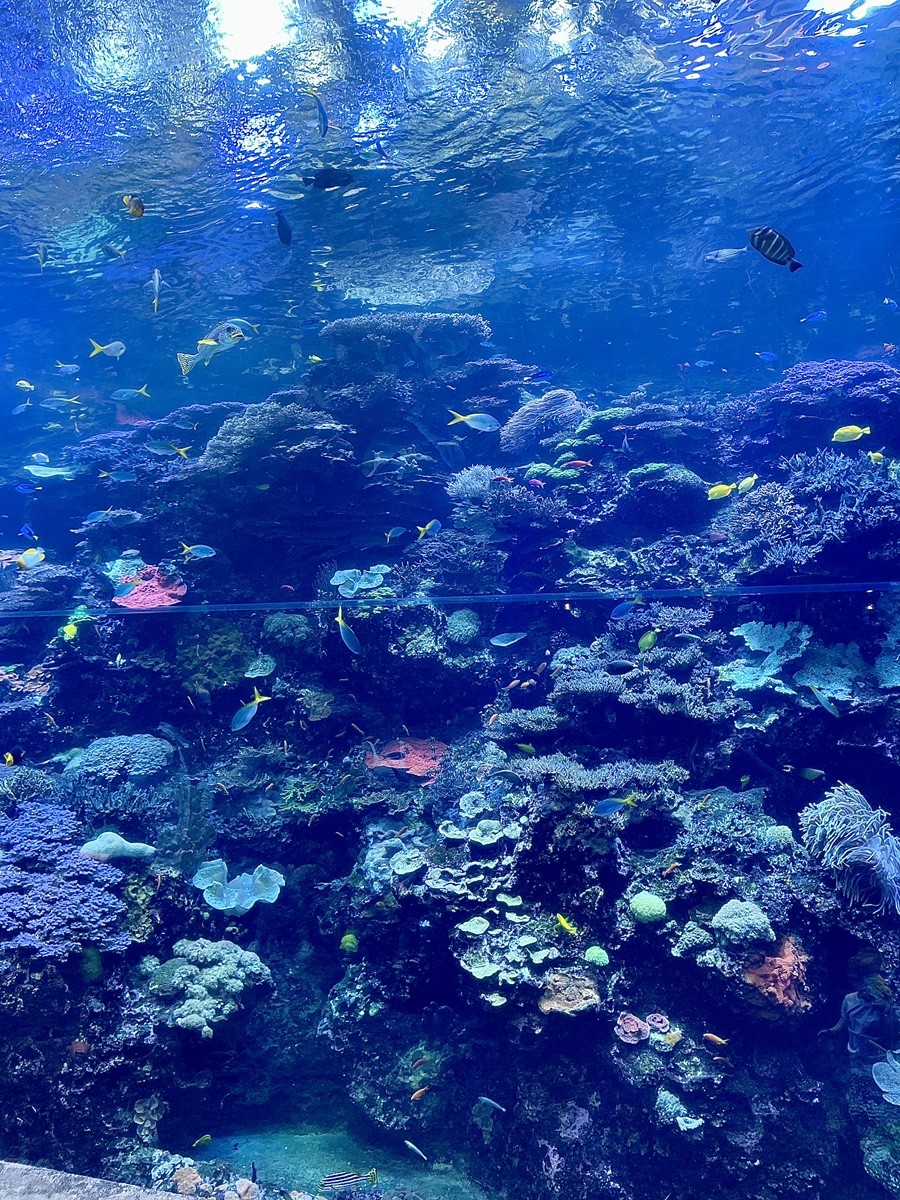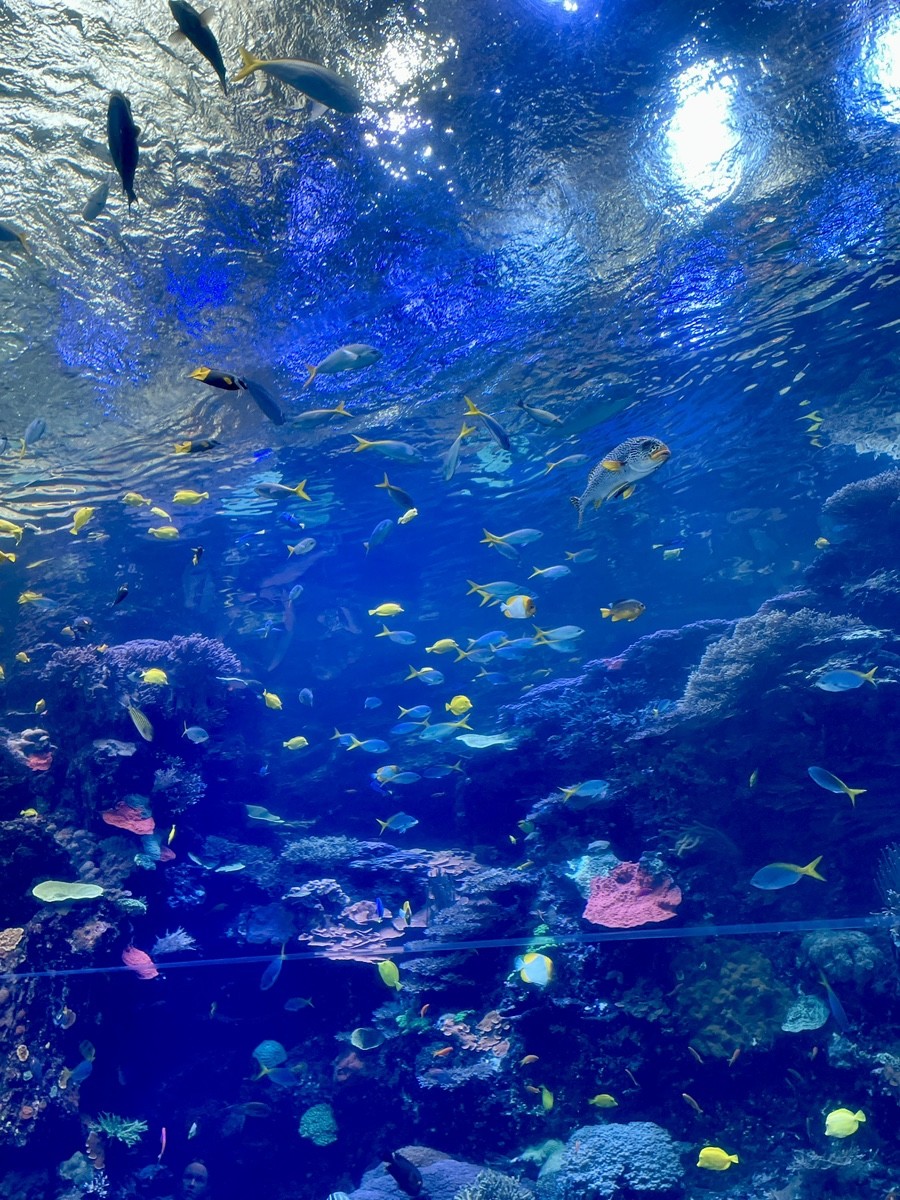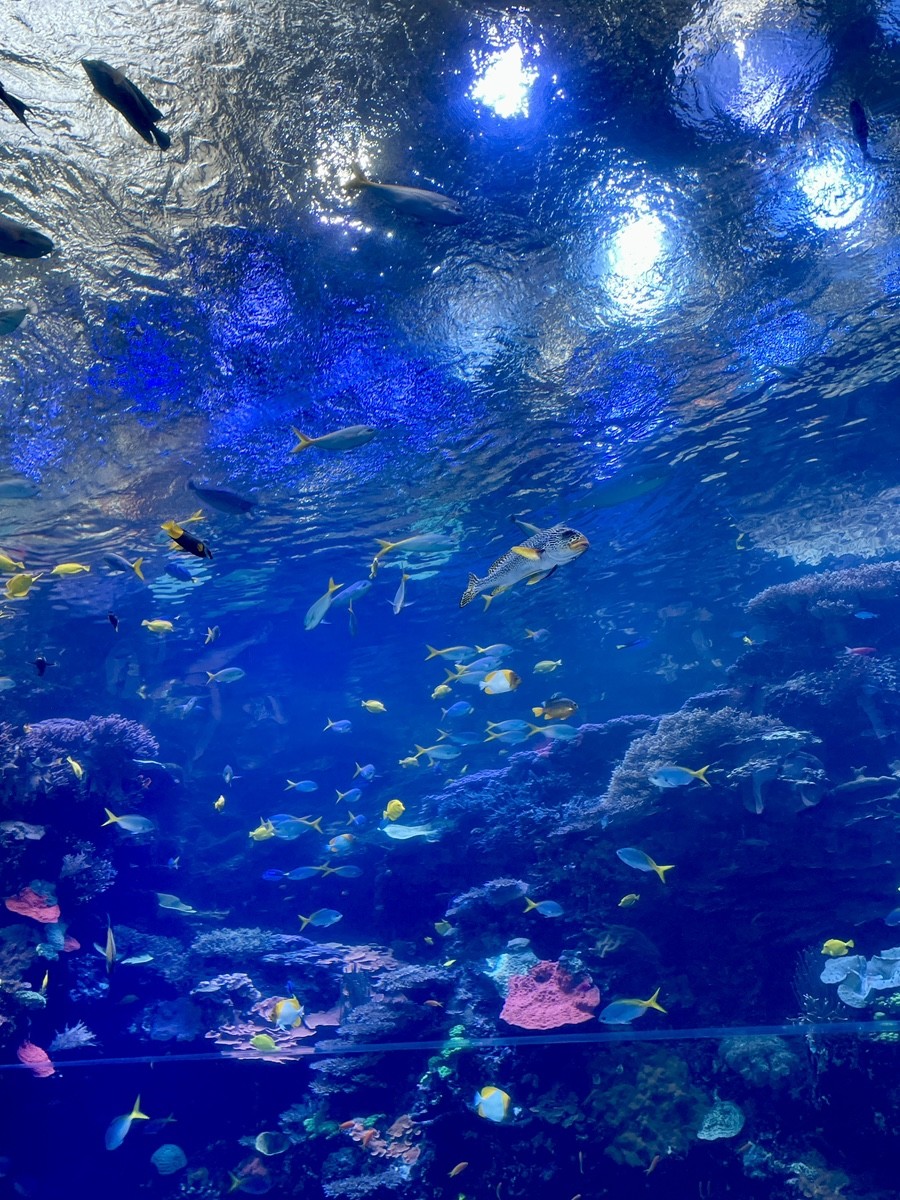

This gallery is one of the true gems of the Georgia Aquarium — a hall entirely devoted to coral reefs. Through the massive viewing window, visitors step into a living city of corals, sponges, and anemones layered like towers and streets, each home to countless species playing their part in the ecosystem.
Hundreds of reef fish dart across the scene: bright schools shimmer like confetti, solitary guards patrol their territory, and delicate plankton feeders hover in the currents. It feels like a real ocean, alive with constant motion.
Though coral reefs cover just 0.1% of the ocean floor, they provide habitat for nearly a quarter of all marine species. At the Georgia Aquarium, this world is recreated with striking accuracy: water temperatures held at 25–27 °C, lighting that mimics the cycle of day and night, and systems that generate currents while maintaining delicate chemical balance.
⸻
🟡 Yellow Tang (Zebrasoma flavescens) – Iconic bright-yellow reef fish from Hawaii and the Pacific. Facts:
1.	Can shift color — vivid yellow by day, pale at night.
2.	Equipped with a sharp “scalpel” near the tail for defense.
3.	Overfishing made it a symbol of reef conservation efforts in Hawaii.
🔵 Blue Tang (Paracanthurus hepatus) — the “Dory” fish – Blue body with black markings and a yellow tail. Facts:
1.	When threatened, they play dead by lying on their side.
2.	Juveniles are bright yellow before maturing into blue.
3.	Live in symbiosis with reefs by grazing algae that would otherwise smother corals.
⚪⚫ Moorish Idol (Zanclus cornutus) – Striking black-and-white stripes with a long trailing fin. Facts:
1.	Seen as a symbol of good luck in Hawaii, called mo‘o iwi.
2.	Infamous among aquarists — rarely lives long in captivity.
3.	Specializes in eating sponges, a tough diet few reef fish can handle.
🐟 Yellowtail Snapper (Ocyurus chrysurus) – Silver body streaked with a golden line and bright yellow tail. Facts:
1.	Migrate long distances to gather for mass spawning events.
2.	A key commercial species across the Caribbean.
⸻
In the middle of Atlanta, this recreated coral reef is a reminder of the ocean’s fragile beauty — and of the extraordinary diversity that thrives in just a sliver of the sea.
Atlanta began as a modest railway stop — the end of the line that unexpectedly grew into the South’s busiest hub. The city was burned to the ground during the Civil War, yet out of the ashes rose a bold, industrious Atlanta. This is the birthplace of Coca-Cola, the cradle of the modern Civil Rights Movement, and home to the largest Black middle class in the United States. Few cities embody change and resilience the way Atlanta does.
At the heart of downtown lies Pemberton Place, a cultural crossroads where three icons stand side by side: the vast Georgia Aquarium, the playful World of Coca-Cola, and the moving Center for Civil and Human Rights. A short walk from the parking lot takes you past fountains and green lawns straight into this vibrant trio.
The Georgia Aquarium is breathtaking in scale — the largest in the Western Hemisphere. Its glass tunnel immerses you in the deep, as whale sharks and graceful manta rays glide overhead, surrounded by a dazzling cast of marine life. The highlight for many visitors is the dolphin presentation in the “Ocean Theater,” a show where science and spectacle merge to reveal the intelligence and energy of these remarkable animals.
The World of Coca-Cola tells another side of Atlanta’s story. From Dr. John Pemberton’s original pharmacy syrup to a brand recognized by billions, the museum traces the evolution of a cultural icon. Visitors marvel at the legendary vault said to guard the secret formula, and the experience ends in the famous tasting room — more than 100 flavors from 40 countries. From familiar Fanta and Sprite to exotic drinks that spark delight or surprise, every sip is part of a global journey that began right here in Atlanta.