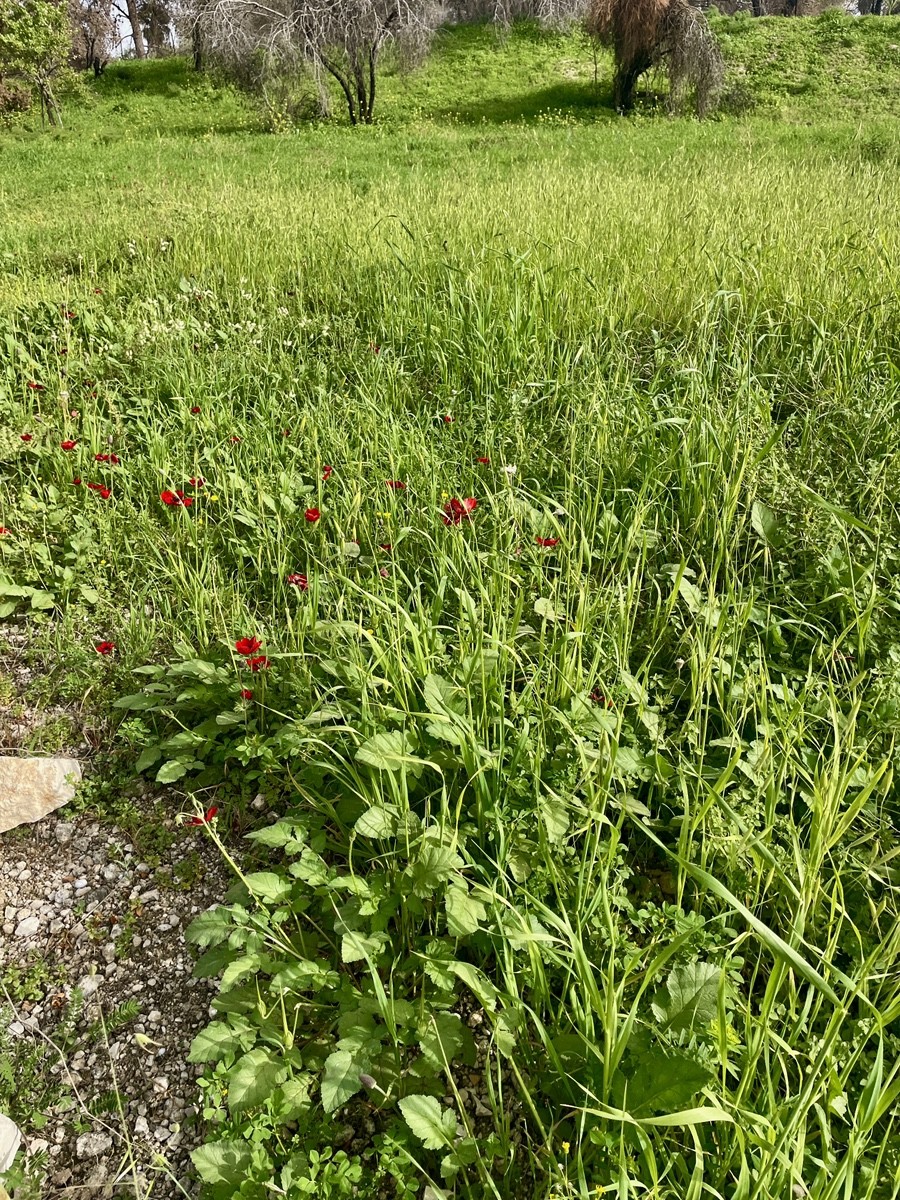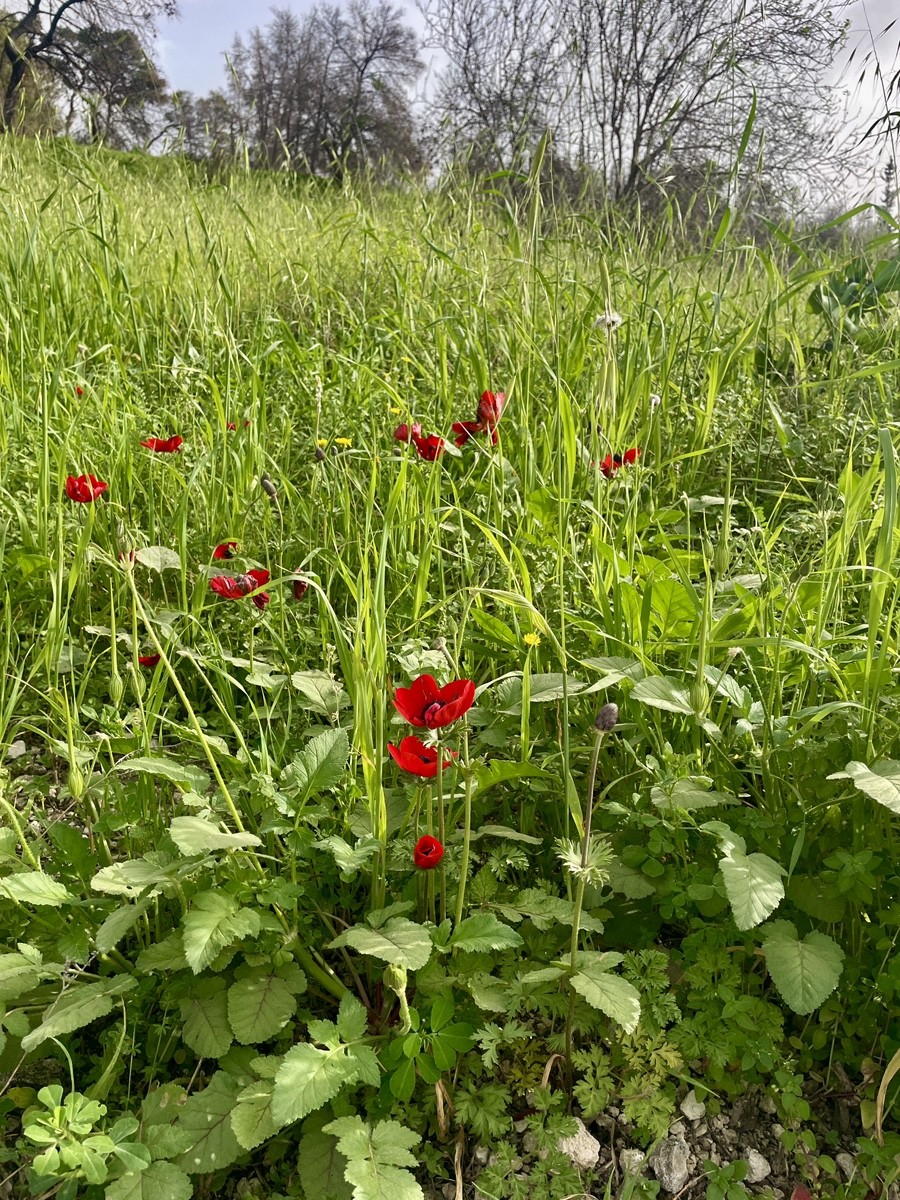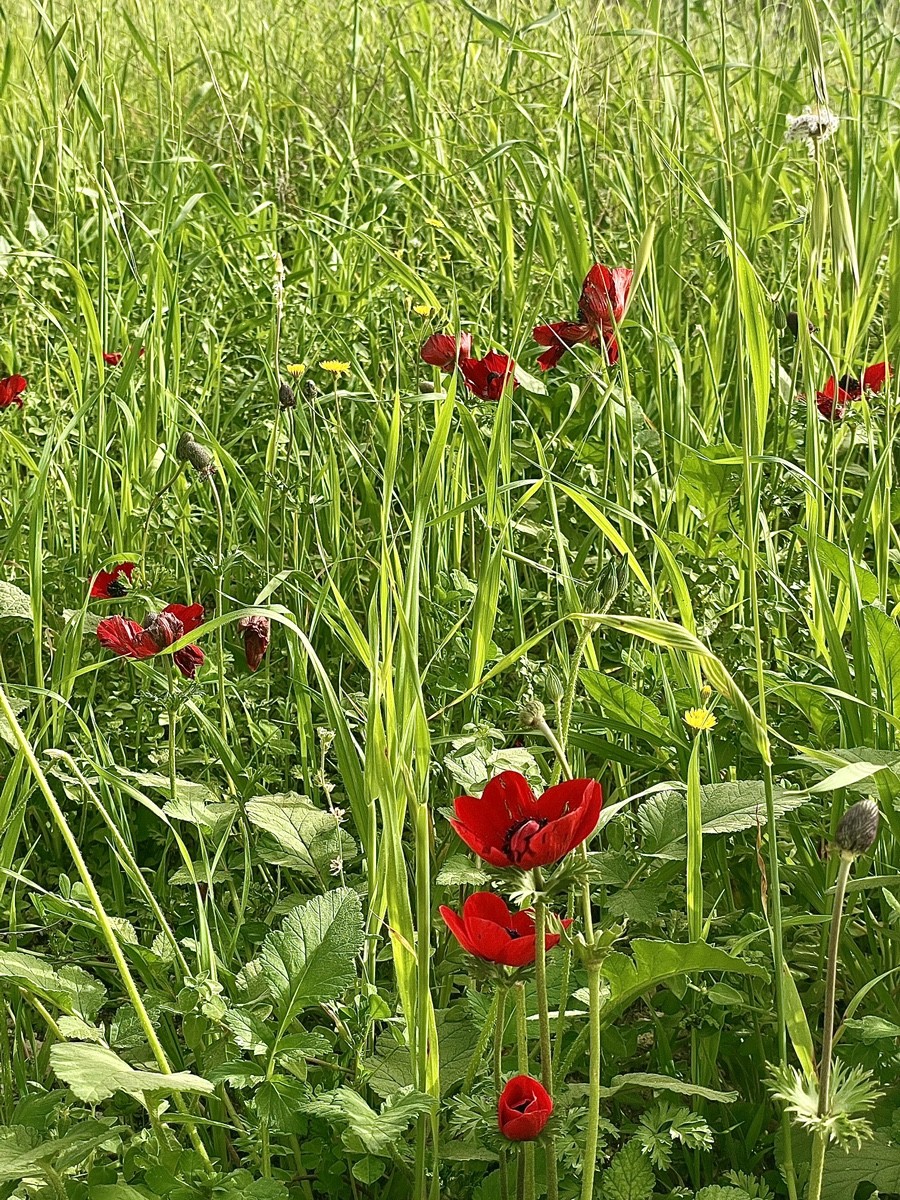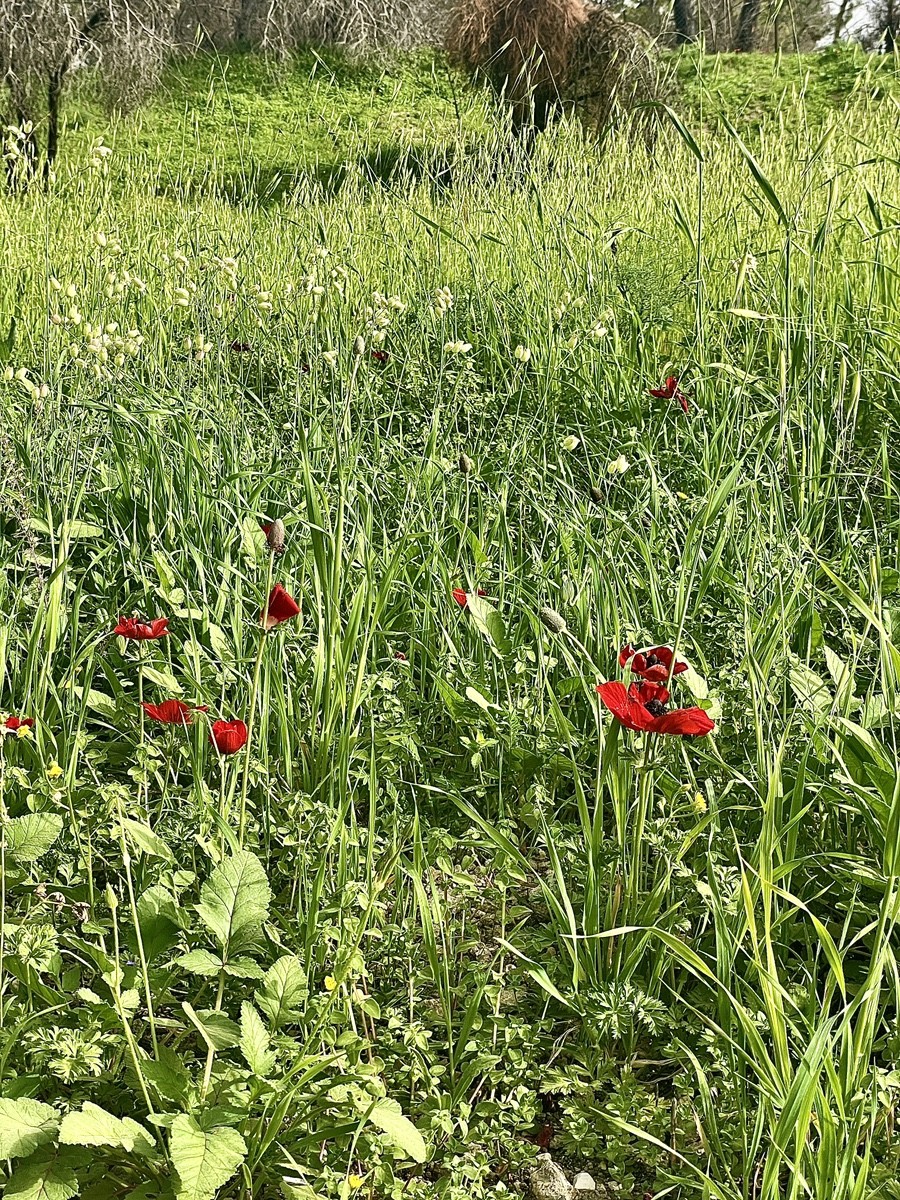

The Shphelah foothills are defined by the vibrant contrast of Anemones (Kalaniyot)—the iconic red symbol of the Israeli winter—blooming amidst lush grasses and wild mustard. This verdant landscape is fleeting; as summer approaches, the valleys quickly transition from deep greens to golden browns.
In 2025, this delicate ecosystem was tested by devastating fires that consumed significant portions of the coniferous forests. However, the ancient olive groves and the limestone tombs of Hammat proved resilient, surviving the flames to maintain the unique character of the Latrun Salient. The enduring presence of these historical and botanical landmarks underscores a cycle of destruction and rebirth that has defined this territory for millennia.
The journey begins in the almond blossoms of Sha'alvim, a landscape rooted in the biblical territory of the Tribe of Dan. The route advances through the strategic Latrun salient to Emmaus-Nicopolis, where Byzantine ruins mark the site of the Resurrection—land preserved through the spiritual visions of Mariam Baouardi and the patronage of Countess Beatrice de Saint-Cricq.
The path culminates at the abandoned Sorek Station, a limestone relic of the Ottoman Empire. Inside, time stands still among concrete staircases and iron veterans: a freight car and a yellow-marked shunting locomotive from the 1990s. A modest monument to Egyptian labourers honours the unsung builders of the WWI era. Today, the silence of these rusted tracks is only broken by the whistle of modern trains, bridging the gap between ancient faith and imperial ruins.