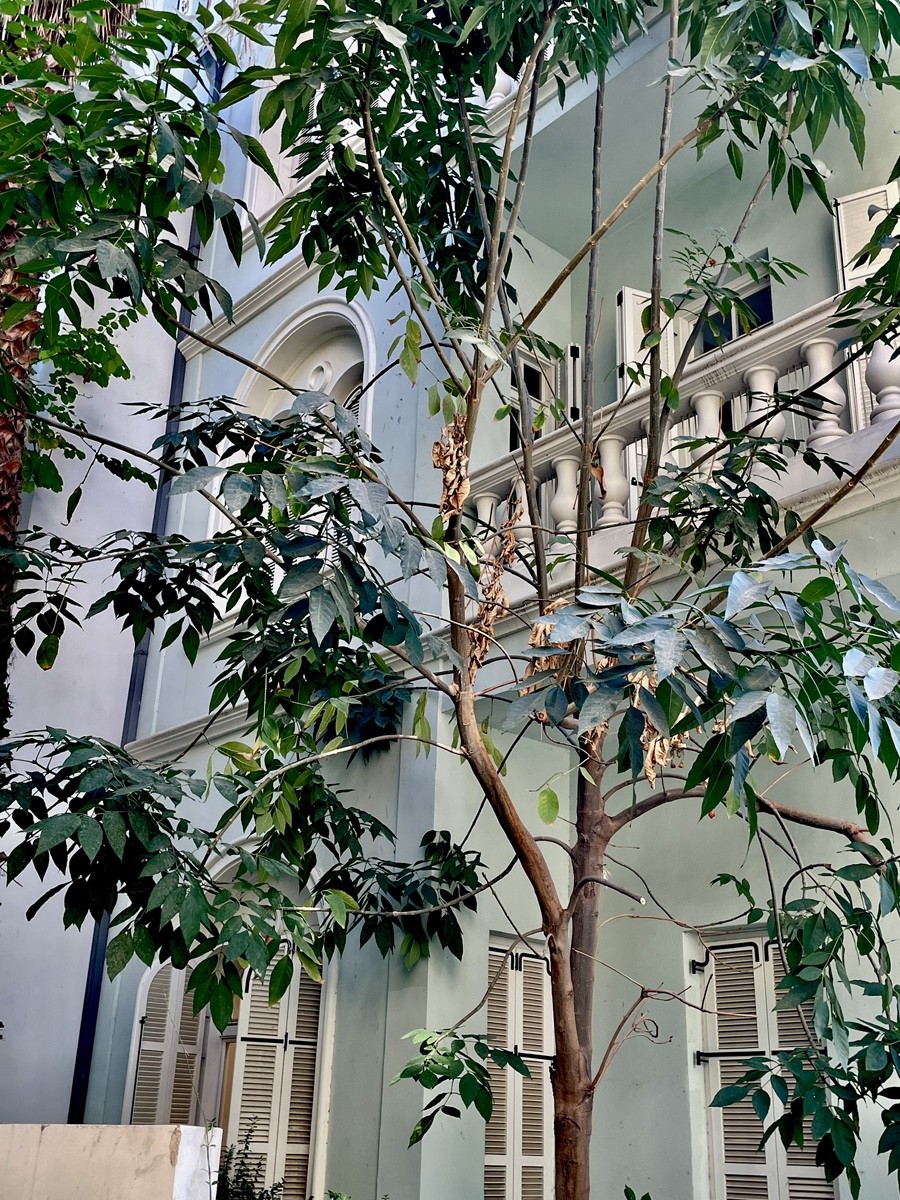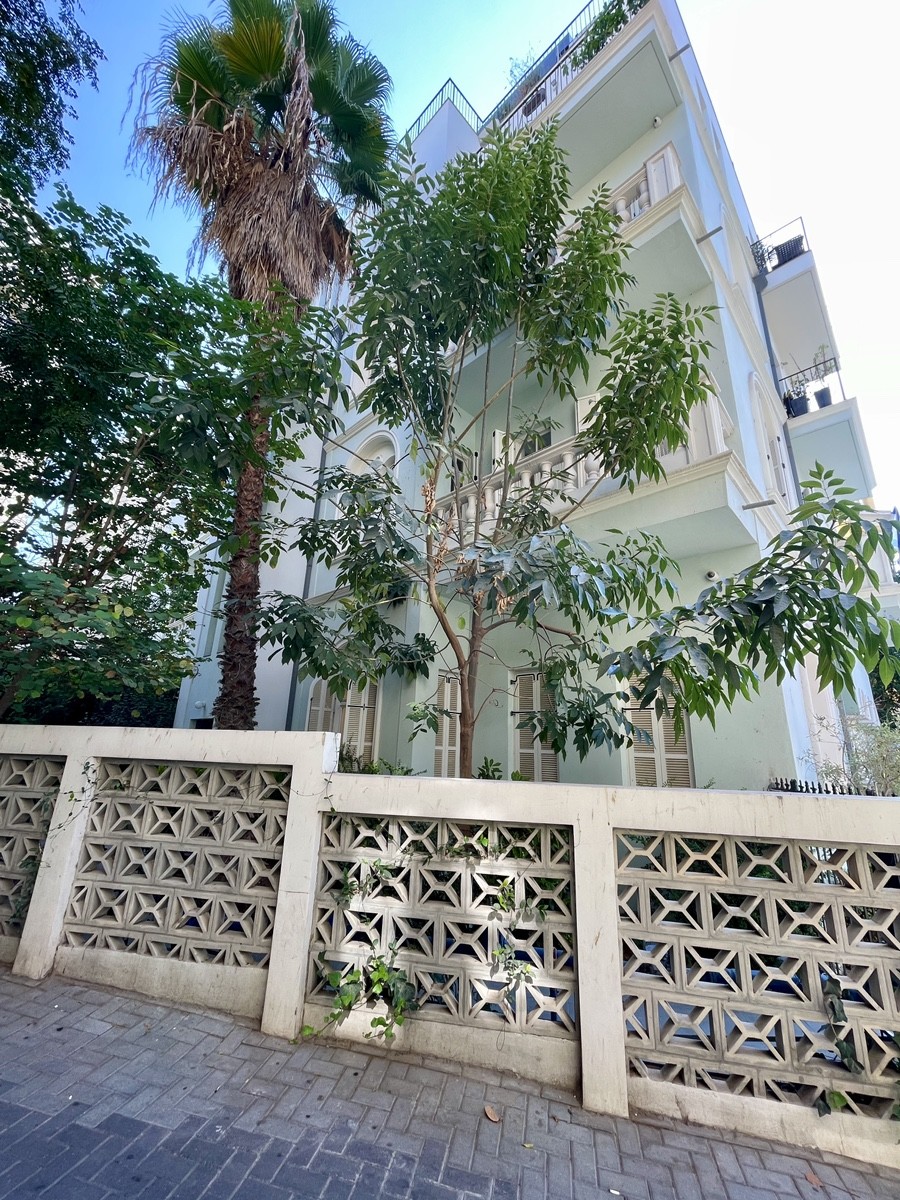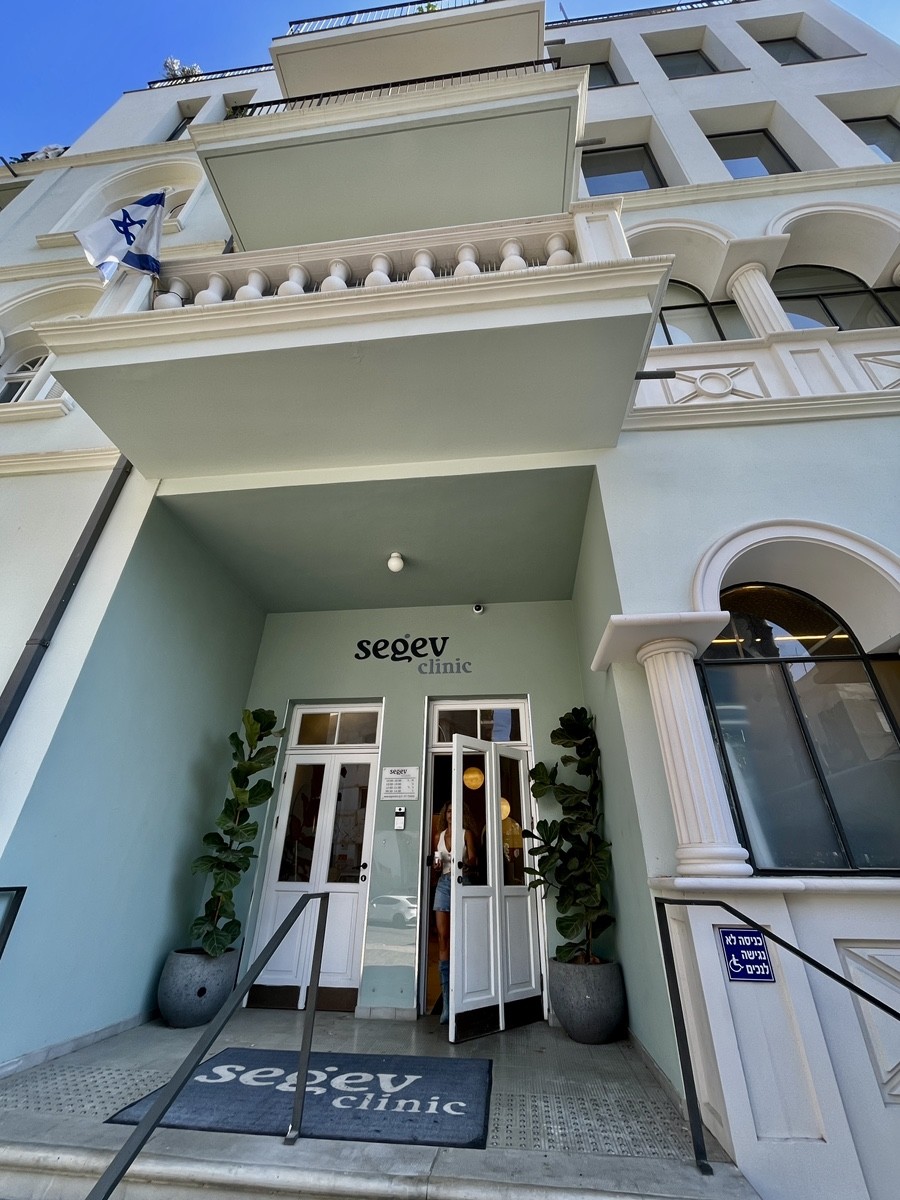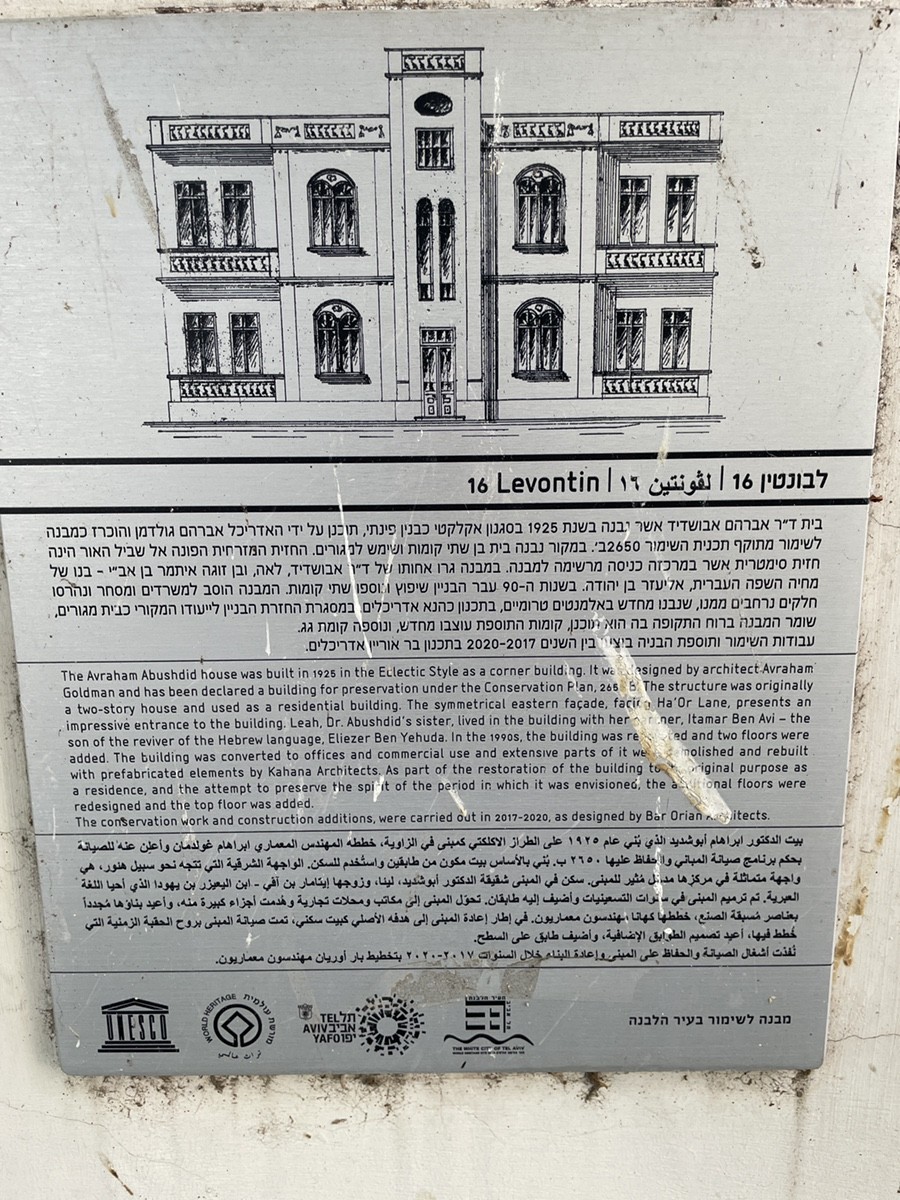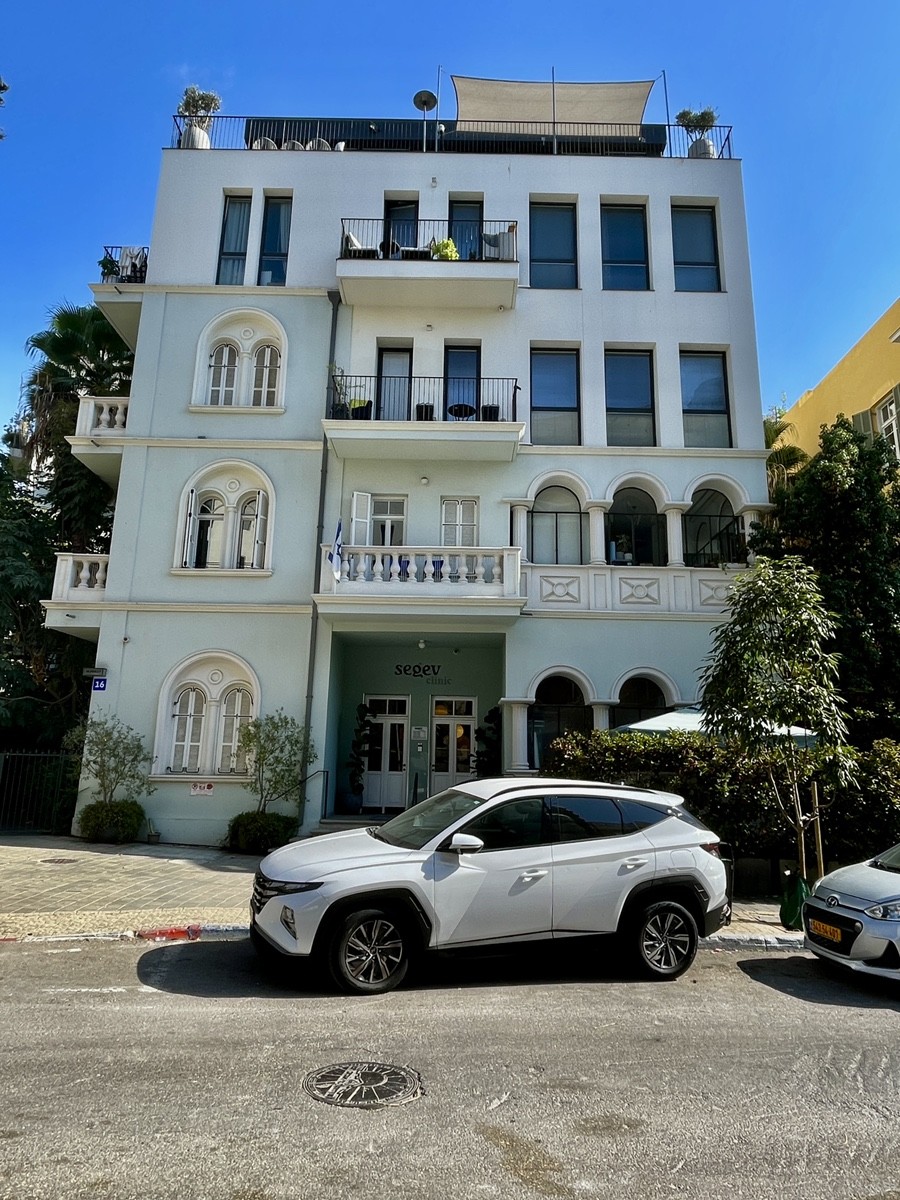

The house at 16 Levontin Street was built in 1925, when Tel Aviv was beginning to find its own architectural voice. Designed by **Avraham Abushdid**, it embodied the **eclectic style** of the period — symmetrical façades, arched windows, decorative stucco, balustrades, and a small central tower with an oval window. The house stood at a crossroads where the sandy road from Mikveh Israel led toward the city centre, serving not only as a residence but also as a marker of social standing.
Here lived **Leah**, the architect’s sister, with her husband **Itamar Ben-Yehuda**, grandson of **Eliezer Ben-Yehuda**, the founder of modern Hebrew. Their presence gave the house a special cultural resonance: its rooms echoed with Hebrew conversation, debates over words, and dreams of a new language for a new nation.
In the 1990s, like many buildings in the area, it was converted into offices. But between **2017 and 2020**, architects **Bar Orian** and **Kahana** restored the building, returning its original structure and harmony while adding a discreet modern upper floor. Today, the house once again looks as if it could tell not only its own family story, but also that of a city born from words, lines, and light.
You’ll walk through the very heart of old Tel Aviv — a neighbourhood where orange groves, missionary dreams, and the glow of early electricity all intertwined. The journey begins at the Model Farm and its iconic water tower, the birthplace of irrigation in Eretz Israel. From there, we’ll trace the footsteps of the Ishma’ilov family — Mashhadi *anusim* who built rental houses and inns for Persian merchants, yet lost much of their fortune under dramatic circumstances. We’ll pause in Gan HaHashmal, the city’s second public garden, which has witnessed the romance of the 1920s, decline, and the wave of 21st-century gentrification. The walk culminates at the grand Ohel Moed Synagogue — the “Tent of Meeting” — where eastern communities claimed their rightful place in the growing city. This is a journey through layers of time: from water to electricity, from merchant houses to gardens and synagogues — a story where every street guards a secret and every building speaks for its generation.