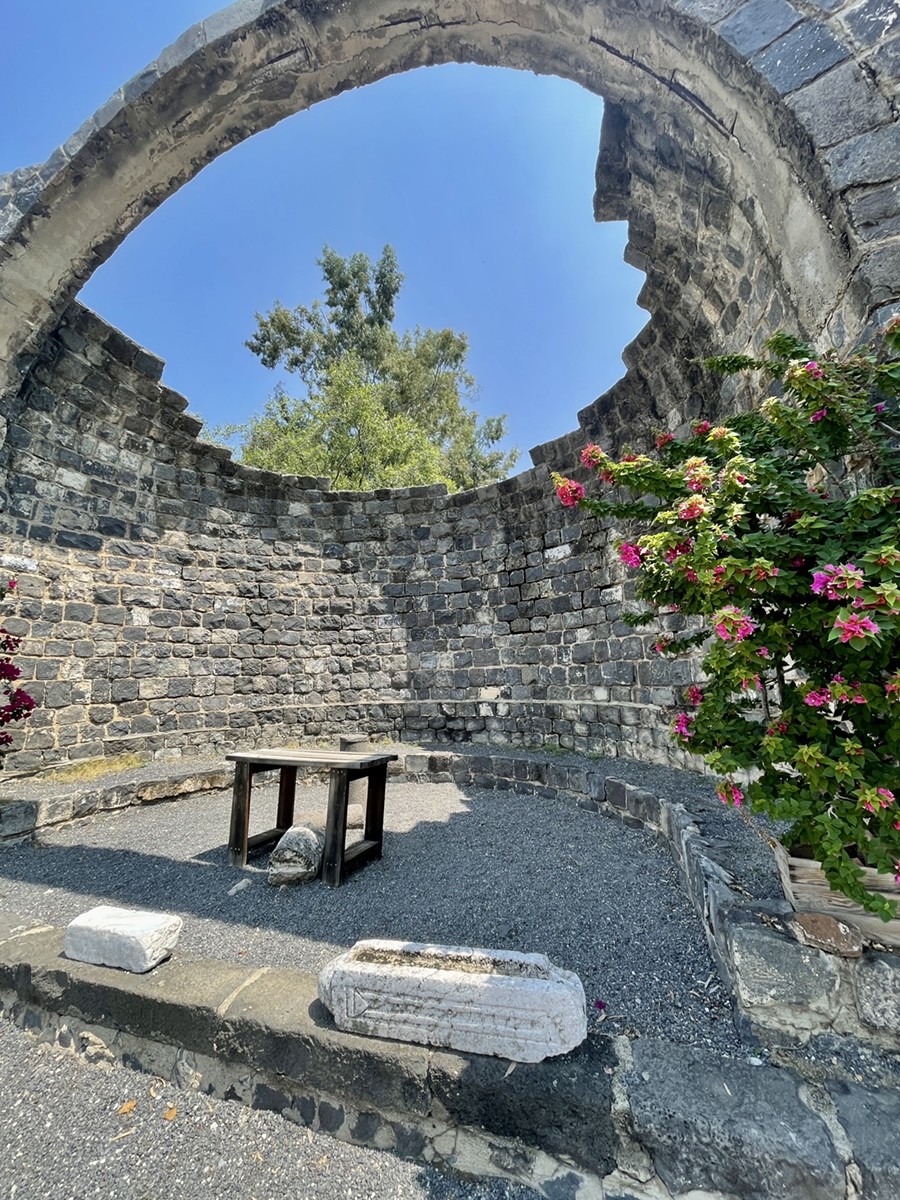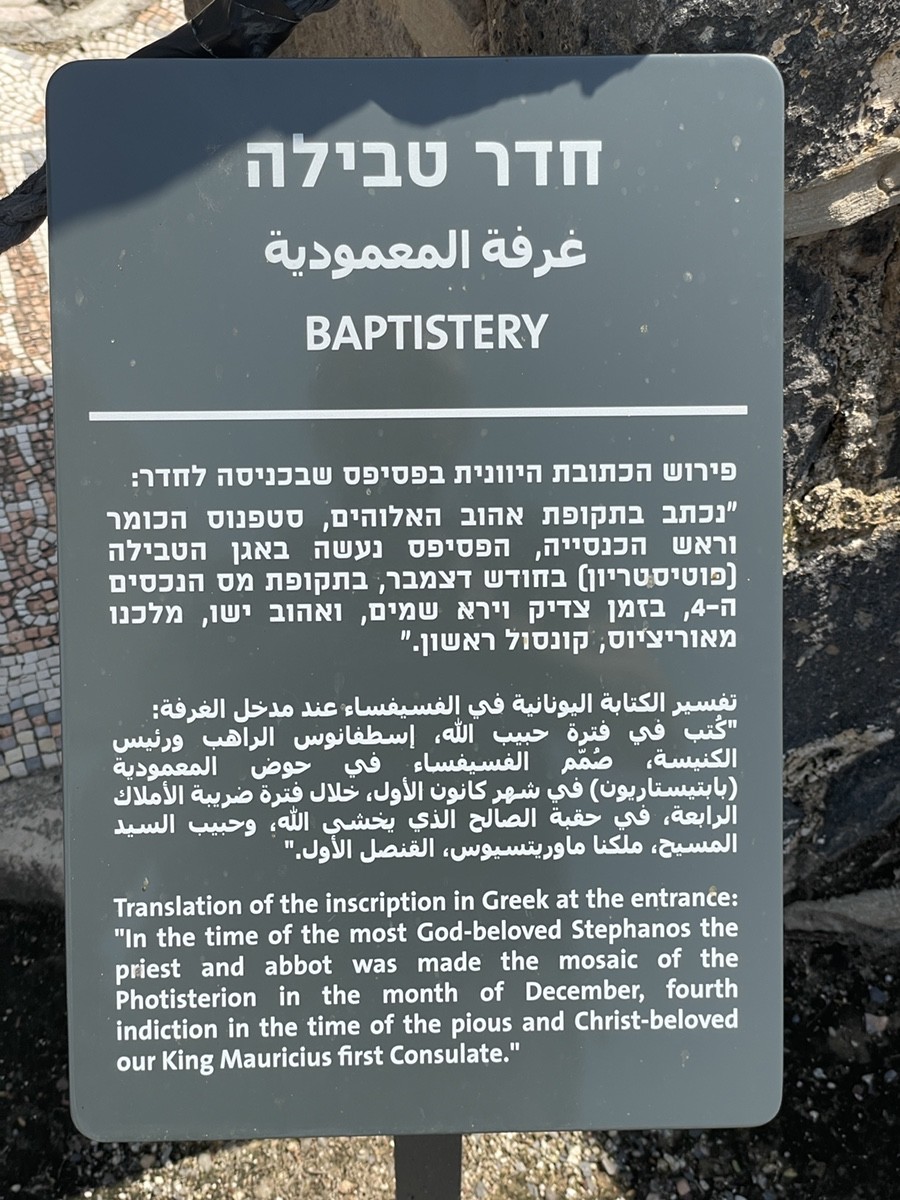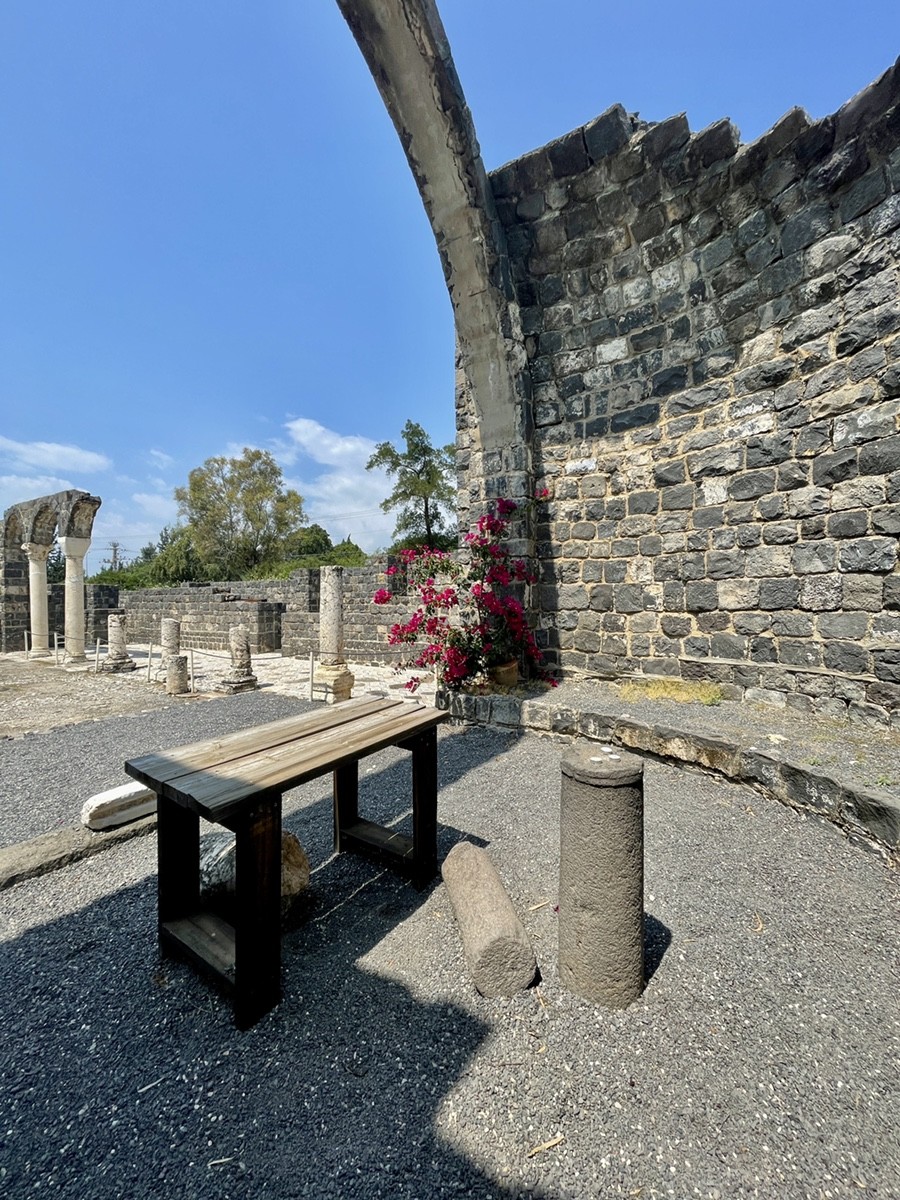

The baptistery was a huge deal in the monastery because that's where people were officially baptised. If you look down at the mosaic floor, there's actually an inscription that acts like a time stamp.
The Emperor's Stamp It says this place was built back when Emperor Maurice was in charge (around 582–602 AD).
Who was this guy? Maurice was basically a rockstar general. He wrapped up a massive war with the Persians, pushed the Empire's borders way out to the East, and even secured their positions in Italy and Africa.
The Martyr: He ended up being canonised as a martyr by the Church, so he's a legendary figure in that world.
Why was this spot a "Hot Zone" This wasn't just a quiet place for prayer; it was a strategic outpost.
The Gateway: This was the main road leading up to the Golan Heights, which was the gateway to the Persian (Parthian) Empire.
The Frontier: In the tug-of-war between the Byzantines and the Persians, this was the front line. Later, this same route became the path for Arab Muslim expansion.
So, when you're standing there looking at the font, you're basically standing at a historical crossroads that shaped the whole map of the Middle East.
Imagine the perfect spring morning in Israel—the sun is warm but not yet "blasting" you, and the air smells like fresh wildflowers. It's the absolute best time to grab the keys and head to the eastern side of the Kinneret (Sea of Galilee).
First Stop: Kursi & The Views Start your day at Kursi. It's this massive Byzantine monastery ruin where the vibe is just... super chill. You can walk across ancient mosaics and literally feel the history. But don't stay too long because the drive up the mountain is even better. Make sure to pull over at Mitzpe Nukieb. On a clear day, the view is insane—you see the whole blue "bowl" of the Kinneret stretched out from Tiberias to the Golan Heights. It's one of those "stop and just stare" moments.
The Main Event: Susita (Hippos) Then, you've got the crown jewel: Susita. It's like a ghost city sitting on a hill. They call it the "Pompeii above the lake." You'll walk through the old Roman forum and see giant columns that were knocked down by an earthquake 1,200 years ago and just... stayed there. It's got this wild mix of ancient Roman vibes and old Israeli military outposts.
Trains and Hummus When you head back down, swing by the old Tzemach train station. It's been restored and feels like a movie set from the early 1900s—back when trains ran all the way from Haifa to Damascus.
Finally, once you're officially "toured out," hit up Hummus Eliyahu at the Tzemach junction. Trust me, a warm bowl of creamy hummus with olive oil, fluffy pita, and a solid cup of coffee is the only way to end a trip like this.
Pro tip: Go right now while it's spring. The Golan is bright green, and everything looks like a masterpiece.