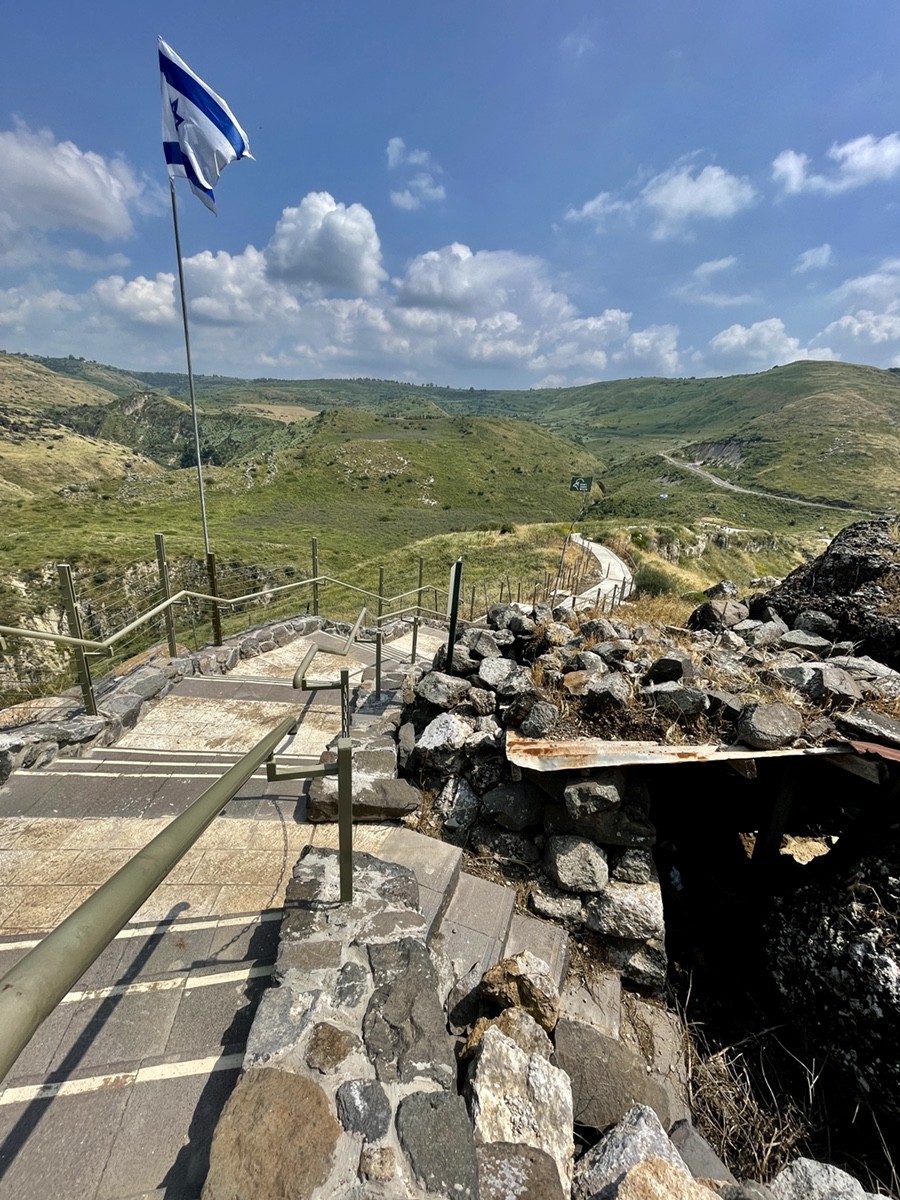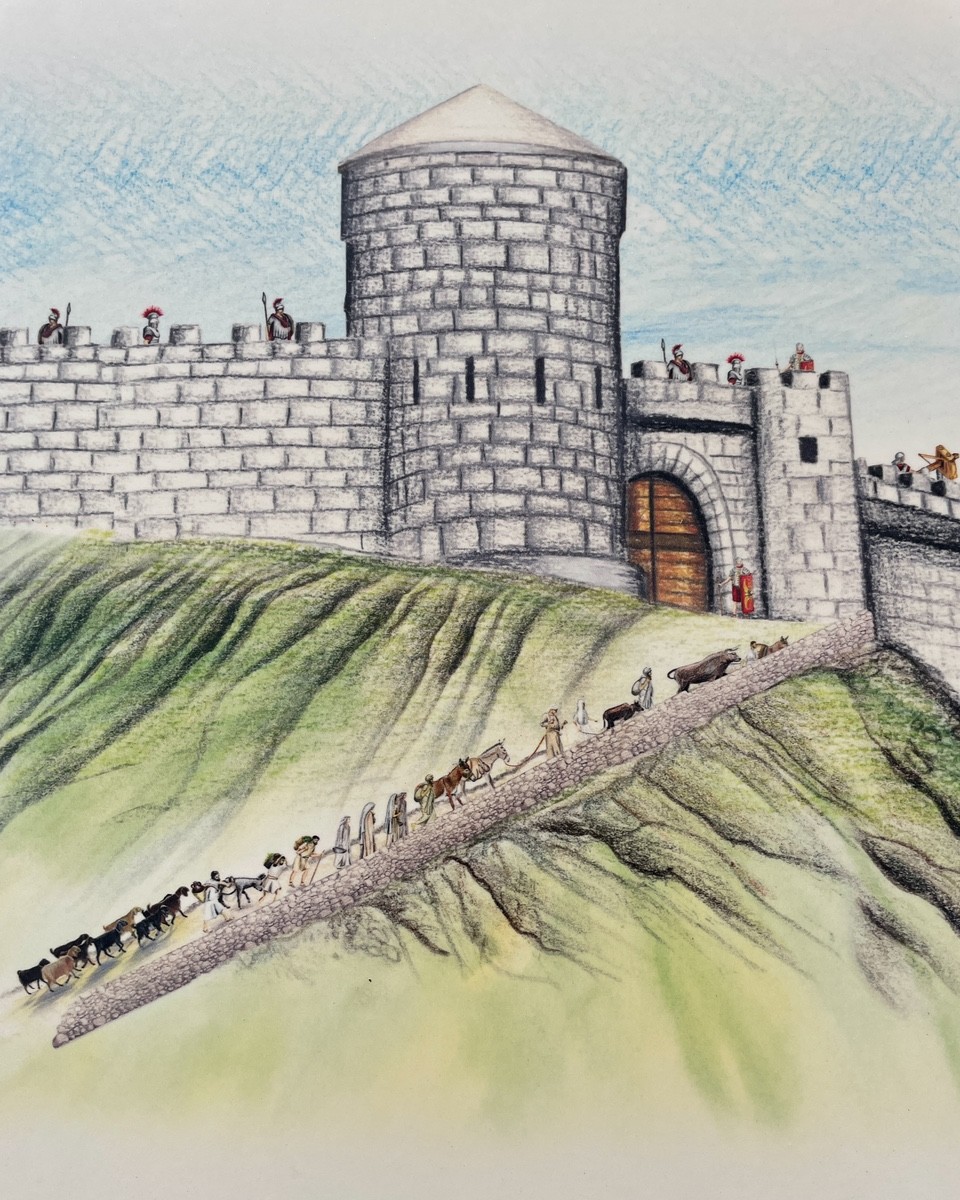

This is one of the coolest spots on the mountain because it's where two different wars, fought 2,000 years apart, literally share the same walls. Here's the breakdown of the East Gate:
Where Roman Towers Meet Israeli Bunkers We're standing at the city's main defensive hub. It's wild because ancient architects and modern military engineers both looked at this exact spot and came to the same conclusion: "If we hold this gate, we hold the mountain."
- The Ancient "Killing Zone" Back in the day, the Romans didn't mess around. The gate was flanked by two massive towers—one round and three stories high, the other square.
The Firepower: They had catapults mounted up there, ready to rain down spears and stones on anyone trying to cross the "saddle."
The Secret Passage: Between the towers, a vaulted hallway allowed guards to zip back and forth along the wall without being seen.
- The Modern Fortification (1948–1967) Fast forward to the 20th century. After Israel's independence, Susita became a vital border post facing Syria. The soldiers here looked at the ruins and realised the Romans had already done half the work for them.
The Moat 2.0: That 7-meter-wide ancient ditch? It turned out to be the perfect anti-tank trench.
The "Basalt & Concrete" Mix: If you look closely at the gate today, you'll see modern concrete bunkers and trenches built right into the ancient ruins. The soldiers used the massive basalt blocks from the Roman era as extra armour against Syrian artillery. It's this weird, forced "architectural mashup" where ancient stone was saving 20th-century lives.
- The Same Old View The logic hasn't changed a bit. The bunkers were positioned to give a 360-degree view of the Golan Heights to the east—the same view the Roman sentries were staring at two millennia ago.
Whether it was a Roman soldier with a ballista or an Israeli soldier with a rifle, the job was the same: watch that narrow neck of land and make sure nobody crosses the moat.
Imagine the perfect spring morning in Israel—the sun is warm but not yet "blasting" you, and the air smells like fresh wildflowers. It's the absolute best time to grab the keys and head to the eastern side of the Kinneret (Sea of Galilee).
First Stop: Kursi & The Views Start your day at Kursi. It's this massive Byzantine monastery ruin where the vibe is just... super chill. You can walk across ancient mosaics and literally feel the history. But don't stay too long because the drive up the mountain is even better. Make sure to pull over at Mitzpe Nukieb. On a clear day, the view is insane—you see the whole blue "bowl" of the Kinneret stretched out from Tiberias to the Golan Heights. It's one of those "stop and just stare" moments.
The Main Event: Susita (Hippos) Then, you've got the crown jewel: Susita. It's like a ghost city sitting on a hill. They call it the "Pompeii above the lake." You'll walk through the old Roman forum and see giant columns that were knocked down by an earthquake 1,200 years ago and just... stayed there. It's got this wild mix of ancient Roman vibes and old Israeli military outposts.
Trains and Hummus When you head back down, swing by the old Tzemach train station. It's been restored and feels like a movie set from the early 1900s—back when trains ran all the way from Haifa to Damascus.
Finally, once you're officially "toured out," hit up Hummus Eliyahu at the Tzemach junction. Trust me, a warm bowl of creamy hummus with olive oil, fluffy pita, and a solid cup of coffee is the only way to end a trip like this.
Pro tip: Go right now while it's spring. The Golan is bright green, and everything looks like a masterpiece.