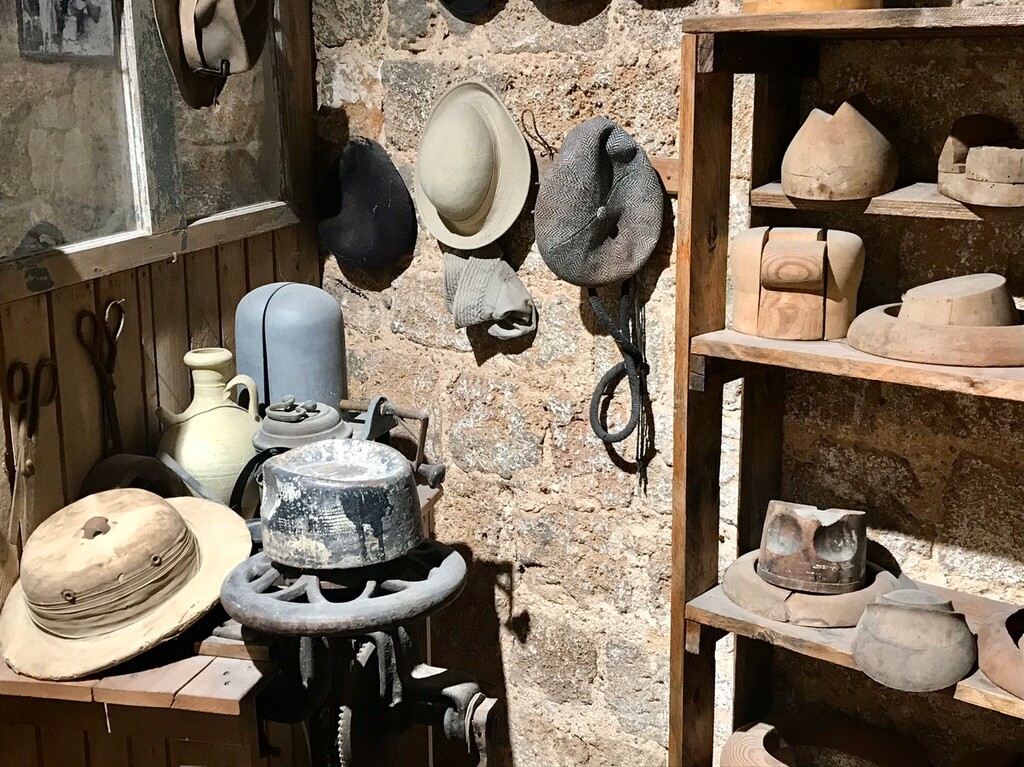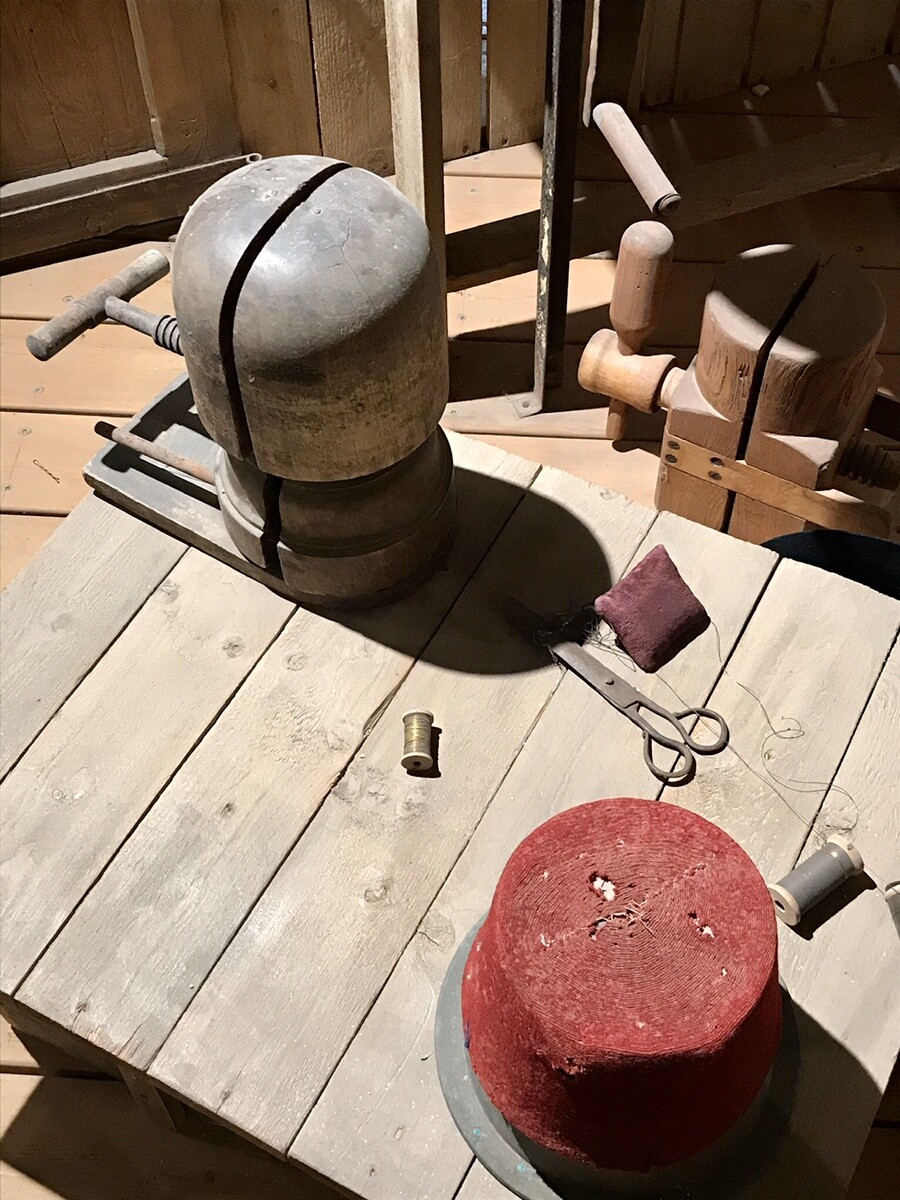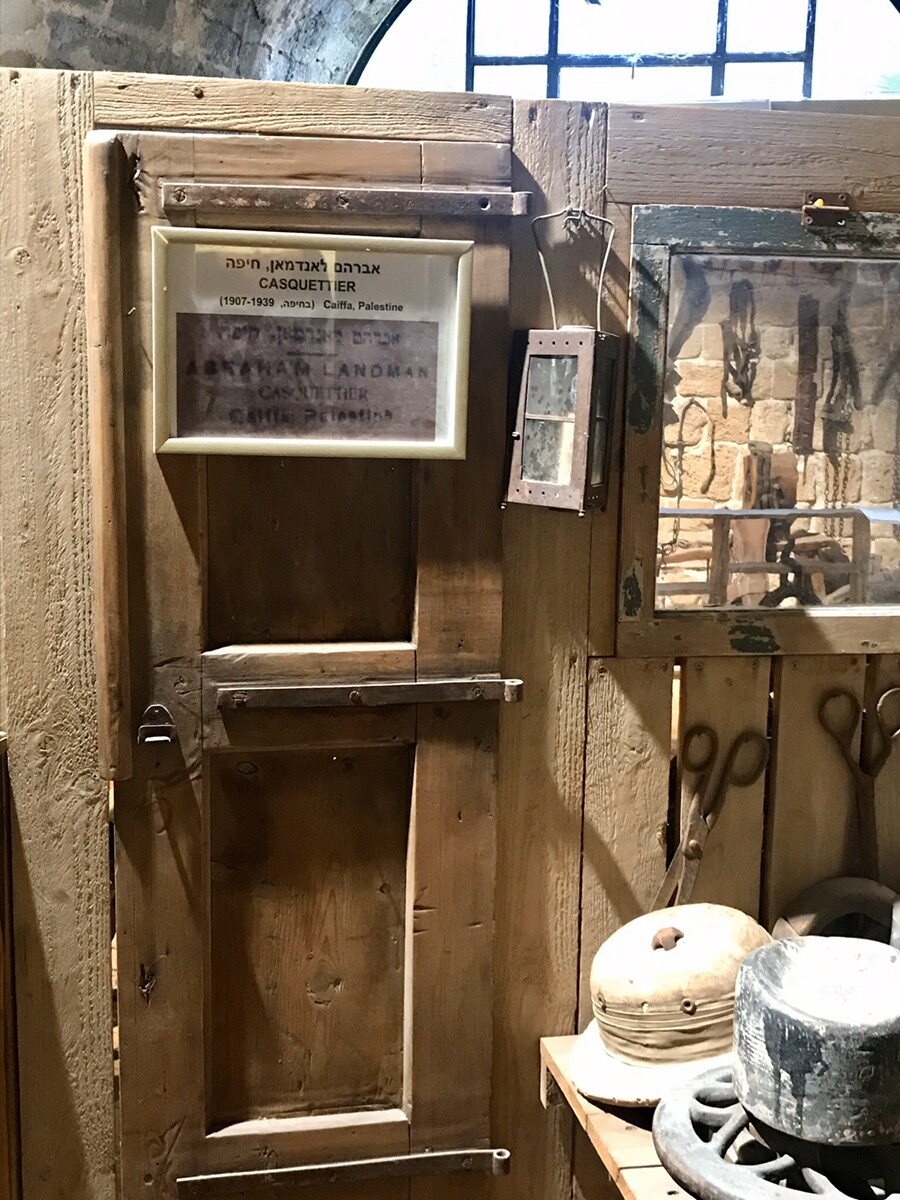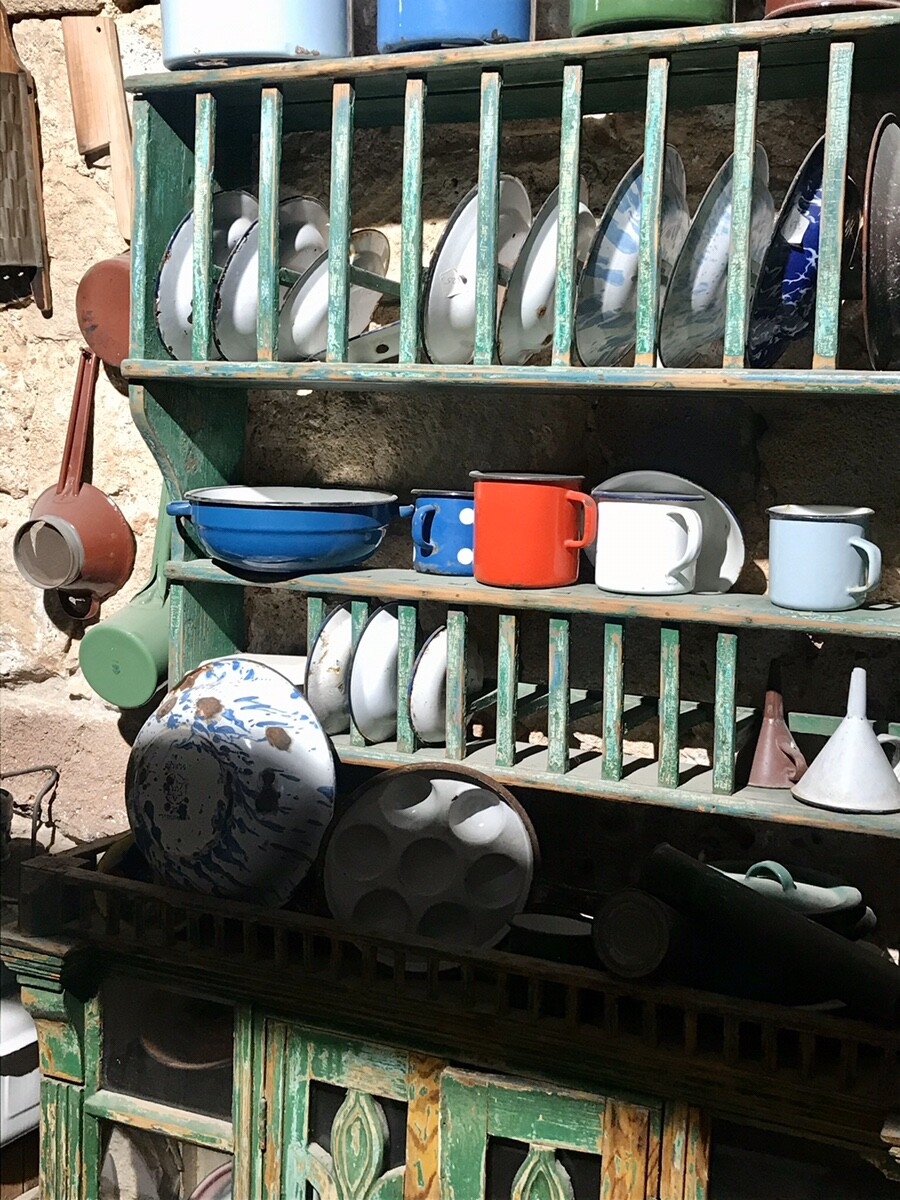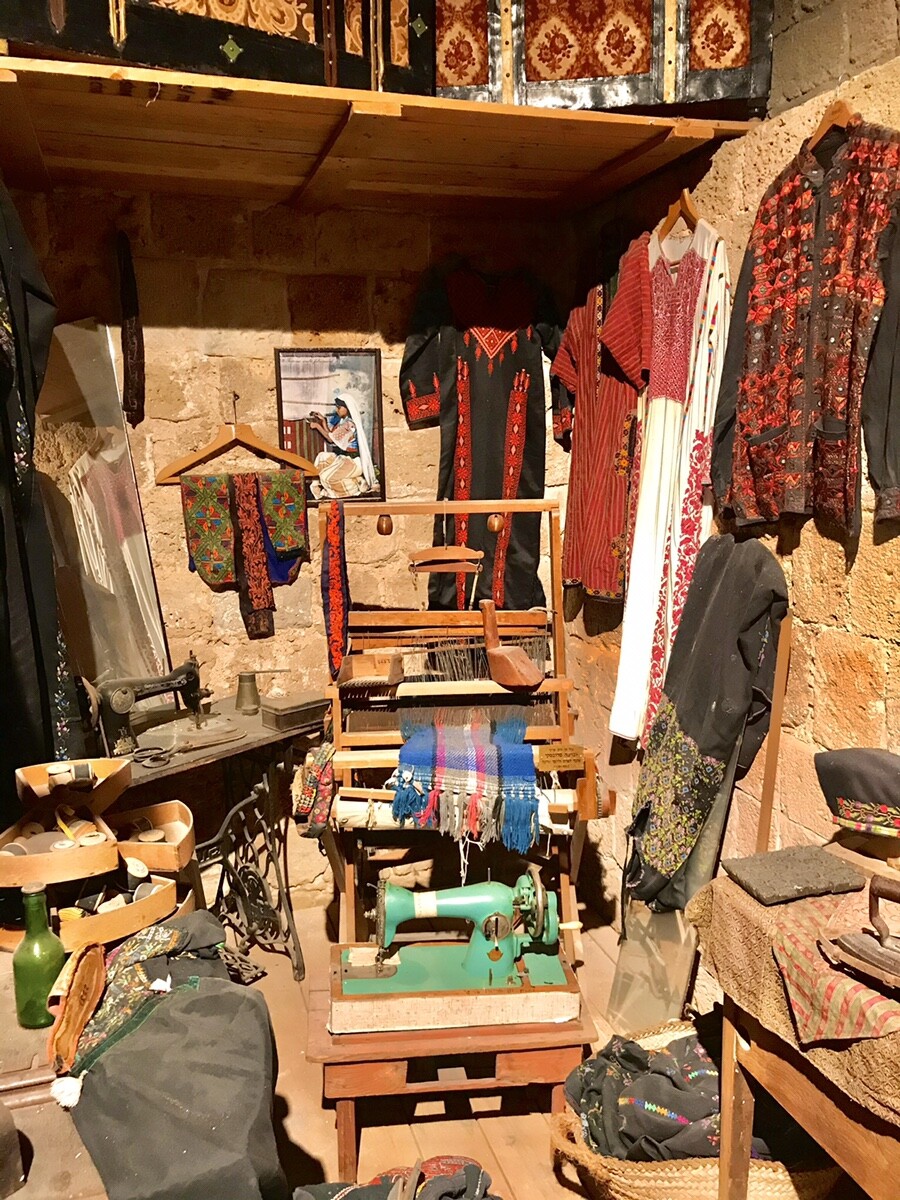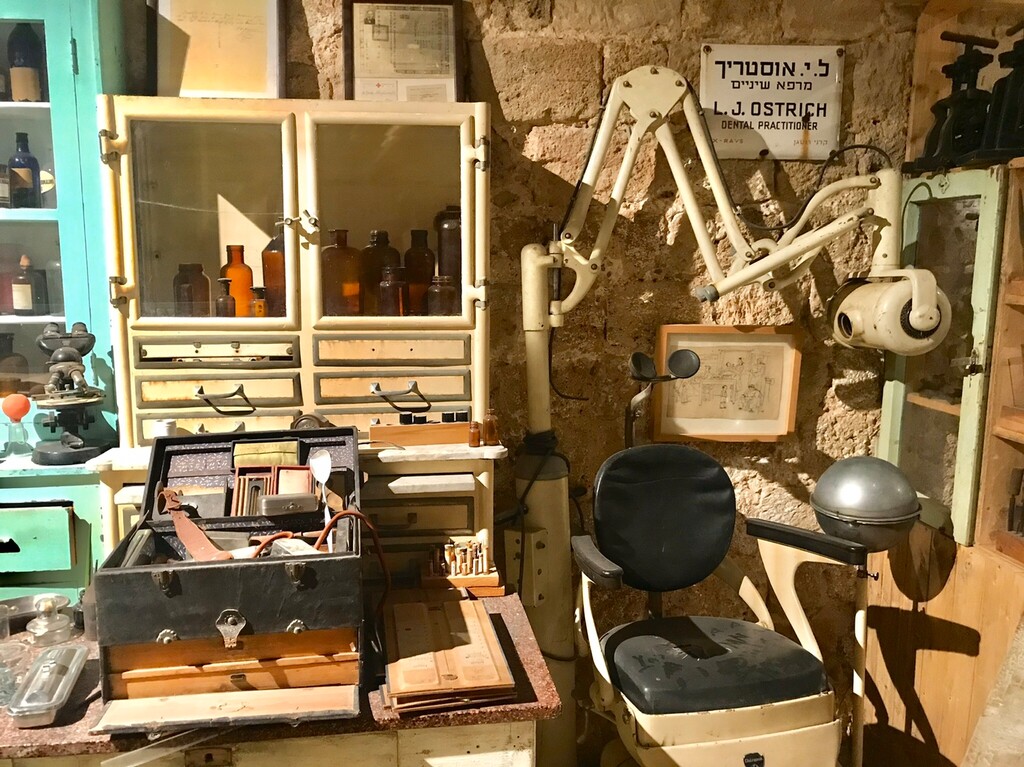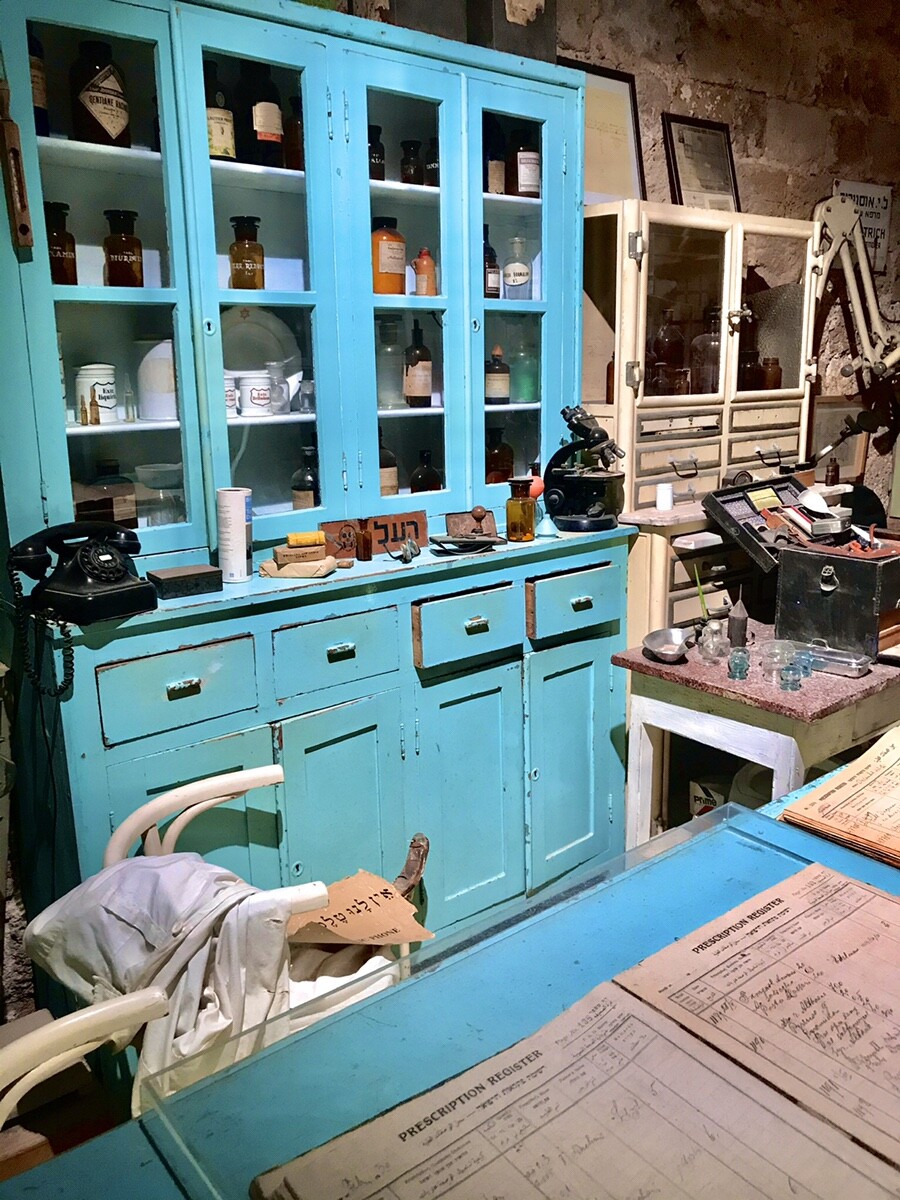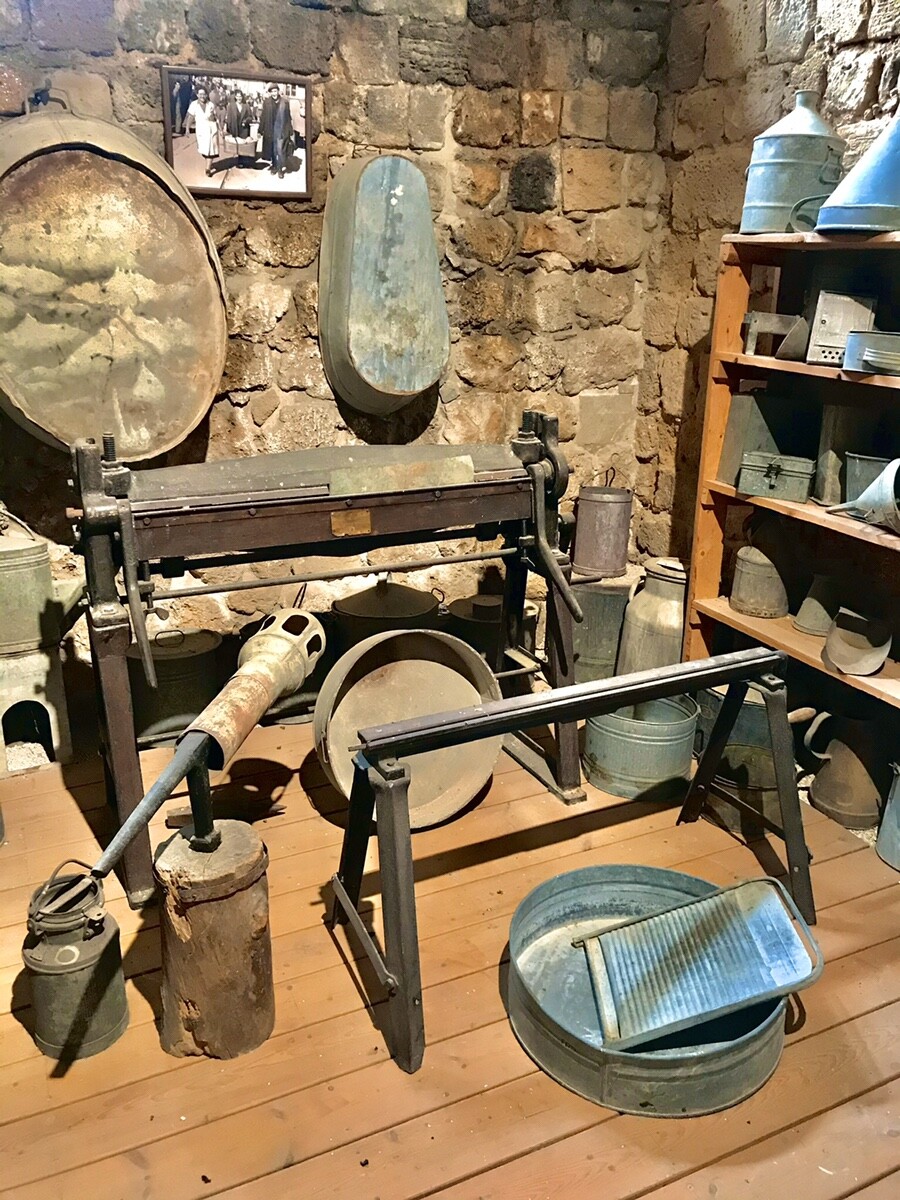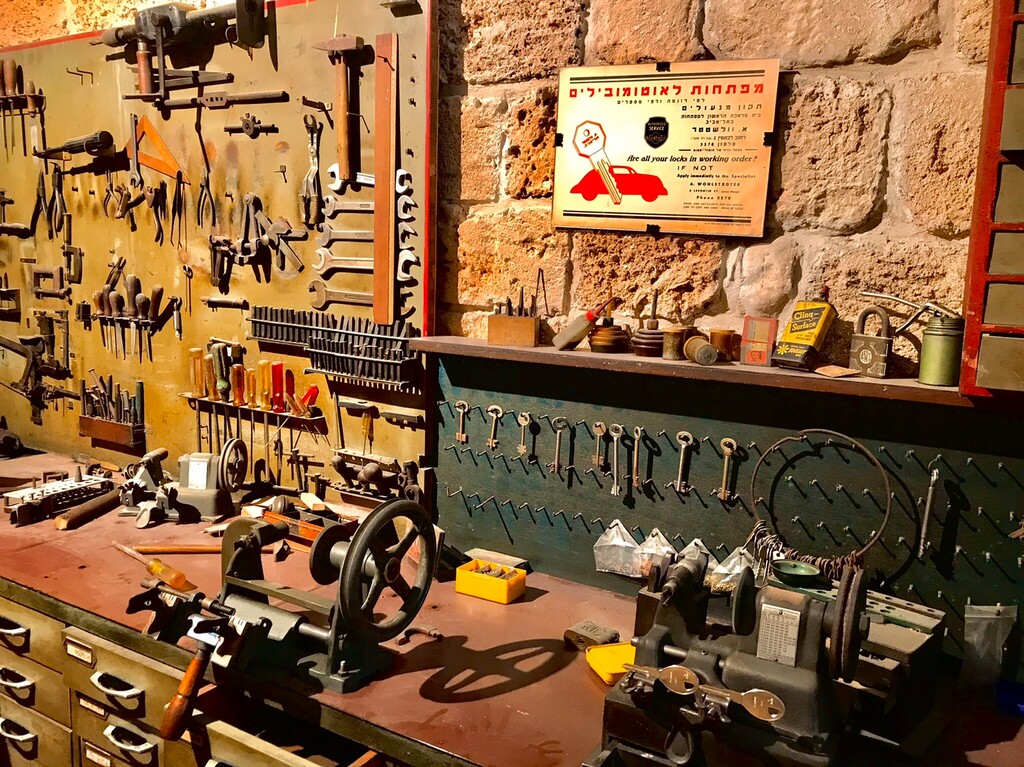

The "Treasures in the Wall" Museum often seems to me to be the cave of Aladdin. Time stopped in these rooms under stone arches and wrapped old things with silence. The former barracks of the Ottoman soldiers and the citadel of Burj al Comander became in 2007 a welcoming home for ethnographic exhibits from private collections. The huge space is divided into two large thematic halls. To the left of the entrance is a theatrical bazaar. To the right are the interiors of houses and collections of old things. The bazaar consists of craft shops with real objects. In the tailor's shop, you can see traditional women's clothing of the late nineteenth and early twentieth centuries. Wooden log for making fez is in the shop of the hatter. Wooden board with a corrugated coating for washing is in a tinman's shop. The laundresses have soaked the laundry in a basin and rubbed it on the corrugated zincous surface of this board. Making keys was one of the most respected crafts. The enclosed space between the stone walls and the vaulted ceiling, the dim light and the distant knock of a tinsmith's hammer, the noise of the street and the crowing of the crowd like a time machine take you a hundred years ago. In those days, where the craft was the basis for life.
http://ozarot.net/
The length of the city walls that we will pass is only a few hundred meters. But Acre talks about herself in every centimeter. The story is about how a formidable ruler emerged from a small village in the mountains, how Napoleon can be defeated, what treasures are hidden in the fortified wall, how to eat fish properly and how life is stronger than anything, everywhere and always, even on the city wall.