
Geographically, the station sits at the "Gateway to the Valley," but its impact went far beyond mere location. Wadi Sarar is a prime example of a "technogenic" landscape, where the natural environment was forcibly reshaped to serve the iron horse.
To protect the tracks from the fierce winter floods of the Sorek stream, 19th-century engineers didn't just build alongside nature—they altered it, diverting the stream's natural course. As you walk the grounds today, you aren't seeing the valley as it existed 150 years ago; you are witnessing a landscape designed by architects and surveyors. The very curves of the earth and the flow of the water here are silent monuments to the industrial ambition that prioritised the reliability of the Jerusalem line over the original contours of the terrain.
The journey begins in the almond blossoms of Sha'alvim, a landscape rooted in the biblical territory of the Tribe of Dan. The route advances through the strategic Latrun salient to Emmaus-Nicopolis, where Byzantine ruins mark the site of the Resurrection—land preserved through the spiritual visions of Mariam Baouardi and the patronage of Countess Beatrice de Saint-Cricq.
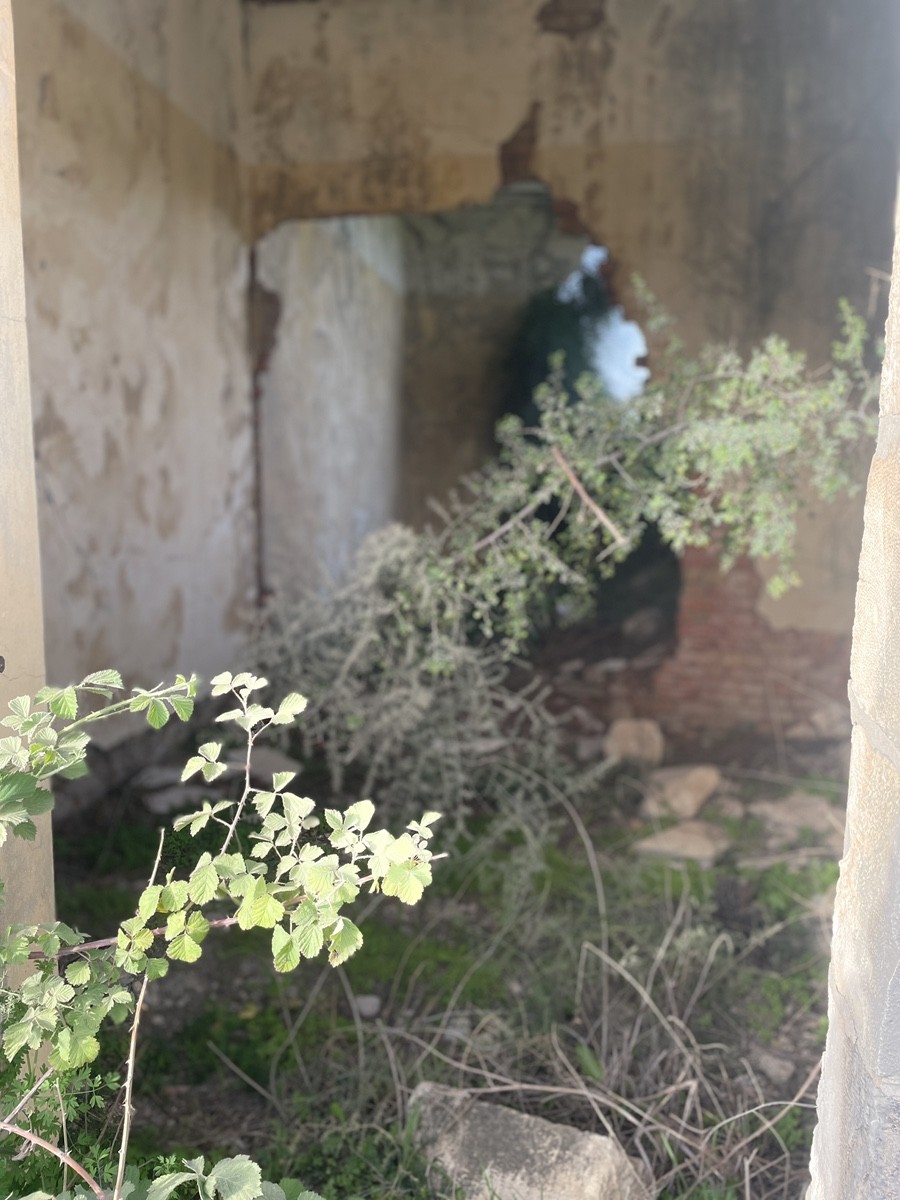
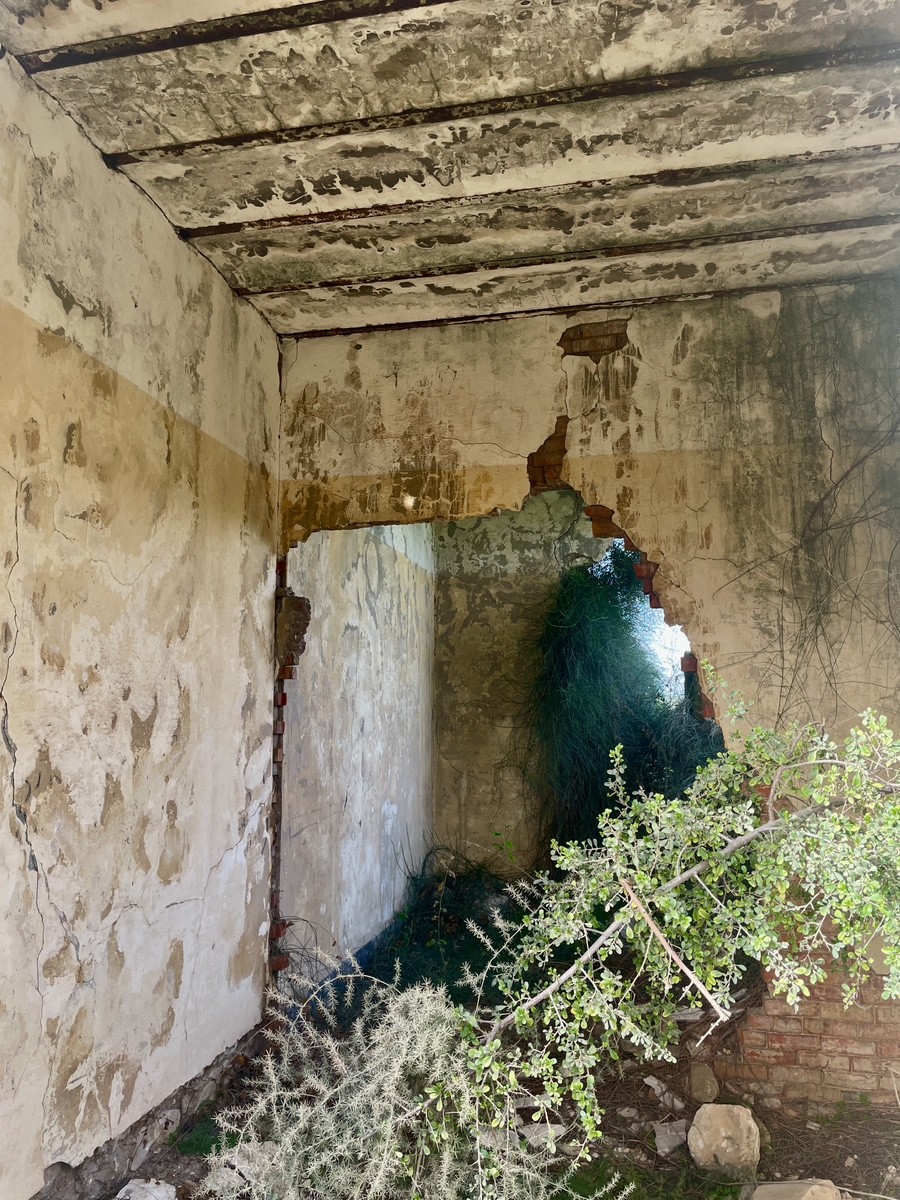
The path culminates at the abandoned Sorek Station, a limestone relic of the Ottoman Empire. Inside, time stands still among concrete staircases and iron veterans: a freight car and a yellow-marked shunting locomotive from the 1990s. A modest monument to Egyptian labourers honours the unsung builders of the WWI era. Today, the silence of these rusted tracks is only broken by the whistle of modern trains, bridging the gap between ancient faith and imperial ruins.