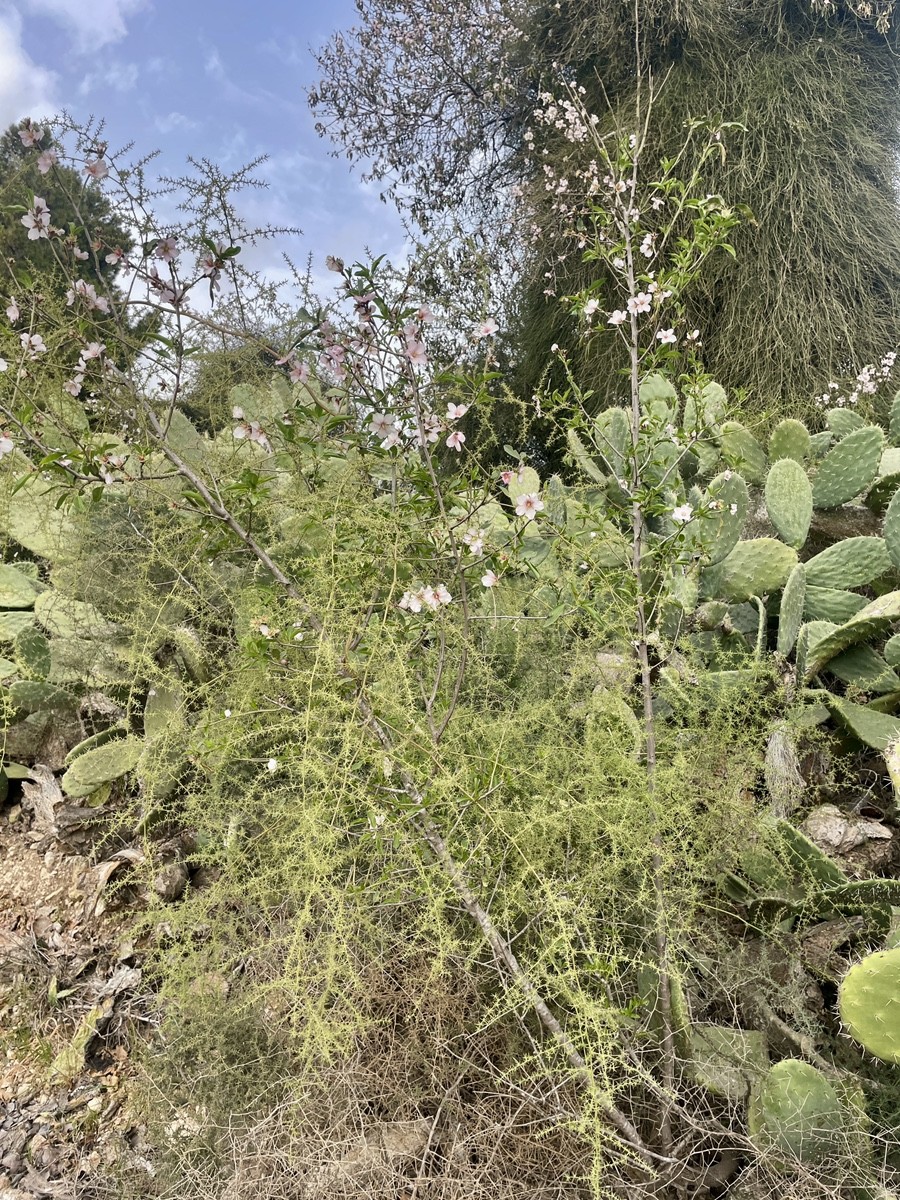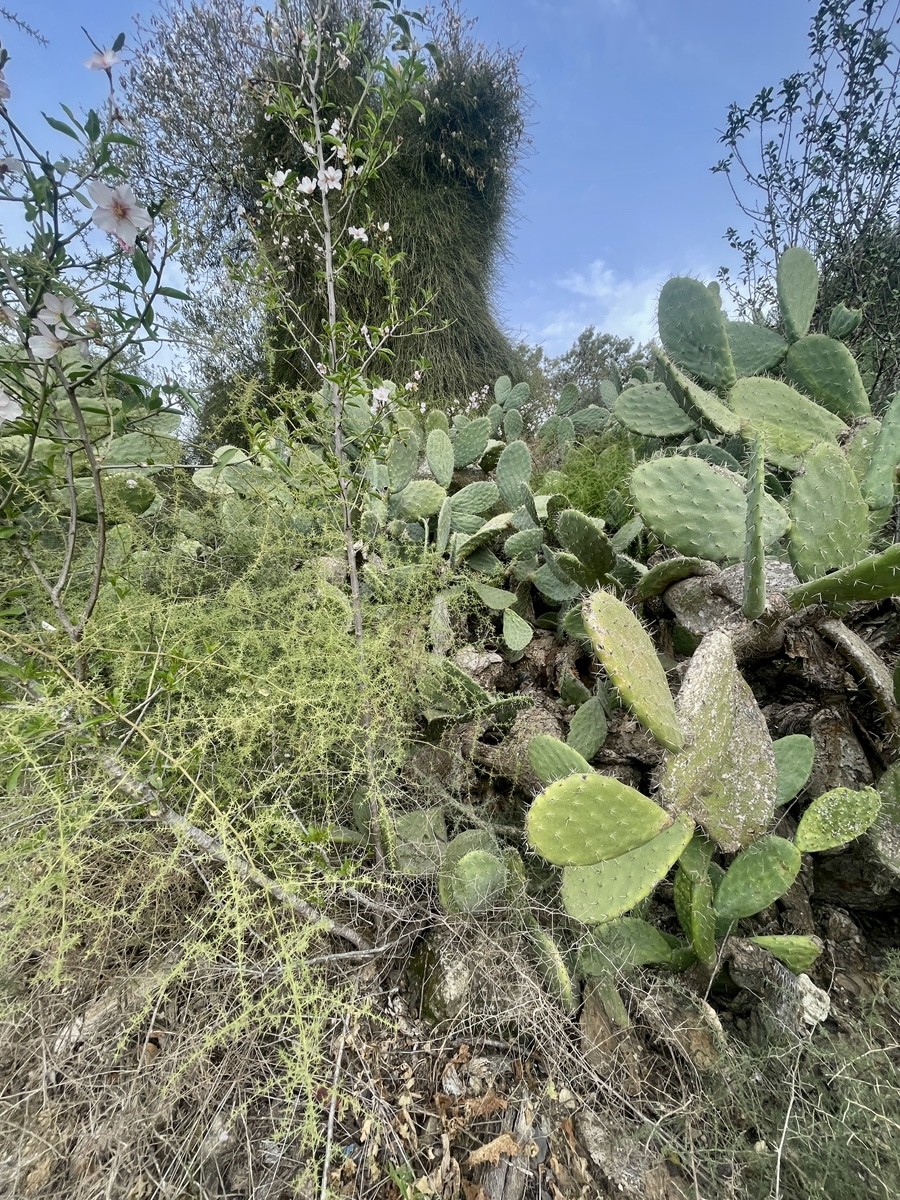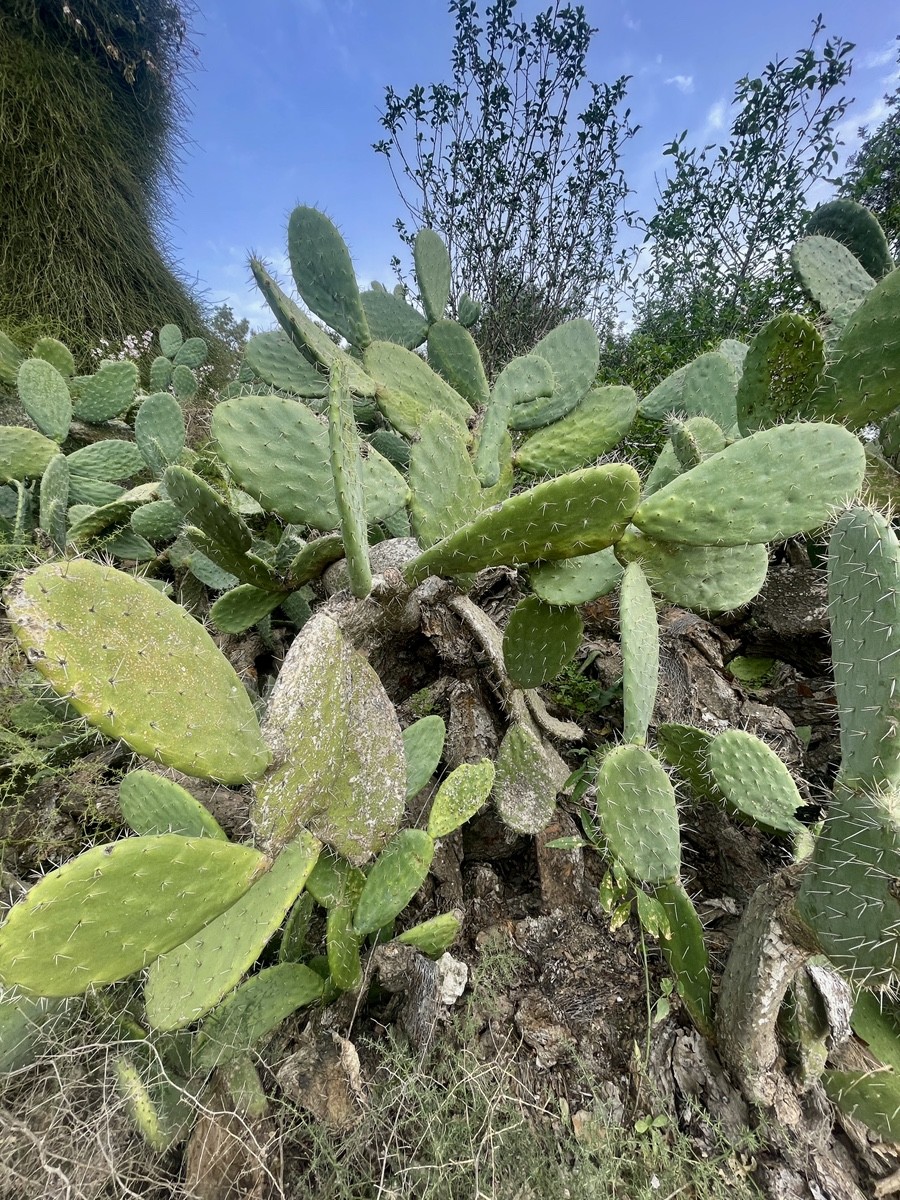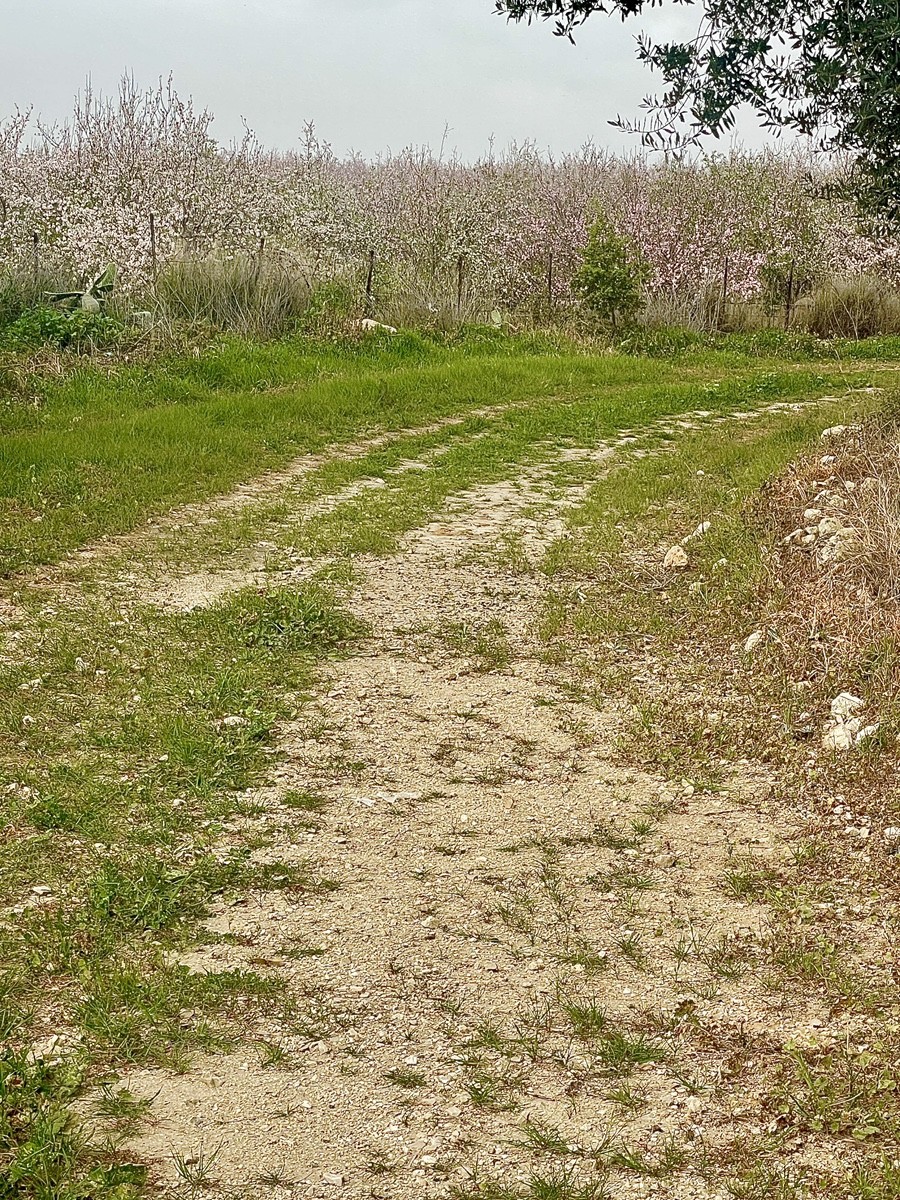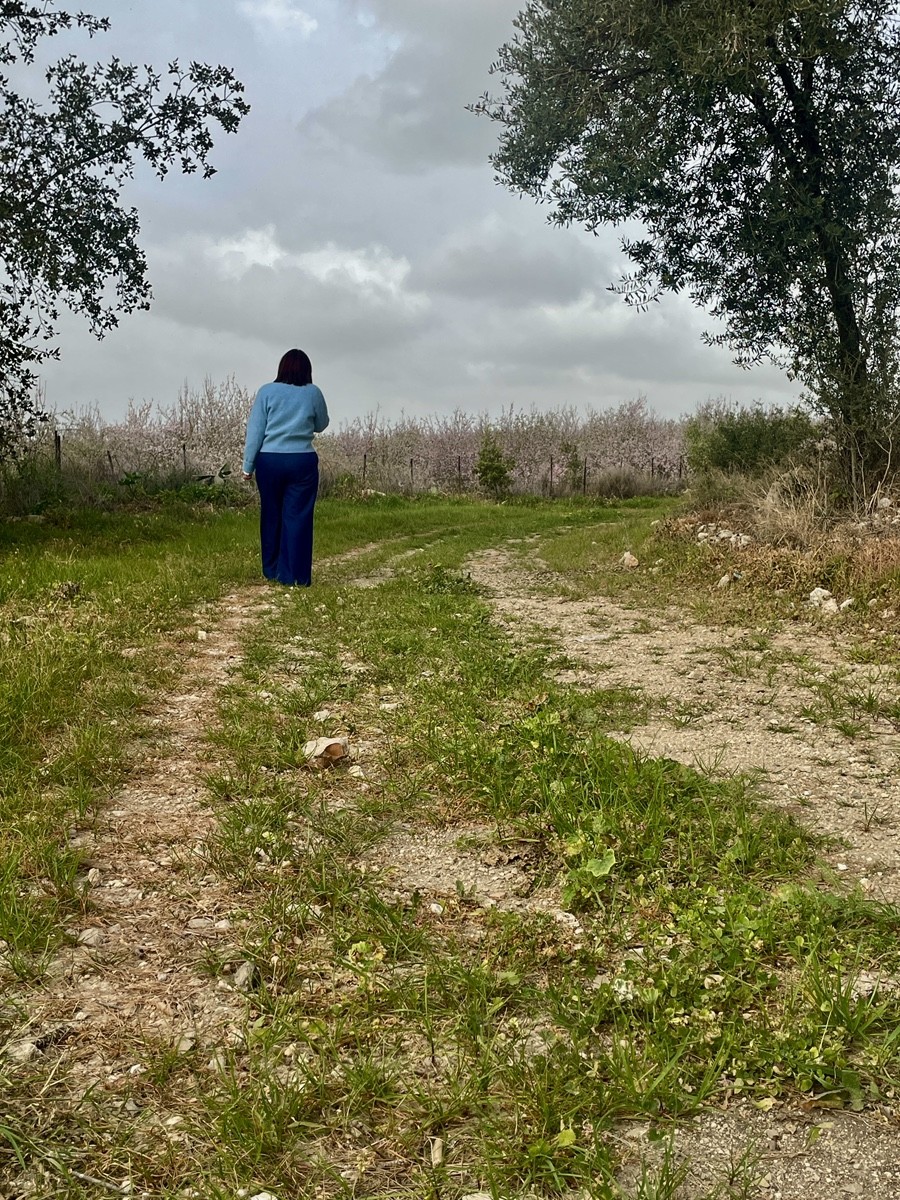

The vegetation of the Latrun Salient serves as a biological archive, demarcating the former Green Line and the scars of its history. Sabra cacti (Opuntia) act as living fences, marking the perimeters of abandoned villages and ancient property lines. In contrast to the orderly, pale rows of Kibbutz Sha'alvim, the vivid pink of wild almond trees highlights old terraced gardens and the once-untouched soil of No-Man's Land.
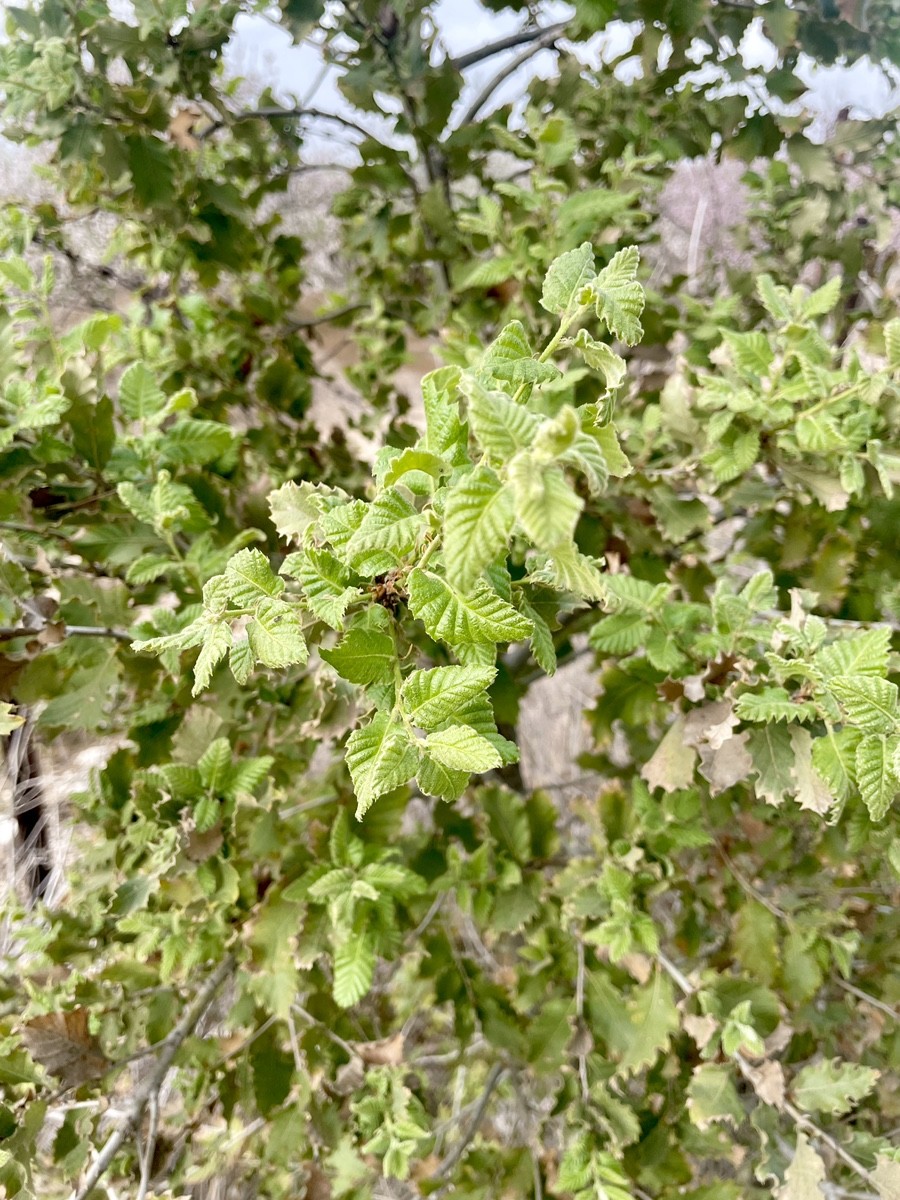
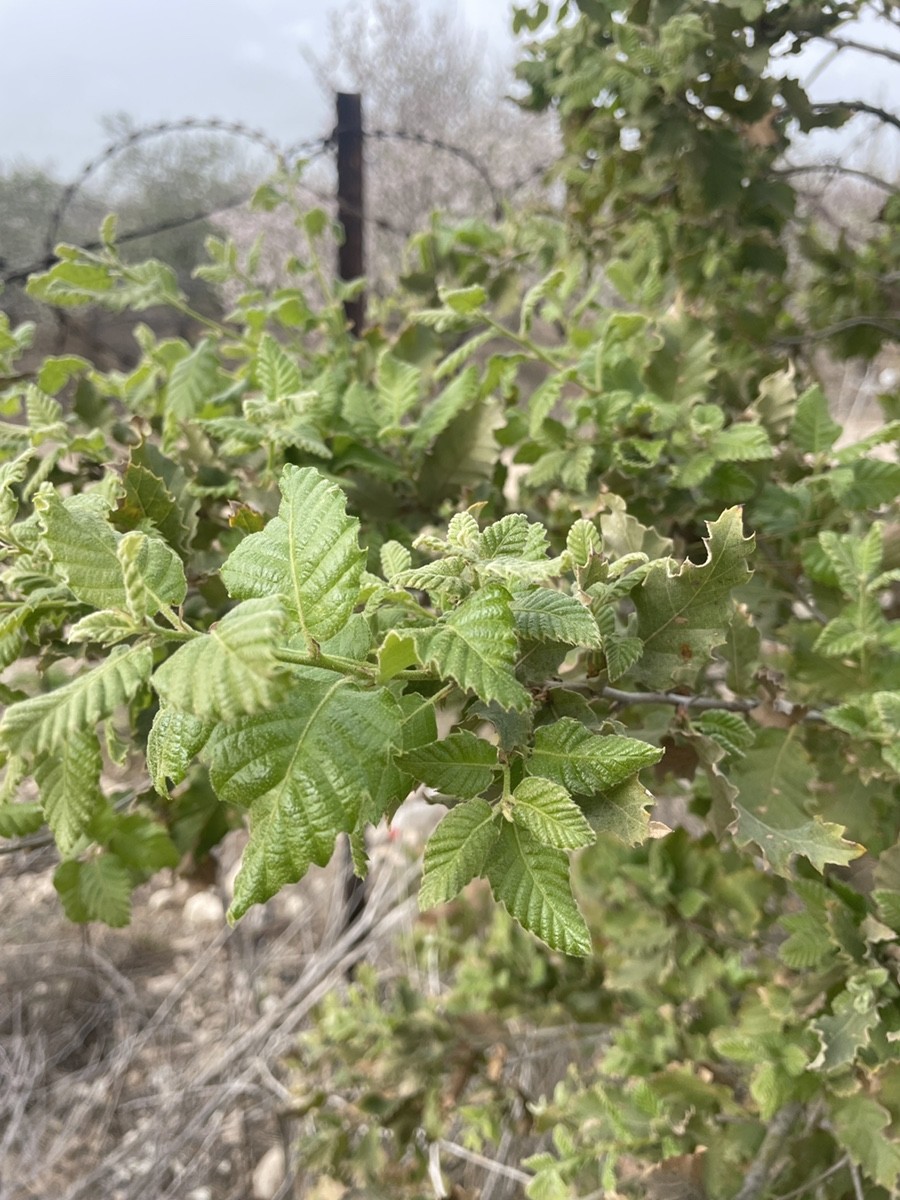
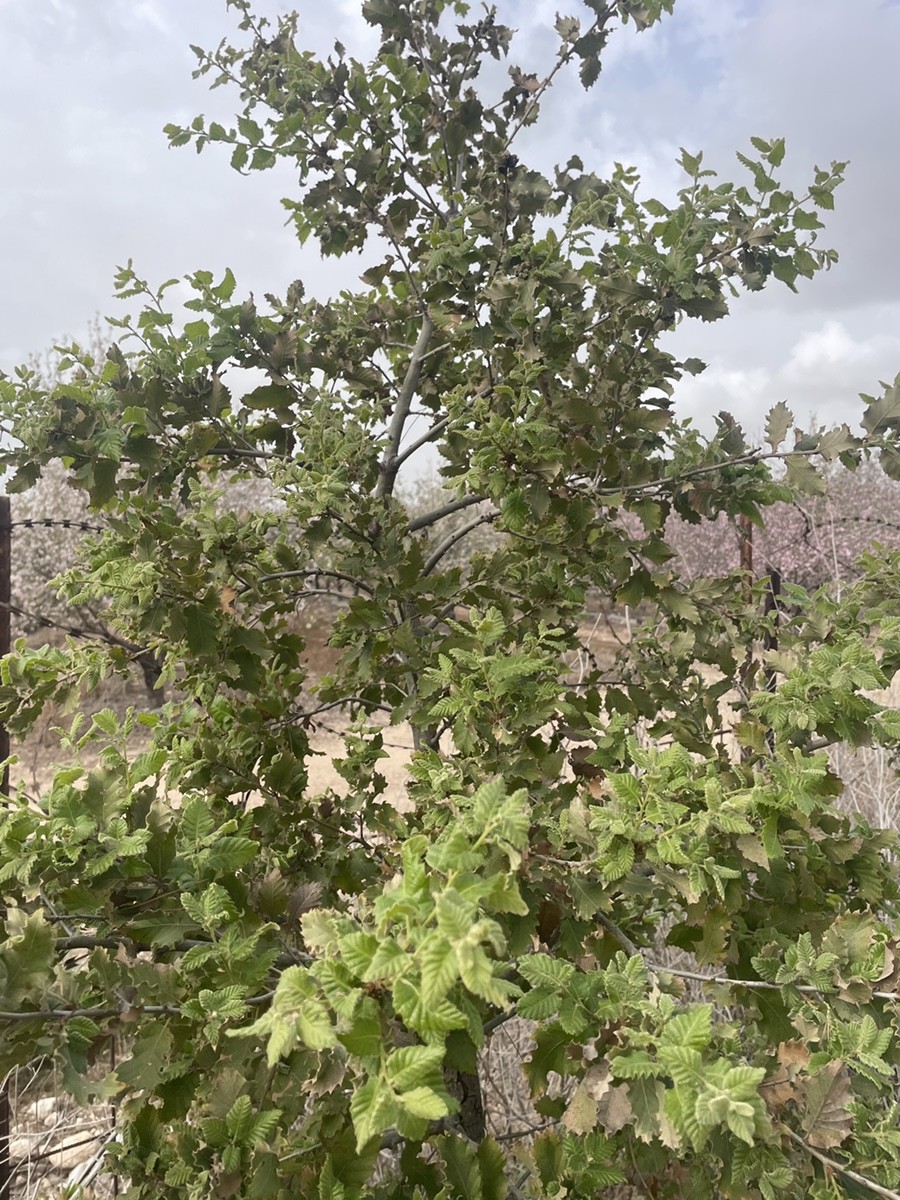
Dominating the landscape is the Mount Tabor Oak, whose ancient branches once served as vantage points for snipers and observers along the border. Meanwhile, dense thickets of wild asparagus and ephedra drape over stone ruins, acting as natural camouflage for old hidden paths. Standing on the edge of the kibbutz fields, one witnesses a stark visual dialogue: the precision of modern Israeli agriculture on one side, and the rugged, "rebellious" flora of the former buffer zone on the other—a landscape where nature and war are inextricably woven together.
The journey begins in the almond blossoms of Sha'alvim, a landscape rooted in the biblical territory of the Tribe of Dan. The route advances through the strategic Latrun salient to Emmaus-Nicopolis, where Byzantine ruins mark the site of the Resurrection—land preserved through the spiritual visions of Mariam Baouardi and the patronage of Countess Beatrice de Saint-Cricq.
The path culminates at the abandoned Sorek Station, a limestone relic of the Ottoman Empire. Inside, time stands still among concrete staircases and iron veterans: a freight car and a yellow-marked shunting locomotive from the 1990s. A modest monument to Egyptian labourers honours the unsung builders of the WWI era. Today, the silence of these rusted tracks is only broken by the whistle of modern trains, bridging the gap between ancient faith and imperial ruins.