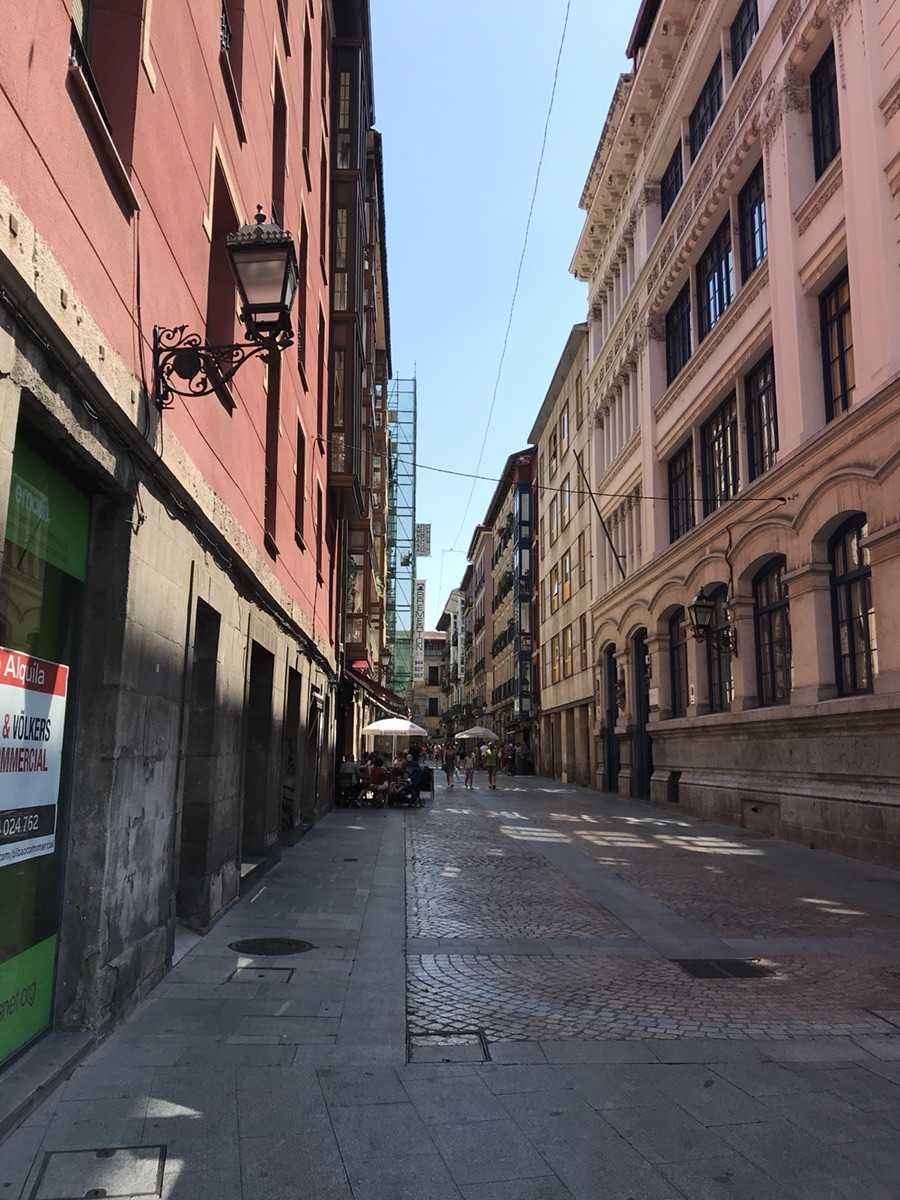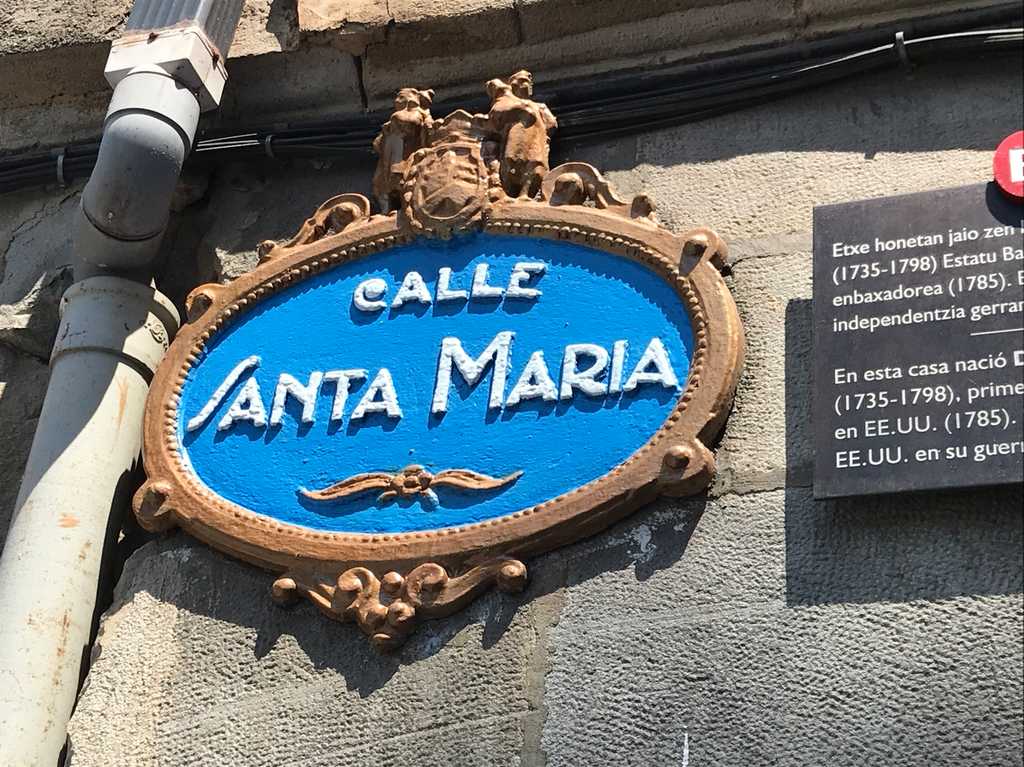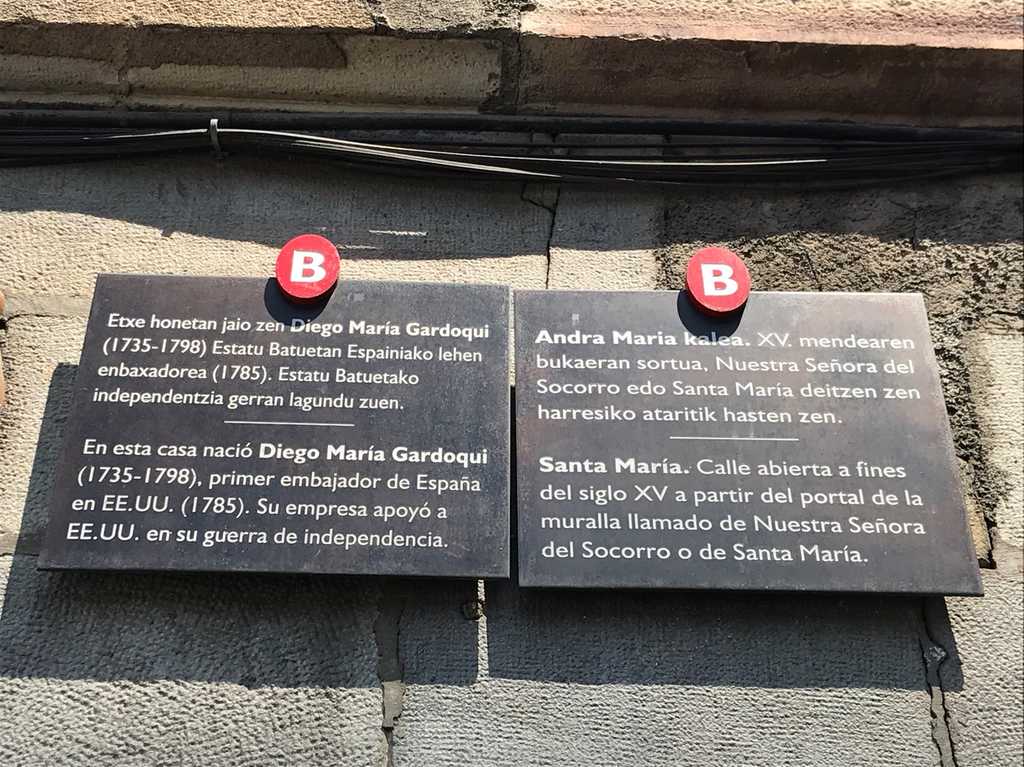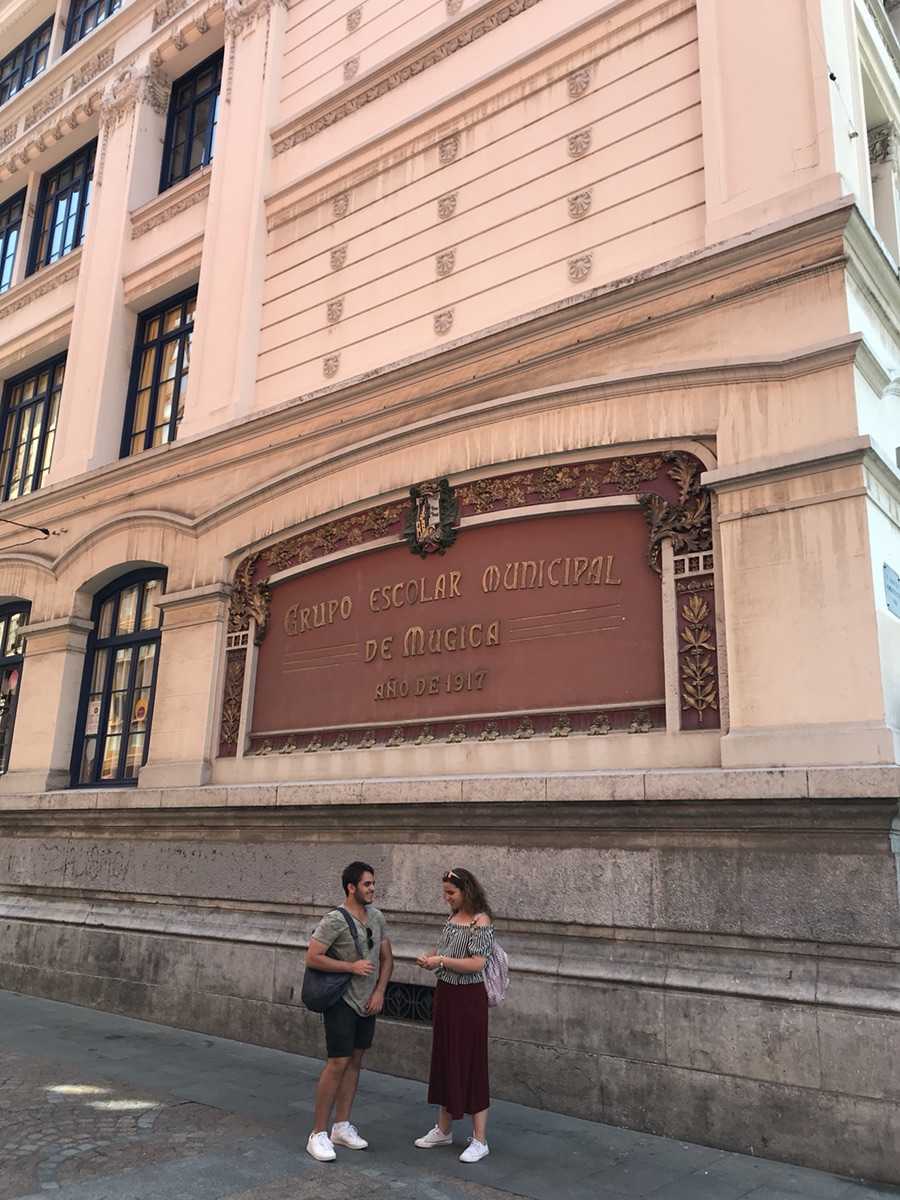

Just a short walk from Andra Mari Street — where the first Spanish ambassador to the Americas was born — stands a building that preserves a quieter, but no less important chapter of Bilbao’s past. On its façade you can still read the inscription:
Grupo Escolar Municipal de Múgica, año de 1917.
This was the old municipal school, built for the children of the old town — the boys and girls who ran through the narrow lanes between Calle Santa María and Calle de la Ribera, helped their parents in tiny shops, and dreamed of a life beyond the market stalls and the port.
The Múgica School was a symbol of a new century. The early 1900s brought Bilbao not only industry and ships, but also a belief in education as the city’s future. Here, every child was taught — regardless of background or income. Newspapers of the time called it “the school of equals,” and the name wasn’t poetic; it was policy. It reflected a city beginning to understand that progress wasn’t only steel and trade — it was opportunity.
The building still stands in Casco Viejo, surrounded by the same streets once filled with the ring of church bells and the shouts of market vendors. Its façade, crowned with the city’s coat of arms, is a reminder that the history of Bilbao isn’t made only of legends, diplomats, and merchants — but also of children who first discovered the world at a wooden desk under this very roof.
This walk is not just a stroll through the old streets of Bilbao — it’s a walk through the city’s memory. Everything here lies close together: the Gothic gates of Santiago Cathedral, the soft murmur of the “Dog Fountain,” the old plaques still marked by the great flood of 1983, and Bar Xukela, where the spirit of the city lives in a glass of wine and laughter at the counter.
We follow Calle del Perro and Calle de la Torre — streets whose names hold legends and the echoes of ancient family towers. At every turn, a story appears: about the Basques, whose defensive towers once stood like the stone houses of Svaneti; about Diego María Gardoki, the first Basque to serve as Spain’s ambassador to the United States; about Pedro Arrupe, the Basque priest who renewed the Jesuit order in the twentieth century.
Our path leads to the river where ships once lined the shore, and finally to El Arenal — the park where Bilbao learned to breathe, to love, and to listen to the quiet rhythm of its own heart.
This walk is like a simple, honest conversation with the city — no guide, no performance, just a friend who has a story waiting behind every corner.