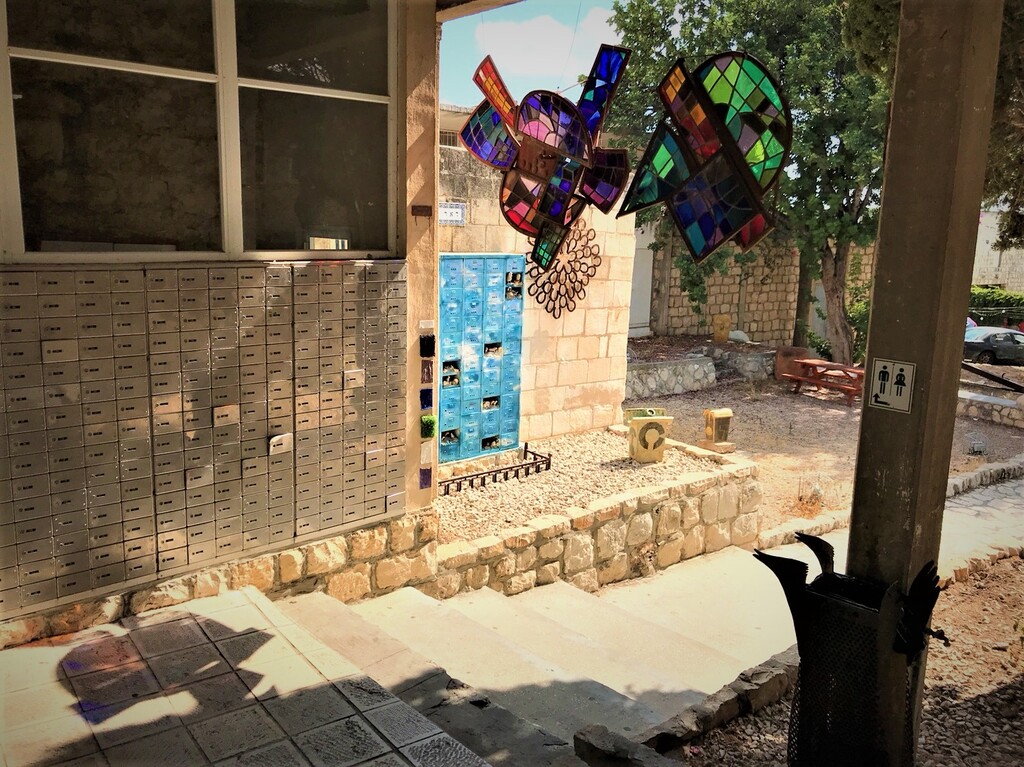

In Ein Hod, the artists' village, mailboxes transcend their ordinary function, becoming more than just receptacles for mail. The Hebrew term for mailbox, "tevat doar," carries layered meanings. "Doar" translates to mail, while "teva" signifies not only a box but also a cell, and even an ark. A notable example is Noah's Ark, known as "Tevat Noach" in Hebrew, which literally means "Noah's box" or "Noah's cell."
This linguistic nuance is cleverly mirrored in the design of the village's mailboxes. Echoing the theme of Noah's Ark, where each animal had its pair, each mailbox in Ein Hod is paired with another, creating a unique duality. This inventive concept is a testament to the village's artistic ethos, transforming even the most mundane items into expressions of art and culture.
The streets of the artists' village of Ein Hod, strewn with autumn leaves, have a unique charm. Slightly worn by time, curvilinear and genuinely charming, they are shrouded in an atmosphere of kindness. Walking from the museum of Janko Dada, the founder of Dada, to the bronze sculptures of Benjamin Levi, you are greeted at every step by art in the most unexpected manifestations. This village has experienced a lot: from liveliness to decline, when houses stood empty, to its rebirth. The walls of its houses are mute witnesses of eras, cultures, the change of the Arab population by the descendants of Saladin's troops to Jewish Dada artists. The stones of these walls contain stories ranging from the times of the Crusaders, through the Arab heritage, to the Jewish restoration.
Today, sculptors, designers, musicians, architects, actors, singers, poets, jewelers, and potters live and work in Ein Hod. Many of them invite visitors to their workshops, organizing master classes and exhibitions. Ein Hod has no aspirations for high art or display of masterpieces, but there is a special atmosphere of simplicity, hospitality and pluralism, attractive in its ease and picturesqueness. Translated with Google Translate