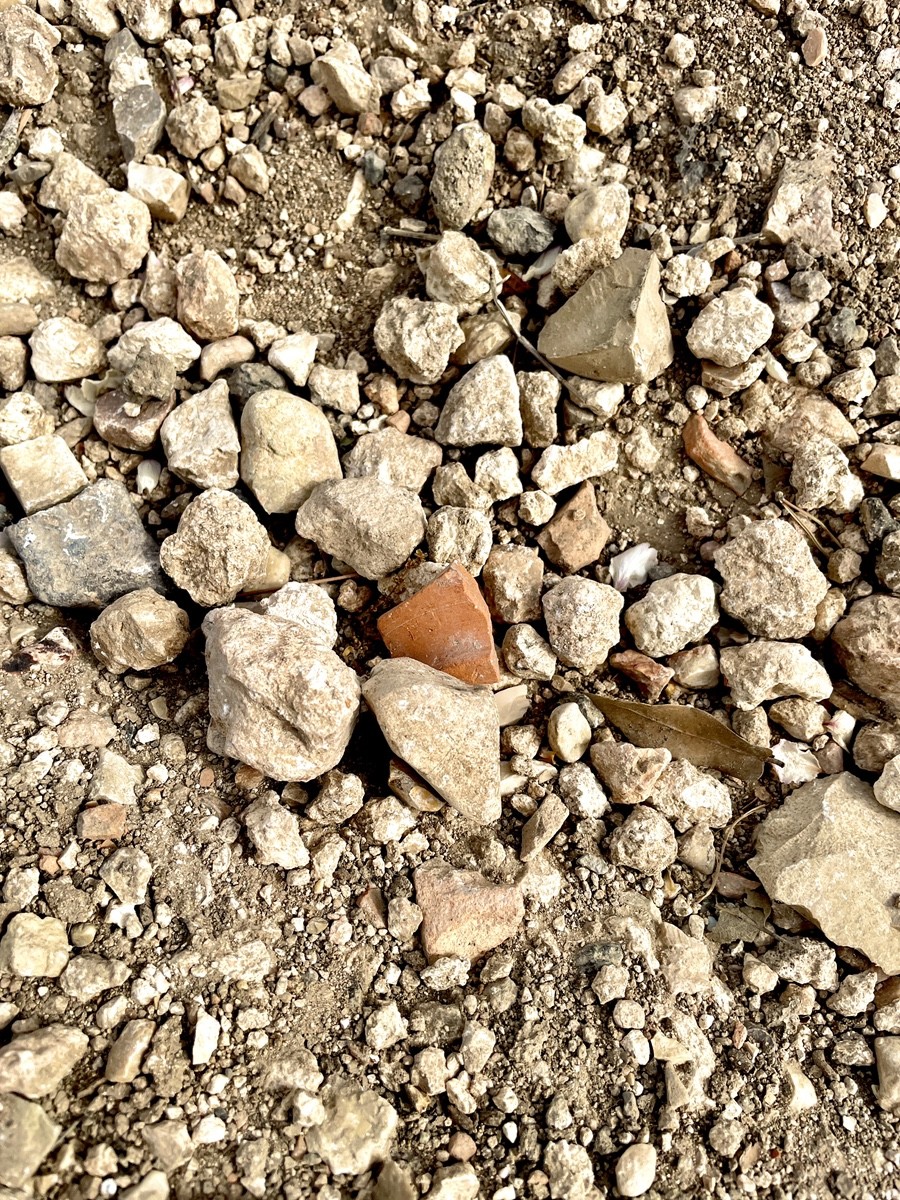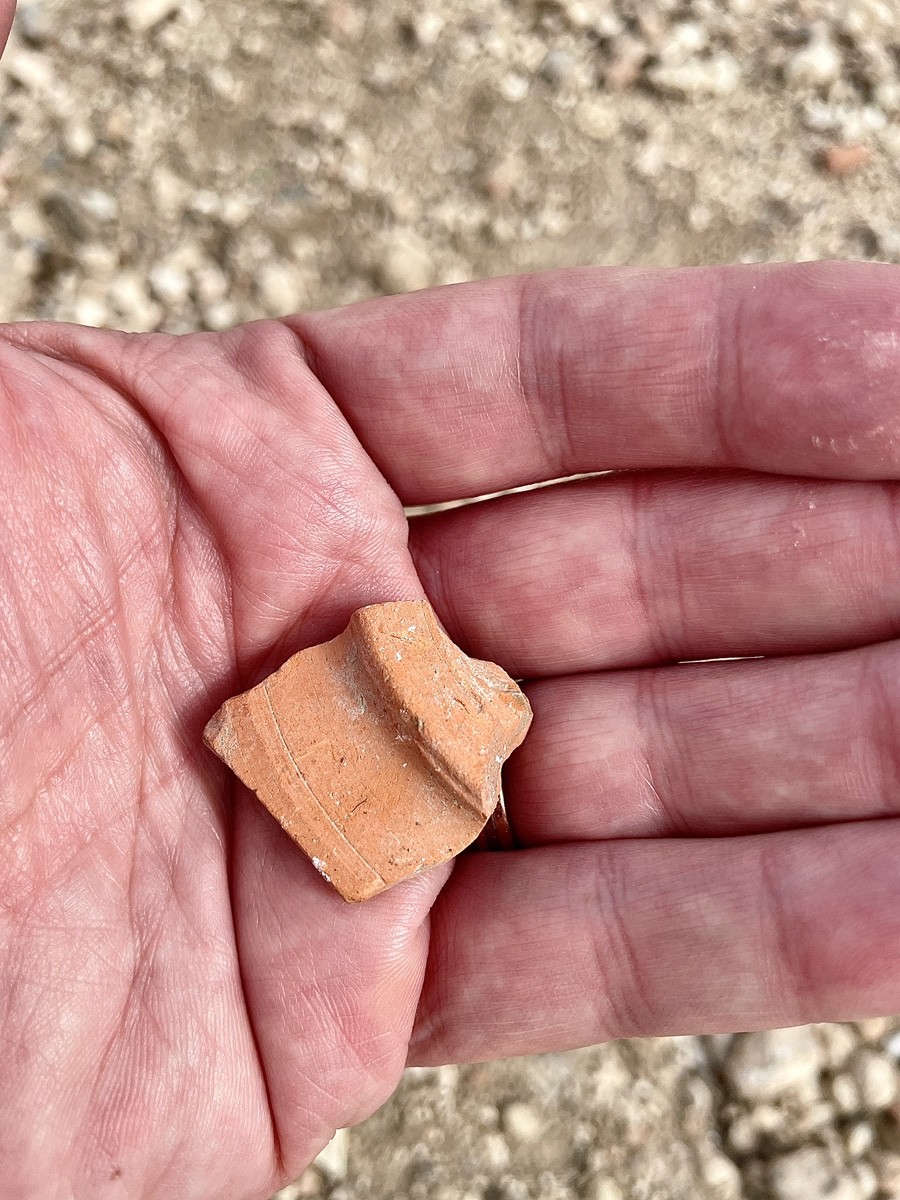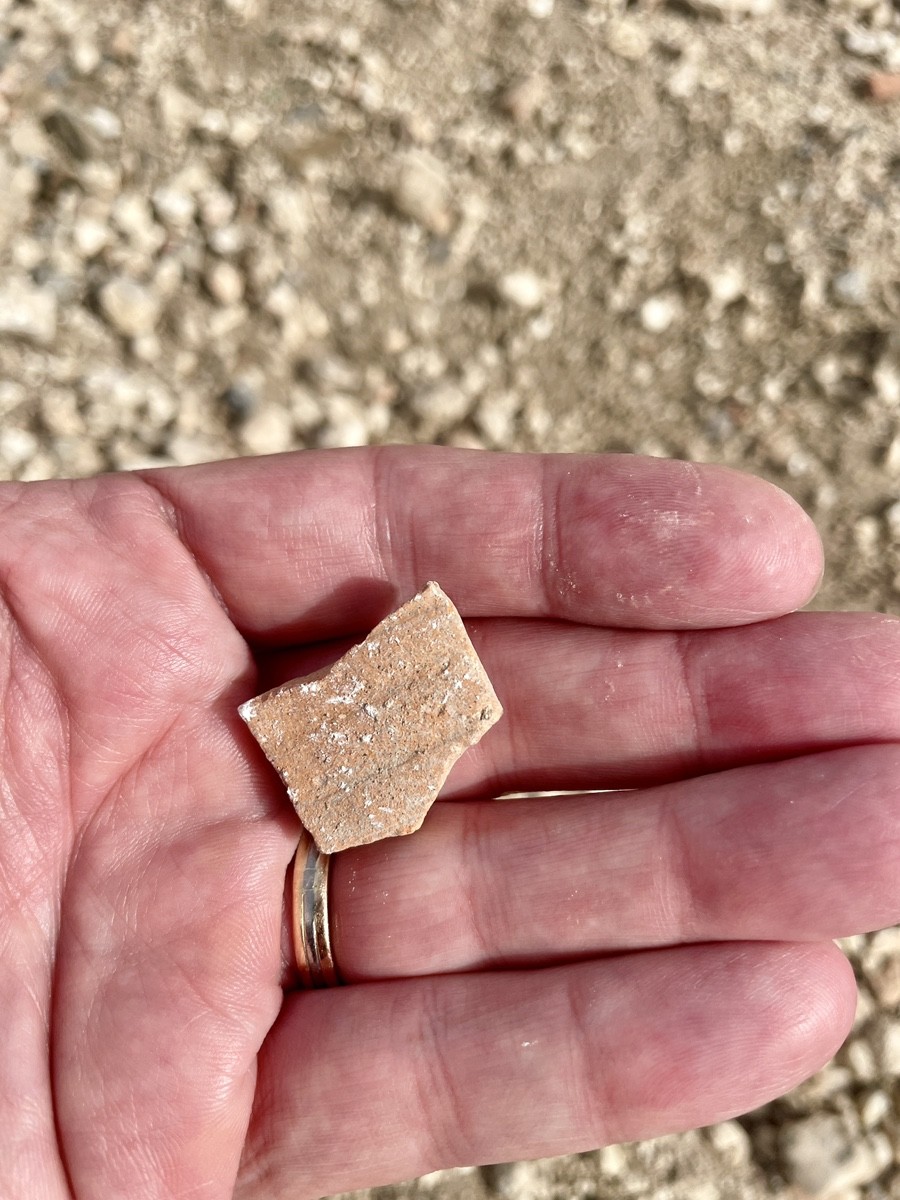

The soil of Sha'alvim serves as a literal archive of the Byzantine era (4th–7th centuries CE). What appears to be debris is actually a "household code"—fragments of pottery that ancient farmers used as fertiliser or discarded, only for erosion to wash them into today's almond orchards.
Two specific types of sherds reconstruct this lost world:
Ribbed Amphorae: Deeply grooved fragments from "Palestinian amphorae," designed to be lightweight yet durable for transporting wine and oil to coastal ports.
Kitchen Ware: Thick-rimmed cooking pots tempered with lime to withstand open flames.
These artefacts prove that the Ayalon Valley was a thriving commercial hub long before modern borders. Holding these fragments offers a tactile connection to the daily lives of Byzantine settlers who worked the same earth 1,500 years ago.
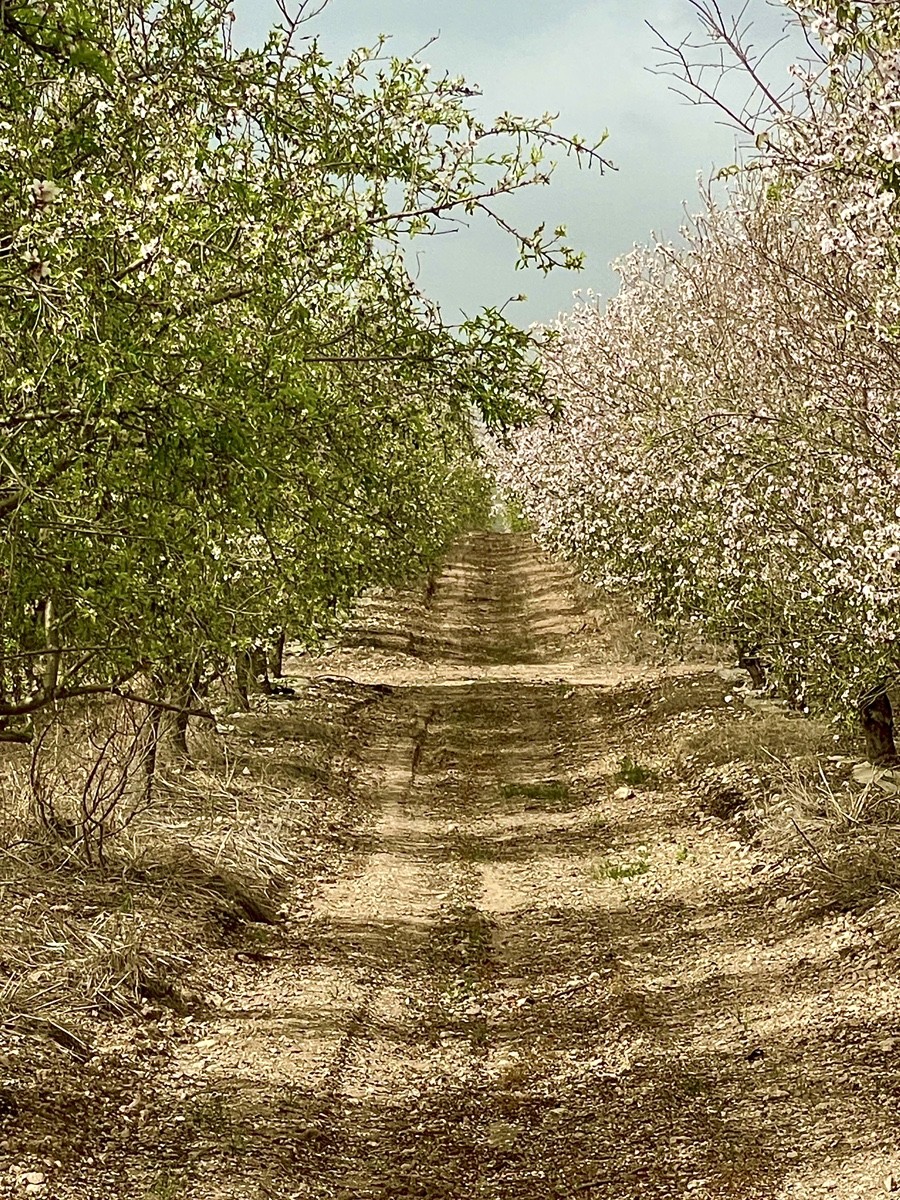
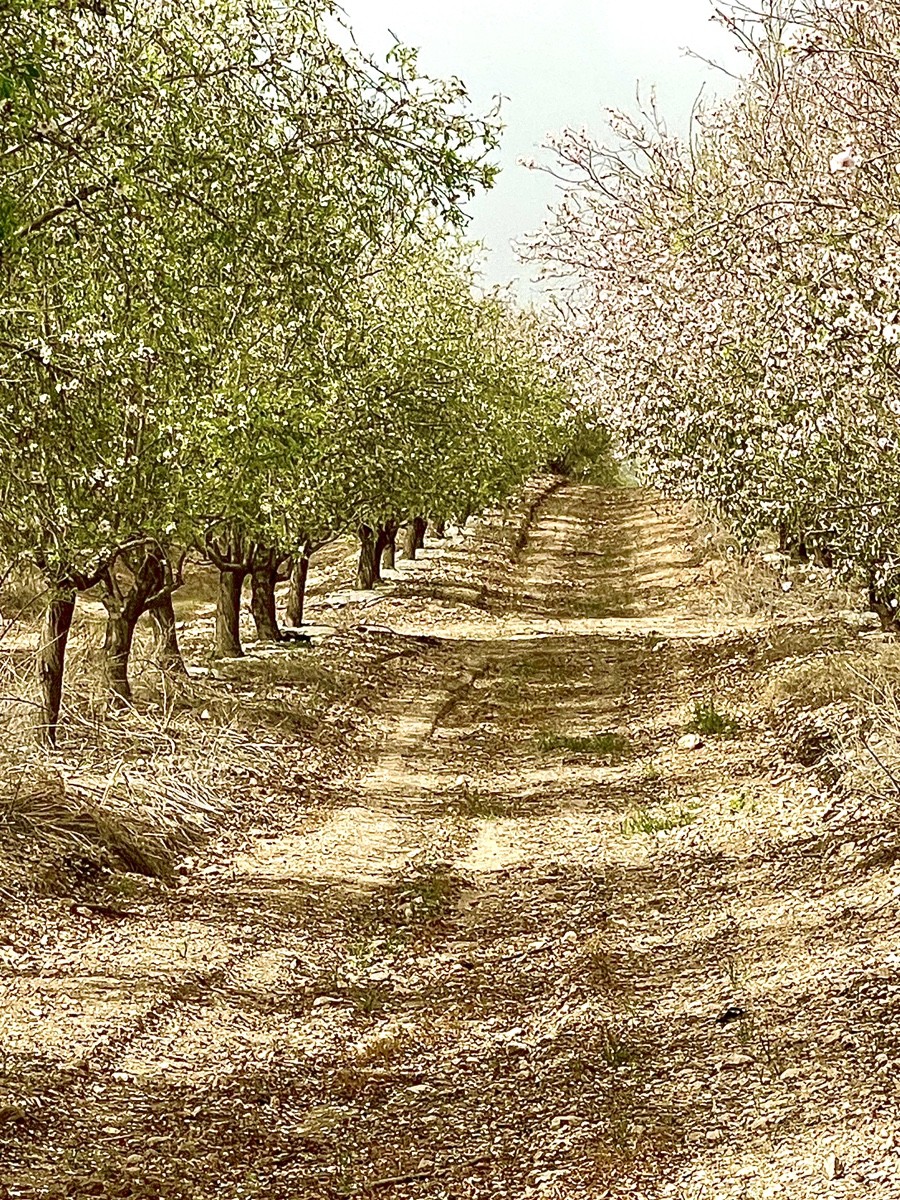
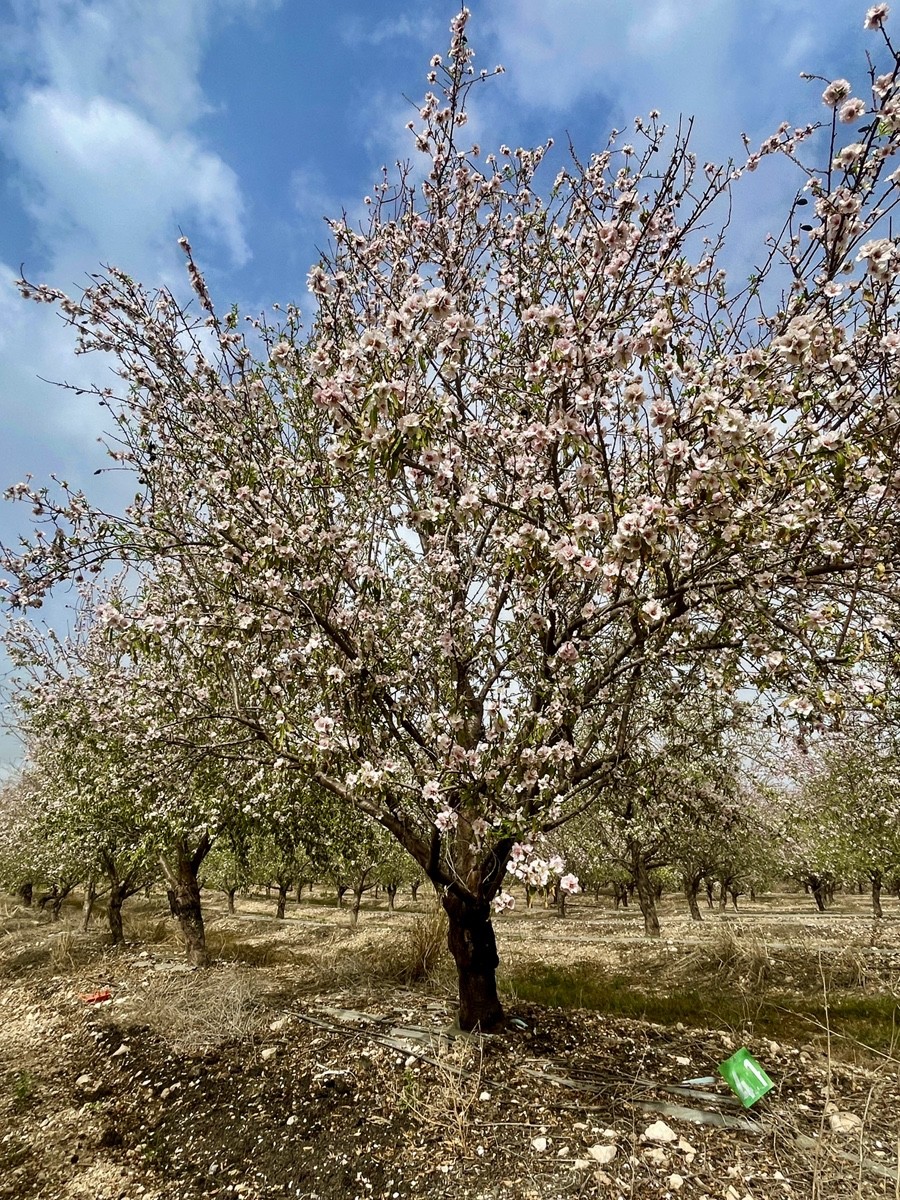
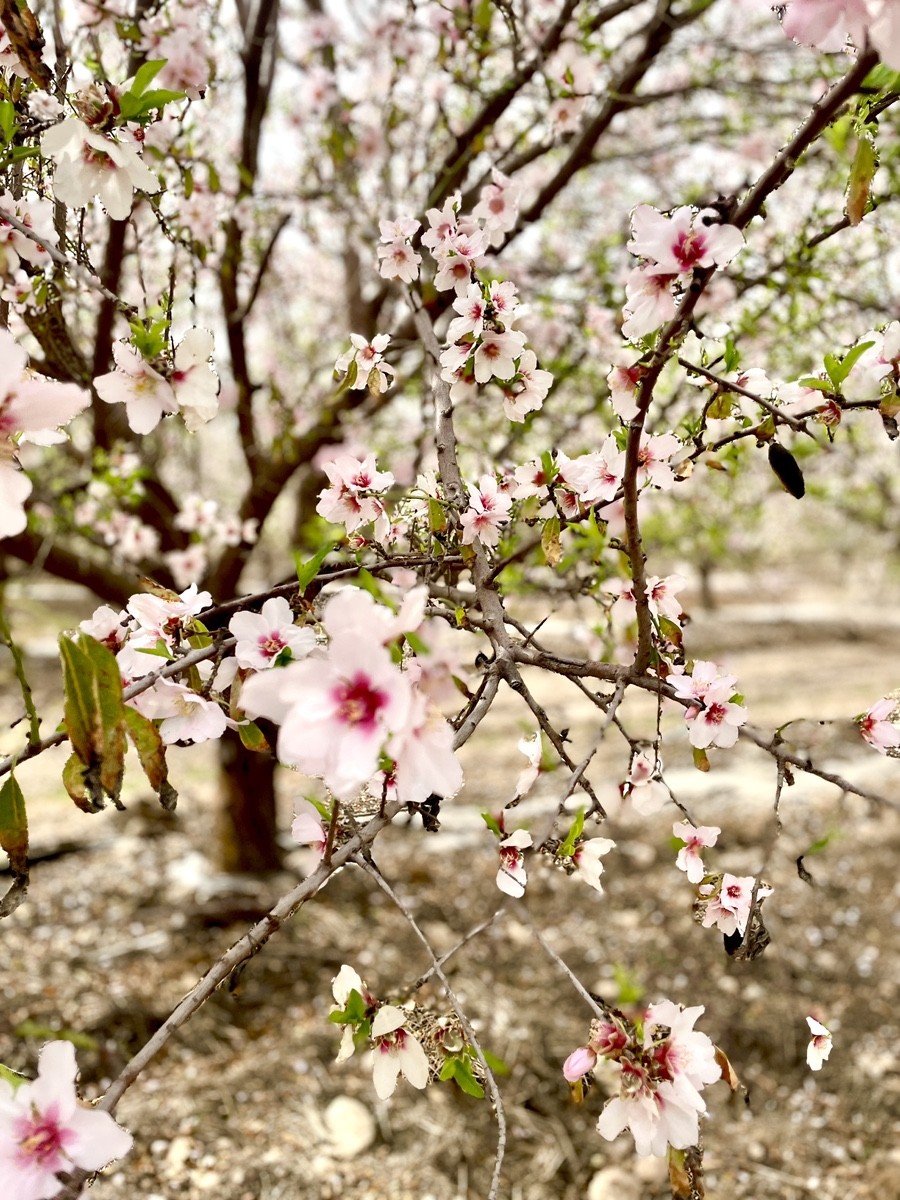
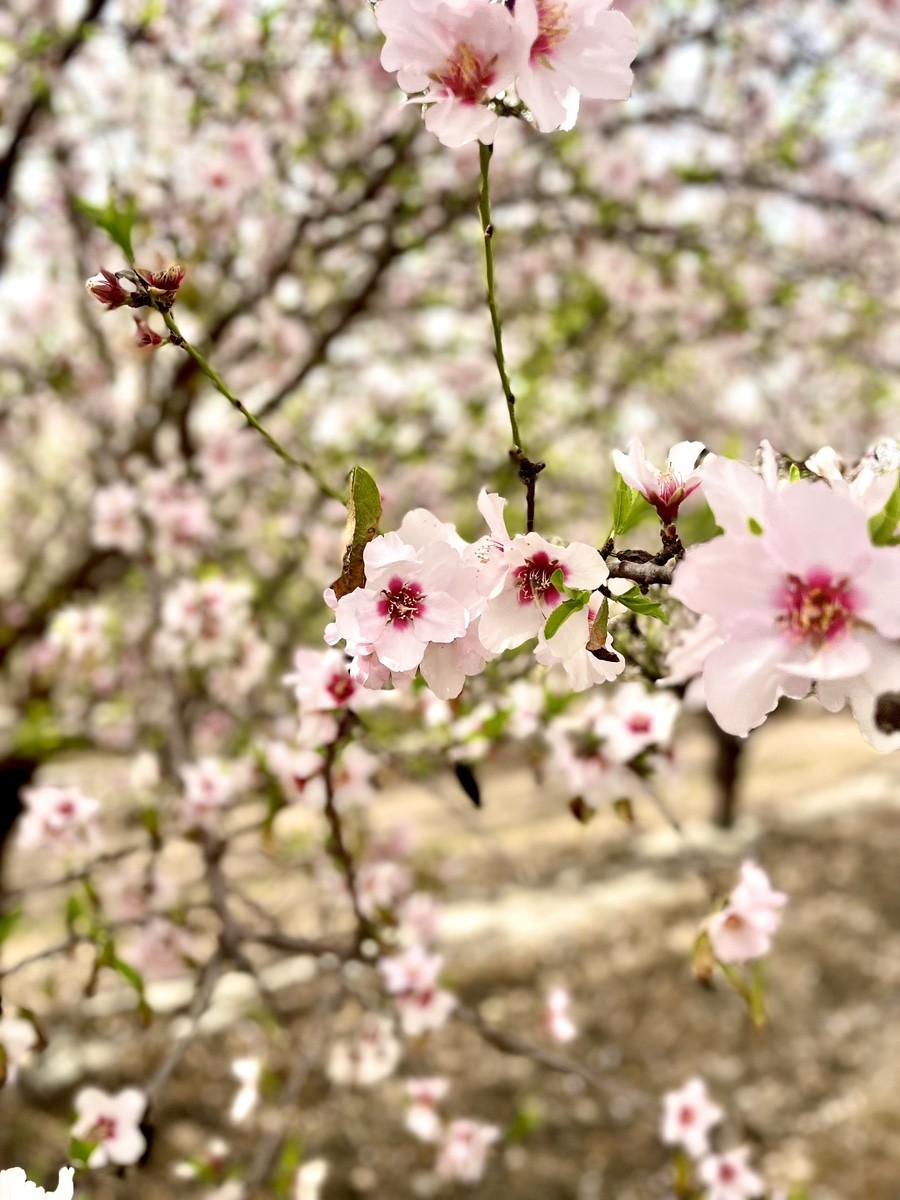
The journey begins in the almond blossoms of Sha'alvim, a landscape rooted in the biblical territory of the Tribe of Dan. The route advances through the strategic Latrun salient to Emmaus-Nicopolis, where Byzantine ruins mark the site of the Resurrection—land preserved through the spiritual visions of Mariam Baouardi and the patronage of Countess Beatrice de Saint-Cricq.
The path culminates at the abandoned Sorek Station, a limestone relic of the Ottoman Empire. Inside, time stands still among concrete staircases and iron veterans: a freight car and a yellow-marked shunting locomotive from the 1990s. A modest monument to Egyptian labourers honours the unsung builders of the WWI era. Today, the silence of these rusted tracks is only broken by the whistle of modern trains, bridging the gap between ancient faith and imperial ruins.