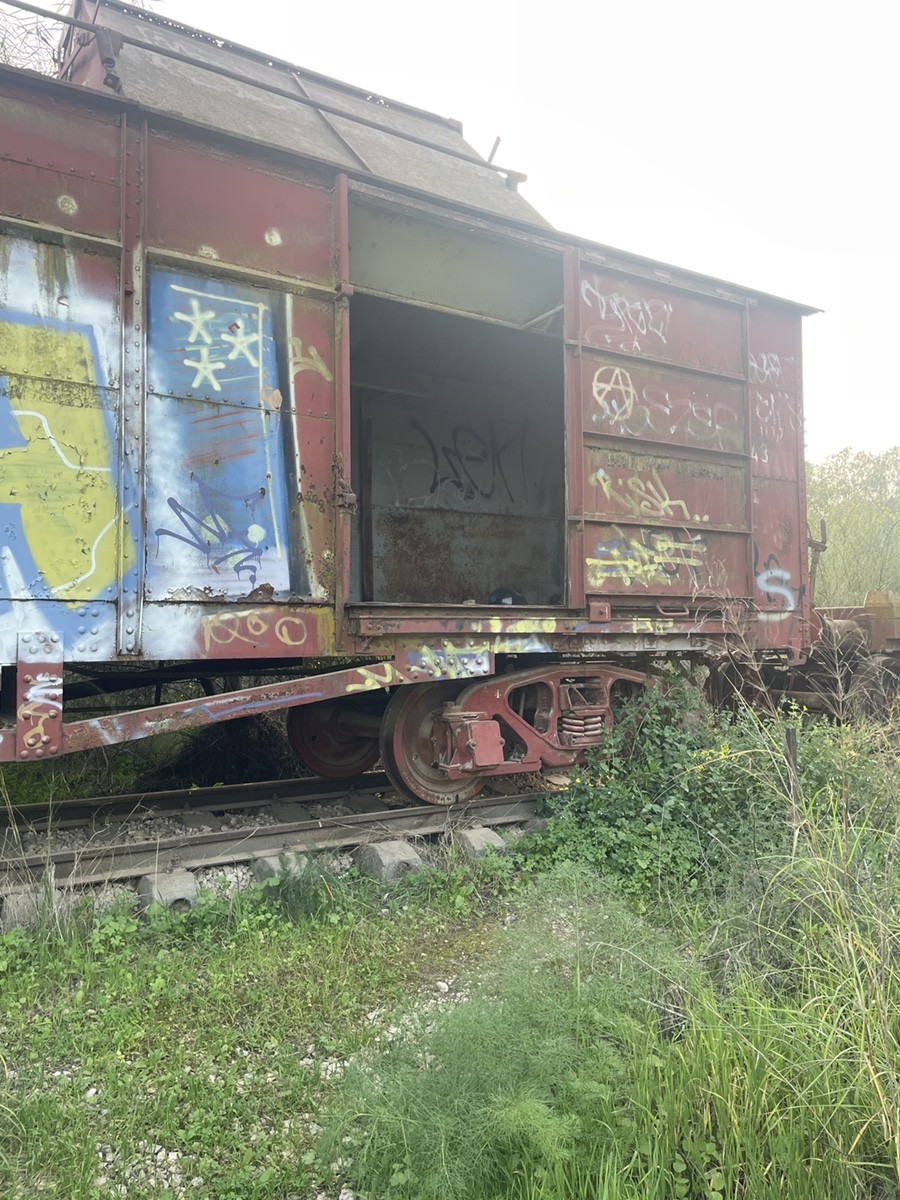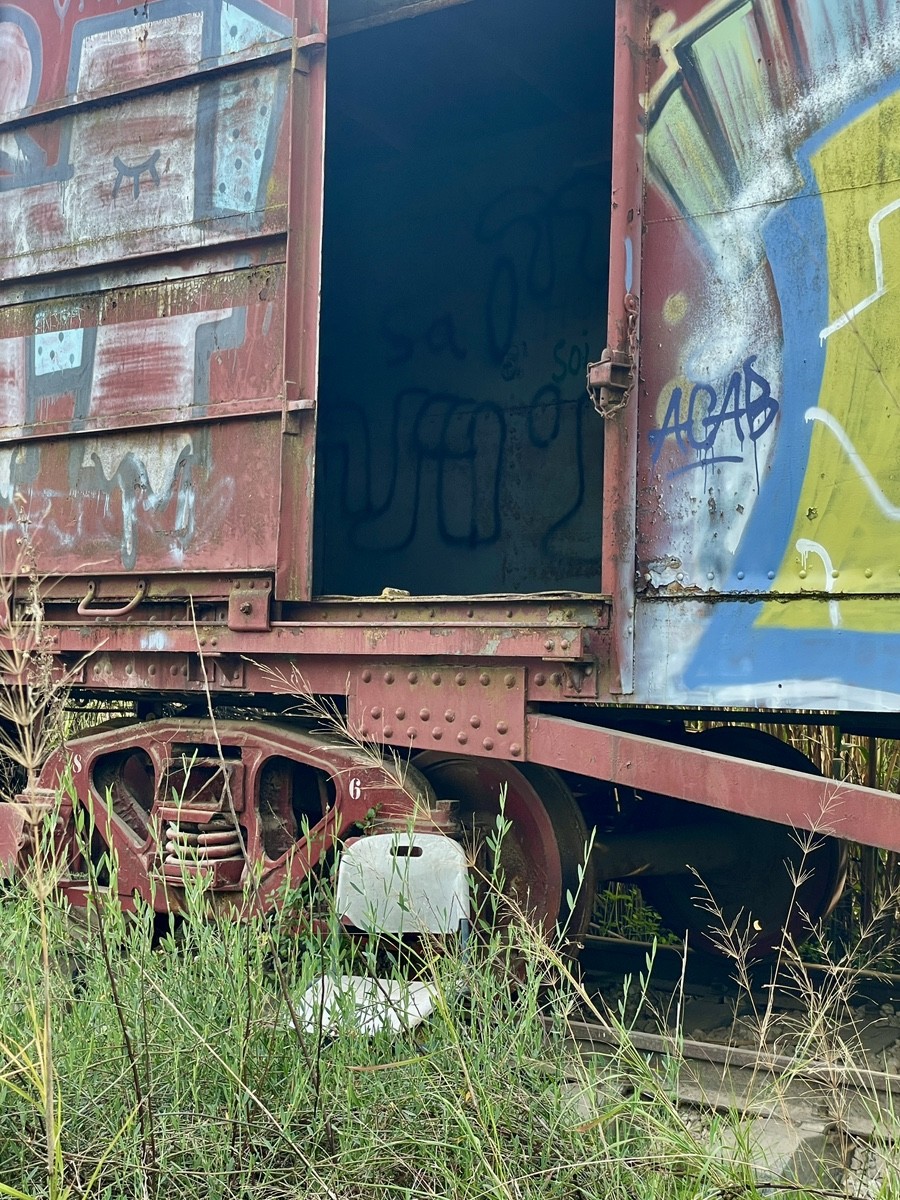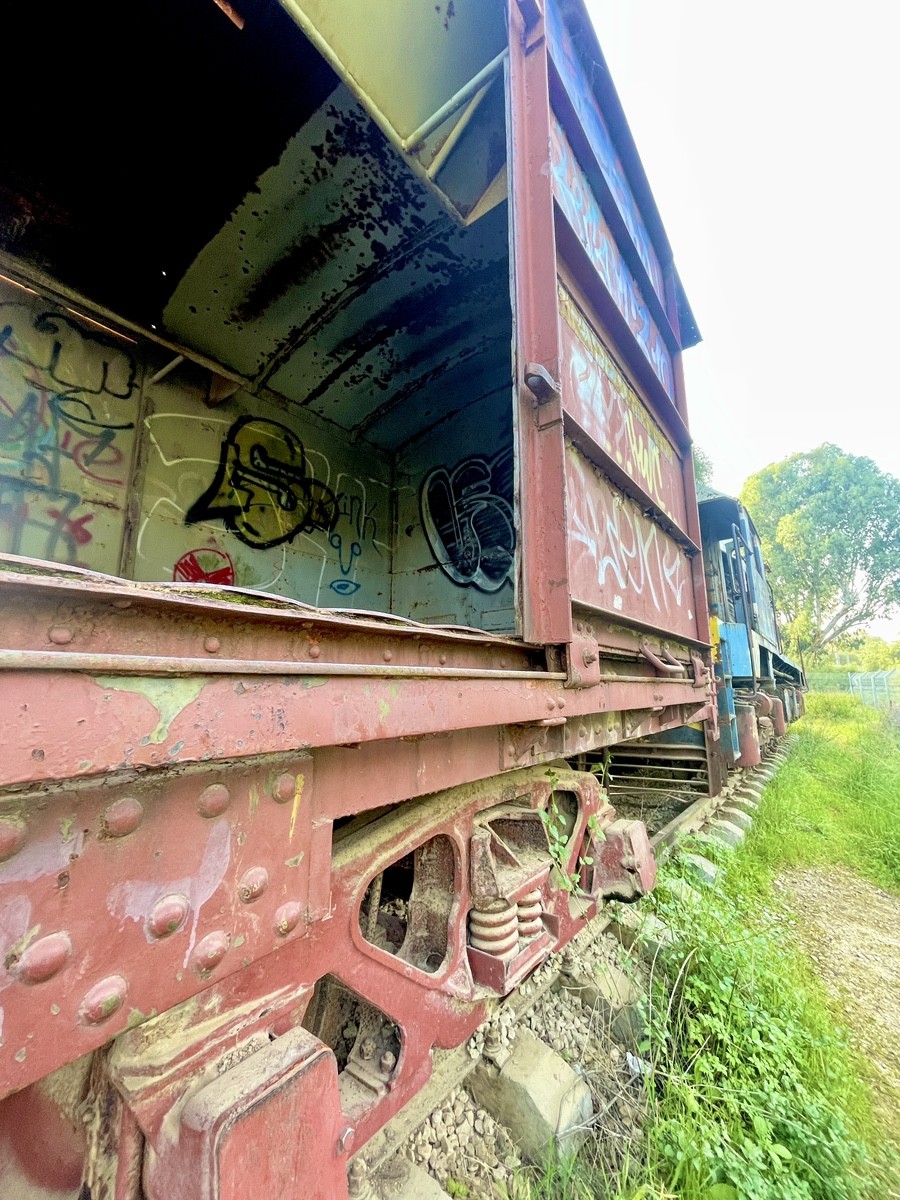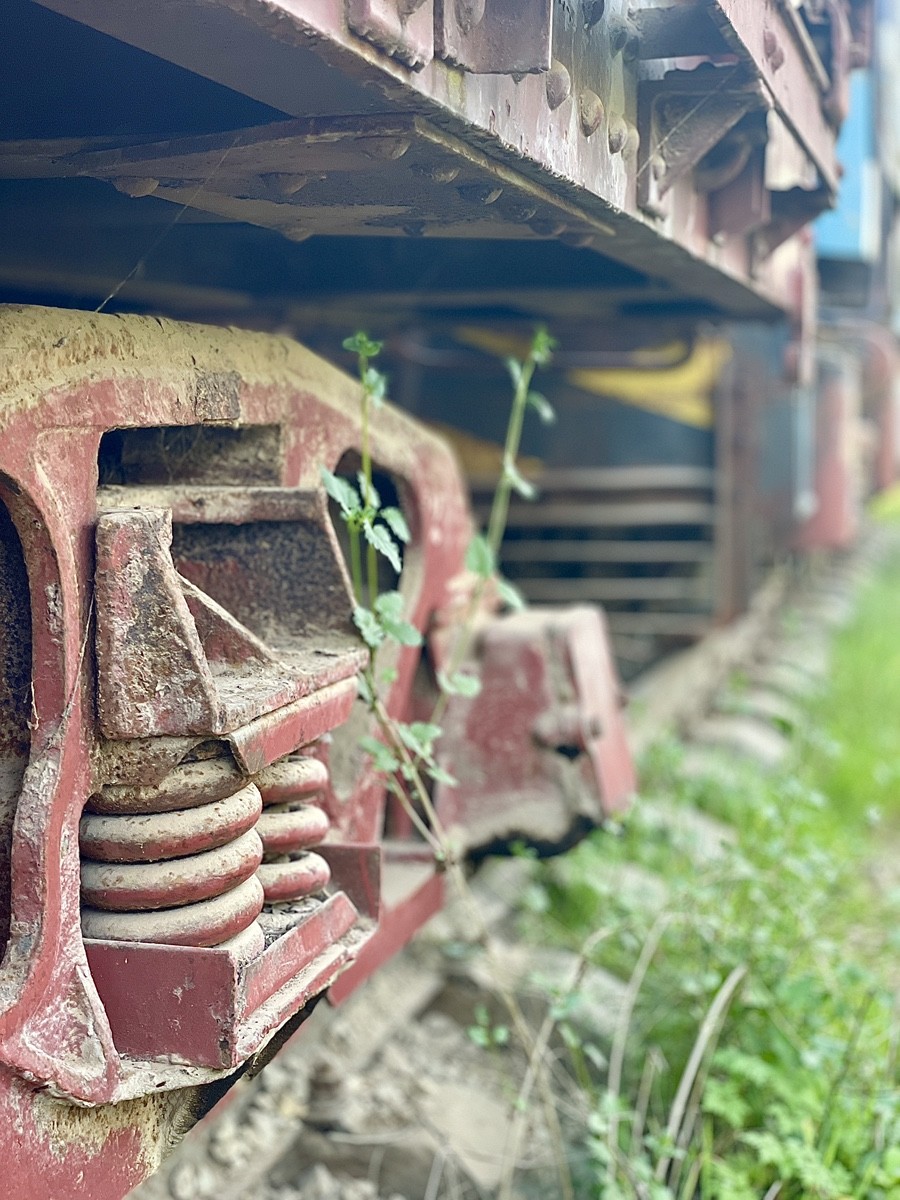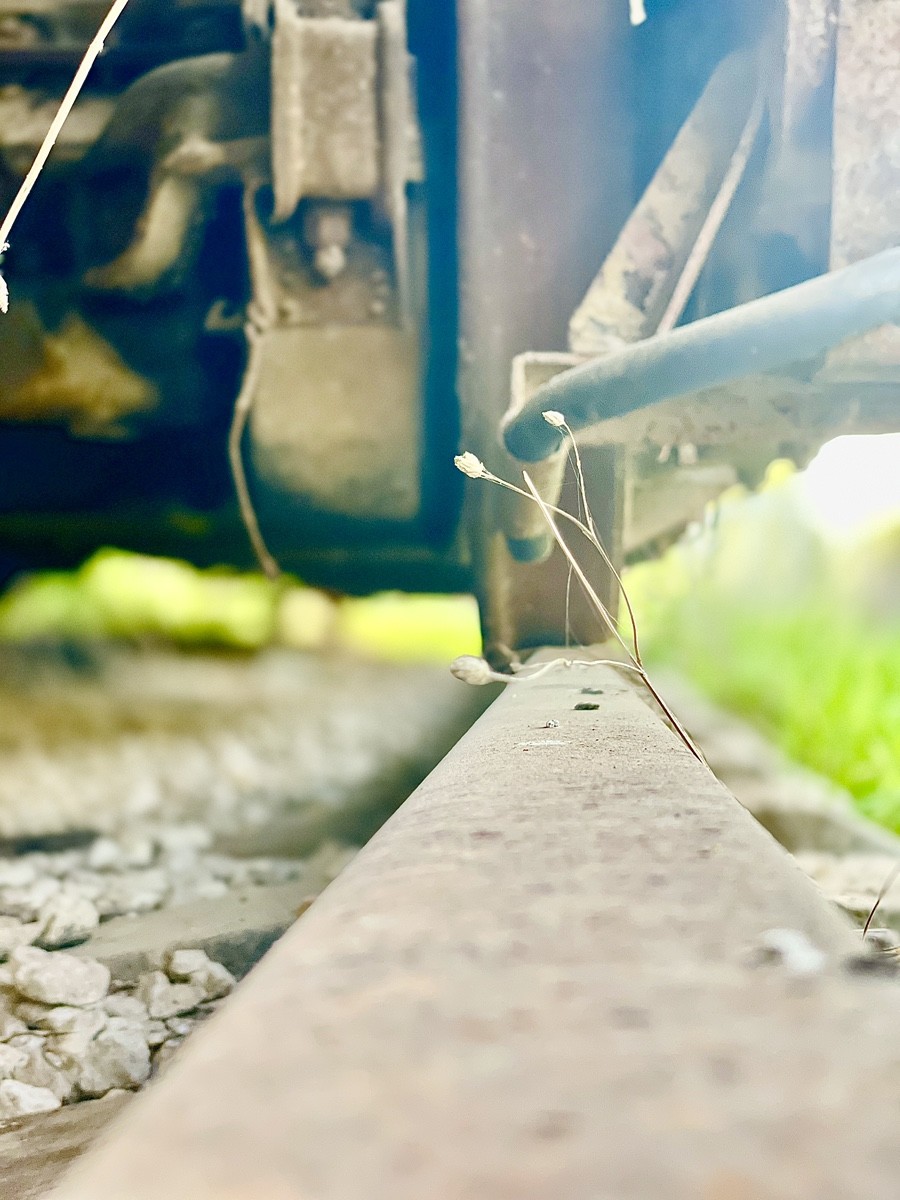

Resting on a "permanent anchor" at Sorek Station is a classic G-type covered goods wagon, a true veteran of the rails. Likely manufactured by British firms such as the Gloucester Railway Carriage and Wagon Company or European factories in the mid-20th century, these wagons were the backbone of regional logistics from the 1940s through the 1980s.
With its riveted metal skin and high-set ventilation slats—designed for transporting perishables or livestock—this wagon is a relic of the transition from steam to early diesel power. No longer carrying cargo to Jerusalem or Cairo, it has become a canvas for graffiti and a prime object of industrial archaeology. It serves as a haunting reminder of an era when logistics were slower and more tactile, often finding a second life as a makeshift warehouse on remote platforms like this one after its active service ended.
The journey begins in the almond blossoms of Sha'alvim, a landscape rooted in the biblical territory of the Tribe of Dan. The route advances through the strategic Latrun salient to Emmaus-Nicopolis, where Byzantine ruins mark the site of the Resurrection—land preserved through the spiritual visions of Mariam Baouardi and the patronage of Countess Beatrice de Saint-Cricq.
The path culminates at the abandoned Sorek Station, a limestone relic of the Ottoman Empire. Inside, time stands still among concrete staircases and iron veterans: a freight car and a yellow-marked shunting locomotive from the 1990s. A modest monument to Egyptian labourers honours the unsung builders of the WWI era. Today, the silence of these rusted tracks is only broken by the whistle of modern trains, bridging the gap between ancient faith and imperial ruins.