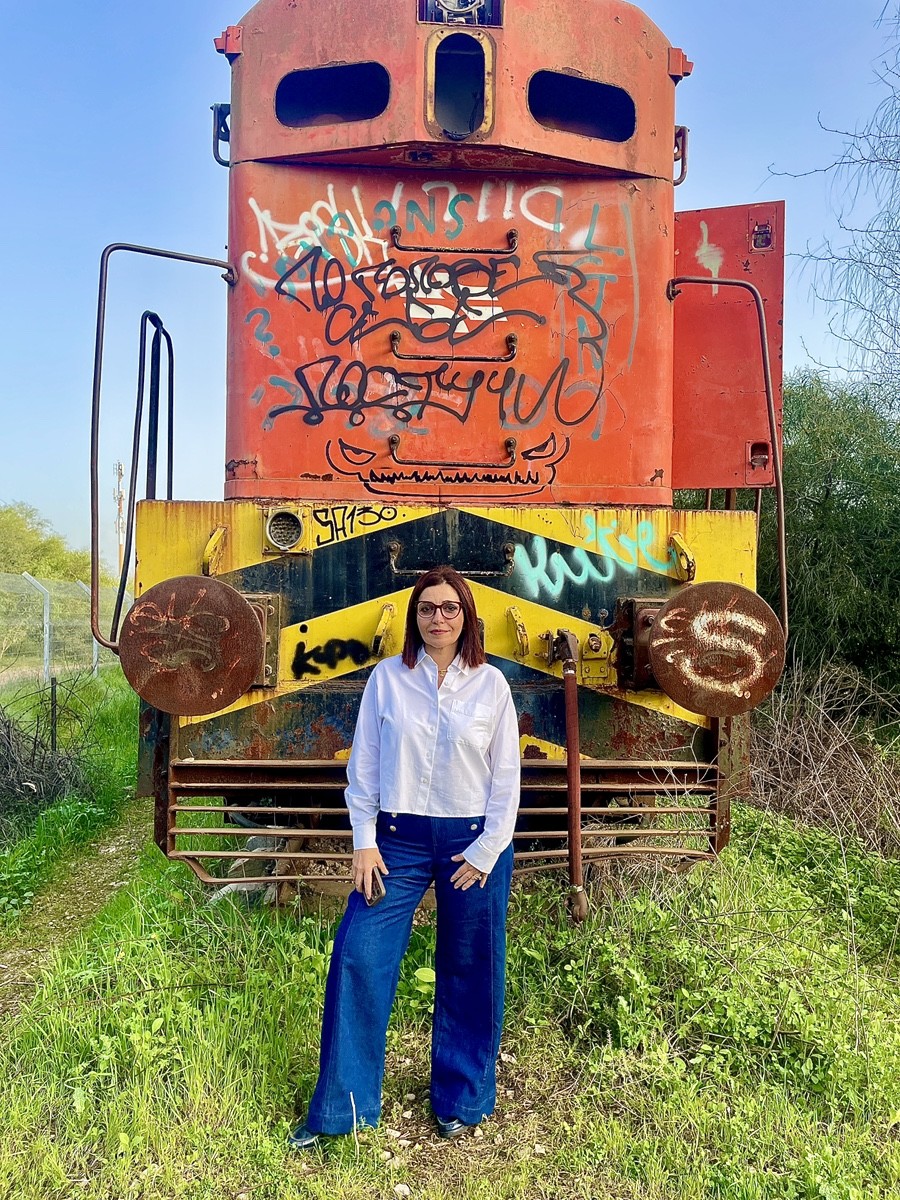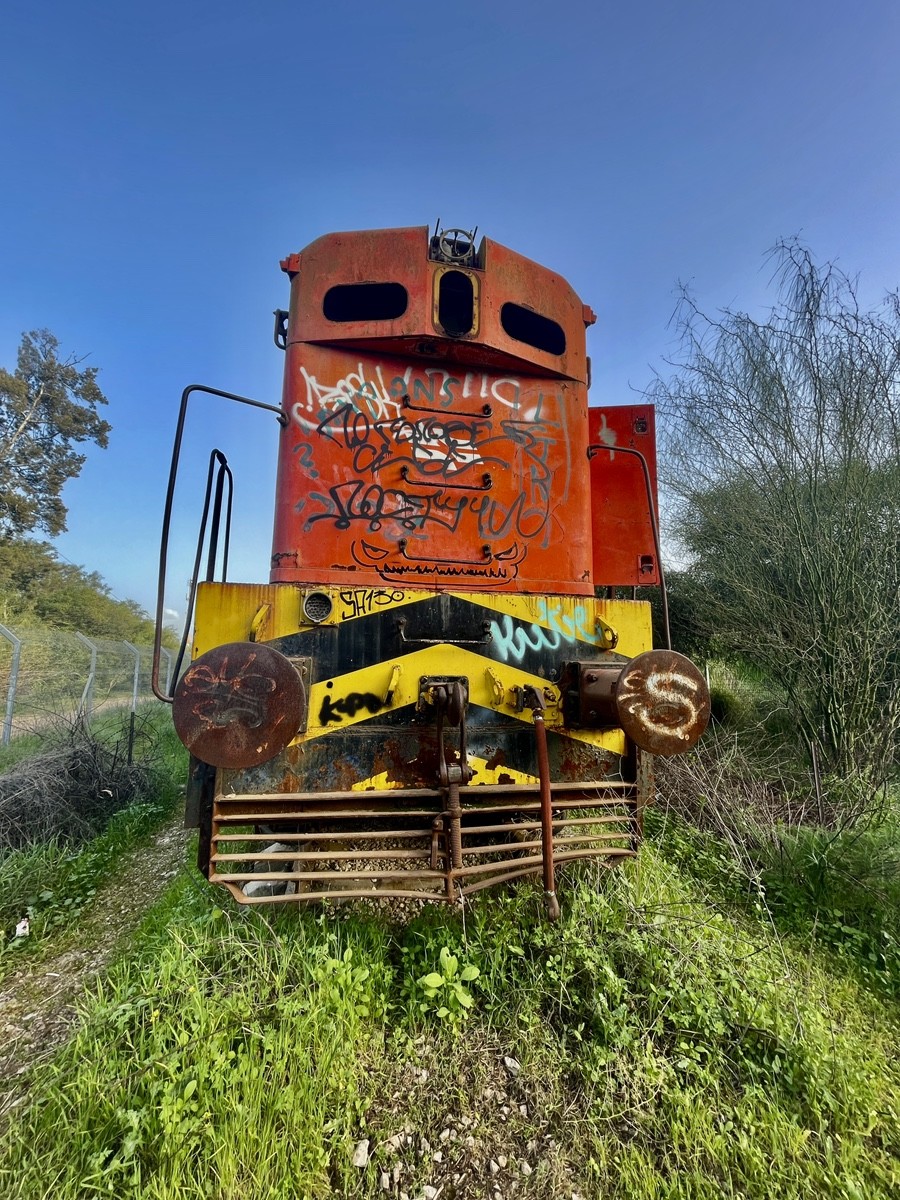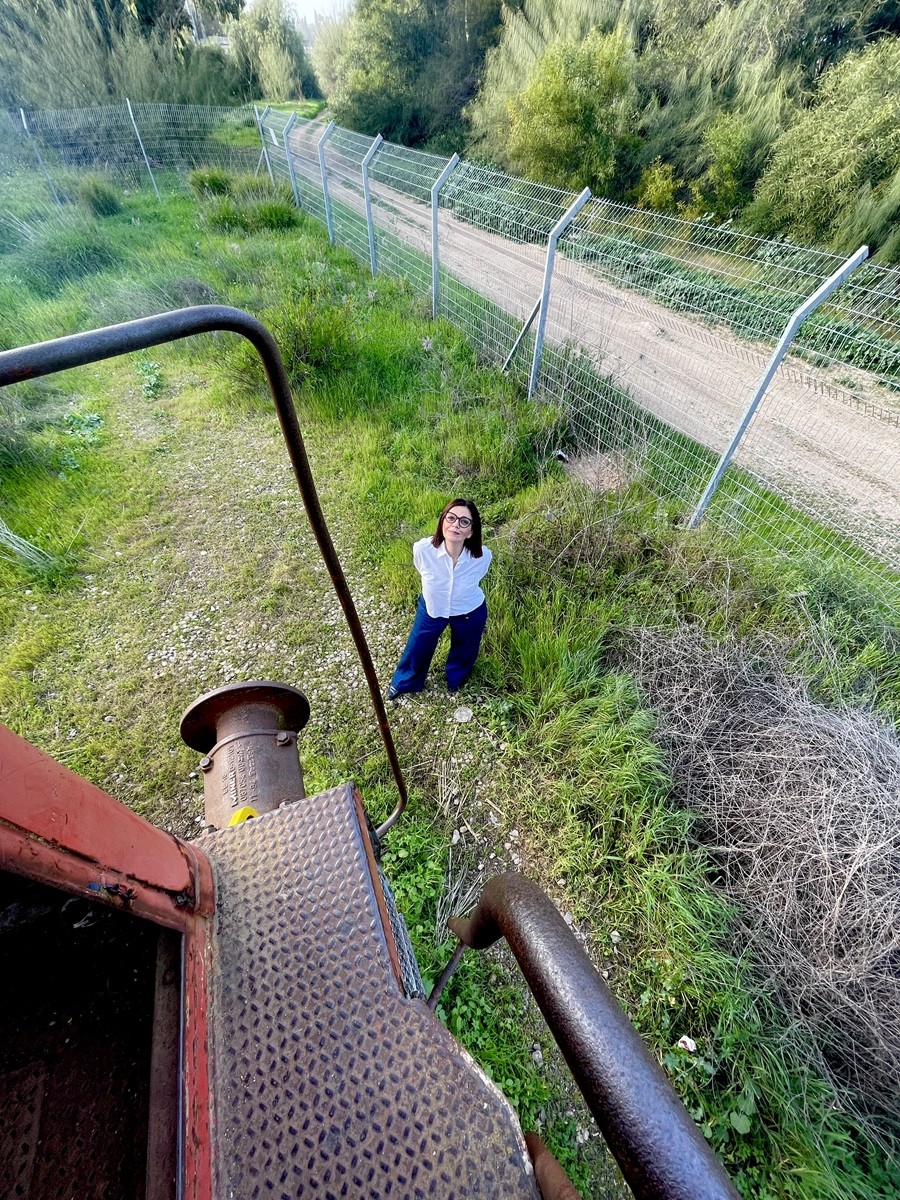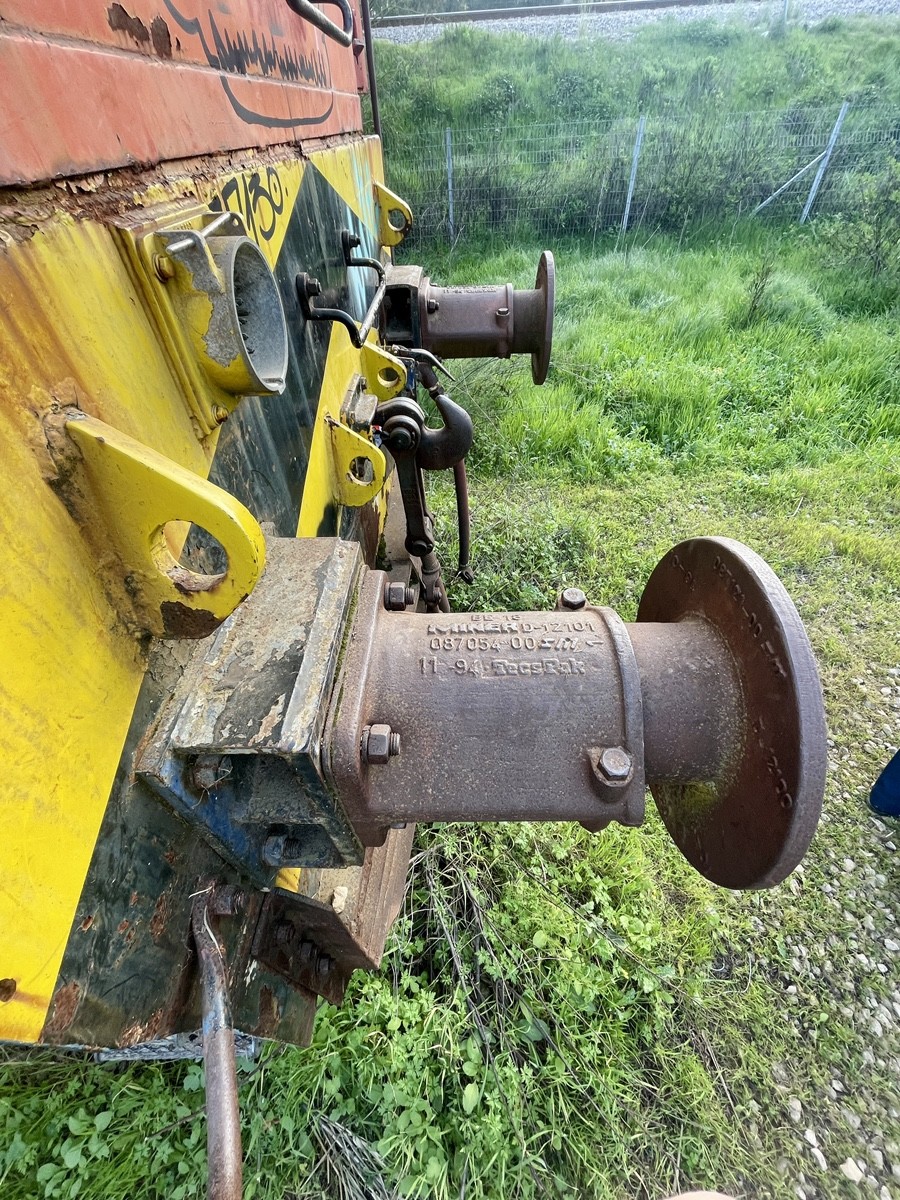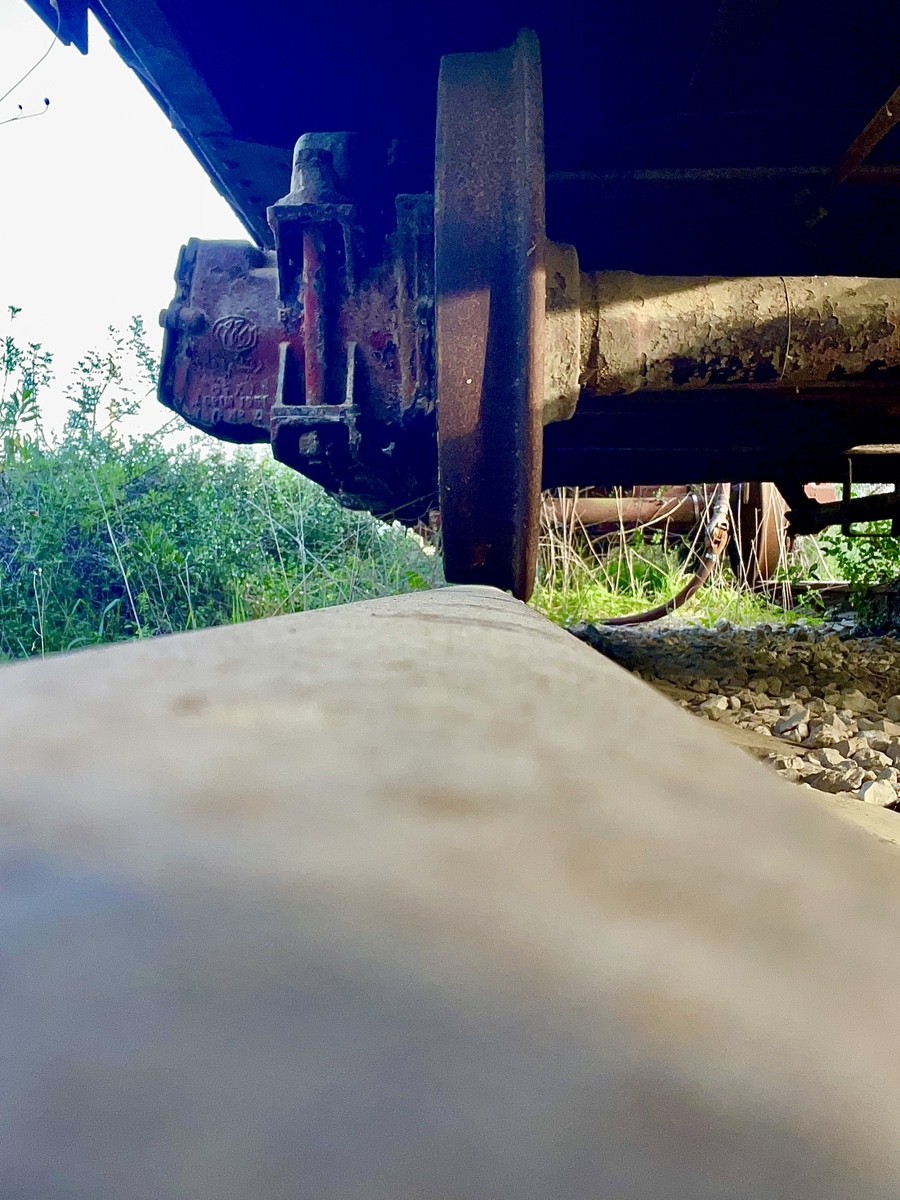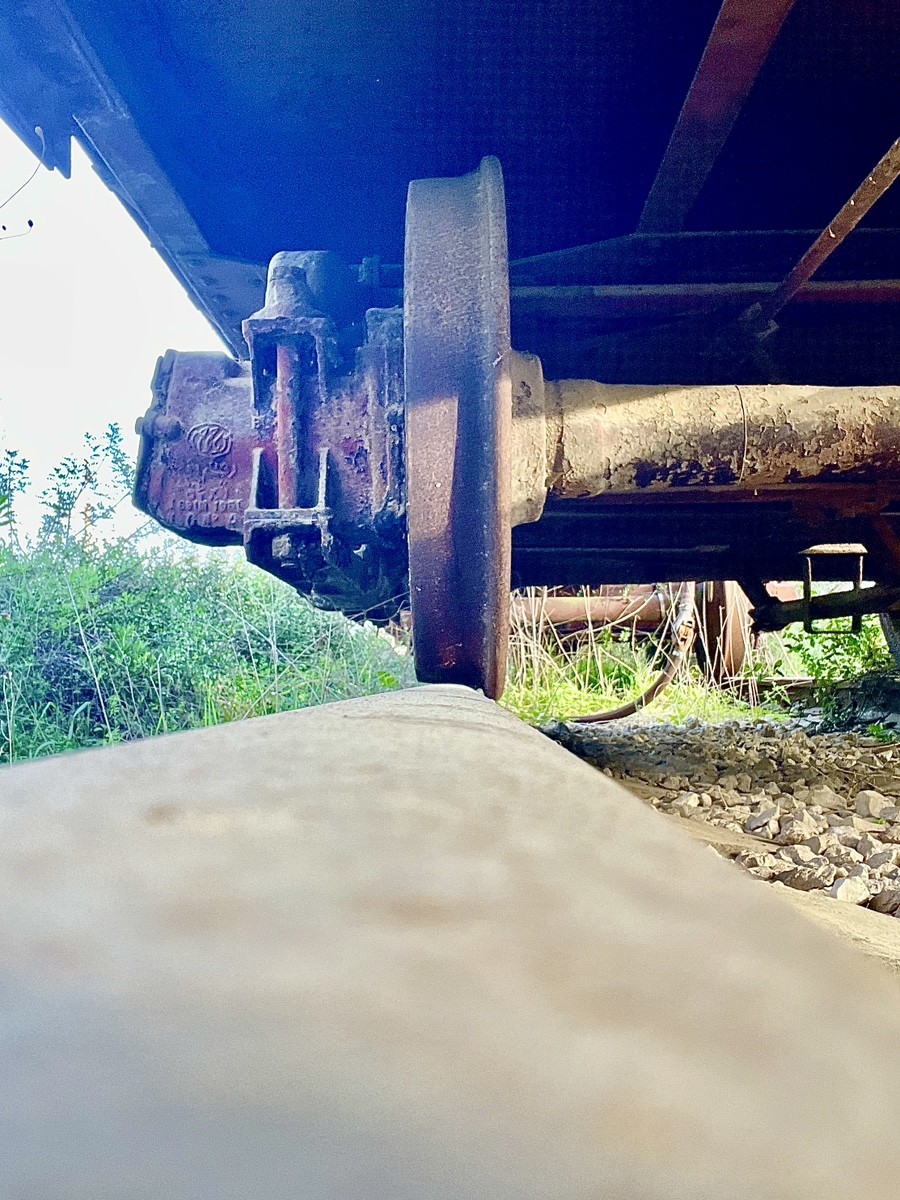

Standing in silent contrast to the high-speed trains of modern Israel is this veteran shunting locomotive (likely a G12 series or a similar British/German model). For decades, these "workhorses" were the lifeblood of Sorek Station, tirelessly marshalling wagons and providing the logistical flexibility required for such a vital junction.
The locomotive features buffers and chain couplings—a manual, labour-intensive technology that required a shunter to work dangerously between the cars. The visual of its fading yellow safety paint surrendering to deep, textured rust serves as a powerful metaphor for the 1970s and 80s infrastructure. Once the centre of all activity, this machine now stands as an industrial monument, watching from the sidelines as modern electric fleets rush past on the main lines toward Jerusalem, oblivious to the manual grit that once built this route.
The journey begins in the almond blossoms of Sha'alvim, a landscape rooted in the biblical territory of the Tribe of Dan. The route advances through the strategic Latrun salient to Emmaus-Nicopolis, where Byzantine ruins mark the site of the Resurrection—land preserved through the spiritual visions of Mariam Baouardi and the patronage of Countess Beatrice de Saint-Cricq.
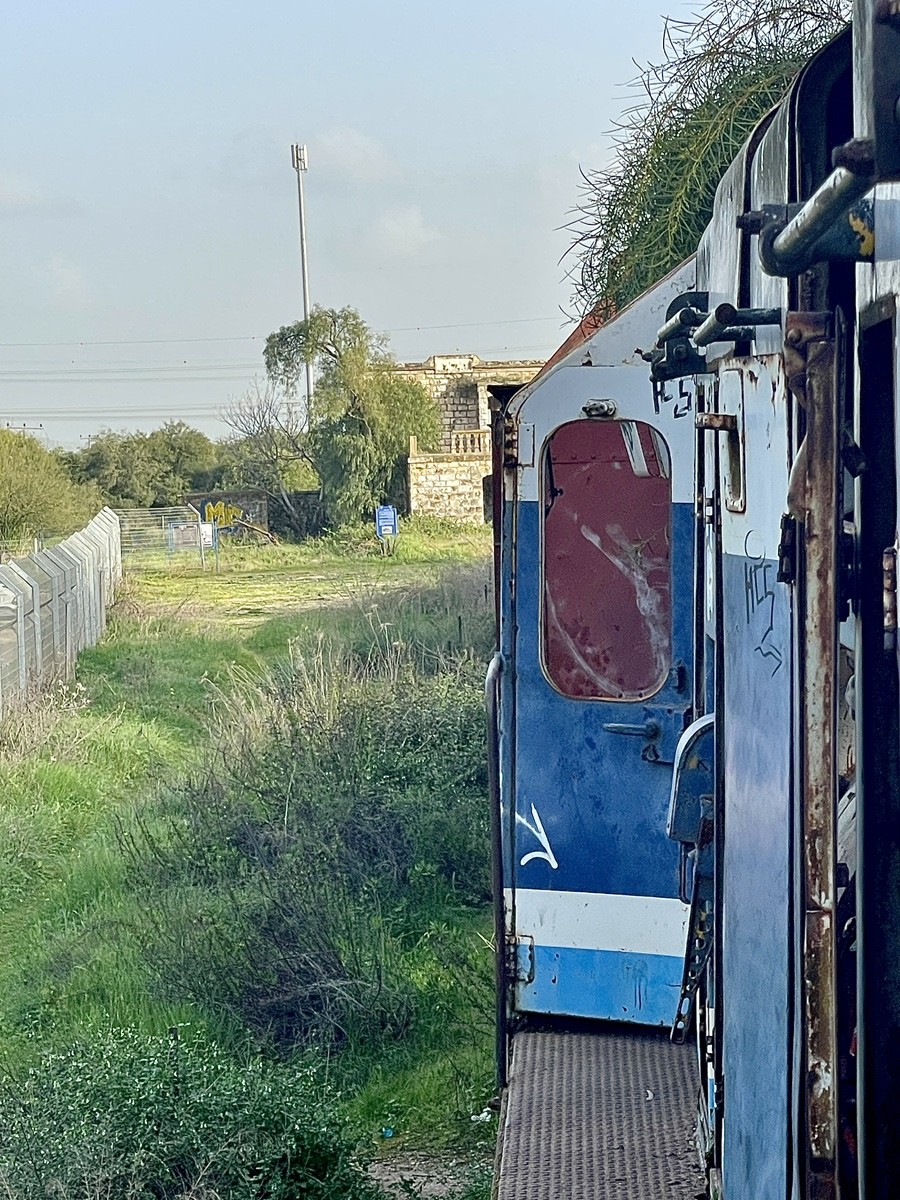
The path culminates at the abandoned Sorek Station, a limestone relic of the Ottoman Empire. Inside, time stands still among concrete staircases and iron veterans: a freight car and a yellow-marked shunting locomotive from the 1990s. A modest monument to Egyptian labourers honours the unsung builders of the WWI era. Today, the silence of these rusted tracks is only broken by the whistle of modern trains, bridging the gap between ancient faith and imperial ruins.