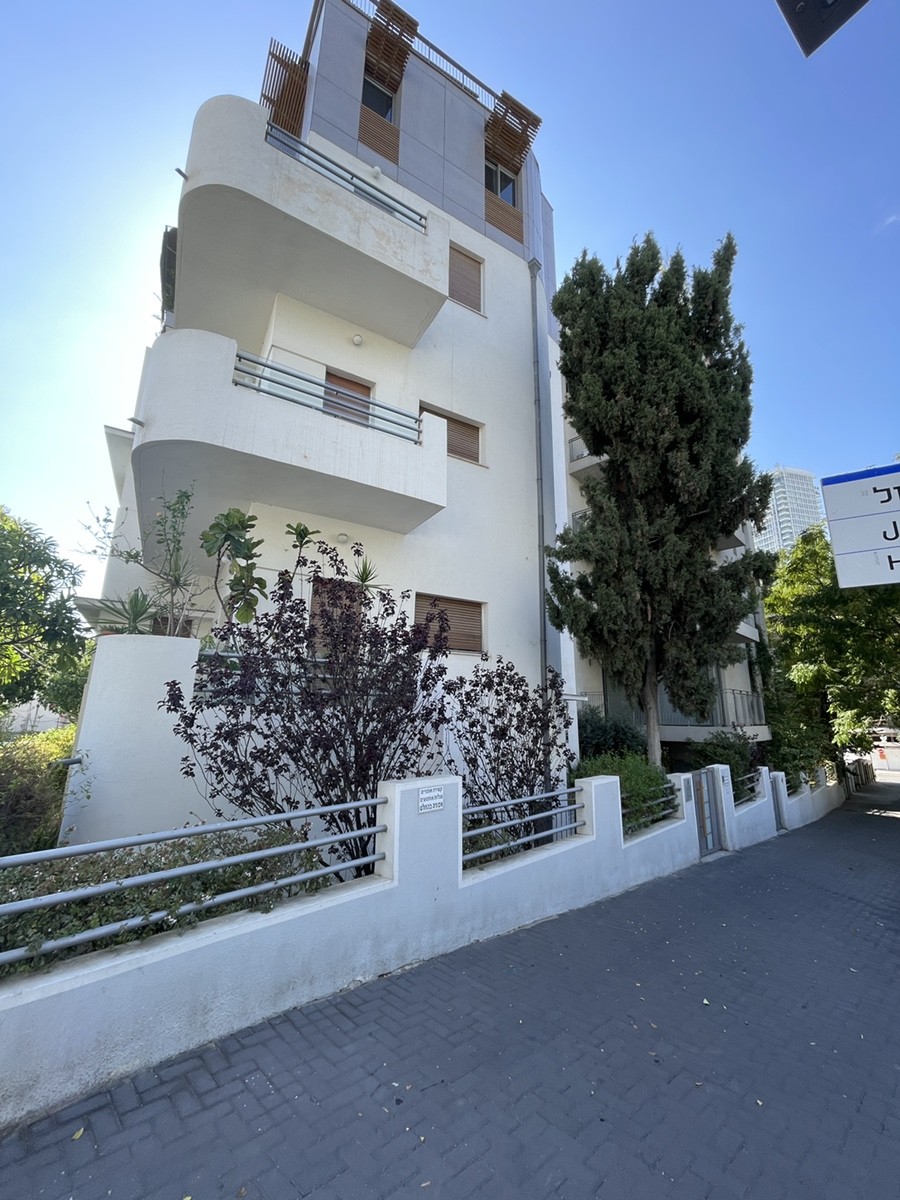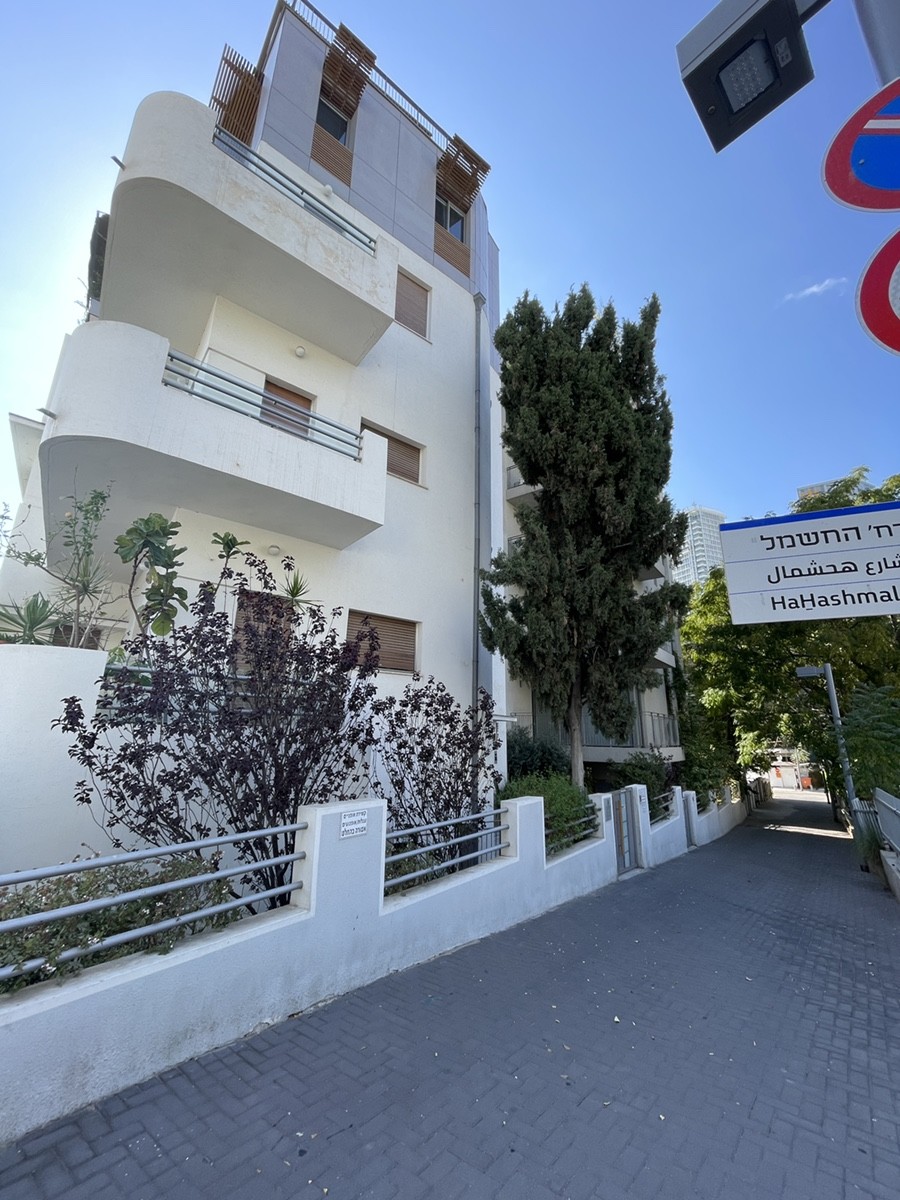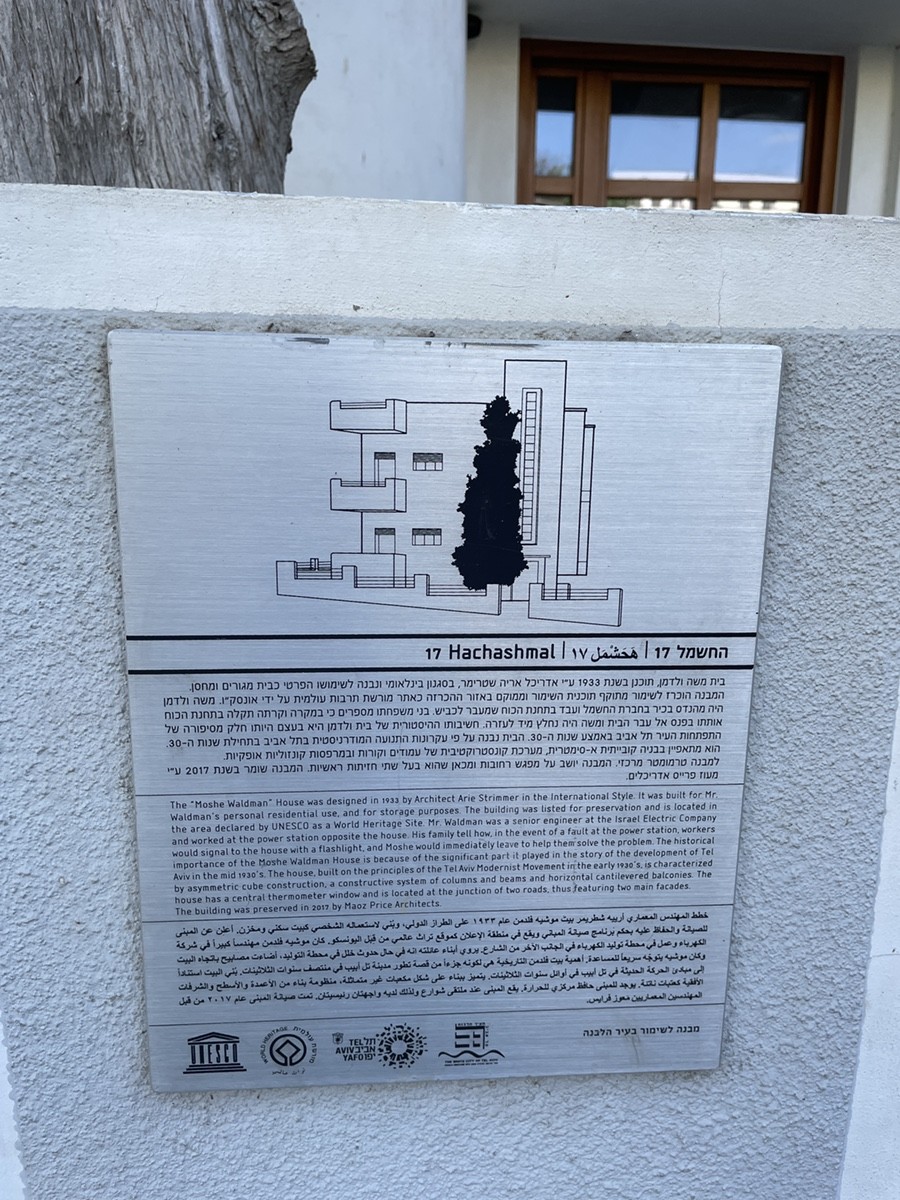

House No. 17 on HaHashmal Street stands almost directly across from the old power station — and that’s no coincidence. Its owner, **Moshe Waldman**, was the chief engineer of the Electric Company in Tel Aviv — a man who quite literally lived among transformers, grids, and circuits. The house was designed in **1933** by architect **Aryeh Strimer**, at the height of the Functionalist era. Its clean cubic form, cantilevered balconies, and “thermometer window” running along the staircase all reflect a devotion to light, air, and precision — as if drawn straight from an engineer’s blueprint.
Waldman built the house not only for his family but also with space for his work: several rooms served as storage for technical equipment. Colleagues used to joke that if something broke at the power station, you could knock on his door — he’d come out in his work robe and fix it himself. The house became a quiet symbol of Tel Aviv’s first generation of engineers — people for whom electricity was not a metaphor but a calling.
Today, the building is part of the **White City** and protected as a **UNESCO World Heritage Site**. In **2017**, architects **Ma’oz and Price** restored it, reinstating its original proportions and the precise, confident geometry with which it was conceived. This house stands not just as a memory of an era, but as a monument to its precision — and to the human faith in mastering the power of light.
You’ll walk through the very heart of old Tel Aviv — a neighbourhood where orange groves, missionary dreams, and the glow of early electricity all intertwined. The journey begins at the Model Farm and its iconic water tower, the birthplace of irrigation in Eretz Israel. From there, we’ll trace the footsteps of the Ishma’ilov family — Mashhadi *anusim* who built rental houses and inns for Persian merchants, yet lost much of their fortune under dramatic circumstances. We’ll pause in Gan HaHashmal, the city’s second public garden, which has witnessed the romance of the 1920s, decline, and the wave of 21st-century gentrification. The walk culminates at the grand Ohel Moed Synagogue — the “Tent of Meeting” — where eastern communities claimed their rightful place in the growing city. This is a journey through layers of time: from water to electricity, from merchant houses to gardens and synagogues — a story where every street guards a secret and every building speaks for its generation.