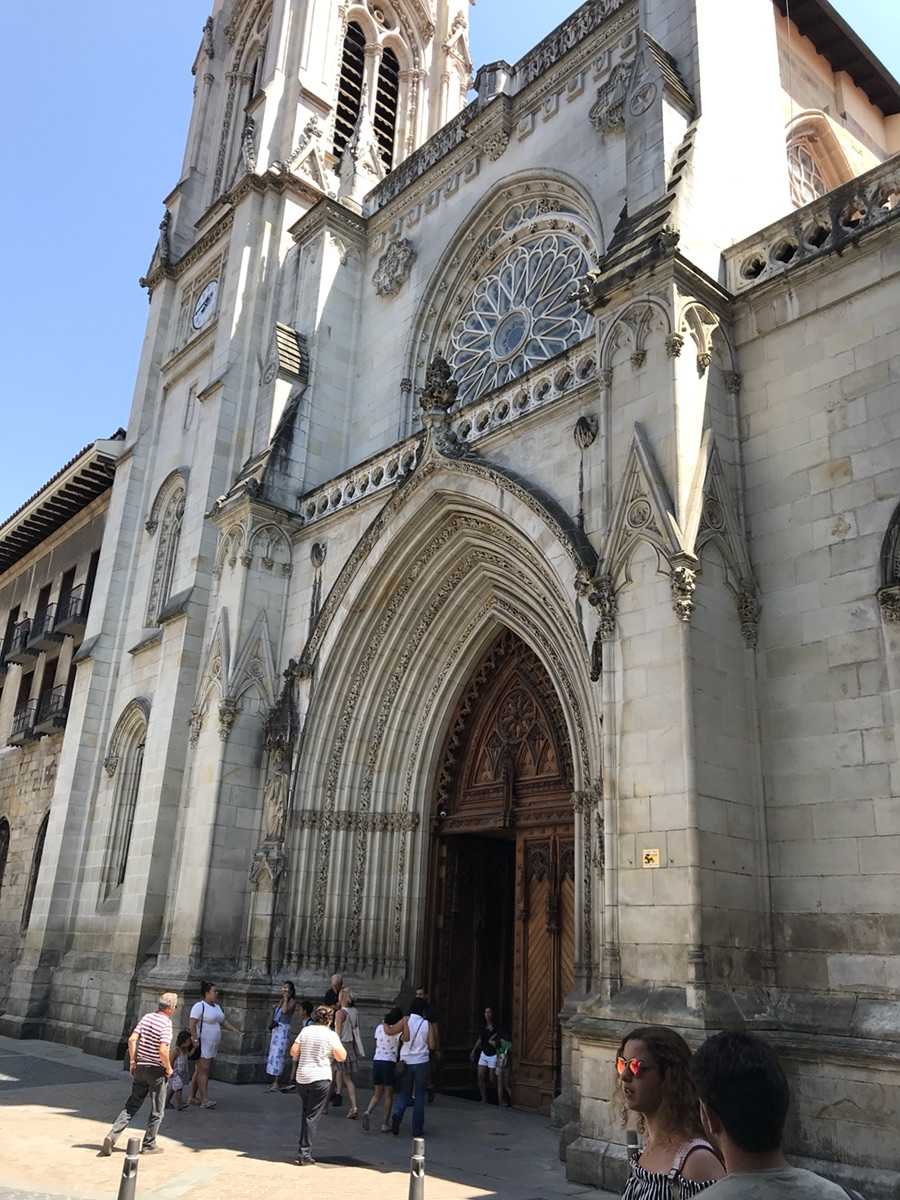

Standing in front of the Cathedral of Saint James, it feels as if the pace of time shifts for a moment. This is the center of Bilbao — not just geographically, but spiritually, the point from which the city’s story begins. A church stood here even before Bilbao became a city. In the founding charter of 1300, signed by Diego López de Haro, the temple is already mentioned, and from that moment it became the city’s spiritual axis. It was dedicated to Saint James, the patron of pilgrims, and it makes sense: the northern Camino route to Santiago de Compostela passed directly through Bilbao.
The cathedral is Gothic — long, narrow, disciplined — with three naves, the central one rising high above the others. Stone vaults rest on flying buttresses like ribs, and the whole building seems to breathe through its masonry. In the sixteenth century a sacristy and cloister were added, with an entrance directly from the street through the Angel’s Gate. That passage still feels like a threshold: one step takes you out of the city’s noise and into a pocket of quiet. According to old tradition, pilgrims entered the cloister through this doorway to rest after their long journey. Above the gate once stood an image of the Archangel Michael, protector and guide, so crossing under it was seen as walking beneath the wings of a guardian.
That is part of Bilbao’s charm: everything here has both form and meaning. Even the architecture speaks.
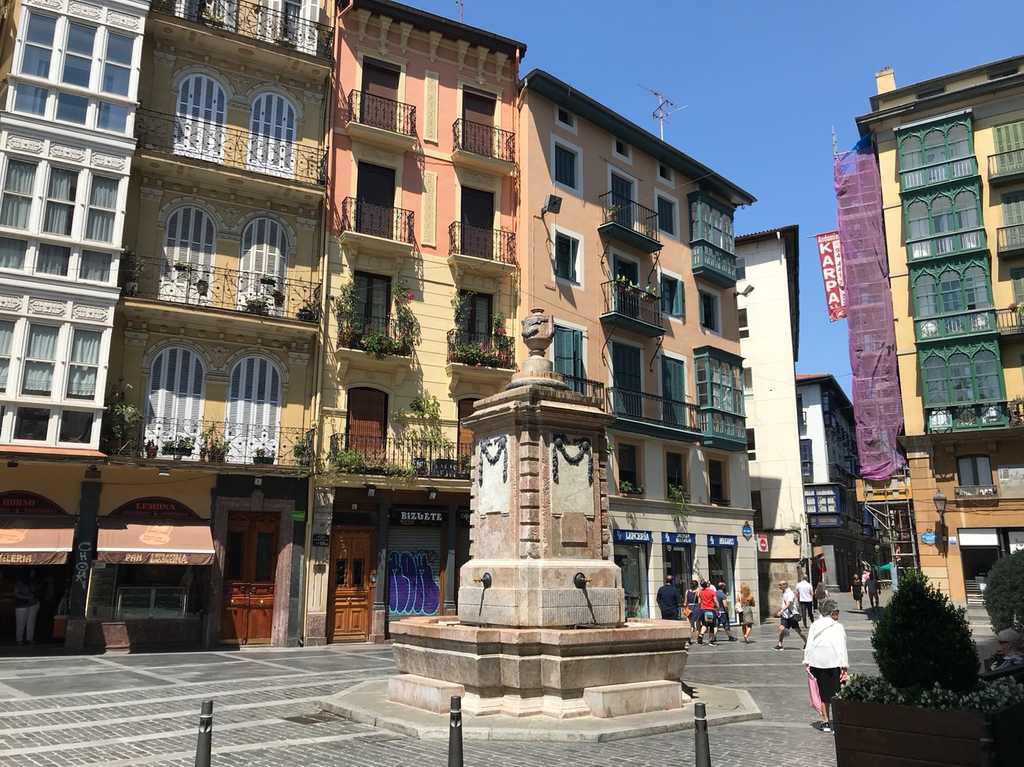
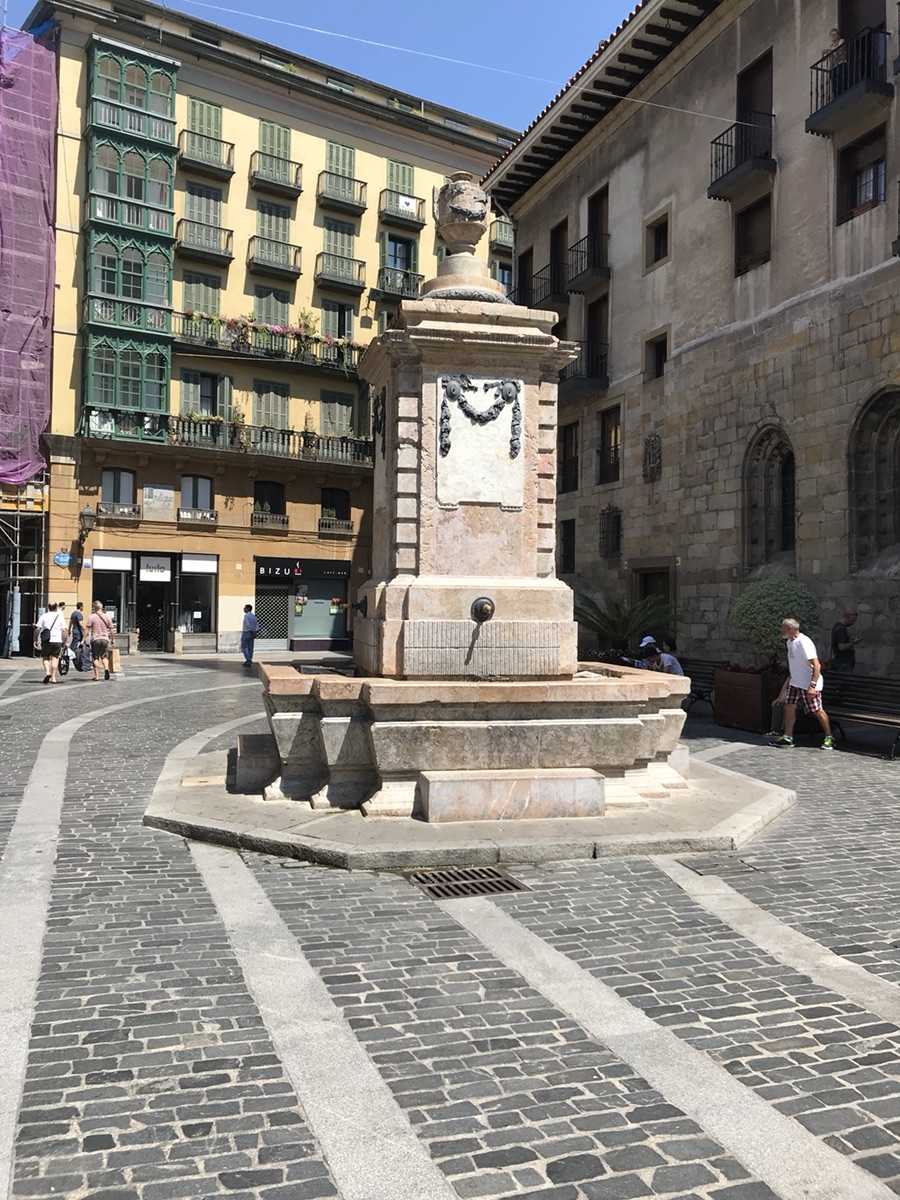
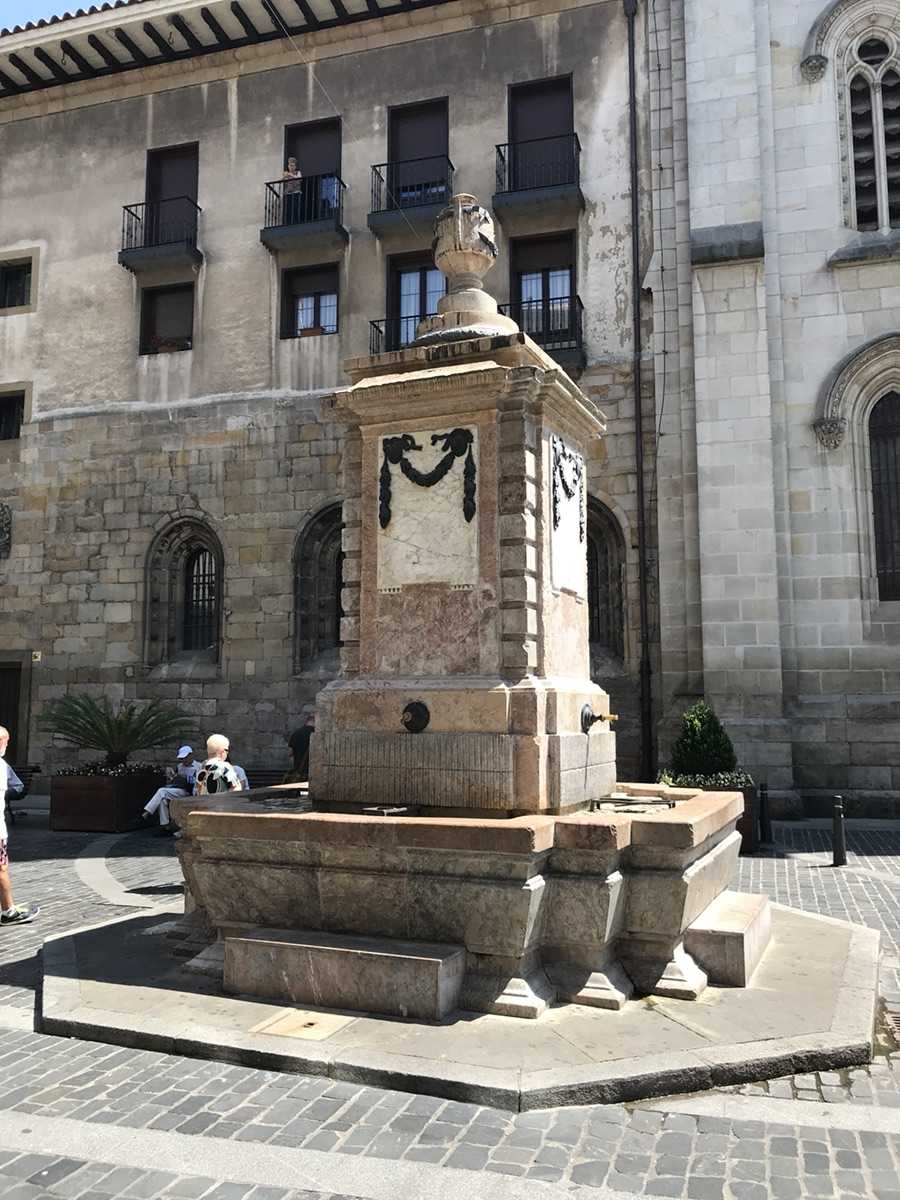
In front of the cathedral stands an eighteenth-century fountain — a stone vase above four lion heads from which water flows. It was created in 1785 by Luis Paret, an exiled painter who lived in Bilbao for several years. The fountain was originally part of the city’s new water system, yet for pilgrims it became a symbol of cleansing, renewal, and fresh strength for the road ahead.
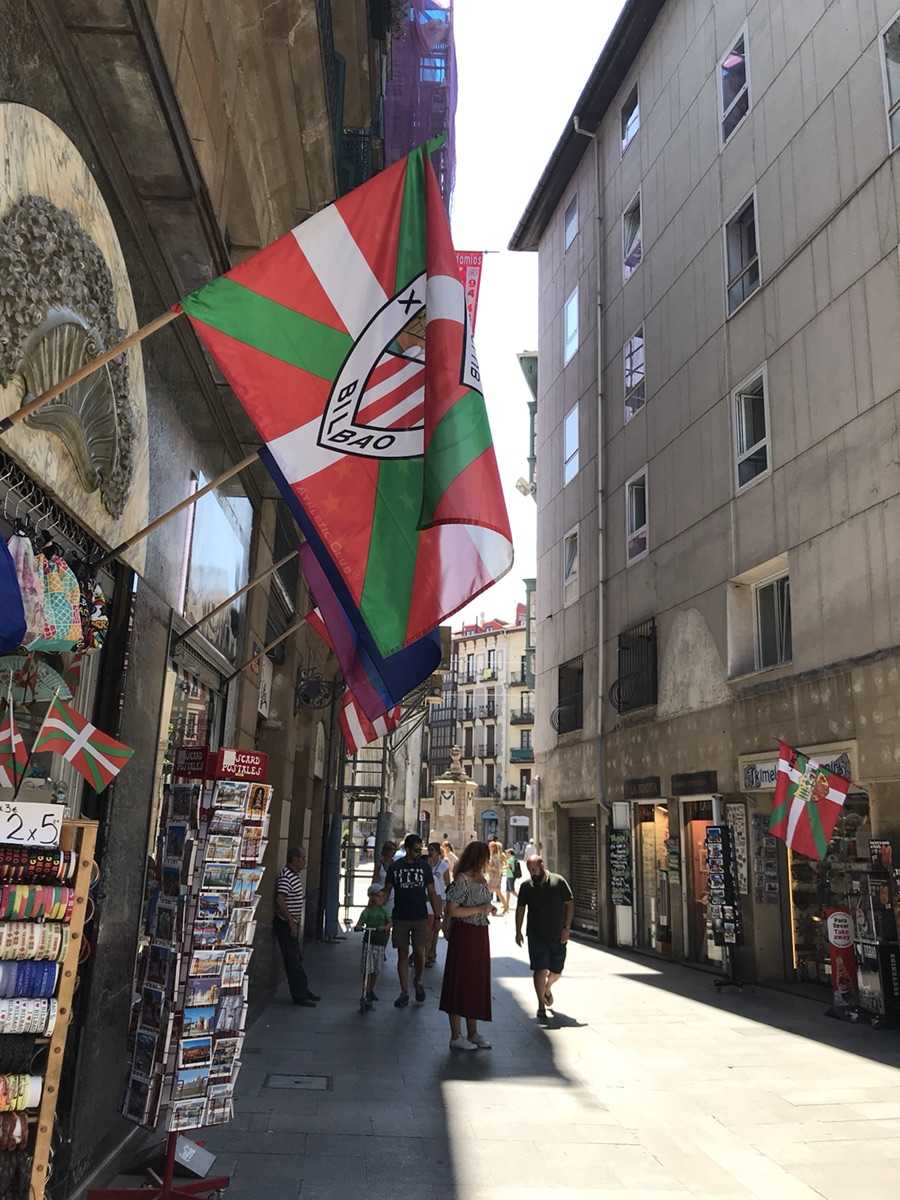
Step a little to the side and you see flags hanging above the shops. The Ikurriña, the Basque flag: red for the land of the Basque Country, the green cross of Saint Andrew for liberty and self-rule, the white cross standing for faith and justice. Created in the nineteenth century, it has long since become more than a flag — it is a declaration of identity from a people who have always insisted on walking their own path.
Sometimes the Basque flag hangs beside the crest of Athletic Bilbao, and that combination says as much about this place as any history book. The crest carries the bear and oak of Gernika — symbols of Basque freedom — along with the old bridge and the church of San Antón, the sites from which the city grew. The club’s colors — red and white — are worn with fierce pride, and its unique rule is famous: only players born or raised in the Basque Country can wear the shirt.
The cathedral, the fountain, the flag, the football crest — together they read like one continuous story about Bilbao: a city where faith, work, honor, and play weave into a single language. Here, history isn’t something preserved behind glass. It lives in the stone, in the water’s murmur, and in the people who still carry their colors with pride.
This walk is not just a stroll through the old streets of Bilbao — it’s a walk through the city’s memory. Everything here lies close together: the Gothic gates of Santiago Cathedral, the soft murmur of the “Dog Fountain,” the old plaques still marked by the great flood of 1983, and Bar Xukela, where the spirit of the city lives in a glass of wine and laughter at the counter.
We follow Calle del Perro and Calle de la Torre — streets whose names hold legends and the echoes of ancient family towers. At every turn, a story appears: about the Basques, whose defensive towers once stood like the stone houses of Svaneti; about Diego María Gardoki, the first Basque to serve as Spain’s ambassador to the United States; about Pedro Arrupe, the Basque priest who renewed the Jesuit order in the twentieth century.
Our path leads to the river where ships once lined the shore, and finally to El Arenal — the park where Bilbao learned to breathe, to love, and to listen to the quiet rhythm of its own heart.
This walk is like a simple, honest conversation with the city — no guide, no performance, just a friend who has a story waiting behind every corner.