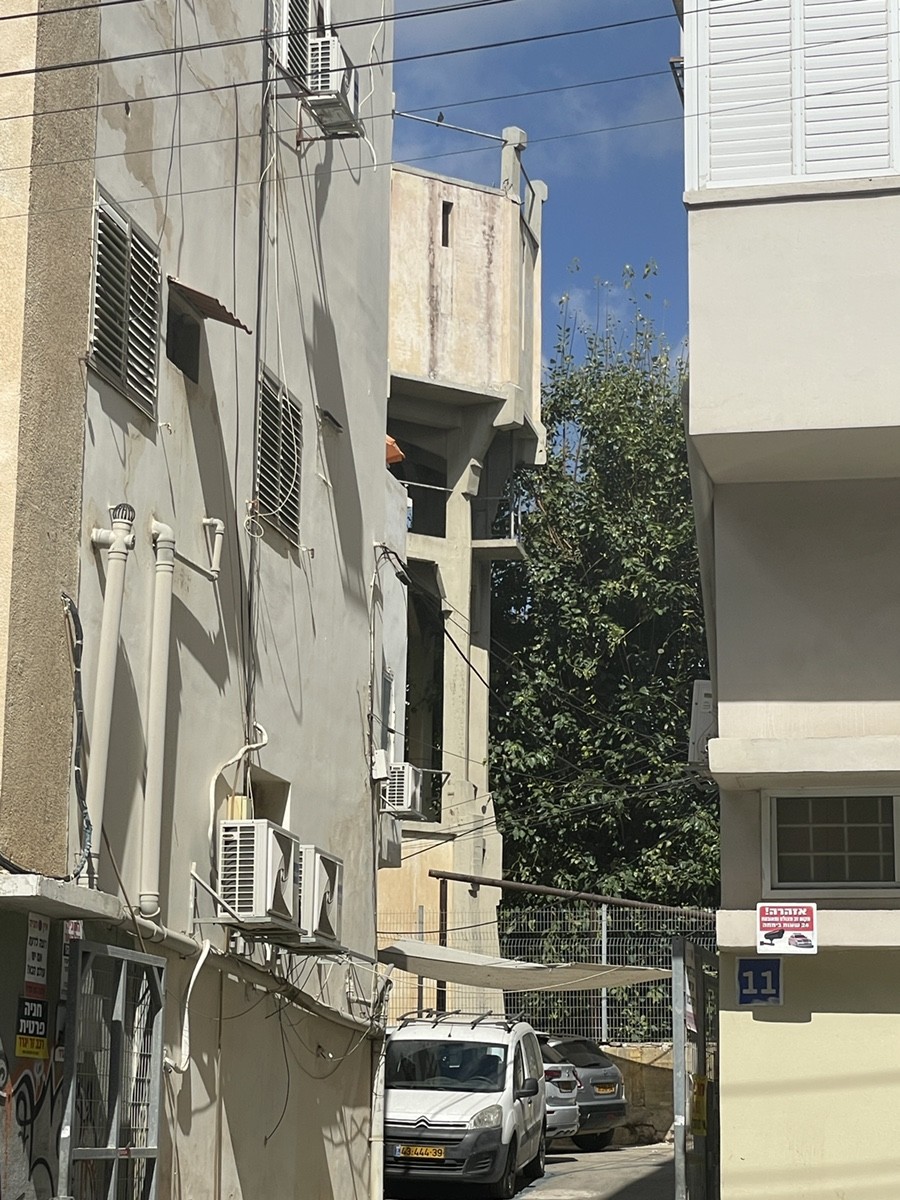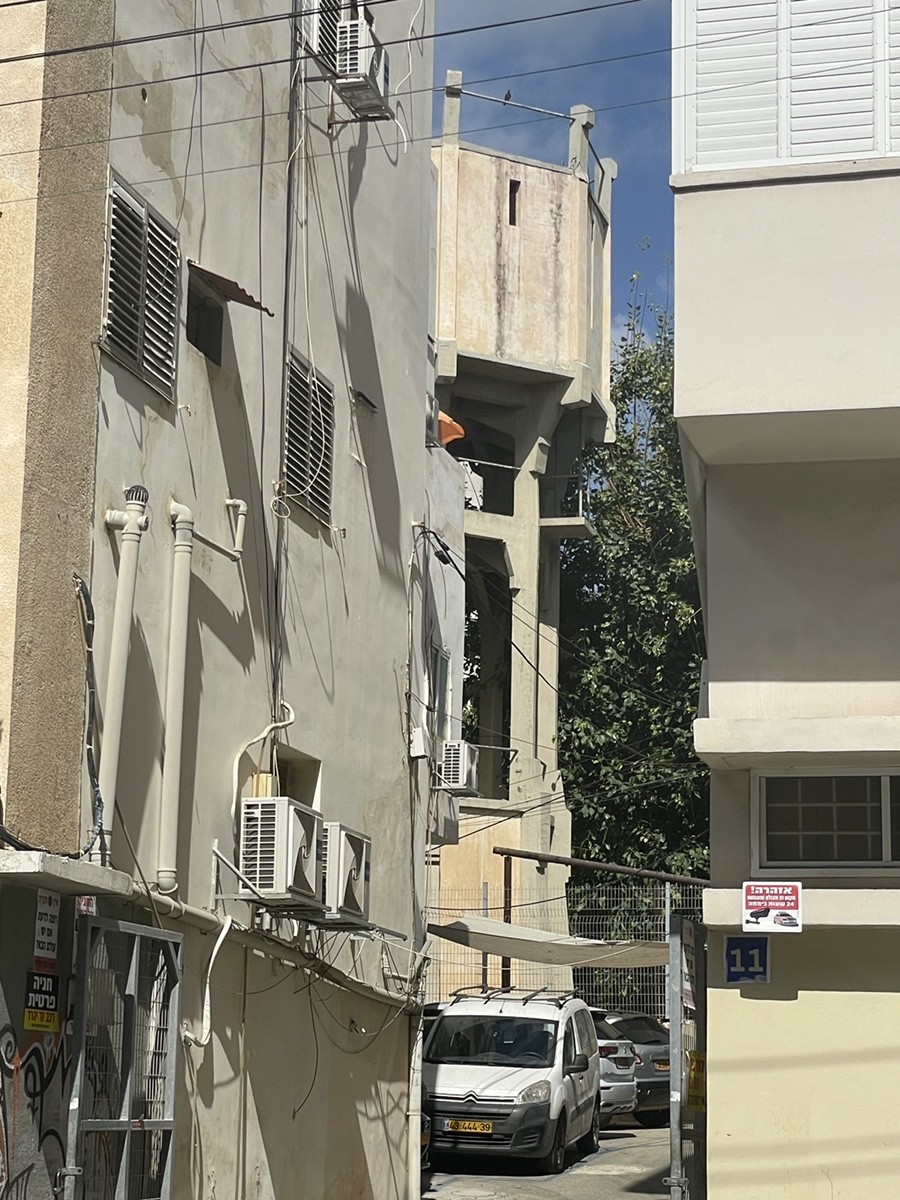

The tower peeking out between the buildings is the ancestor of innovation in the Land of Israel — the very first of its kind. In the mid-19th century, missionary Albert Isaacs built a well, a pump, and the first water tower in Jaffa on his **Model Farm**. Water was lifted to the top and flowed down through irrigation channels to the orchards — a technological leap from buckets and cisterns to a system of steady pressure. That simple idea made large-scale citrus cultivation possible and became a model for future settlements.
A few decades later, the Baron’s colonies adopted the same concept. In **Zikhron Yaakov**, a “very advanced” tower appeared in 1891. In **Rishon LeZion** in 1898, the Rothschild administration built its own, designed by architect A. Varon, complete with reservoirs and arched distributors that watered both orchards and the public garden. Wells had been drilled there since 1883, but it was the tower that made water a managed, communal resource.
Soon, urban Tel Aviv took up the torch: new towers rose across the young city, like the one on Mazeh Street (1924, engineer Arpad Gott). And beside the old Model Farm, the first power station flickered to life. From water to electricity, the principle remained the same — to store energy and distribute it to all. What began as a farmer’s experiment became the blueprint of urban infrastructure, shaping the neighbourhoods that grew around it.
You’ll walk through the very heart of old Tel Aviv — a neighbourhood where orange groves, missionary dreams, and the glow of early electricity all intertwined. The journey begins at the Model Farm and its iconic water tower, the birthplace of irrigation in Eretz Israel. From there, we’ll trace the footsteps of the Ishma’ilov family — Mashhadi *anusim* who built rental houses and inns for Persian merchants, yet lost much of their fortune under dramatic circumstances. We’ll pause in Gan HaHashmal, the city’s second public garden, which has witnessed the romance of the 1920s, decline, and the wave of 21st-century gentrification. The walk culminates at the grand Ohel Moed Synagogue — the “Tent of Meeting” — where eastern communities claimed their rightful place in the growing city. This is a journey through layers of time: from water to electricity, from merchant houses to gardens and synagogues — a story where every street guards a secret and every building speaks for its generation.