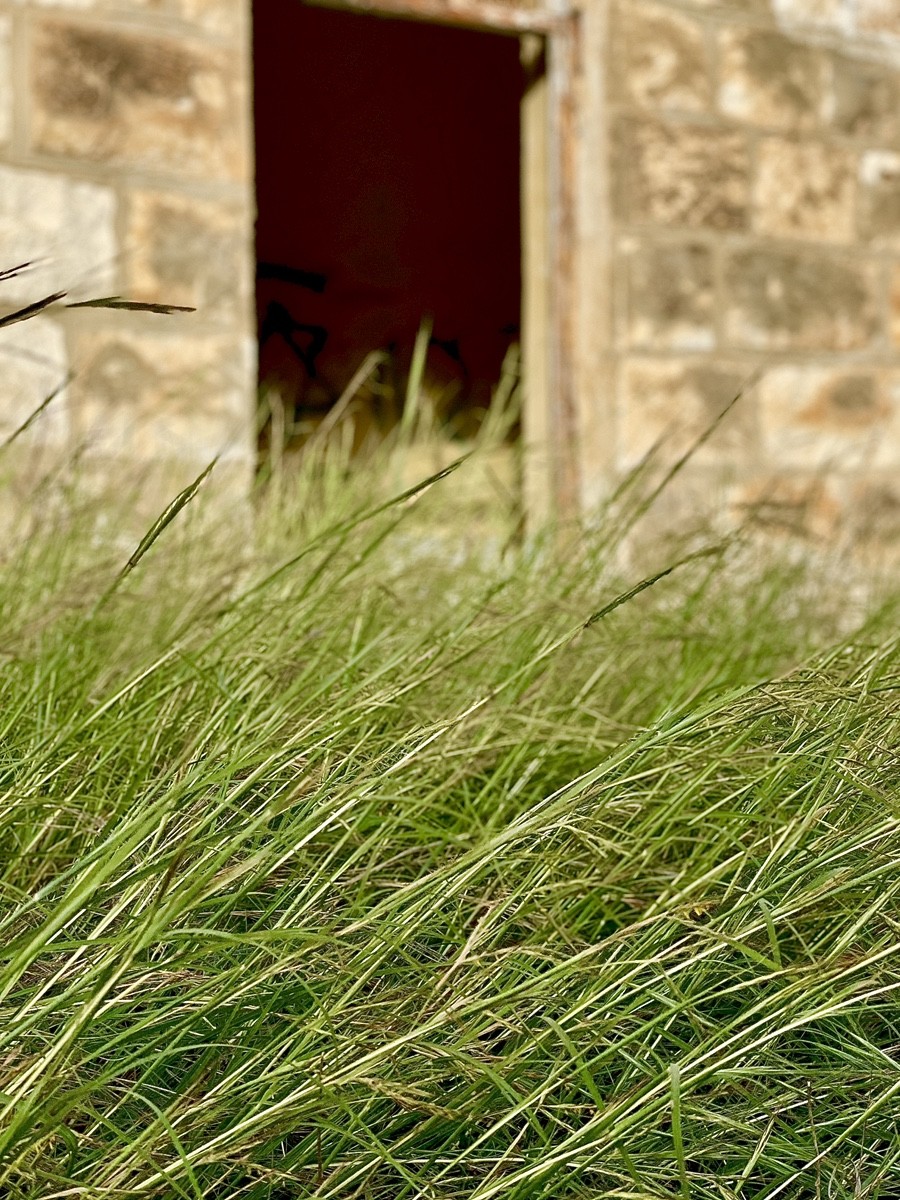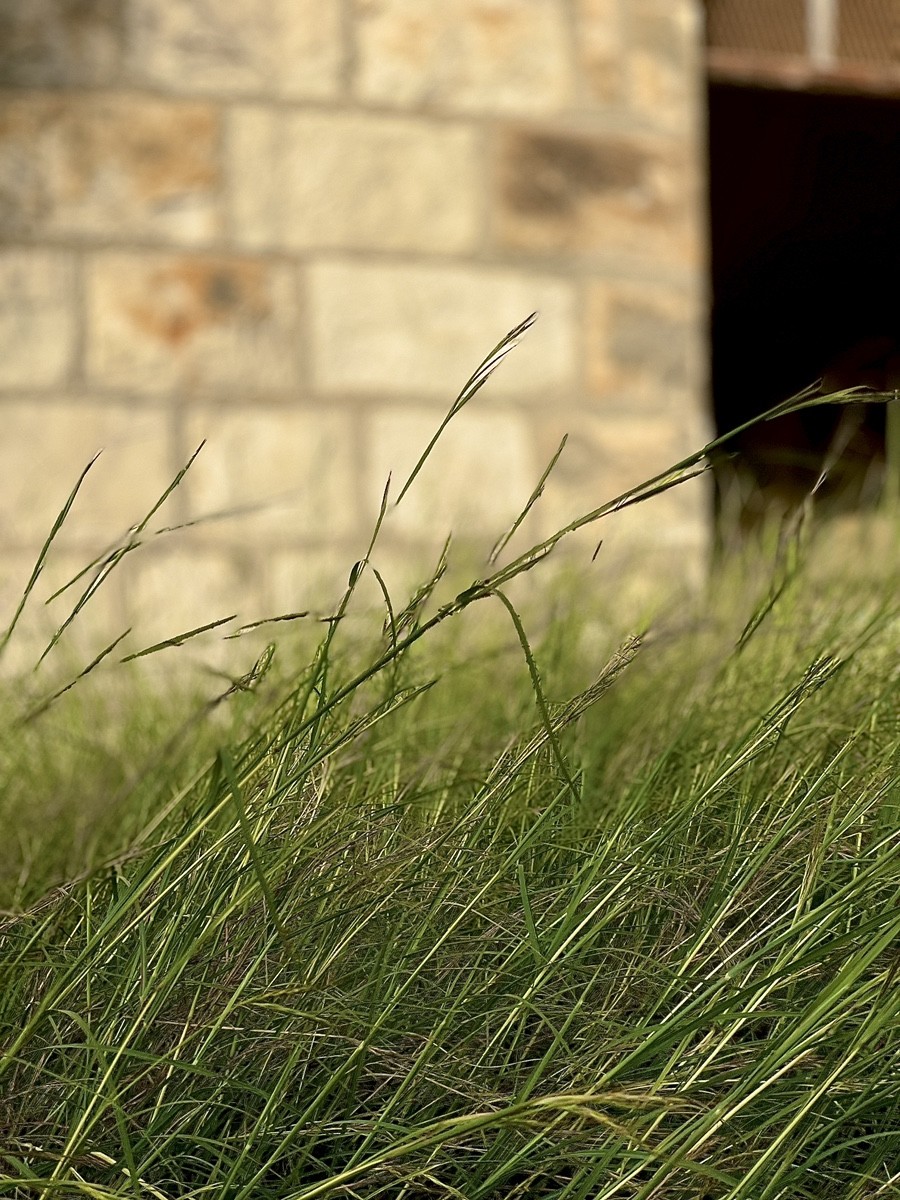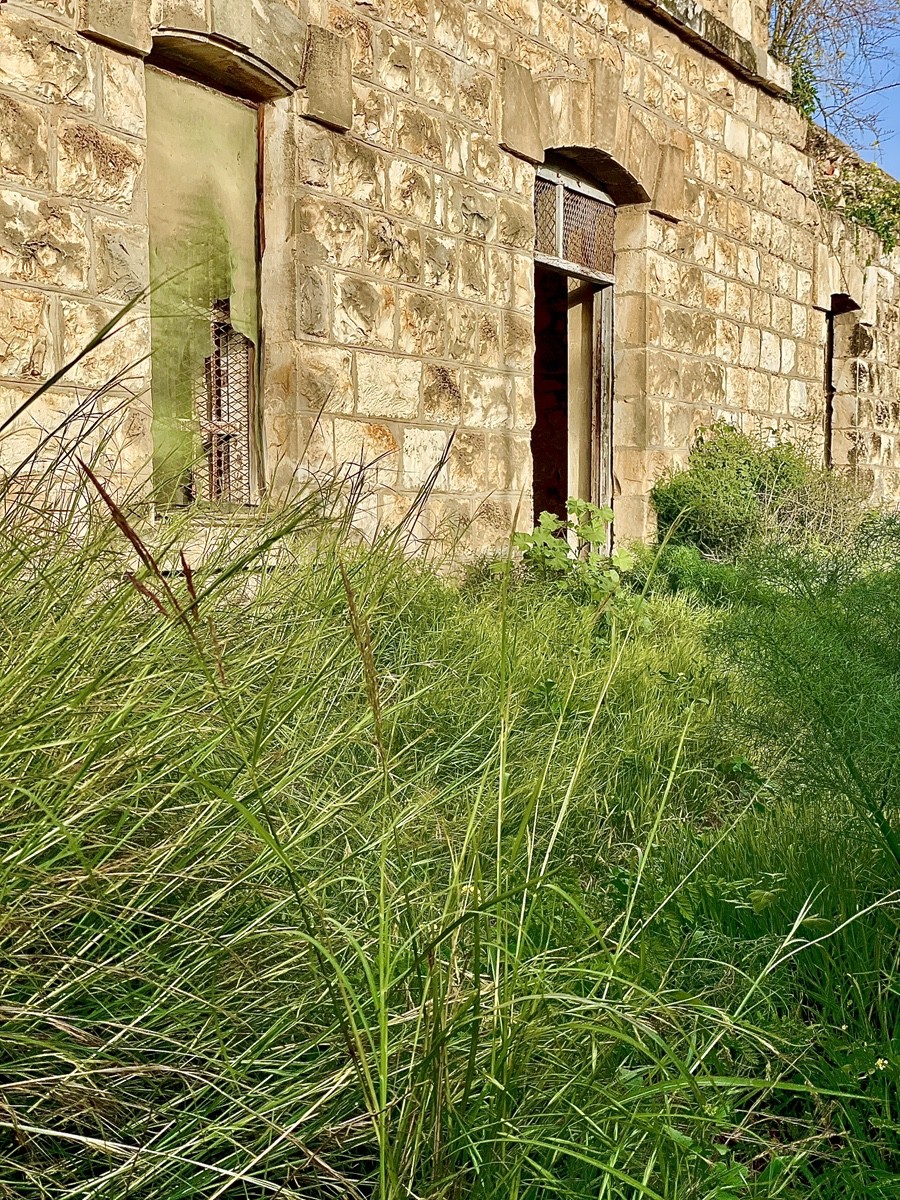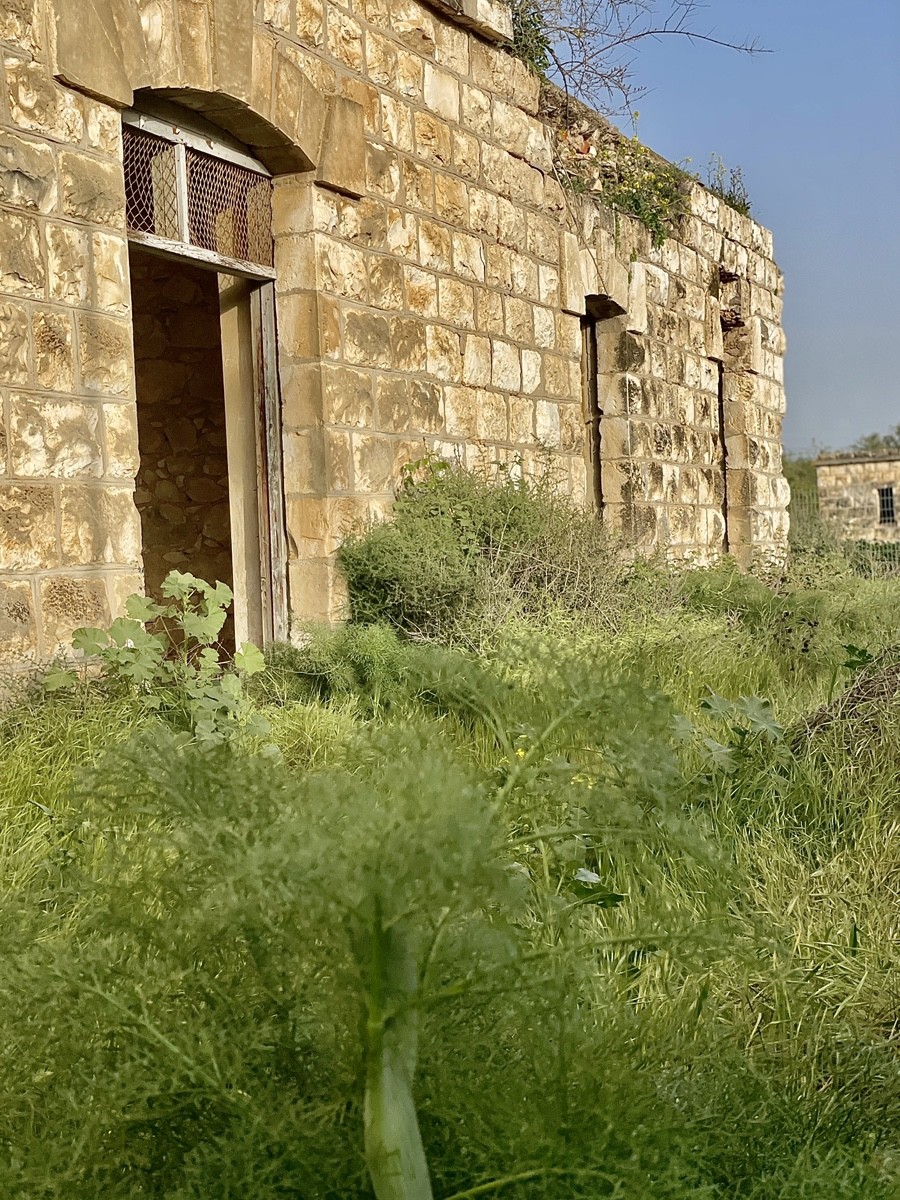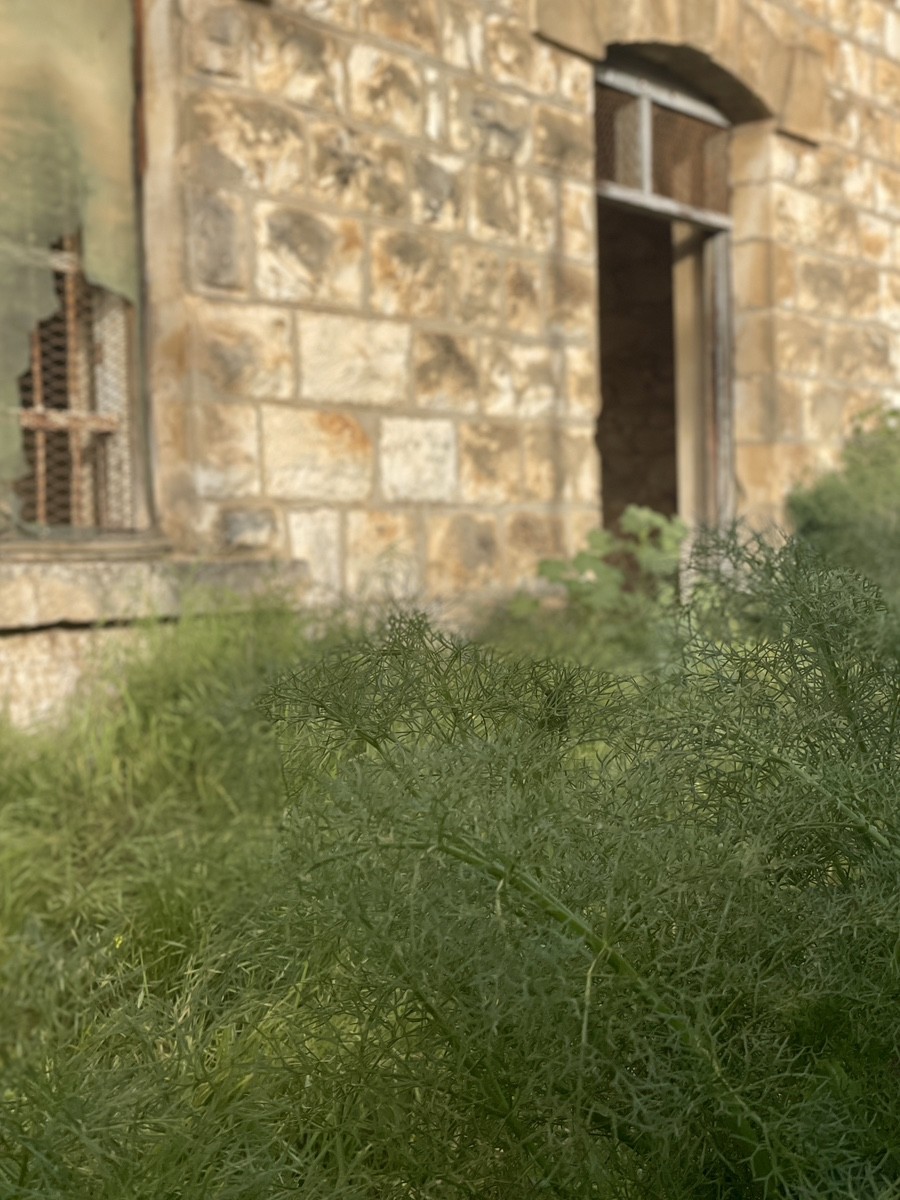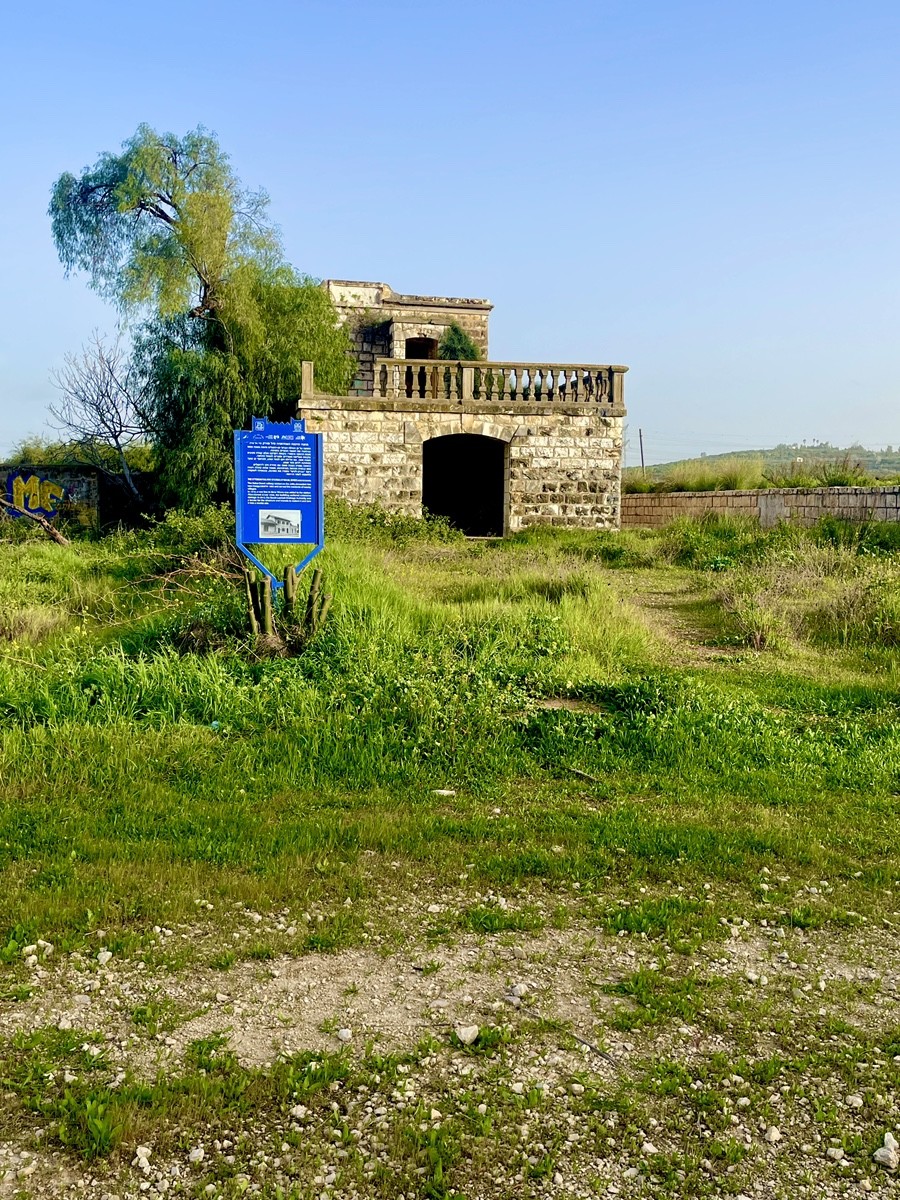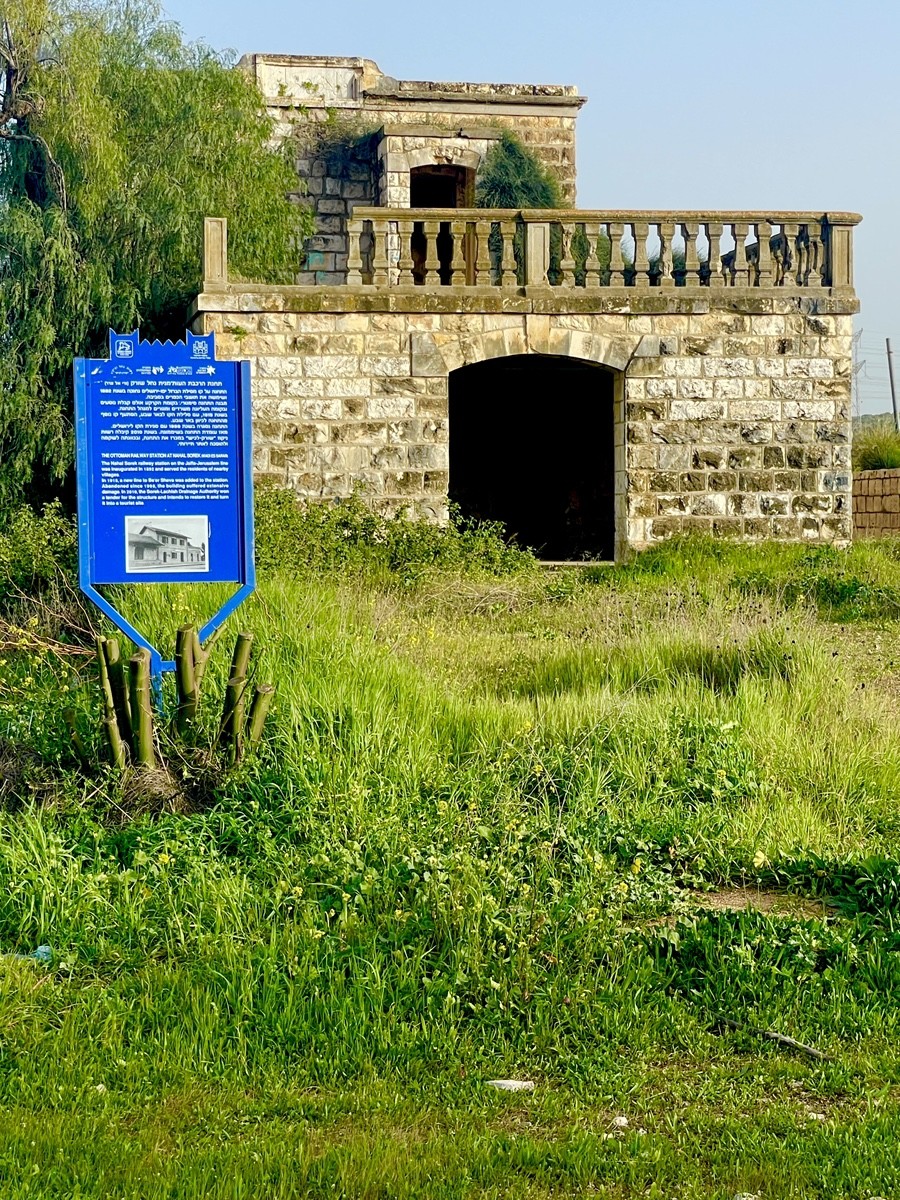

The most significant artefact of Wadi Sarar remains perched above the classic balustrades of the upper balcony: a decorative Ottoman cartouche featuring elegant Arabic calligraphy. This "signature" confirms that while the station reached its strategic peak under British rule, its soul and foundation were laid under Sultan Abdul Hamid II.
The visual contrast is striking—the massive, rusticated stone masonry represents strength, while the delicate balusters and the carved cartouche speak to the imperial prestige of the Jaffa-Jerusalem line. This stone seal acts as a silent witness to the shifting world orders, from the twilight of the Ottoman Caliphate to the British Mandate and the modern State of Israel. Today, this emblem of faded majesty is slowly being reclaimed by wild greenery, standing as a poignant reminder of an empire that once connected these hills to the wider world.
The journey begins in the almond blossoms of Sha'alvim, a landscape rooted in the biblical territory of the Tribe of Dan. The route advances through the strategic Latrun salient to Emmaus-Nicopolis, where Byzantine ruins mark the site of the Resurrection—land preserved through the spiritual visions of Mariam Baouardi and the patronage of Countess Beatrice de Saint-Cricq.
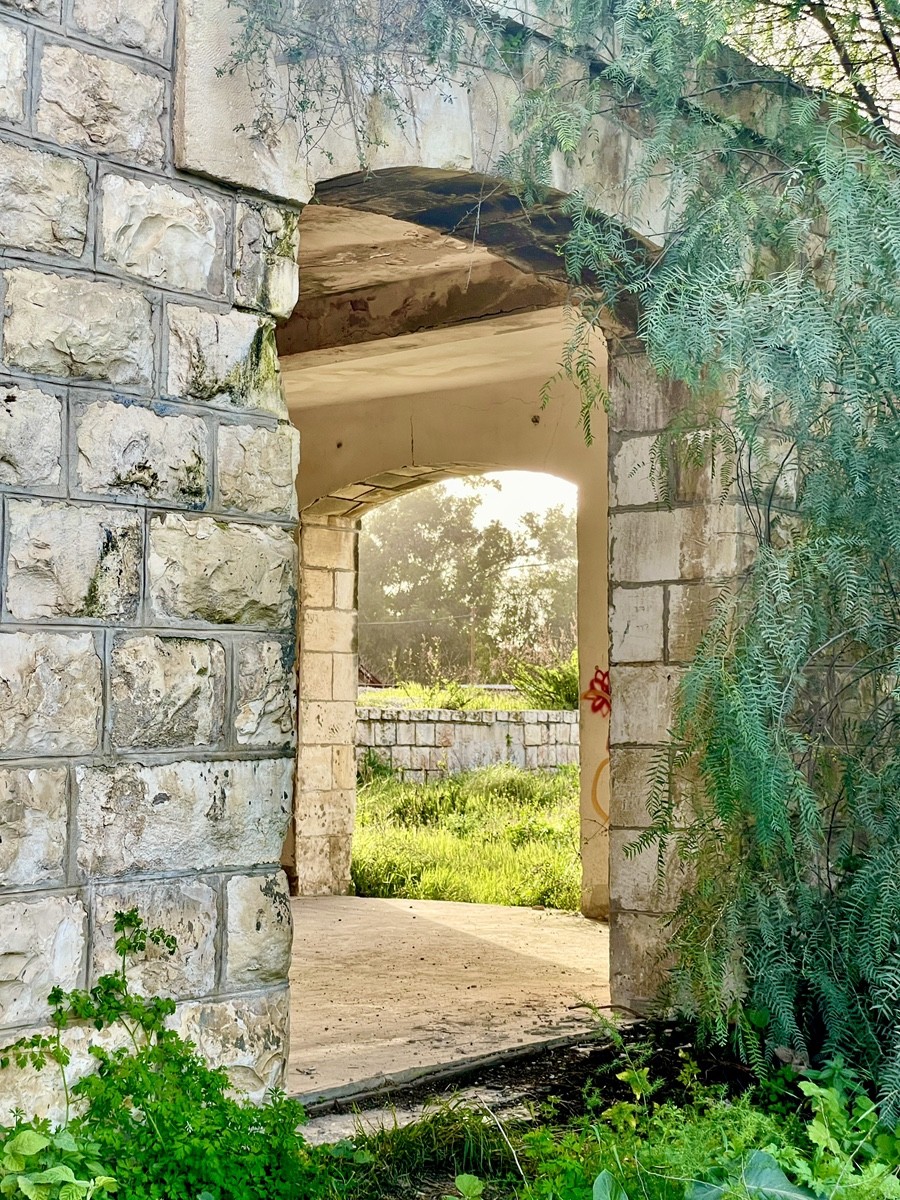
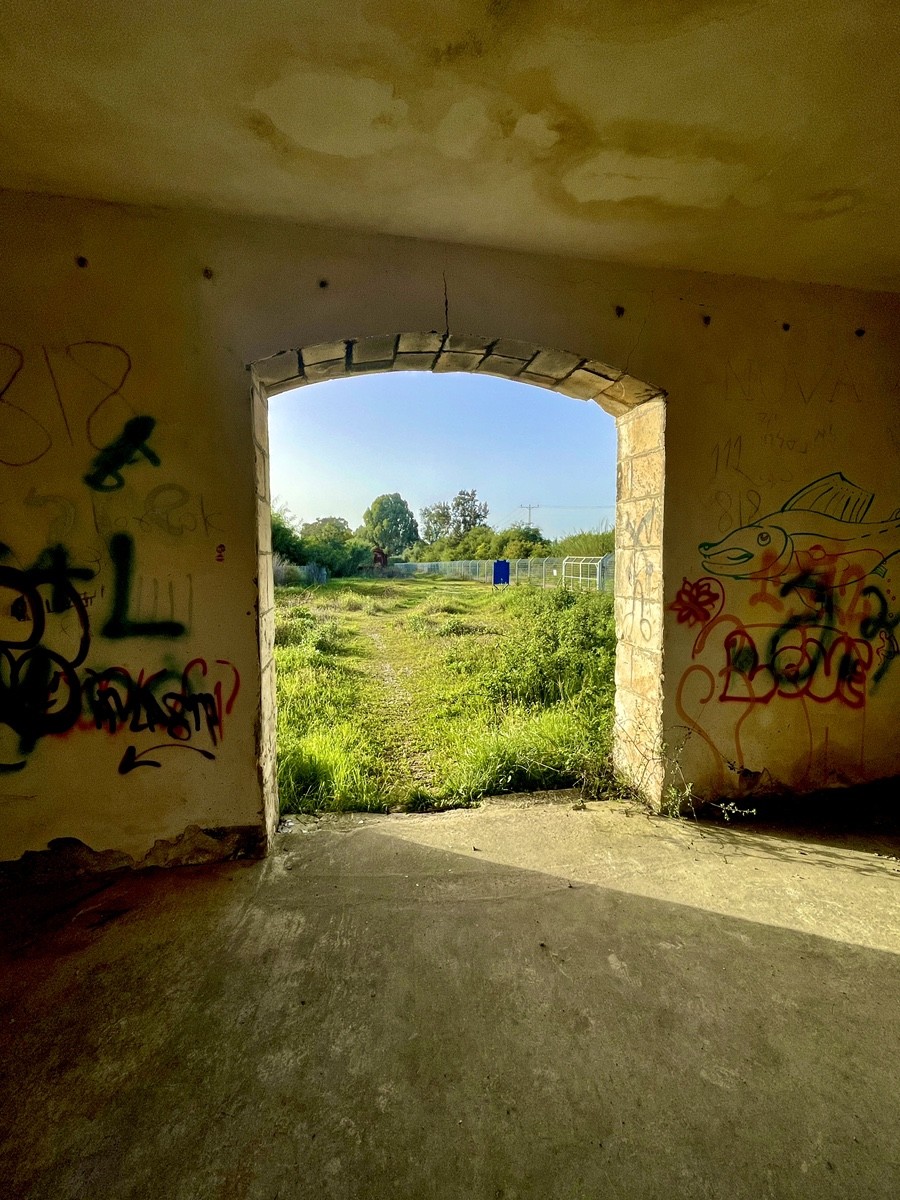
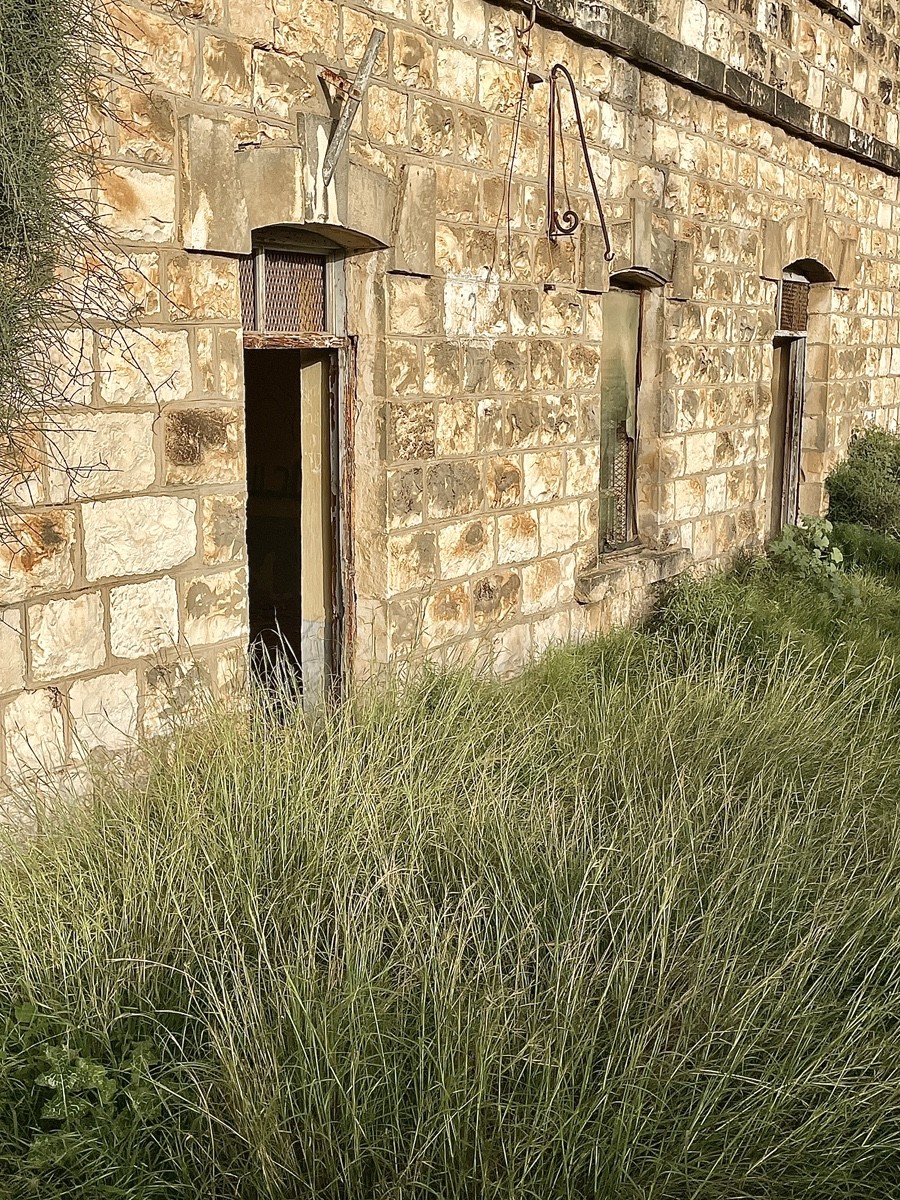
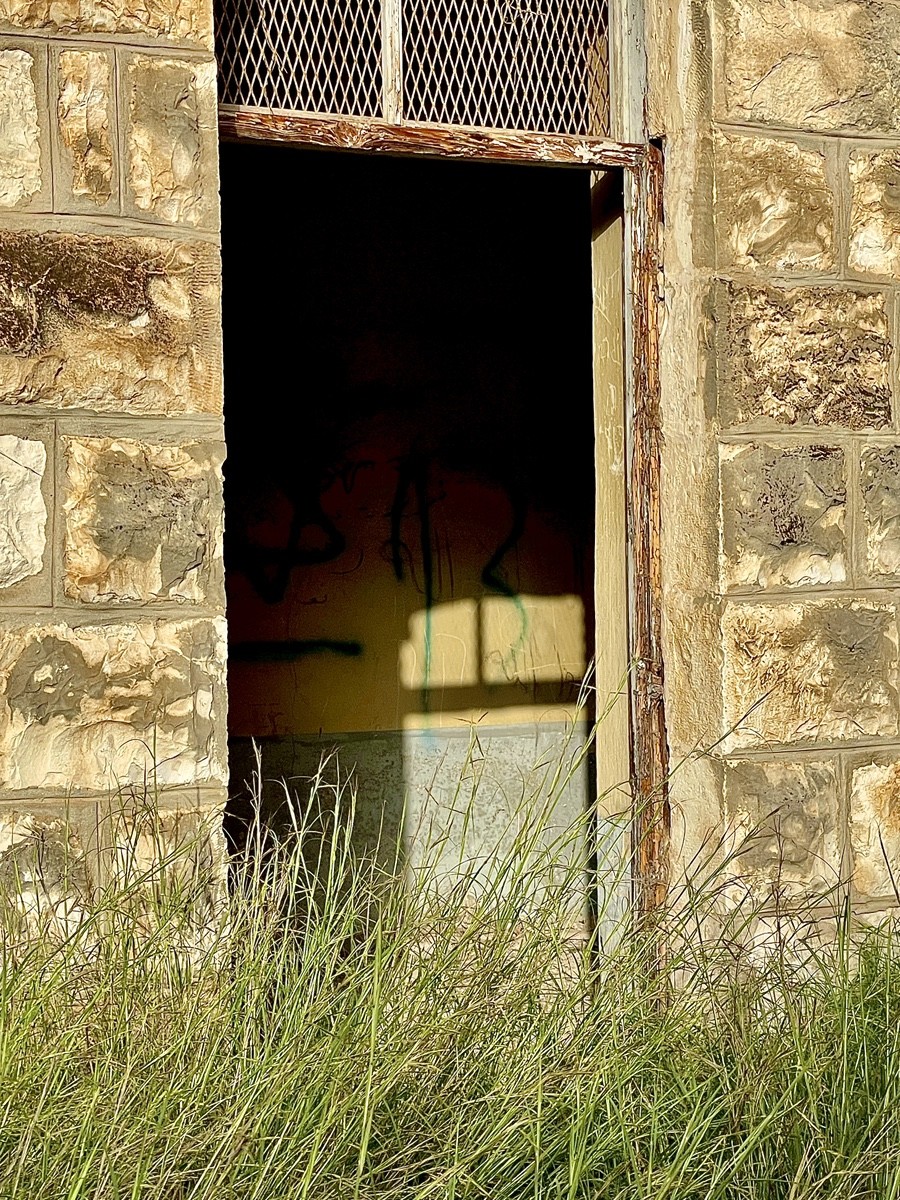
The path culminates at the abandoned Sorek Station, a limestone relic of the Ottoman Empire. Inside, time stands still among concrete staircases and iron veterans: a freight car and a yellow-marked shunting locomotive from the 1990s. A modest monument to Egyptian labourers honours the unsung builders of the WWI era. Today, the silence of these rusted tracks is only broken by the whistle of modern trains, bridging the gap between ancient faith and imperial ruins.