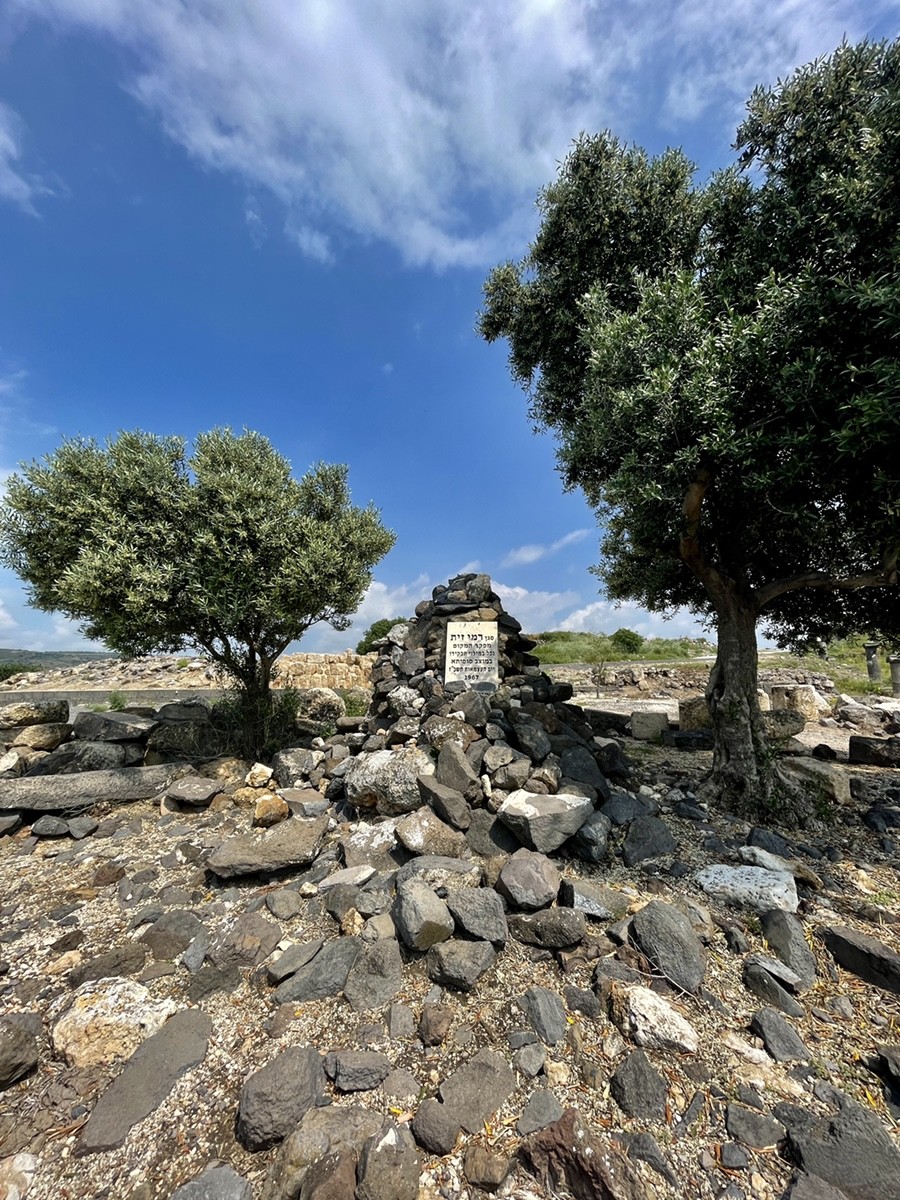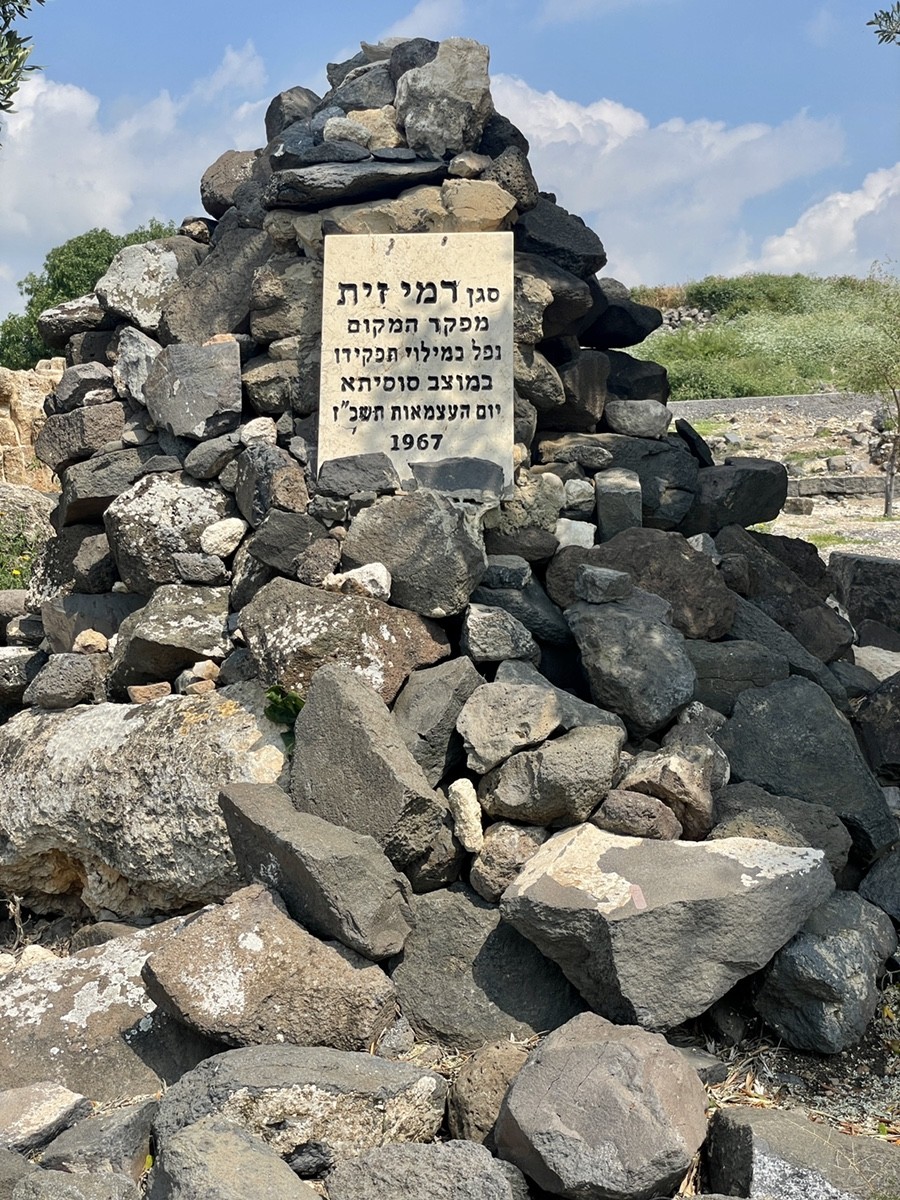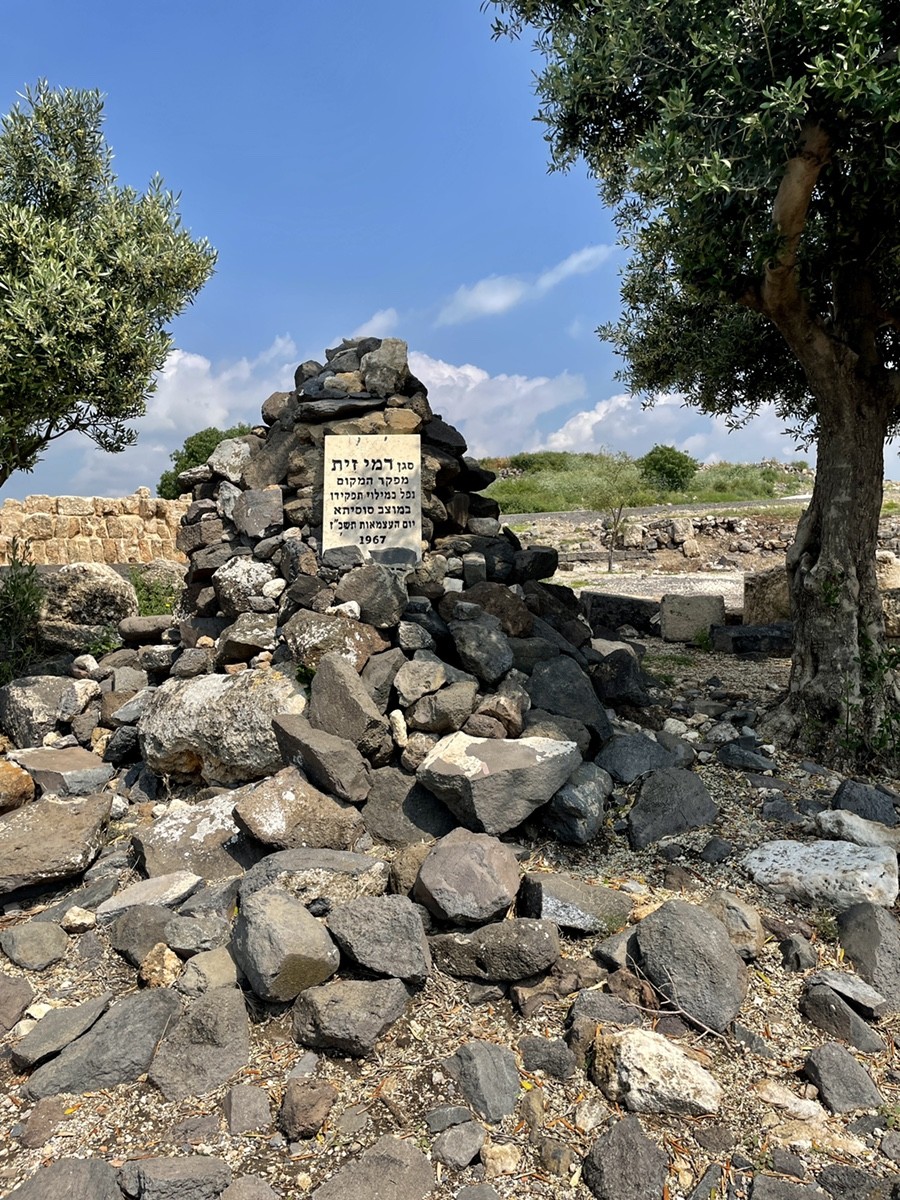

The memorial plaque dedicated to Lieutenant Rami Zait brings our journey from the ancient world into the modern reality of this mountain. It serves as a sombre bridge between the Roman soldiers who once guarded these cliffs and the Israeli soldiers who did the same 2,000 years later.
The Modern Fortress: A Strategic Enclave The inscription on the stone reads: "Lieutenant Rami Zait, commander of this place, fell in the line of duty at the Sussita post on Independence Day 5727 (1967)."
- The Lone Outpost Until 1967, the strategic value of this plateau remained exactly as the Greeks and Romans saw it.
The Enclave: Sussita was an Israeli enclave, isolated on the eastern shore of the Sea of Galilee and surrounded by Syrian positions on the Golan Heights above.
The Guardian: It was the only fortified Israeli point on this side of the lake, standing on the same "impregnable" mountain we've been exploring.
- Three Weeks Before the Storm Rami Zait's story is particularly tragic because of the timing.
The Date: He fell on May 15, 1967—Israel's Independence Day.
The Context: This was just three weeks before the outbreak of the Six-Day War, the conflict that would finally push the borders away from these cliffs and secure the region.
- A Legacy of Duty His death underscores just how tense and dangerous life was in this "fortress" during the 20th century. While we walk through these ruins as tourists and history buffs today, for men like Rami Zait, this mountain was a high-stakes frontline where a single moment could change everything.
Imagine the perfect spring morning in Israel—the sun is warm but not yet "blasting" you, and the air smells like fresh wildflowers. It's the absolute best time to grab the keys and head to the eastern side of the Kinneret (Sea of Galilee).
First Stop: Kursi & The Views Start your day at Kursi. It's this massive Byzantine monastery ruin where the vibe is just... super chill. You can walk across ancient mosaics and literally feel the history. But don't stay too long because the drive up the mountain is even better. Make sure to pull over at Mitzpe Nukieb. On a clear day, the view is insane—you see the whole blue "bowl" of the Kinneret stretched out from Tiberias to the Golan Heights. It's one of those "stop and just stare" moments.
The Main Event: Susita (Hippos) Then, you've got the crown jewel: Susita. It's like a ghost city sitting on a hill. They call it the "Pompeii above the lake." You'll walk through the old Roman forum and see giant columns that were knocked down by an earthquake 1,200 years ago and just... stayed there. It's got this wild mix of ancient Roman vibes and old Israeli military outposts.
Trains and Hummus When you head back down, swing by the old Tzemach train station. It's been restored and feels like a movie set from the early 1900s—back when trains ran all the way from Haifa to Damascus.
Finally, once you're officially "toured out," hit up Hummus Eliyahu at the Tzemach junction. Trust me, a warm bowl of creamy hummus with olive oil, fluffy pita, and a solid cup of coffee is the only way to end a trip like this.
Pro tip: Go right now while it's spring. The Golan is bright green, and everything looks like a masterpiece.