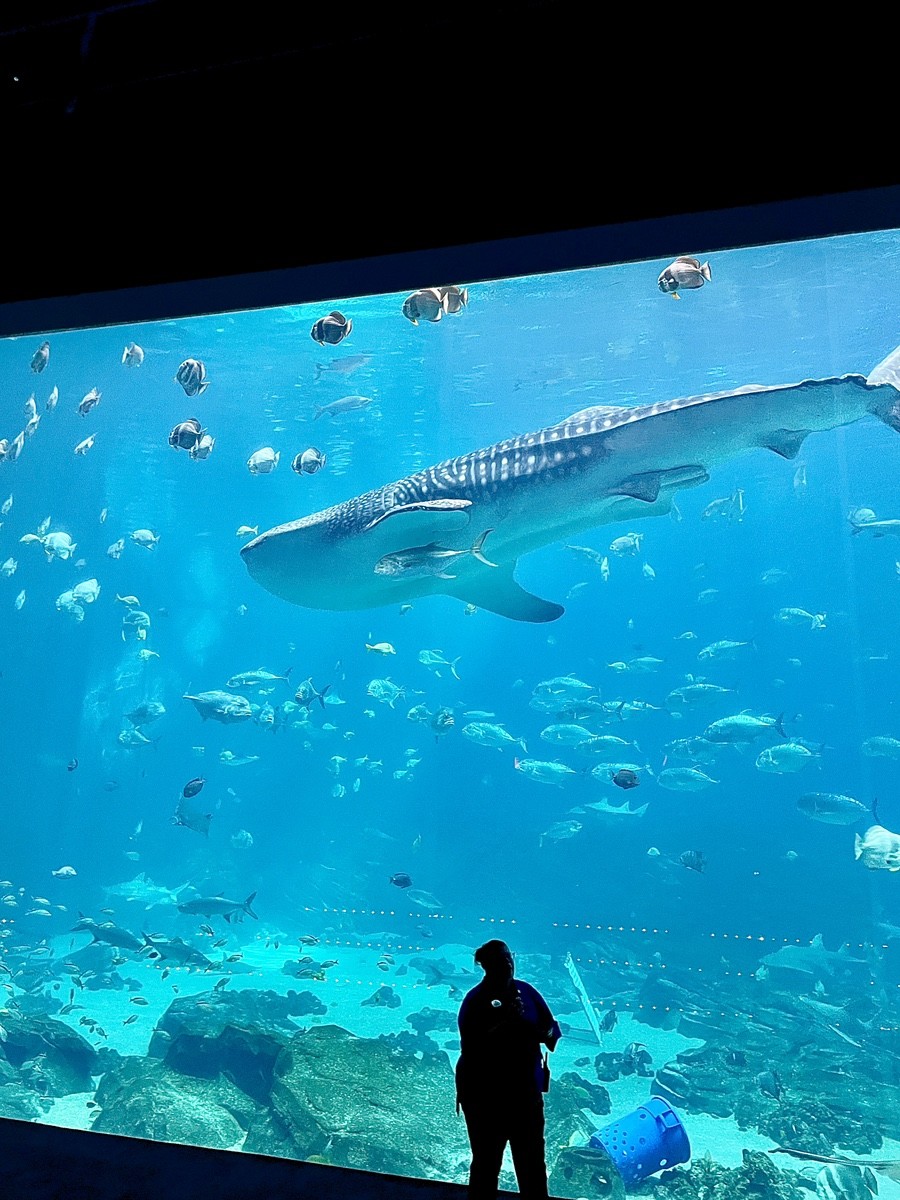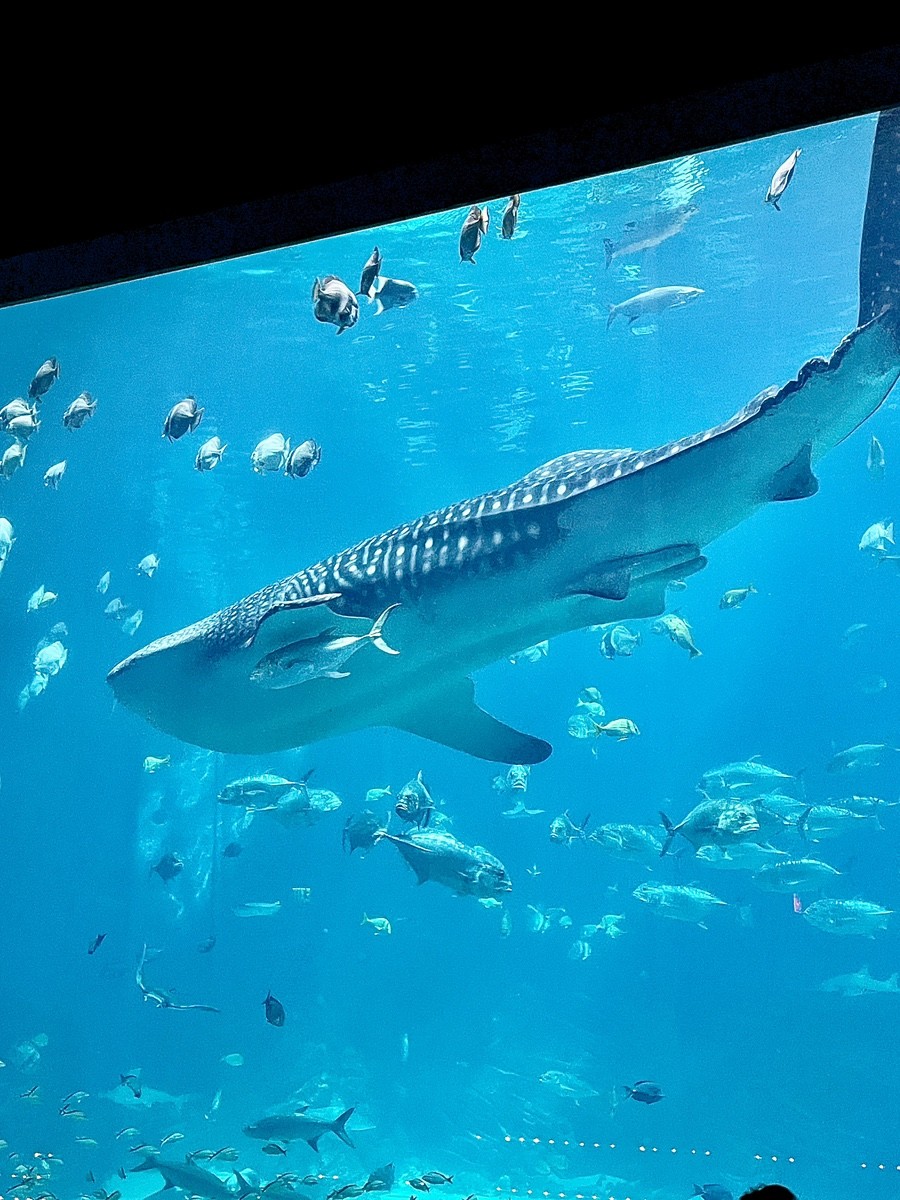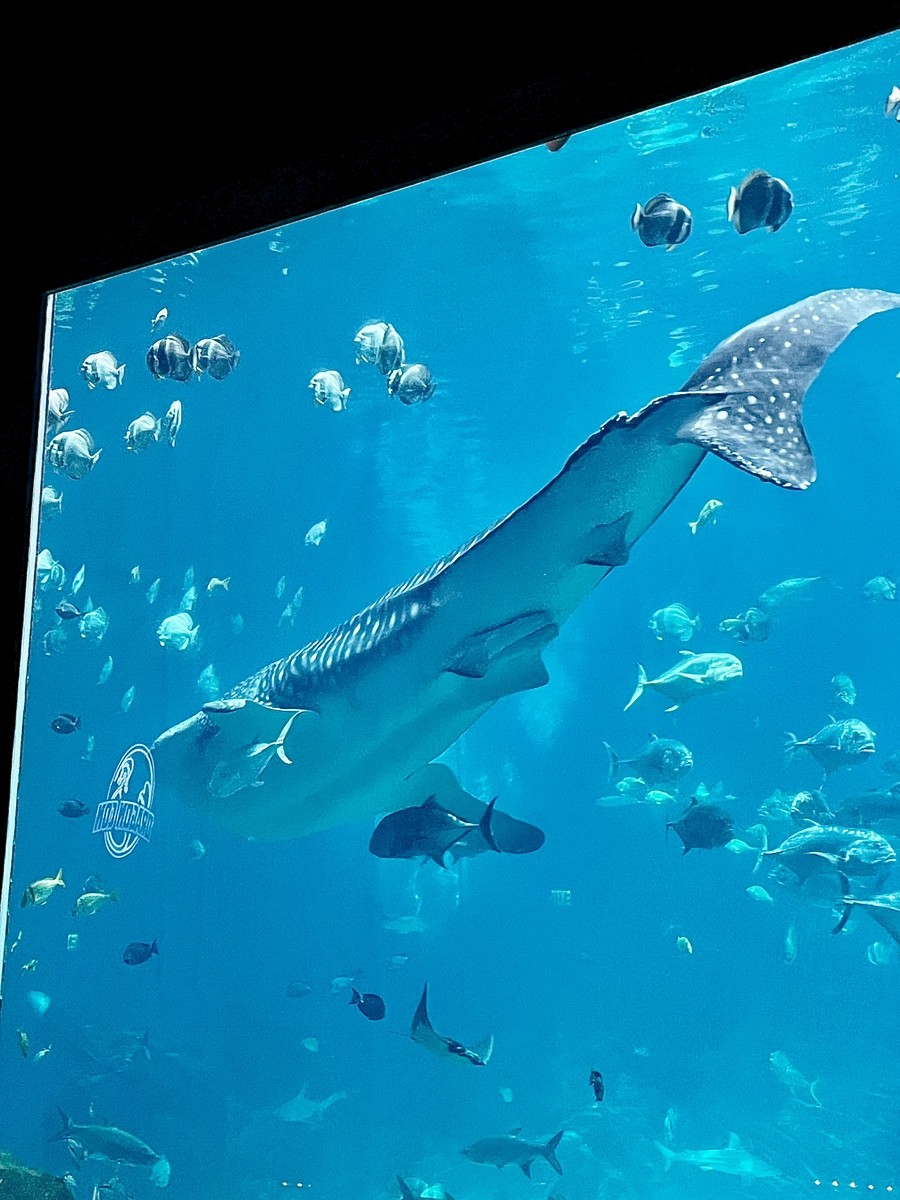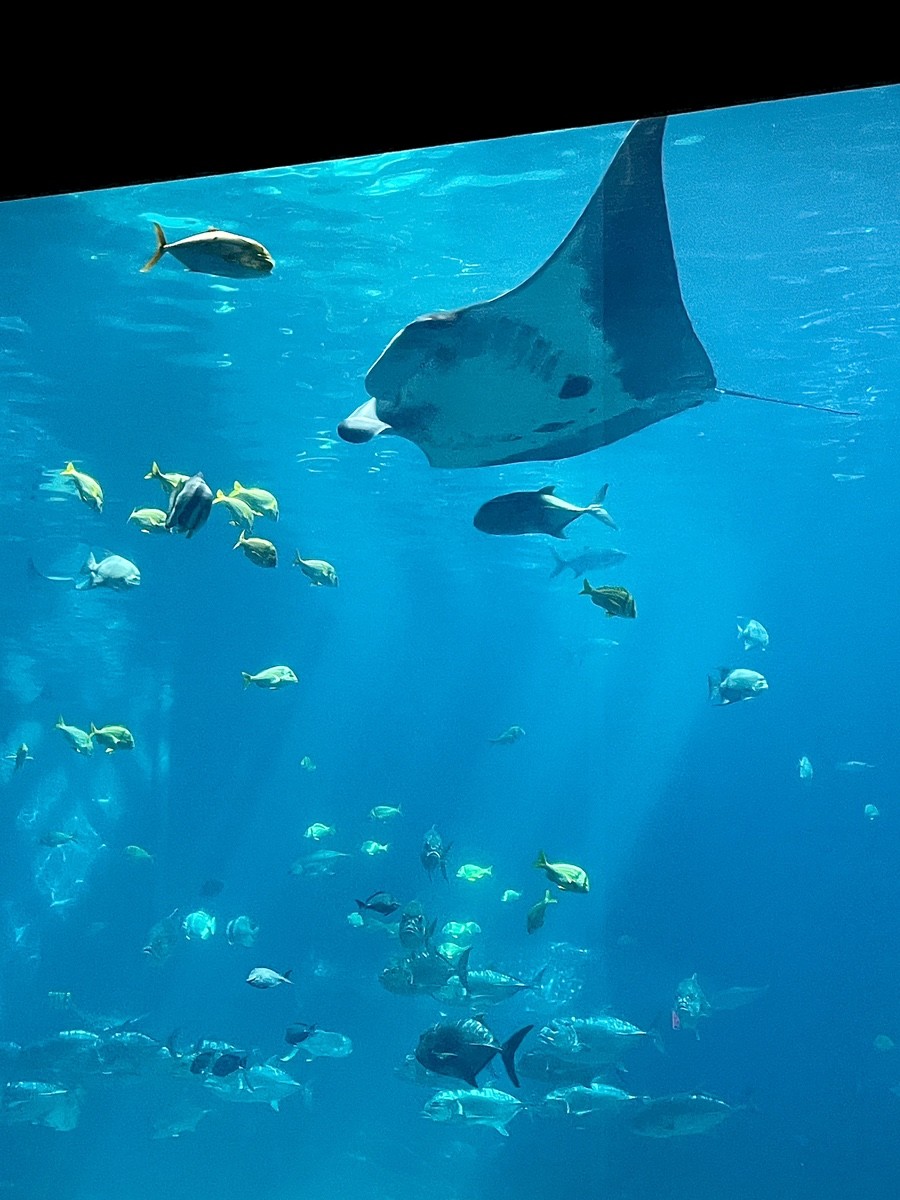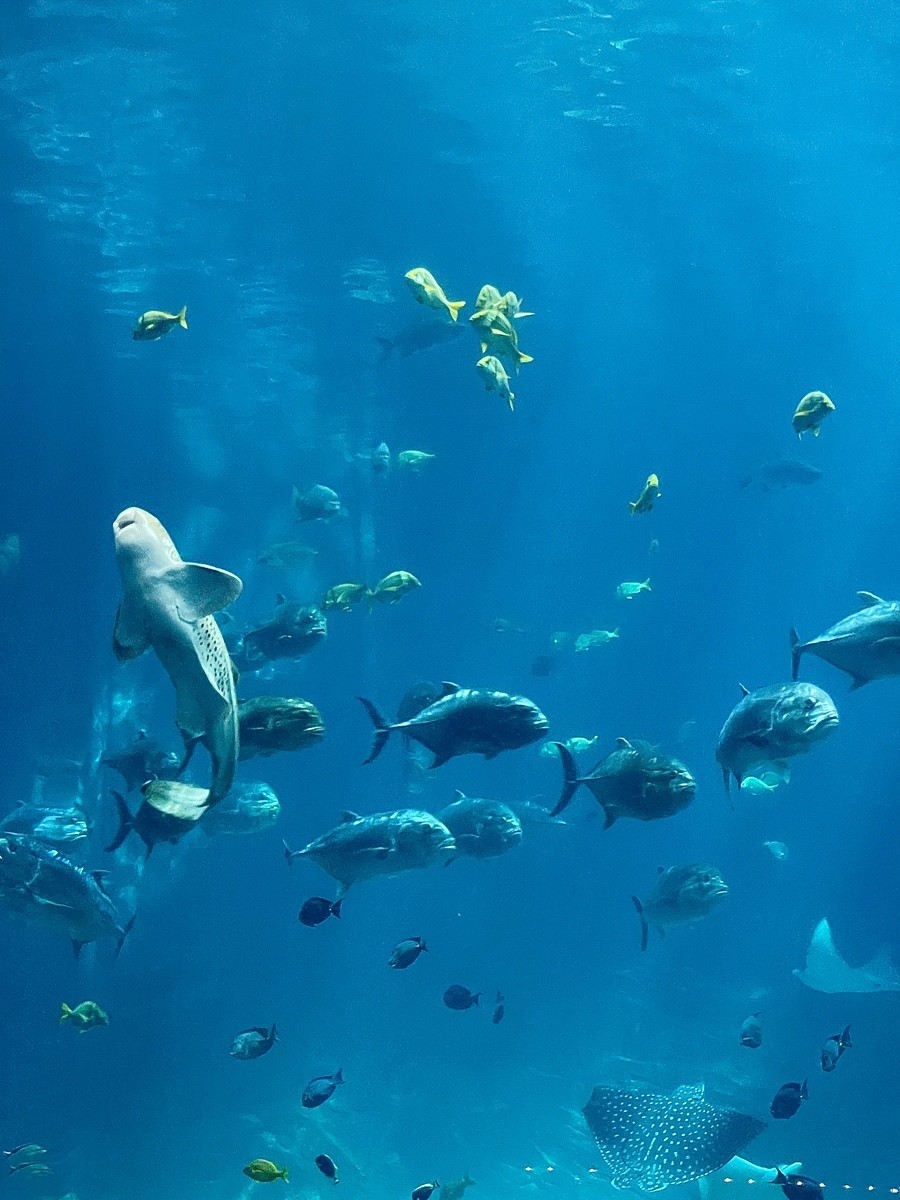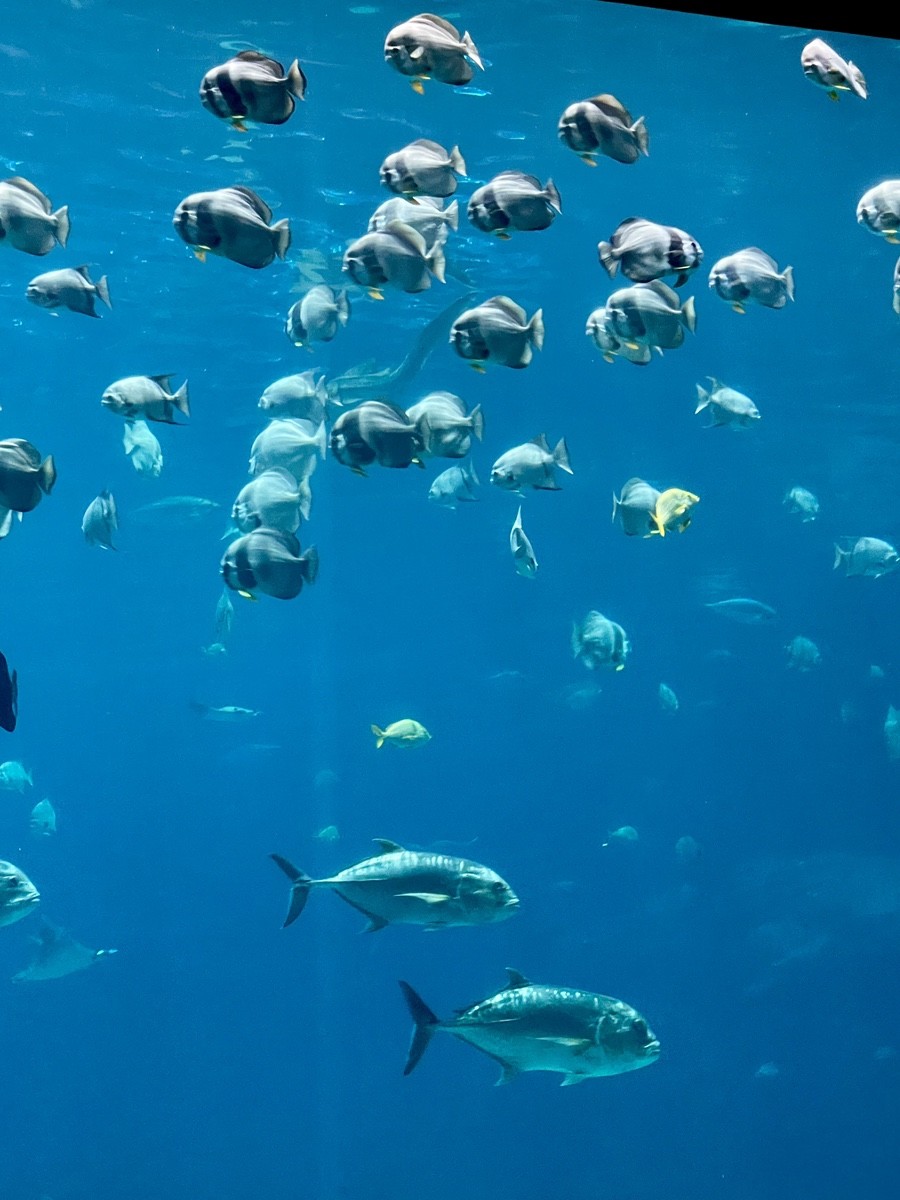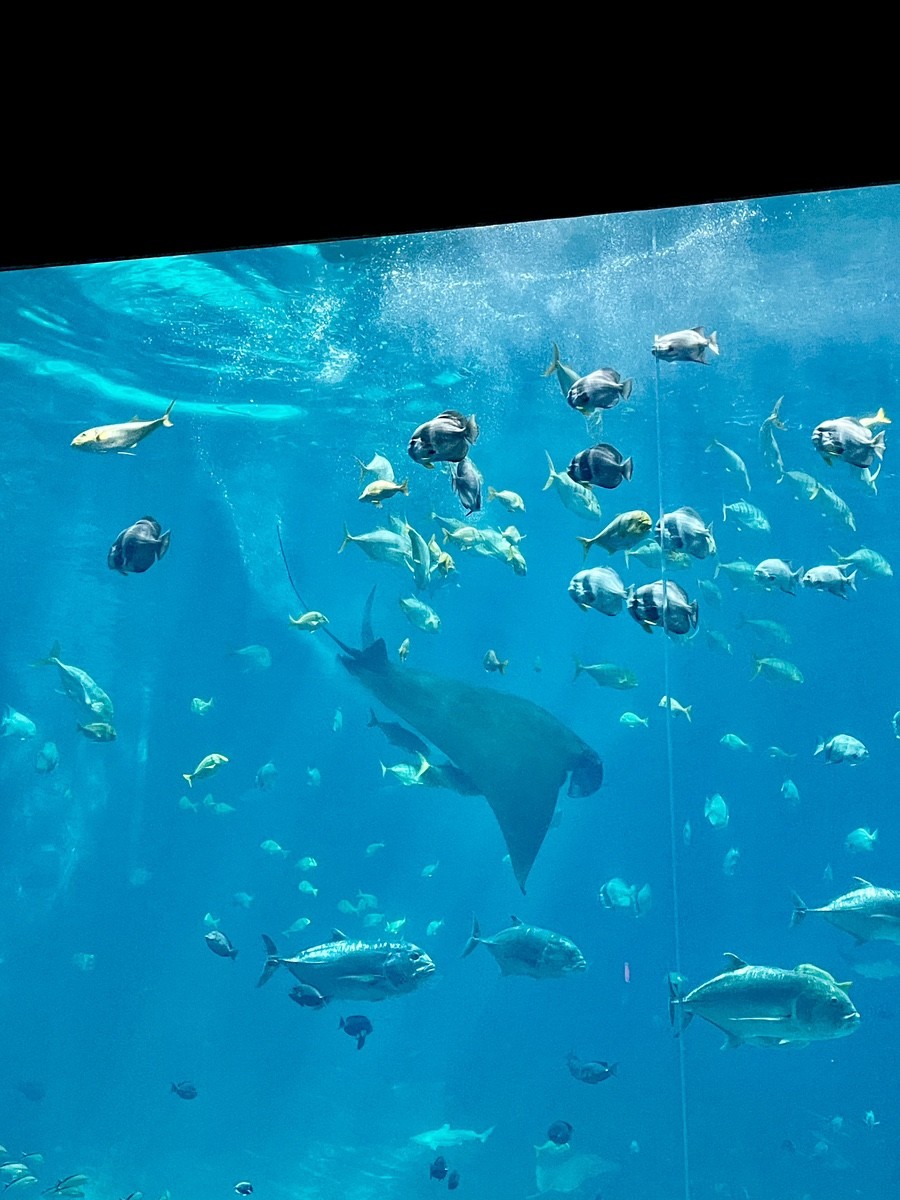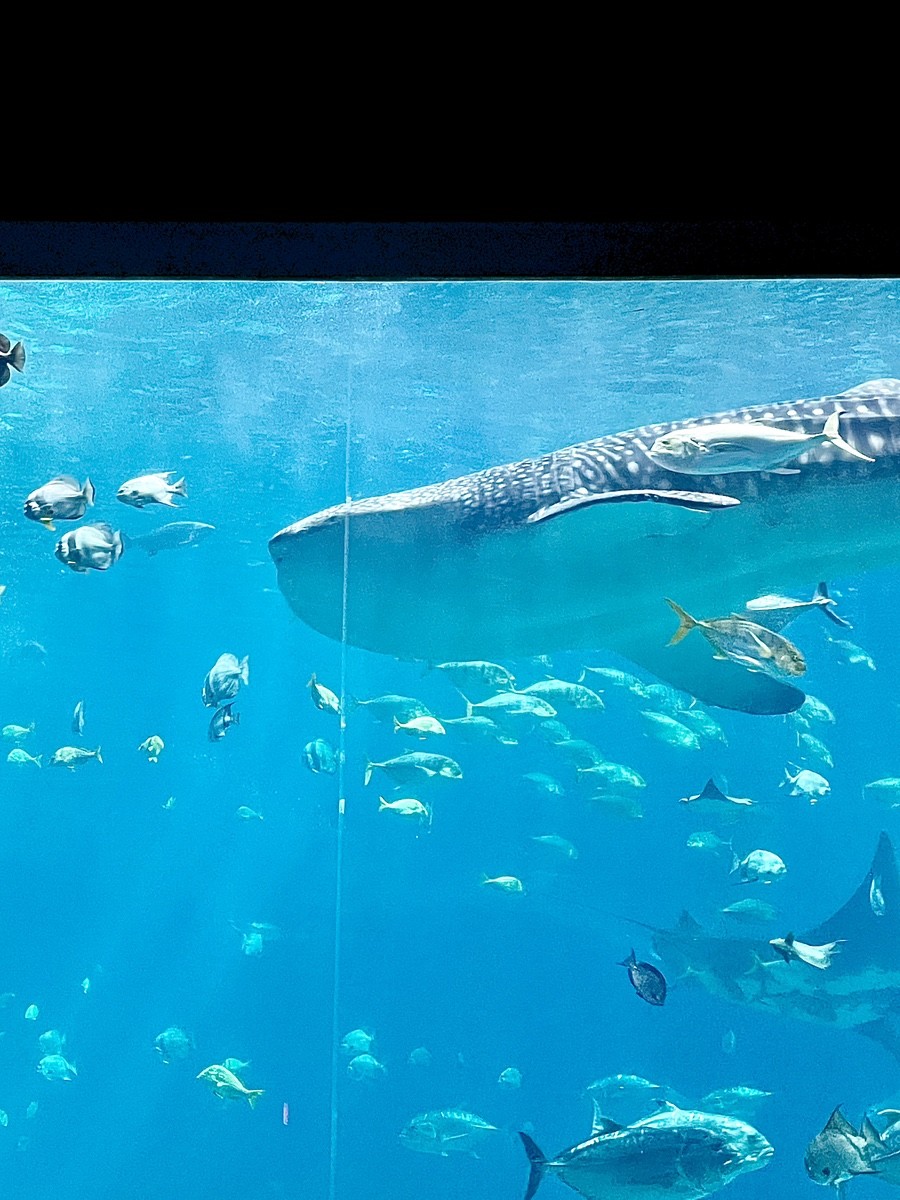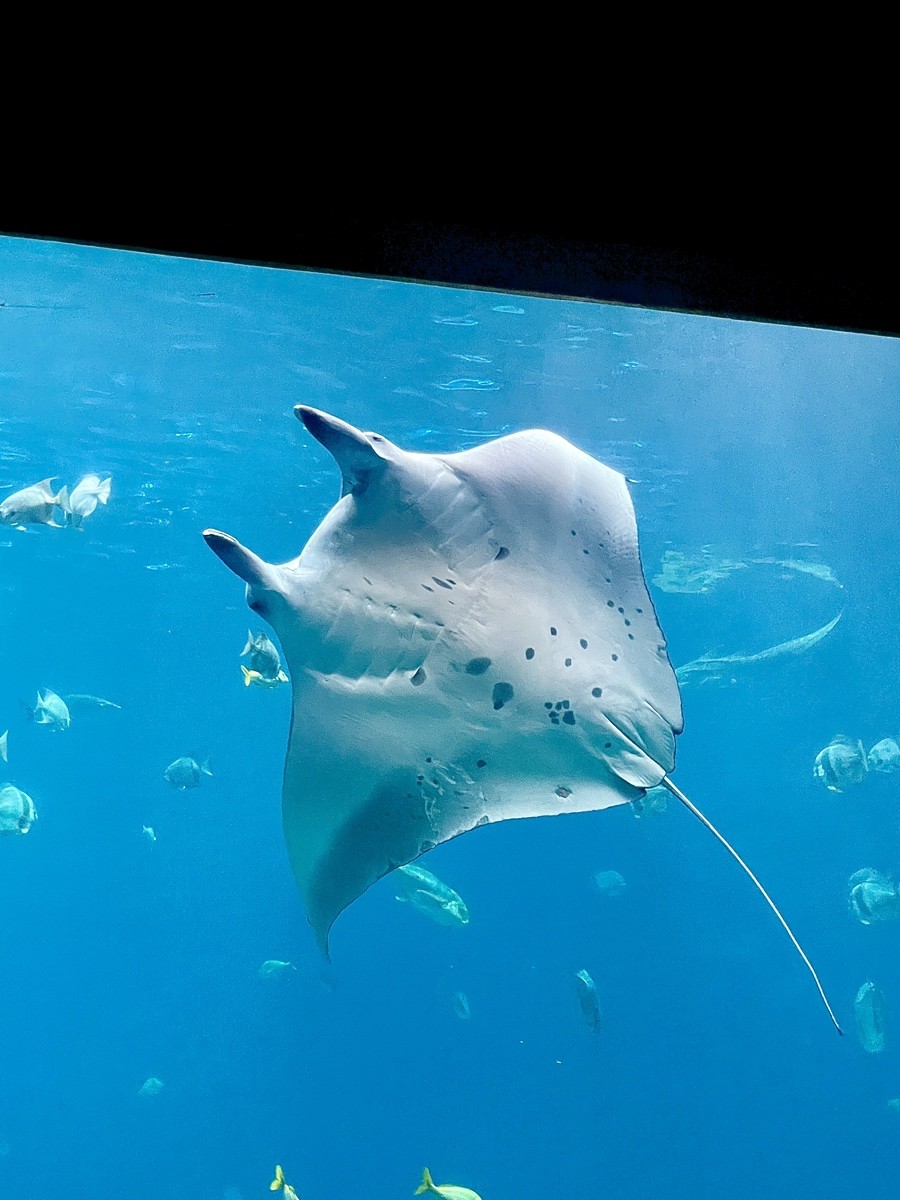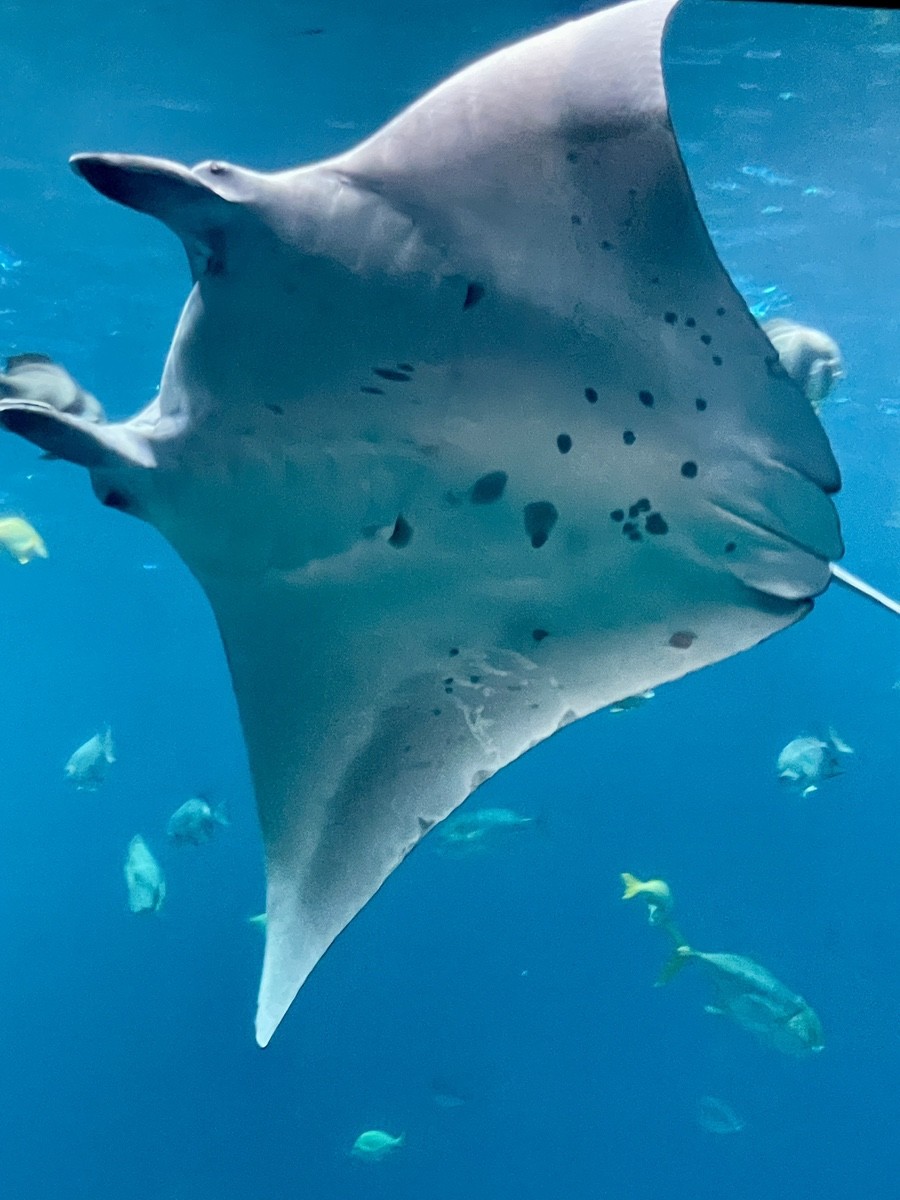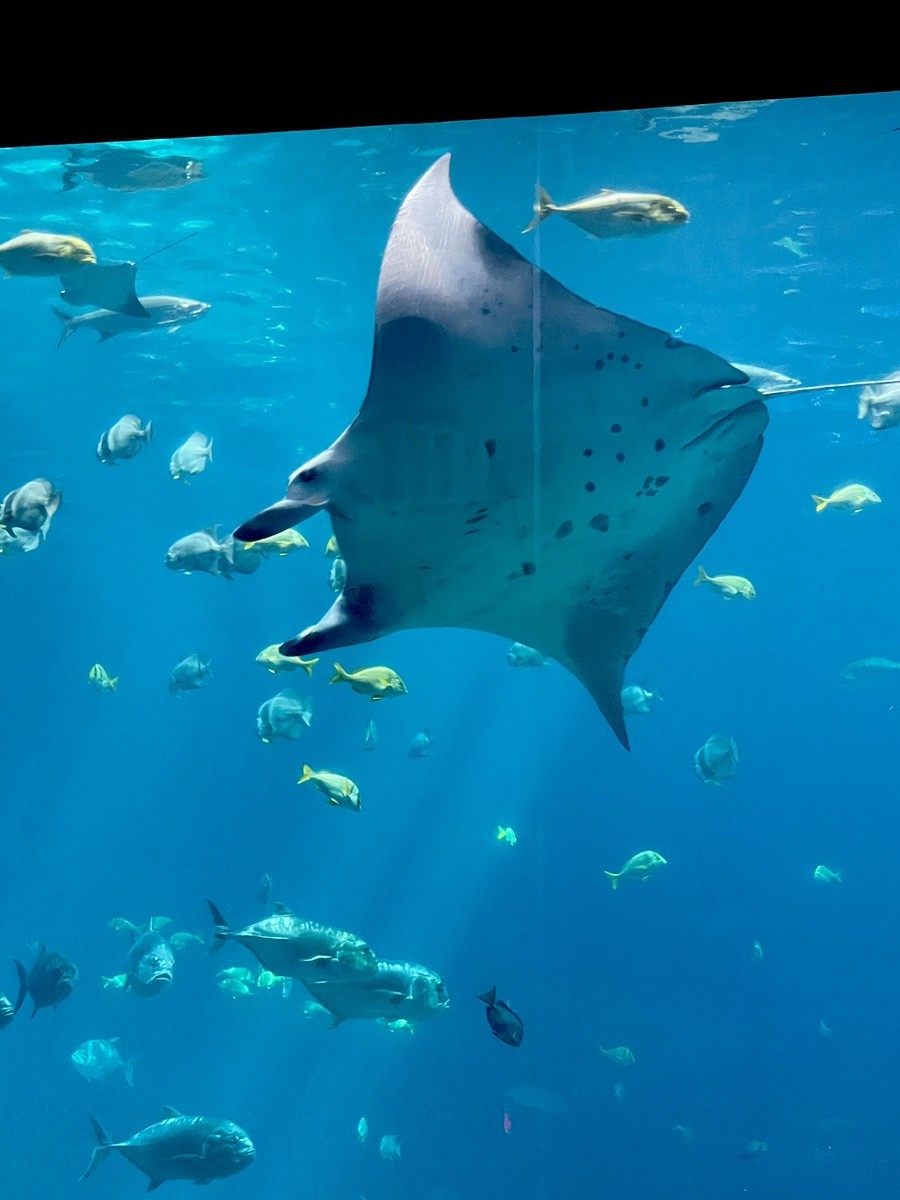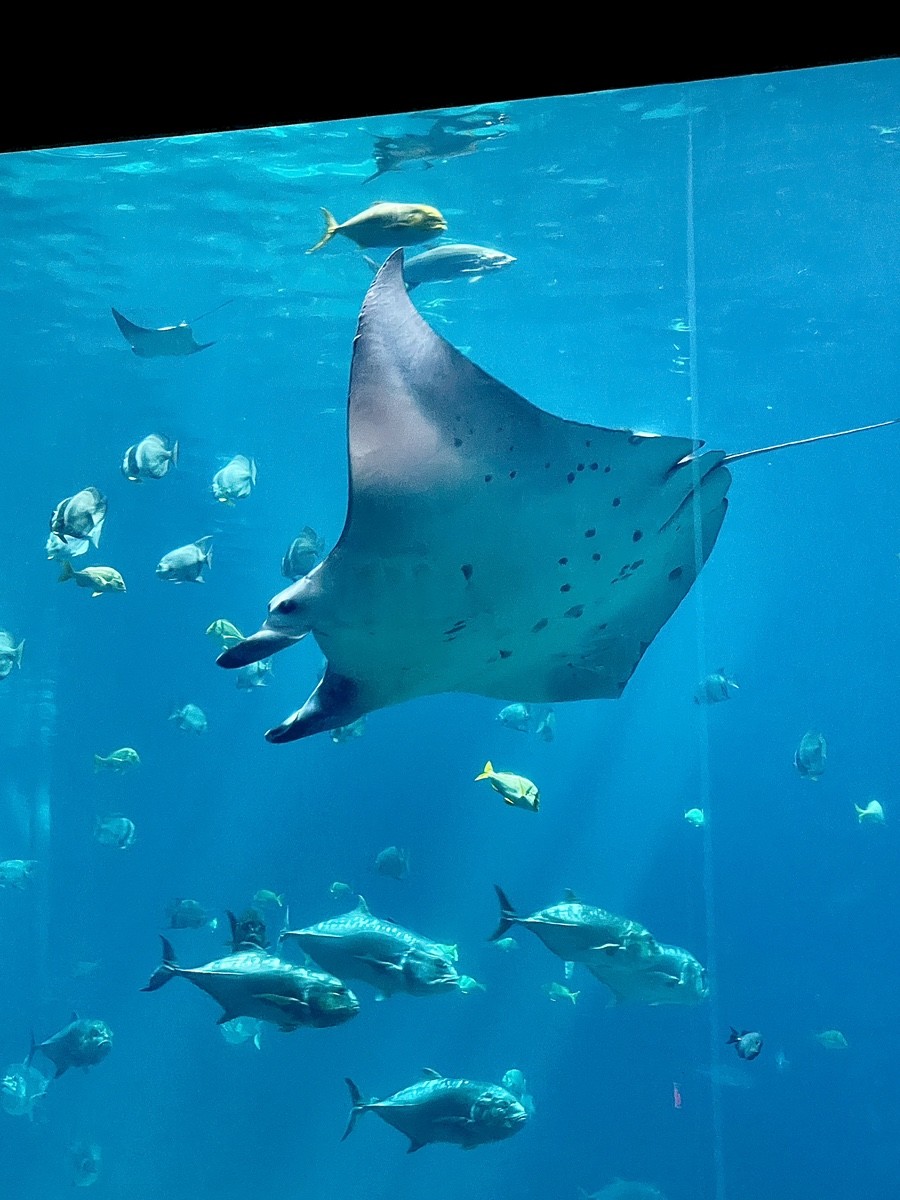

The main tank of the Georgia Aquarium is not only home to whale sharks, manta rays, and thousands of fish — it’s also an engineering marvel. Its vast panoramic viewing window ranks among the largest in the world: roughly 18 meters wide, over 7 meters tall, and nearly 60 centimeters thick. Made from layered acrylic rather than glass, it can withstand the crushing force of millions of liters of water — a pressure equal to the weight of a skyscraper.
The acrylic panels were manufactured in Japan, shipped across the Pacific on special carriers, and then assembled in Atlanta. Several massive sections were fused seamlessly on-site, creating a single transparent wall. The joints are so fine they’re invisible, giving the illusion of staring straight into the open ocean.
Transporting the tank’s star residents — the whale sharks — was a global operation. They were flown from Taiwan in custom-built seawater containers, each monitored around the clock for oxygen, temperature, and water quality, with teams of veterinarians and marine biologists on board. Manta rays, far more sensitive to space and stress, were also carried in specially designed transport tanks.
The aquarium was envisioned from the start as a sanctuary for whale sharks, which had never before been displayed in the United States. To house them, engineers built a 24-million-liter reservoir, crowned by the giant viewing window that has since become an icon of the entire complex. Here, face-to-face with the largest fish on Earth, visitors experience the awe of the ocean brought to the heart of Atlanta.
For comparison: – Georgia Aquarium (Atlanta, USA) — window ~18 m wide, 7 m tall, acrylic thickness ~60 cm; the only aquarium in the U.S. with whale sharks. – Churaumi Aquarium (Okinawa, Japan) — “Kuroshio Sea” window ~22.5 m wide, 8.5 m tall, acrylic thickness ~60 cm; home to whale sharks in Asia.
Atlanta began as a modest railway stop — the end of the line that unexpectedly grew into the South’s busiest hub. The city was burned to the ground during the Civil War, yet out of the ashes rose a bold, industrious Atlanta. This is the birthplace of Coca-Cola, the cradle of the modern Civil Rights Movement, and home to the largest Black middle class in the United States. Few cities embody change and resilience the way Atlanta does.
At the heart of downtown lies Pemberton Place, a cultural crossroads where three icons stand side by side: the vast Georgia Aquarium, the playful World of Coca-Cola, and the moving Center for Civil and Human Rights. A short walk from the parking lot takes you past fountains and green lawns straight into this vibrant trio.
The Georgia Aquarium is breathtaking in scale — the largest in the Western Hemisphere. Its glass tunnel immerses you in the deep, as whale sharks and graceful manta rays glide overhead, surrounded by a dazzling cast of marine life. The highlight for many visitors is the dolphin presentation in the “Ocean Theater,” a show where science and spectacle merge to reveal the intelligence and energy of these remarkable animals.
The World of Coca-Cola tells another side of Atlanta’s story. From Dr. John Pemberton’s original pharmacy syrup to a brand recognized by billions, the museum traces the evolution of a cultural icon. Visitors marvel at the legendary vault said to guard the secret formula, and the experience ends in the famous tasting room — more than 100 flavors from 40 countries. From familiar Fanta and Sprite to exotic drinks that spark delight or surprise, every sip is part of a global journey that began right here in Atlanta.