

Places to visit in Haifa
The best of Stela Maris
Starting point Stella Maris | Ends at Bat Galim Promenade
The trail begins alongside the Navy Building opposite the Carmelite church and monastery, in the midst of Carob and Mastic trees in a natural forest. Several paths lead to a small domed building - the Holy Family Chapel, which initially served as a windmill. There’s a beautiful view of the sea and Haifa’s neighbourhoods from several terraces next to the chapel and above it. This is the best place to understand Jeremiah's passage: “...and Carmel by the sea; it shall come about” (46.18).




The northwestern summit of Mt. Carmel descends towards the sea, whose western end is the most prominent on the Israeli coastline, with only a tiny strip separating it and the sea. From here, the sea can be viewed from three directions - west, north and east. The Bat Galim neighbourhood and the medical school building come into view, as do the Surfers and Shikmona beaches, the Maritime Institute, Tel Shikmona, the Shprinzak neighbourhood, Sha’ar Ha’aliya and Neve David.
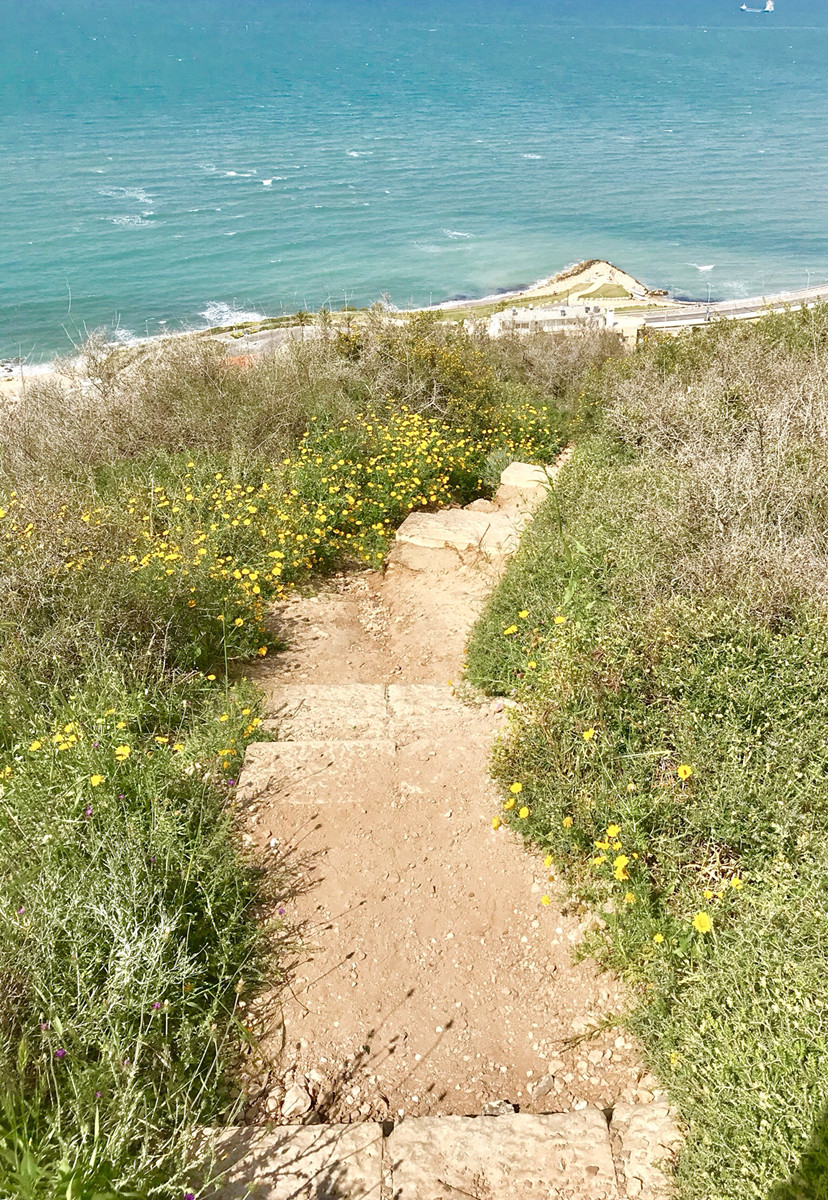
From the chapel, descend on a path marked with stones. The pathway winds down the mountain. The way to Elijah’s Cave passes ancient water well.

According to tradition, the Prophet Elijah lived in the cave when he hid from the wrath of King Ahab. The cave is holy to all religions and communities - even today, it is visited by Jews, Muslims, Christians and Druze and has become a symbol of coexistence. Christians believe Jesus and his family hid from King Herod in it. Under the British Mandate, the place was the property of the Muslim wakf, Wakf al-Qadr (Green). After Israeli independence, the cave has been under the care of the Ministry of Religious Services. Very few historical sources connect the place with Elijah; identification of the place is based on very old traditions about this harbinger of divine wrath’s penchant for solitude in deserts and mountains and living in caves. It’s commonly believed that Elijah lived in the cave near the Haifa shore at the foot of the Carmel. This tradition was already familiar to medieval Jewish traveller Rabbi Benjamin of Tudela and is repeated by many other travellers and pilgrims. Various sources indicated that there was a synagogue here. Like at all holy places, the place was regarded with respect. Visitors to the cave recited Psalms, lit candles and took oaths. According to one of the testimonies, there were those who immersed themselves in the sea before ascending to the cave, which was believed to have special powers in healing the sick and mentally ill. Those people were brought to the caves from many places, even from neighbouring countries. It was customary to etch the names of the sick on the cave walls as a talisman. Another unique quality of Elijah’s Cave (like the caves of Shamai and Hillel, two famous rabbis, on Mt. Meron elsewhere in Israel) is that it purifies itself from visits by the impure by sprinkling purifying waters. The cave had been a destination for pilgrims at all times, day and night, including the Sabbath and holidays. Many people congregated in the cave and nearby rooms. In addition to pilgrimages to the cave, mass visits took place on two dates: The first Sunday after the Sabbath Nachamu is traditionally dedicated to Elijah as the prophet of deliverance, and the Lag Ba’Omer holiday. The custom was travelling to Meron on the night of Lag Ba’Omer and to Elijah’s Cave in the daytime. Pilgrimages to the cave were stopped when the “owners” took control of the cave.
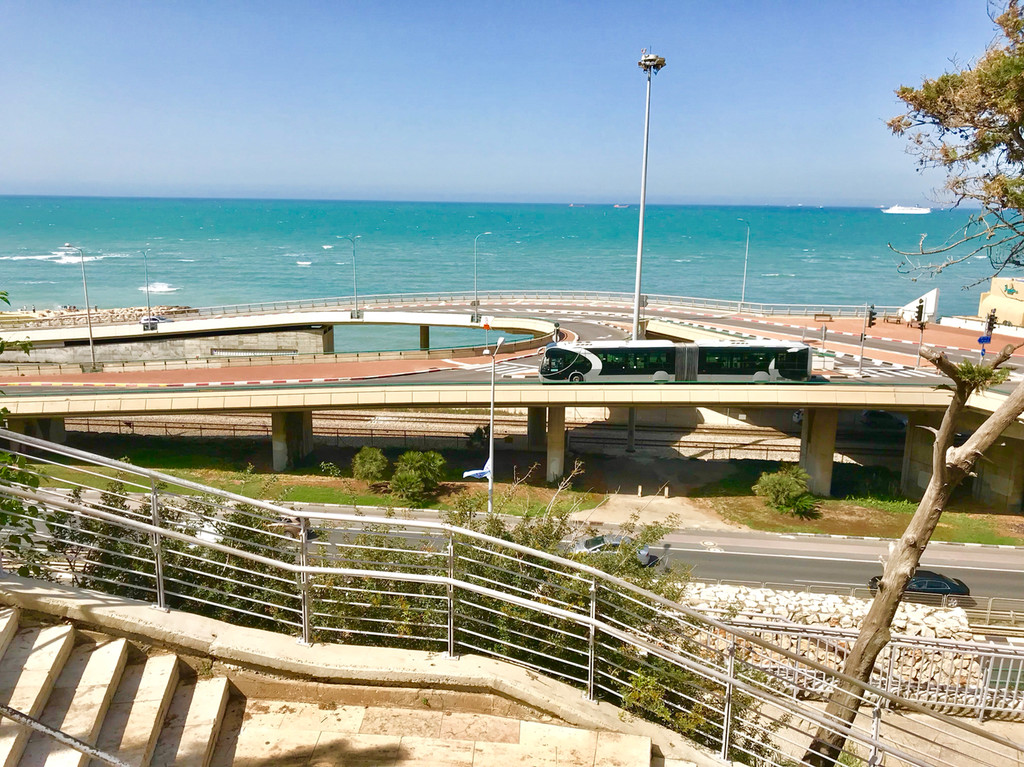
From Elijah’s Cave we head towards the sea, so we must cross the highway and the Allenby interchange and descend on stairs to Surfers Beach, the only beach in Israel facing north. The westerly winds parallel the shoreline are strengthened by the Carmel ridge descending to the sea. It’s not only a local beach for surfers - professional and amateur surfers flock to it from almost every country.
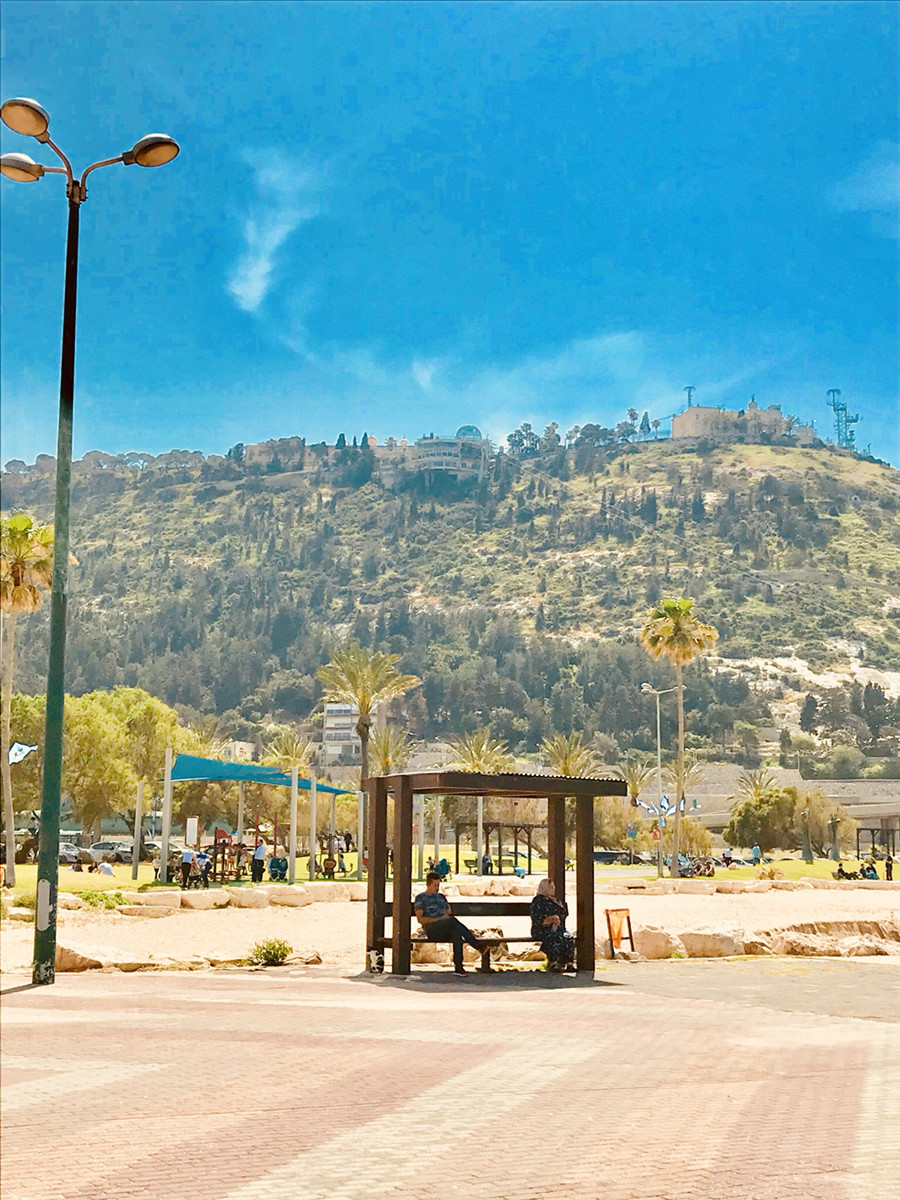
Bat Galim, north of the route, was built in the 1920s as a garden suburb outside the city. Bat Galim’s original houses were one story high. Many houses from the 1920s and 30s still remain, some in the International Style (Bauhaus) that still stand out among their neighbours.
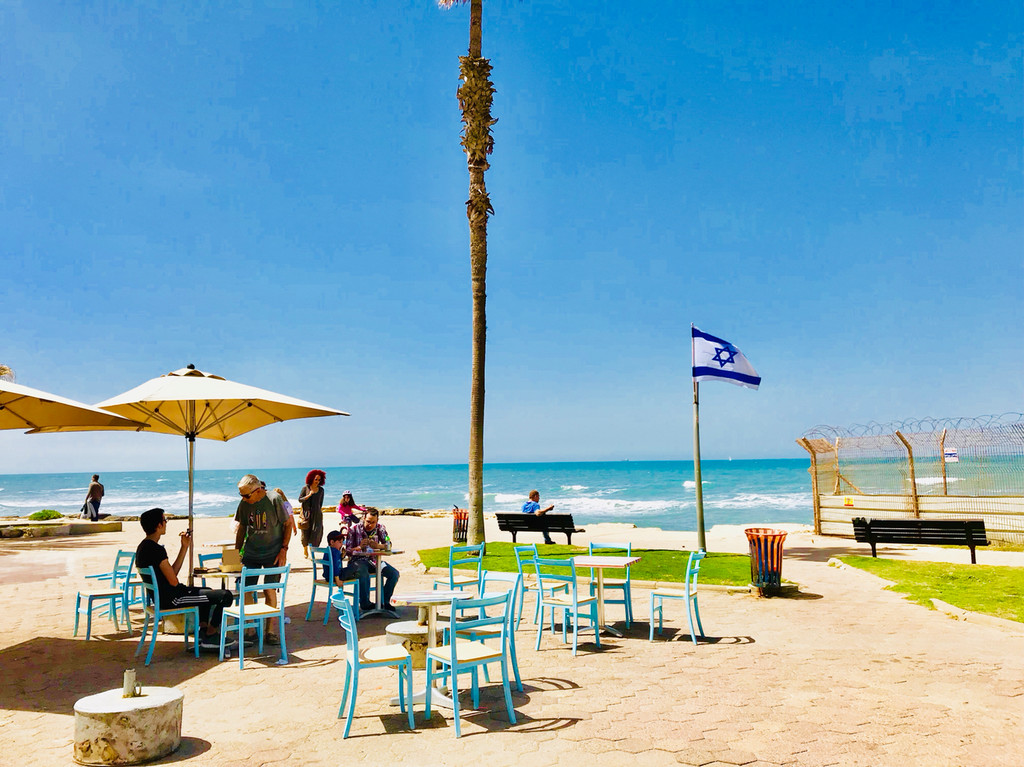
Some old buildings along the Bat Galim promenade have been abandoned. They are designated for preservation and can’t be demolished, but renovation isn’t worthwhile, so their owners have sealed them with concrete blocks to save on property tax. While you’re here, try the ice cream at Glidat Tel Hanan: it’s Israel’s best ice cream, without any doubt.